

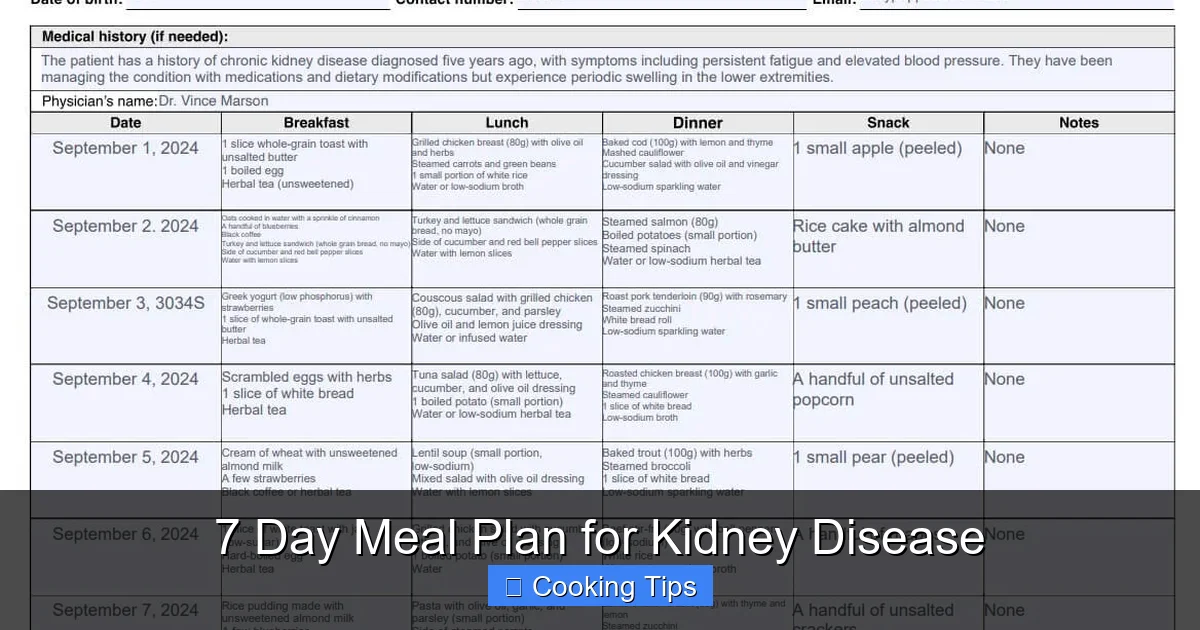
Managing kidney disease doesn’t mean sacrificing flavor. This 7-day meal plan offers delicious and kidney-friendly recipes designed to support your health. You’ll learn about portion control, balanced nutrition, and how to incorporate a variety of safe foods into your daily diet. Embrace this guide for a flavorful and health-conscious journey.
7 Day Meal Plan for Kidney Disease
Living with kidney disease can feel overwhelming, especially when it comes to what you eat. But it doesn’t have to be a burden. In fact, a well-planned diet can be a powerful tool to help manage your condition and improve your overall well-being. This comprehensive 7-day meal plan is designed to guide you toward delicious, kidney-friendly meals. We’ll focus on managing sodium, protein, potassium, and phosphorus intake while ensuring you get the nutrients you need.
This guide will walk you through creating balanced meals, understanding portion sizes, and making informed food choices. By the end, you’ll feel more confident in your ability to prepare tasty and healthy meals that support your kidney health. Remember, this plan is a template. Your individual dietary needs might differ, so always consult with your doctor or a registered dietitian for personalized advice.
Key Takeaways
- Personalized Nutrition is Key: Every individual with kidney disease has unique needs. This meal plan serves as a template; consult your doctor or a registered dietitian for personalized guidance.
- Sodium Management is Crucial: Limiting sodium intake helps manage blood pressure and fluid retention, which are vital for kidney health. This plan emphasizes fresh ingredients and limits processed foods.
- Protein Intake Needs Careful Consideration: The amount of protein you need can vary. This plan offers moderate protein options, but your specific requirements should be discussed with a healthcare professional.
- Potassium and Phosphorus Awareness: Certain fruits, vegetables, and dairy products are high in potassium and phosphorus. This plan suggests lower-potassium and lower-phosphorus alternatives.
- Hydration is Essential: Adequate fluid intake is important for kidney function, but the amount may need to be adjusted based on your stage of kidney disease.
- Focus on Whole, Unprocessed Foods: This meal plan prioritizes fresh produce, lean proteins, and healthy fats, minimizing processed items that are often high in sodium and phosphorus.
- Portion Control Matters: Understanding appropriate portion sizes is essential for managing nutrient intake and maintaining a healthy weight, which benefits kidney health.
Understanding the Basics of a Kidney-Friendly Diet
Before diving into the meal plan, it’s important to grasp the core principles of eating for kidney health. The primary goals are to reduce the workload on your kidneys and prevent the buildup of waste products in your blood. This typically involves:
- Limiting Sodium: High sodium intake can raise blood pressure and lead to fluid retention, both of which strain the kidneys. Aim for less than 2,000 mg of sodium per day, or as advised by your doctor.
- Controlling Protein: While protein is essential, too much can be hard for damaged kidneys to process. Your doctor or dietitian will determine your ideal protein intake.
- Managing Potassium: High potassium levels can be dangerous. Many fruits and vegetables are high in potassium, so choosing lower-potassium options is key.
- Monitoring Phosphorus: Damaged kidneys struggle to remove phosphorus. High phosphorus can weaken bones and cause other health issues. Dairy, nuts, seeds, and processed foods are common sources.
- Staying Hydrated: Fluids help your kidneys flush out waste. However, in some stages of kidney disease, fluid intake might need to be restricted.
Your 7-Day Kidney-Friendly Meal Plan
This meal plan offers a variety of options. Feel free to swap meals between days, but try to maintain similar nutritional profiles. We’ll focus on fresh ingredients and simple preparation methods.
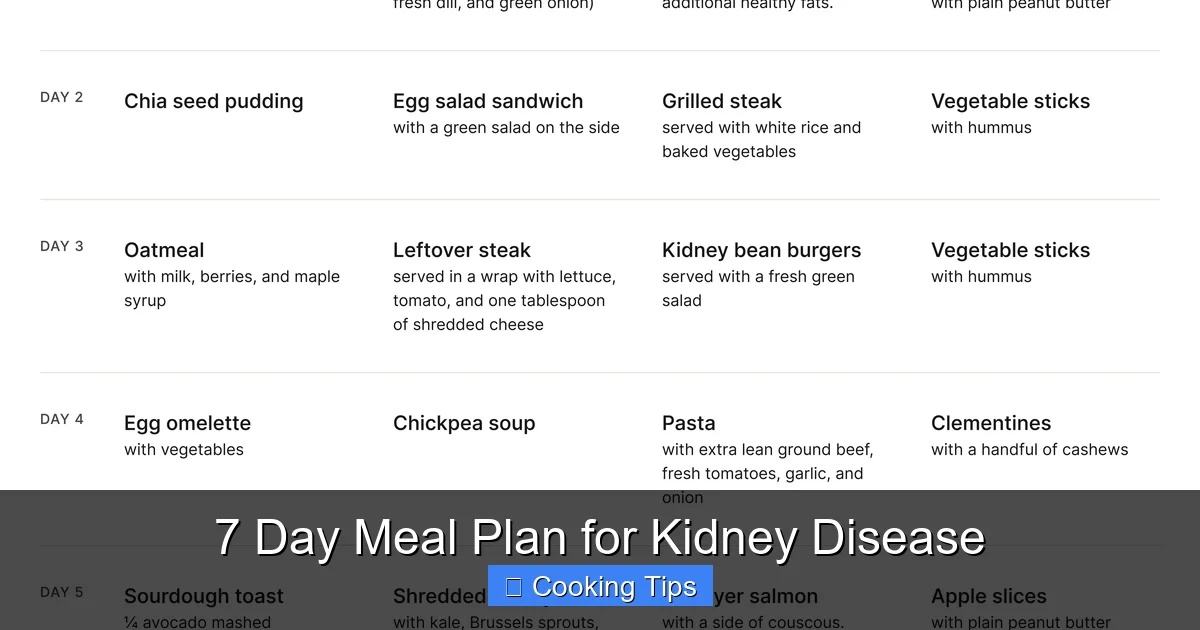
Visual guide about 7 Day Meal Plan for Kidney Disease
Image source: assets-global.website-files.com
Day 1: Gentle Start
Today is about easing into kidney-friendly eating with simple, flavorful dishes.
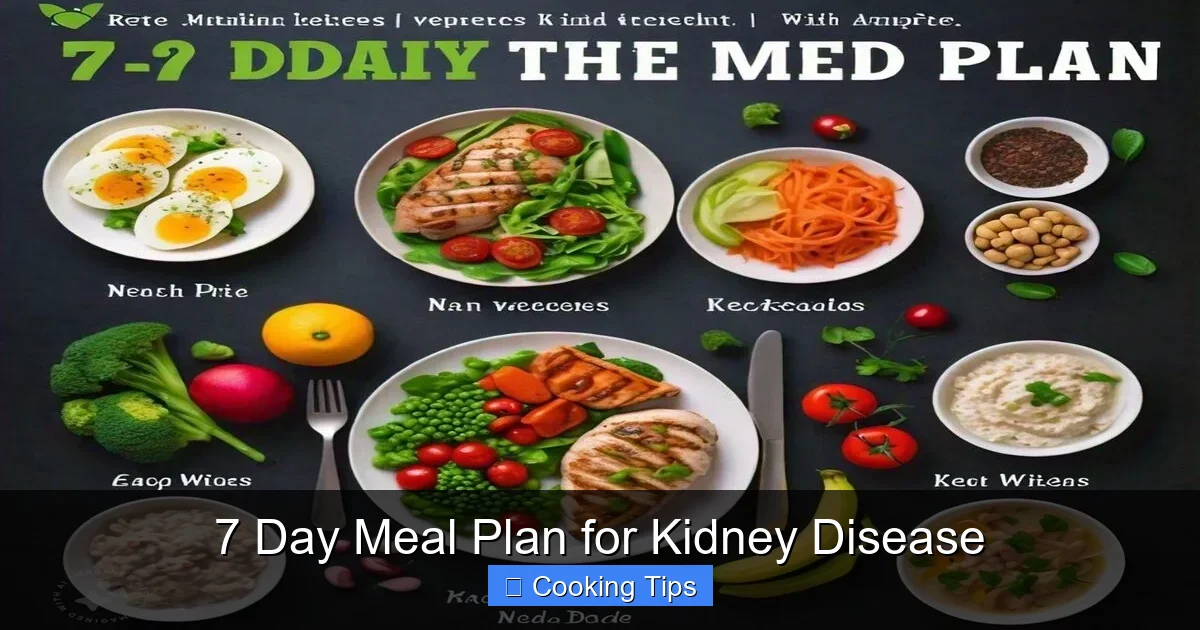
Visual guide about 7 Day Meal Plan for Kidney Disease
Image source: medlifeguide.com
Breakfast
Oatmeal with Berries and a Sprinkle of Nuts
- 1/2 cup rolled oats cooked with water or unsweetened almond milk
- 1/4 cup mixed berries (strawberries, blueberries – lower potassium options)
- 1 tablespoon chopped walnuts (a small portion to manage phosphorus)
Tip: Avoid instant oatmeal, which often contains added sodium and sugar.
Lunch
Grilled Chicken Salad with Mixed Greens
- 3 ounces grilled chicken breast, sliced
- 2 cups mixed greens (lettuce, spinach)
- 1/4 cup cucumber, sliced
- 1/4 cup bell pepper, sliced
- 2 tablespoons light vinaigrette dressing (low sodium)
Tip: Make your own vinaigrette with olive oil, lemon juice, and herbs to control sodium.
Dinner
Baked Salmon with Steamed Asparagus and Quinoa
- 4 ounces baked salmon (rich in omega-3s)
- 1 cup steamed asparagus
- 1/2 cup cooked quinoa
Tip: Season salmon with lemon pepper (ensure no added salt) and herbs like dill.
Day 2: Flavorful and Fresh
We’ll introduce a few more vegetables and lean protein sources today.
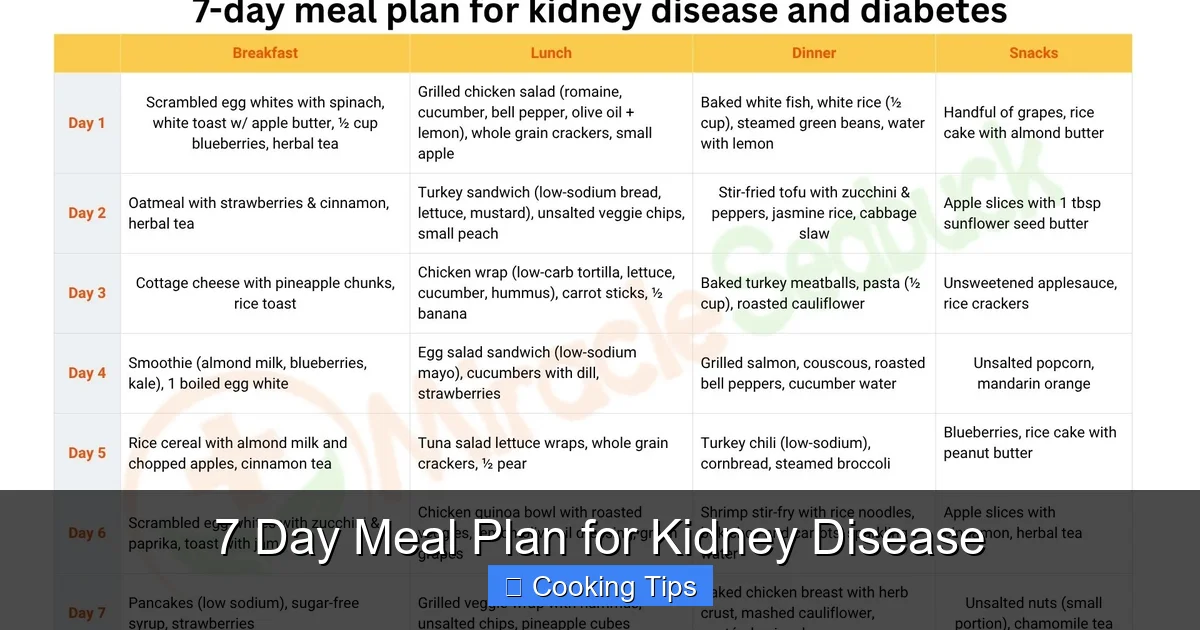
Visual guide about 7 Day Meal Plan for Kidney Disease
Image source: miracleseabuck.com
Breakfast
Scrambled Eggs with Spinach and Whole Wheat Toast
- 2 egg whites or 1 whole egg and 1 egg white
- 1/2 cup fresh spinach, wilted in
- 1 slice whole wheat toast
- 1 teaspoon unsalted butter or olive oil spread
Tip: Cooking with egg whites can help reduce phosphorus intake.
Lunch
Lentil Soup (Low Sodium) with a Side Salad
- 1.5 cups homemade lentil soup (made with low-sodium broth and plenty of vegetables like carrots and celery)
- 1 cup mixed greens with a light vinaigrette
Tip: Spices like cumin, turmeric, and bay leaves can add flavor without sodium.
Dinner
Lean Ground Turkey Stir-fry with Brown Rice
- 3 ounces lean ground turkey
- 1 cup mixed stir-fry vegetables (broccoli, snap peas, carrots – avoid high-potassium options like potatoes)
- 1/2 cup cooked brown rice
- Low-sodium soy sauce or tamari for seasoning
Tip: Use garlic, ginger, and a splash of rice vinegar for flavor instead of excessive soy sauce.
Day 3: Plant-Powered Protein
Exploring plant-based protein options can be beneficial. Today, we’ll focus on controlled portions.
Breakfast
Greek Yogurt with Peach Slices
- 1/2 cup plain, low-fat Greek yogurt (check phosphorus content)
- 1/2 cup sliced peaches (fresh or canned in juice, drained)
Tip: Plain yogurt is better than flavored, which often contains added sugars and sodium.
Lunch
Tuna Salad Sandwich (Made with Low-Sodium Mayo) on Whole Wheat Bread
- 3 ounces canned tuna in water, drained
- 1 tablespoon low-sodium mayonnaise
- 1/4 cup chopped celery
- 2 slices whole wheat bread
Tip: Add chopped pickles or dill for extra flavor instead of salt.
Dinner
Chicken Breast with Roasted Zucchini and Cauliflower Rice
- 4 ounces baked or grilled chicken breast
- 1 cup roasted zucchini and cauliflower florets (tossed with olive oil and herbs)
Tip: Cauliflower rice is a lower-potassium alternative to regular rice.
Day 4: Comfort Foods, Kidney-Style
Enjoying familiar flavors while keeping kidney health in mind is possible.
Breakfast
Whole Wheat Pancakes with Berries
- 2 small whole wheat pancakes (homemade with low-sodium baking powder)
- 1/4 cup mixed berries
Tip: Use a small amount of maple syrup or sugar-free syrup. Avoid butter and high-sodium toppings.
Lunch
Leftover Chicken Breast and Roasted Vegetables
- Portion of Day 3’s dinner
Tip: A great way to save time and reduce food waste.
Dinner
Shepherd’s Pie with Lean Ground Beef and Mashed Cauliflower Topping
- 3 ounces lean ground beef, sautéed with onions and herbs
- Mixed vegetables (peas, carrots – moderate potassium)
- Topped with mashed cauliflower instead of potatoes
Tip: Use low-sodium broth and herbs for the gravy base. Mashed cauliflower is a great low-phosphorus alternative to mashed potatoes.
Day 5: Seafood and Greens
Let’s enjoy some healthy fats from fish and nutrient-rich greens.
Breakfast
Smoothie with Spinach, Banana (small portion), and Unsweetened Almond Milk
- 1 cup unsweetened almond milk
- 1/2 cup spinach
- 1/2 small banana (lower potassium choice)
- 1 tablespoon chia seeds
Tip: Adjust banana portion based on your potassium needs. Chia seeds add fiber and omega-3s.
Lunch
Salmon Salad (made with low-sodium mayo) on a Bed of Lettuce
- 3 ounces canned salmon in water, drained
- 1 tablespoon low-sodium mayonnaise
- Chopped celery
- Served over a bed of mixed greens
Tip: Consider adding a squeeze of lemon for brightness.
Dinner
Shrimp Scampi with Zucchini Noodles
- 4 ounces shrimp
- Zucchini noodles (zoodles)
- Garlic, olive oil, lemon juice, parsley for sauce
- Avoid high-sodium ingredients like pre-made sauces.
Tip: Zucchini noodles are a low-carb, low-potassium alternative to pasta.
Day 6: Global Flavors, Kidney-Friendly Twist
Exploring international cuisines can add variety. We’ll focus on fresh, low-sodium ingredients.
Breakfast
Scrambled Tofu with Turmeric and Black Pepper
- 1/2 cup firm tofu, crumbled
- 1/4 teaspoon turmeric
- Pinch of black pepper
- Sautéed with a little olive oil
Tip: Tofu can be a good plant-based protein alternative, but check phosphorus levels with your doctor.
Lunch
Chicken and Vegetable Skewers with a Light Yogurt Dip
- 3 ounces chicken breast chunks
- Vegetables like bell peppers, onions, zucchini
- Marinated in olive oil, lemon juice, and herbs
- Serve with a dip made from plain yogurt and cucumber
Tip: Grilling or baking adds flavor without excess oil.
Dinner
Curried Chicken with Cauliflower Rice and Green Beans
- 4 ounces chicken breast, cubed
- Curry powder, turmeric, garlic, ginger for flavor
- 1 cup cauliflower rice
- 1 cup steamed green beans
Tip: Use coconut milk (light version) sparingly for creaminess, and ensure no added salt in curry paste.
Day 7: Simple and Satisfying
A relaxed end to the week with easy-to-prepare meals.
Breakfast
Apple Slices with a Small Handful of Almonds
- 1 medium apple, sliced
- 10-12 almonds (portion controlled for phosphorus)
Tip: A simple, satisfying snack or breakfast that’s naturally low in sodium.
Lunch
Leftover Curried Chicken and Cauliflower Rice
- Portion of Day 6’s dinner
Tip: Enjoying leftovers is convenient and waste-reducing.
Dinner
Baked Cod with Roasted Root Vegetables (Carrots and Parsnips)
- 4 ounces baked cod
- 1 cup roasted carrots and parsnips (moderate potassium)
- Seasoned with herbs and olive oil
Tip: Cod is a lean, white fish that is generally well-tolerated.
Practical Tips for Success
Beyond the specific meals, here are some general tips to help you thrive on a kidney-friendly diet:
H3: Reading Food Labels
Pay close attention to sodium, potassium, and phosphorus content. Look for “low sodium” or “no salt added” options. Be aware that phosphorus can be listed as “phosphoric acid” in ingredients, which is a form to limit.
H3: Cooking Methods
Opt for baking, grilling, steaming, roasting, and stir-frying. These methods require less added fat and can enhance the natural flavors of food.
H3: Herbs and Spices
Embrace a wide variety of herbs and spices to add flavor to your meals. Garlic, onion powder (not salt), ginger, turmeric, cumin, basil, oregano, and thyme are excellent choices.
H3: Portion Control
Use measuring cups and spoons to ensure you’re eating appropriate portion sizes. Visual cues, like a deck of cards for protein portions, can also be helpful.
H3: Hydration Strategies
If your doctor advises fluid restriction, track your intake carefully. Carry a water bottle and sip throughout the day. Consider flavoring water with lemon or cucumber if plain water is challenging.
Troubleshooting Common Challenges
It’s normal to face challenges. Here’s how to address them:
H3: Cravings for Salty Foods
Gradually reduce sodium intake. Your taste buds will adjust over time. Try using salt substitutes (ask your doctor first, as some are potassium-based) or experiment with other strong flavors like vinegar, lemon juice, and spicy peppers.
H3: Finding Low-Potassium Fruits and Vegetables
Focus on berries, apples, pears, grapes, cauliflower, cabbage, green beans, and bell peppers. Limit or avoid bananas, oranges, potatoes, tomatoes, and spinach in large quantities. For a comprehensive list, consult a renal dietitian.
H3: Managing Phosphorus Intake from Dairy
Milk, cheese, and yogurt are high in phosphorus. Consider plant-based milks (like unsweetened almond or rice milk) and be mindful of portion sizes if dairy is still included in your diet. Non-dairy creamers and cheeses can also be alternatives, but always check their phosphorus content.
H3: Eating Out
Research restaurant menus online beforehand. Look for grilled or baked options and ask for dishes to be prepared with no added salt. Request sauces and dressings on the side.
Conclusion
Embarking on a kidney-friendly diet is a journey, not a destination. This 7-day meal plan provides a solid foundation for making delicious and health-conscious choices. By understanding the principles of sodium, protein, potassium, and phosphorus management, and by embracing fresh, whole foods, you can nourish your body and support your kidney health. Remember to celebrate small victories, be patient with yourself, and always partner with your healthcare team. With consistent effort and informed decisions, you can enjoy a vibrant and flavorful life, even with kidney disease.
