


Is your Keurig dispensing less coffee than expected? Don’t worry! This guide provides a clear, step-by-step process to troubleshoot and fix your Keurig not brewing a full cup. From simple cleaning to more involved checks, you’ll learn how to get your machine back to brewing your favorite beverages to the brim. Follow these easy instructions to enjoy a complete cup every time.
Keurig Not Brewing Full Cup: Step-by-Step Fix
Are you finding yourself staring at a half-empty mug when you expect a full brew from your Keurig? It’s a common and frustrating problem, but thankfully, one that’s often fixable with a little know-how. This guide will walk you through everything you need to do to get your Keurig brewing a full cup again, just like it used to. We’ll cover everything from simple cleaning to more in-depth checks, ensuring you can enjoy your coffee without disappointment.
You’ve invested in a Keurig for convenience and a perfect cup of coffee. When it starts shortchanging you, it can really throw off your morning routine. Don’t fret! With these easy-to-follow steps, you’ll be back to enjoying full, delicious cups of your favorite beverages in no time. Let’s dive into how to fix your Keurig when it’s not brewing a full cup.
Key Takeaways
- Regular cleaning and descaling are crucial for maintaining optimal Keurig performance and preventing brewing issues.
- Clogged needles are a common culprit for incomplete brews; learning how to clear them is essential.
- Water reservoir issues, like an airlock or insufficient water, can prevent the machine from brewing a full cup.
- Choosing the right K-Cup pod and brewing size can significantly impact the final coffee volume.
- Understanding your specific Keurig model will help in identifying unique troubleshooting steps.
- Basic maintenance checks, such as ensuring the pod holder is seated correctly, can resolve many brewing problems.
Step 1: Check the Basics – Water and Power
Before we get into complex issues, let’s ensure the simplest things are in order. Sometimes, the most obvious solutions are overlooked.
Ensure the Water Reservoir is Sufficiently Filled
This might seem incredibly basic, but it’s a frequent cause of a Keurig not brewing a full cup. If the water level is too low, the pump might not be able to draw enough water to complete a full brew cycle. Always make sure the water reservoir is filled to at least the “MAX FILL” line. If you are trying to brew a larger cup size, ensure there is enough water to accommodate it.
Verify Power Connection
Is your Keurig plugged in securely? A loose connection could cause intermittent power issues, affecting the brewing process. Ensure the power cord is firmly seated in both the machine and the wall outlet. If you’re using a power strip, try plugging the Keurig directly into the wall to rule out any issues with the strip itself.
Step 2: Clean the K-Cup Pod Holder and Needles
This is where many of the common brewing problems originate. Clogged needles can restrict water flow, leading to a weak or incomplete brew.
Remove and Clean the K-Cup Pod Holder
The K-Cup pod holder is where you insert your coffee pod. Over time, coffee grounds and residue can build up here, obstructing the flow of water. To clean it, first, lift the handle to access the holder. Then, carefully remove the entire K-Cup pod holder assembly. Many models allow you to detach the bottom portion of the holder. Rinse the holder thoroughly under warm running water. Use a small brush or an old toothbrush to gently scrub away any stubborn residue. Make sure to dry it completely before reinserting.
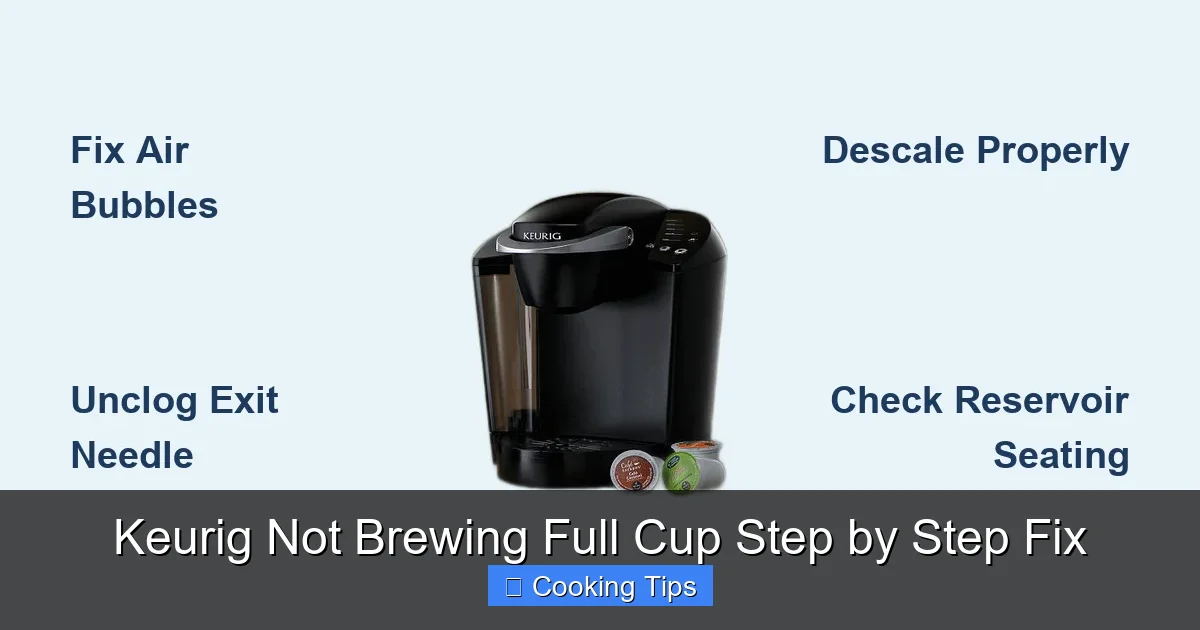
Visual guide about Keurig Not Brewing Full Cup Step by Step Fix
Image source: keurigcoffee.blog
Clear the Exit Needle
The exit needle is located at the bottom of the K-Cup pod holder and is responsible for piercing the K-Cup pod. If this needle is clogged, water cannot enter the pod properly.
How to Clear the Exit Needle:
- With the K-Cup pod holder removed, locate the exit needle at the bottom.
- You can use a paperclip (straightened out) or a Keurig-specific needle cleaning tool (often found in descaling kits) to gently poke into the needle opening.
- Carefully try to dislodge any coffee grounds or debris. Be gentle to avoid bending or breaking the needle.
- Rinse the holder again after clearing the needle.
Clear the Entrance Needle
The entrance needle is at the top of the brewing mechanism and pierces the foil top of the K-Cup pod. This needle can also get clogged with coffee grounds.
How to Clear the Entrance Needle:
- Lift the Keurig handle all the way up. You will see the entrance needle protruding from the top brew head.
- Carefully insert a straightened paperclip or a cleaning tool into the needle opening.
- Gently wiggle and twist the paperclip to break up any blockages.
- Be careful not to force it or bend the needle.
- Once you believe it’s clear, you can run a water-only brew cycle (without a K-Cup) to flush out any loosened debris.
Step 3: Perform a Descaling Cycle
Mineral deposits from your water can build up inside your Keurig over time, creating blockages that impede water flow. Descaling is essential maintenance for any coffee maker.
What is Descaling?
Descaling is the process of removing mineral buildup (scale) from the inside of your Keurig. This scale can clog the heating element and water lines, affecting brewing temperature and volume. Keurig recommends descaling your machine every 3-6 months, depending on your water hardness.
How to Descale Your Keurig
Keurig sells a descaling solution, but you can also use a mixture of white vinegar and water (a 1:1 ratio is common, but always check your Keurig’s manual for specific recommendations).
- Empty the Water Reservoir: Remove any water and K-Cup from the machine.
- Prepare the Descaling Solution: Fill the water reservoir with your chosen descaling solution (either Keurig’s or your homemade vinegar/water mix).
- Run Brew Cycles: Place a large mug on the drip tray. Run multiple brew cycles using the largest cup size setting. You’ll be brewing the descaling solution through the machine. Discard the solution after each cycle.
- Let it Soak (Optional): For stubborn buildup, after running a few cycles, you can let the remaining solution sit in the reservoir for at least 30 minutes or up to an hour.
- Rinse Thoroughly: Once the descaling solution is gone, empty and rinse the water reservoir thoroughly with fresh water.
- Run Fresh Water Cycles: Fill the reservoir with clean, fresh water and run at least 8-10 full brew cycles using only water (no K-Cup). This is crucial to flush out any remaining descaling solution or vinegar smell/taste.
After descaling, your Keurig should have improved water flow, hopefully resolving the issue of not brewing a full cup.
Step 4: Check for an Airlock in the Water Pump
An airlock occurs when air gets trapped in the water pump, preventing water from being drawn from the reservoir. This can happen after the reservoir has been empty or after descaling.
How to Break an Airlock
If you suspect an airlock, try this:
- Ensure the water reservoir is filled to the “MAX FILL” line.
- Remove the K-Cup pod holder and the K-Cup itself.
- Lift the brew handle and allow it to sit open for a minute or two.
- Gently tap the side of the water reservoir.
- Close the handle and attempt to run a brew cycle with just water (no K-Cup).
- If it still doesn’t work, try removing the reservoir, emptying any water, and refilling it. Reattach the reservoir firmly.
- Then, try running a water-only brew cycle again. The goal is to let the pump suck up water, pushing any trapped air out.
Visual guide about Keurig Not Brewing Full Cup Step by Step Fix
Image source: minikeurig.com
Step 5: Inspect the K-Cup Pod Itself
While less common, a faulty K-Cup pod can also lead to incomplete brews.
Examine the K-Cup Pod
Check the K-Cup pod for any damage. Ensure the foil lid is fully intact and hasn’t been pierced or damaged prior to insertion. A damaged lid can cause grounds to enter the brew chamber or prevent proper water flow. Also, ensure you are using a K-Cup pod compatible with your Keurig model. Some older or off-brand pods might not fit or function correctly.
Ensure Proper Pod Seating
When you insert the K-Cup pod, make sure it sits securely in the holder. Close the handle firmly. If the pod isn’t seated correctly, the needles might not be able to pierce it properly, or the water might not flow through it as intended.
Step 6: Consider Your Brew Size Selection
Did you accidentally select a smaller brew size than you intended?
Verify Your Brew Size Setting
Most Keurig models offer different cup size options (e.g., 6 oz, 8 oz, 10 oz). Double-check that you haven’t inadvertently selected a smaller size. If you’re aiming for a full 8 oz cup, ensure the 8 oz button is illuminated or selected. Accidentally selecting a smaller size is a very simple, but effective, reason for a short brew.
Troubleshooting Summary
If your Keurig is still not brewing a full cup after following these steps, here’s a quick recap of potential issues and solutions:
- Blocked Needles: Re-clean the entrance and exit needles thoroughly.
- Mineral Buildup: Perform another descaling cycle, perhaps using a stronger solution or letting it soak longer.
- Water Flow Issue: Check for any kinks in the water line if your model has an external water filter.
- Faulty Pump: If none of the above work, the water pump itself might be failing.
- Machine Malfunction: In rare cases, there might be an internal electronic issue.
When to Call for Support
If you’ve gone through all these steps and your Keurig is still not brewing a full cup, it might be time to contact Keurig customer support. They can provide further troubleshooting assistance or advise on repair or replacement options if your machine is still under warranty. Remember to have your Keurig model number handy when you call.
Conclusion
It’s incredibly satisfying to get your Keurig back in perfect working order! By systematically working through these steps, from checking the basics to deep cleaning and descaling, you’ve likely identified and fixed the problem. A Keurig not brewing a full cup is usually a sign that it needs a little maintenance. Regular cleaning and descaling will not only fix this particular issue but also ensure your Keurig continues to brew delicious coffee for a long time. Enjoy your perfectly brewed, full cups!
