

Is your coffee maker failing to brew a hot cup? This guide provides a comprehensive, step-by-step approach to diagnosing and fixing your coffee maker when it won’t heat properly. We cover common causes from water flow issues to faulty heating elements, offering practical solutions and troubleshooting tips to get your morning brew back to its perfect temperature. Don’t let a lukewarm coffee ruin your day!
Fixing a Coffee Maker That Will Not Heat Properly
There’s nothing quite like the disappointment of brewing a cup of coffee only to find it’s lukewarm or barely warm. A coffee maker that won’t heat properly can be a real morning buzzkill. Fortunately, many common heating issues with coffee makers are fixable without needing a professional repair. This comprehensive guide will walk you through diagnosing and resolving the most frequent causes of your coffee maker’s lack of heat.
We’ll start with the simplest checks and progressively move towards more complex potential problems. By following these steps, you’ll be well on your way to enjoying a perfectly hot cup of coffee again.
Key Takeaways
- Check the Power Supply and Basic Settings: Ensure the coffee maker is plugged in securely and the brewing cycle is correctly initiated.
- Inspect the Water Reservoir and Filter Basket: Blockages or improper placement can prevent water from reaching the heating element.
- Clean the Heating Element and Brew Basket: Mineral buildup (scale) is a common culprit for poor heating. Regular descaling is crucial.
- Test the Thermostat: A faulty thermostat can misread or fail to signal the heating element, leading to insufficient heat.
- Examine the Heating Element for Damage: Visible damage or a complete lack of heat after other checks points to a likely issue with the heating element itself.
- Consider Internal Wiring and Connections: Loose or damaged wires can disrupt the flow of electricity to the heating components.
1. Start with the Basics: Power and Settings
Before diving into the internal workings of your coffee maker, it’s essential to rule out the most straightforward issues. These are often overlooked but are surprisingly common causes of malfunction.
Check the Power Outlet and Cord
Is the coffee maker actually receiving power? Plug another small appliance into the same outlet to confirm it’s working. If the outlet is fine, inspect the coffee maker’s power cord for any visible damage, such as fraying or cuts. A damaged cord should be replaced immediately for safety reasons.
Verify the Brewing Cycle
Are you sure the brewing cycle has been initiated correctly? Some coffee makers have specific buttons or sequences to start the heating and brewing process. Double-check your coffee maker’s manual to ensure you’re following the correct procedure. For machines with a timer, confirm it’s set for the correct time and that the brewing function is activated.
2. Inspect Water Flow and Blockages
The heating element in a coffee maker heats the water as it flows through it. If water can’t reach the heating element, or if it’s not flowing correctly, the coffee will inevitably be less hot.
Visual guide about Fixing a Coffee Maker That Will Not Heat Properly
Image source: img.thrfun.com
Examine the Water Reservoir
Ensure the water reservoir is filled to the appropriate level. Some coffee makers have a minimum water line that needs to be met for the heating process to engage correctly. Also, check that the reservoir is seated properly in its base. If it’s slightly askew, it might not be allowing water to flow into the machine.
Clear the Filter Basket and Carafe Path
Is the coffee filter basket overflowing with grounds, or is there debris blocking the spout that dispenses coffee into the carafe? These obstructions can slow down or stop the flow of hot water, resulting in a cooler brew. Remove the filter, dispose of used grounds, and ensure the basket and the carafe’s lid are clean and free of any blockages. For carafes, make sure the lid is on correctly, as some models have a mechanism that requires the lid to be in place for proper dispensing.
3. The Culprit: Mineral Buildup (Scale)
Over time, mineral deposits from tap water can build up inside your coffee maker, a process known as scaling. This buildup can insulate the heating element, reducing its efficiency and preventing it from heating water to the optimal temperature. This is one of the most common reasons for a coffee maker not heating properly.
Visual guide about Fixing a Coffee Maker That Will Not Heat Properly
Image source: c8.alamy.com
Descaling Your Coffee Maker
Most manufacturers recommend descaling your coffee maker every 1-3 months, depending on your water hardness and usage. You can use a commercial descaling solution specifically designed for coffee makers, or a mixture of equal parts white vinegar and water.
Steps for Descaling:
- Empty the water reservoir and remove any coffee grounds or filters.
- Fill the reservoir with your chosen descaling solution (or vinegar/water mixture). Follow the instructions on your commercial descaler or use the standard 1:1 ratio for vinegar.
- Place an empty carafe on the warming plate.
- Run a full brew cycle. Do not add coffee grounds.
- Once the cycle is complete, discard the hot water from the carafe.
- Rinse the reservoir by filling it with clean water and running another full brew cycle. Repeat this rinsing process 2-3 times to ensure all traces of the descaling solution are removed.
- Wipe down the exterior of the coffee maker.
This process should significantly improve heating performance if scale was the issue.
4. Faulty Internal Components
If the basic checks and descaling haven’t resolved the problem, you might be dealing with a faulty internal component. This is where a little more technical troubleshooting comes in.
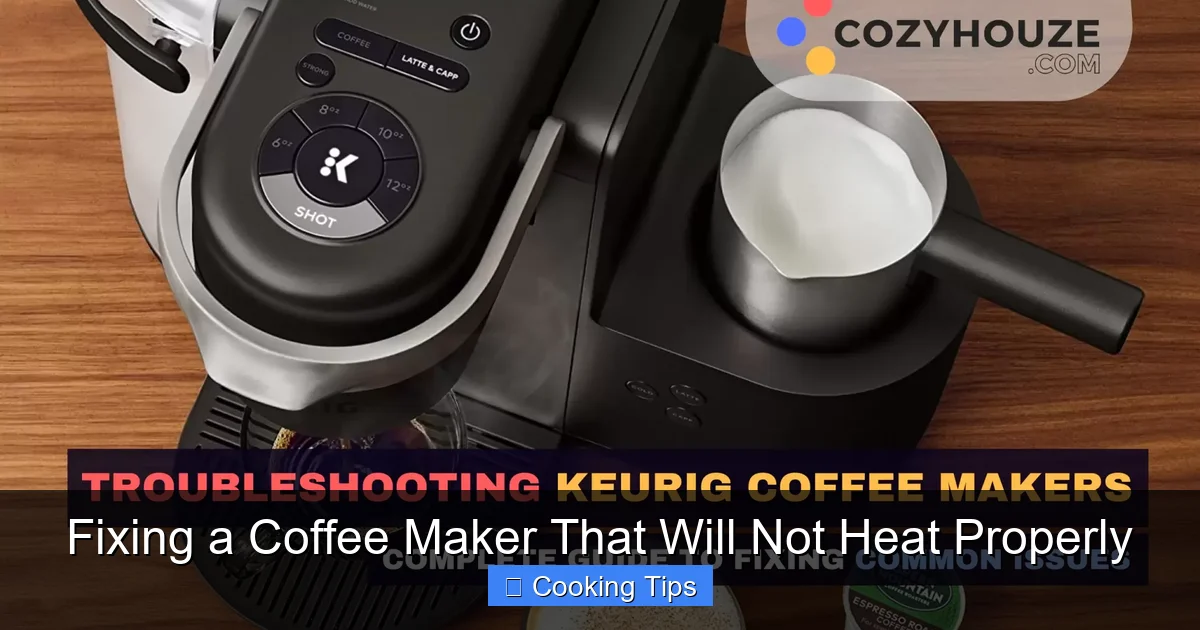
Visual guide about Fixing a Coffee Maker That Will Not Heat Properly
Image source: cozyhouze.com
Testing the Thermostat
The thermostat is responsible for regulating the water temperature. If it’s not functioning correctly, it might not signal the heating element to turn on or to reach the desired temperature. Thermostats are usually small, disc-shaped components, often with two wires attached. They are typically located near the heating element.
How to Test (Requires Caution and Basic Electrical Knowledge):
Disclaimer: If you are not comfortable working with electrical components, it’s best to seek professional help or consider replacing the unit. Always unplug the coffee maker before attempting any internal inspections.
- Unplug the coffee maker and remove the outer casing (usually held together by screws).
- Locate the thermostat. It’s often near the heating element, which is a long, metal tube.
- Visually inspect the thermostat for any signs of burning or damage.
- Using a multimeter set to continuity mode, test the thermostat. It should show continuity (a beep or very low resistance) when cold. If it doesn’t, or if it shows continuity when it should be open (at higher temperatures, though this is harder to test without specialized equipment), it’s likely faulty.
If the thermostat is faulty, it will need to be replaced. You’ll need to find a replacement part that matches your specific coffee maker model.
Examining the Heating Element
The heating element is the heart of your coffee maker’s heating system. It’s usually a resistive coil encased in metal. If this element has failed, the water won’t get hot.
Signs of a Faulty Heating Element:
- Visible burn marks or damage on the element.
- No heat whatsoever, even after checking power and thermostat.
- A distinct smell of burning when you try to brew.
How to Test (Requires Caution and Multimeter):
Disclaimer: As with the thermostat, proceed with caution and ensure the coffee maker is unplugged.
- Once you’ve accessed the internal components, locate the heating element.
- It will have two electrical terminals where wires connect.
- Set your multimeter to measure resistance (ohms, Ω).
- Disconnect the wires from the heating element terminals.
- Place the multimeter probes on each of the terminals. A good heating element will show a specific resistance value (this varies by model, but it’s typically between 10-50 ohms). If the multimeter reads infinite resistance (OL or open loop), or zero resistance (a direct short), the heating element has likely failed and needs replacement.
Replacing a heating element can be complex and often involves disconnecting and reconnecting multiple wires and securing the element. If you’re not confident, this is a job for a repair technician or a new coffee maker.
Checking Internal Wiring and Connections
Loose or corroded wires can prevent electricity from reaching the heating element or thermostat. This is more common in older or heavily used machines.
Inspection:
- With the coffee maker unplugged and open, carefully trace the wires from the power cord to the heating element and thermostat.
- Look for any wires that appear loose, disconnected, frayed, or corroded at their connection points (terminals).
- Gently tug on wires to ensure they are securely attached.
- If you find a loose connection, you may be able to reattach it. For corroded connections, you might be able to clean them gently with a soft brush or electrical contact cleaner.
If you discover significant damage to the wiring, it’s often safer to replace the appliance.
Troubleshooting Summary Table
Here’s a quick reference table to help you pinpoint the issue:
| Symptom | Likely Cause | Action |
|---|---|---|
| Coffee is lukewarm. | Mineral buildup, partially blocked water path. | Descale, check filter basket and carafe. |
| No heat at all. | Power issue, faulty heating element, faulty thermostat, loose wiring. | Check outlet/cord, test thermostat/element, inspect wiring. |
| Brewing is very slow and coffee is not hot. | Significant mineral buildup, blockage. | Thorough descaling, check all water paths. |
| Machine makes unusual noises during brewing. | Air in the system (after descaling), or potential pump issue (less related to direct heating). | Run a few cycles with just water to clear air. |
When to Consider Replacement
While many coffee maker issues can be fixed with a little effort, there comes a point where replacement might be the more practical option. If your coffee maker is quite old, if the cost of replacement parts is high, or if you’ve attempted repairs and are still facing problems, it might be time to invest in a new machine. Safety is also paramount; if you encounter extensive electrical damage or are unsure about a repair, don’t risk it.
Conclusion
A coffee maker that fails to heat properly is a frustrating problem, but with this step-by-step guide, you’re equipped to tackle most common causes. By starting with simple checks and systematically moving towards internal component testing, you can diagnose whether the issue is a simple clog, mineral buildup, or a more complex electrical fault. Remember to always prioritize safety by unplugging your appliance before any internal inspections. With a little patience and troubleshooting, you can get your coffee maker back to brewing perfectly hot coffee, ensuring your mornings start on the right note.
