

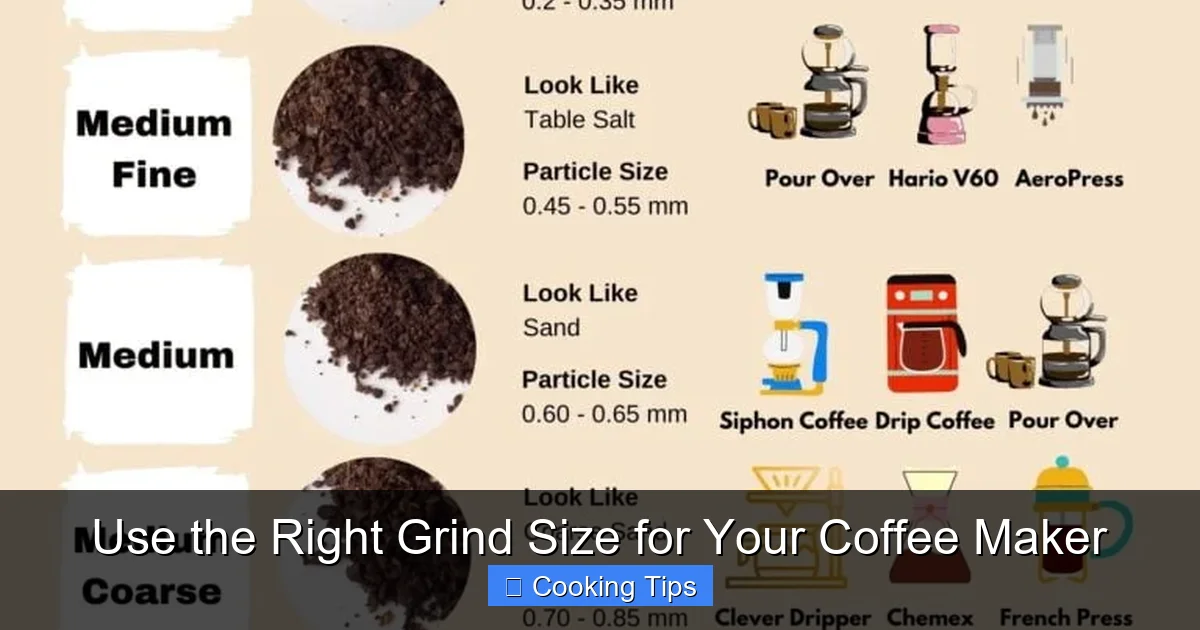
Achieving delicious coffee at home starts with the right grind size for your specific coffee maker. This guide explains why grind size matters and provides step-by-step instructions to ensure you select the correct coarseness for optimal extraction. Mastering grind size will elevate your home brewing experience, leading to a more flavorful and satisfying cup.
Use the Right Grind Size for Your Coffee Maker
Are you tired of coffee that’s too bitter, too weak, or just… off? You might be overlooking one of the most critical factors in brewing delicious coffee: the right grind size. It sounds simple, but using the incorrect grind for your coffee maker can sabotage even the freshest beans and the most advanced brewing equipment. This guide will demystify the world of coffee grinds and show you exactly how to match your grind size to your coffee maker for a consistently amazing cup.
- Grind size dictates extraction: Finer grinds extract faster, coarser grinds extract slower. Matching grind to brew time is crucial.
- Drip coffee makers need medium grinds: Similar to coarse sand, this allows for balanced water flow and extraction.
- French presses require coarse grinds: Resembling sea salt, this prevents sediment from passing through the filter.
- Espresso machines demand fine grinds: Like powdered sugar, this fine texture is necessary for high-pressure extraction.
- Pour-over methods benefit from medium-fine grinds: Slightly finer than drip, this balances flavor and flow rate.
- Blade grinders are less consistent: They produce uneven particle sizes, which can lead to over- and under-extraction. Burr grinders offer superior consistency.
- Experimentation is key: While guidelines exist, slight adjustments to grind size can fine-tune your coffee’s flavor profile.
Why Grind Size Matters So Much
Think of brewing coffee as an extraction process. Hot water dissolves the soluble compounds from coffee grounds, creating the delicious beverage we love. The rate at which this extraction happens is heavily influenced by the surface area of the coffee grounds that the water comes into contact with. This is where grind size plays a starring role.
- Finer grinds have a larger surface area. This means water can interact with more of the coffee in a shorter amount of time, leading to faster extraction. If the grind is too fine for the brew method, you can get over-extraction, resulting in bitter, harsh flavors.
- Coarser grinds have less surface area. Water interacts with them more slowly, meaning extraction takes longer. If the grind is too coarse for the brew method, you can get under-extraction, leading to weak, sour, or watery coffee.
The goal is to find the “sweet spot” – the perfect balance where the water flows through the grounds at the right speed for the right amount of time, extracting all the desirable flavors without pulling out the bitter or sour notes. This sweet spot is directly determined by your brewing method.
Understanding Common Coffee Makers and Their Ideal Grind Sizes
Different coffee makers employ different brewing mechanisms and contact times between water and coffee. This dictates the optimal grind size for each.
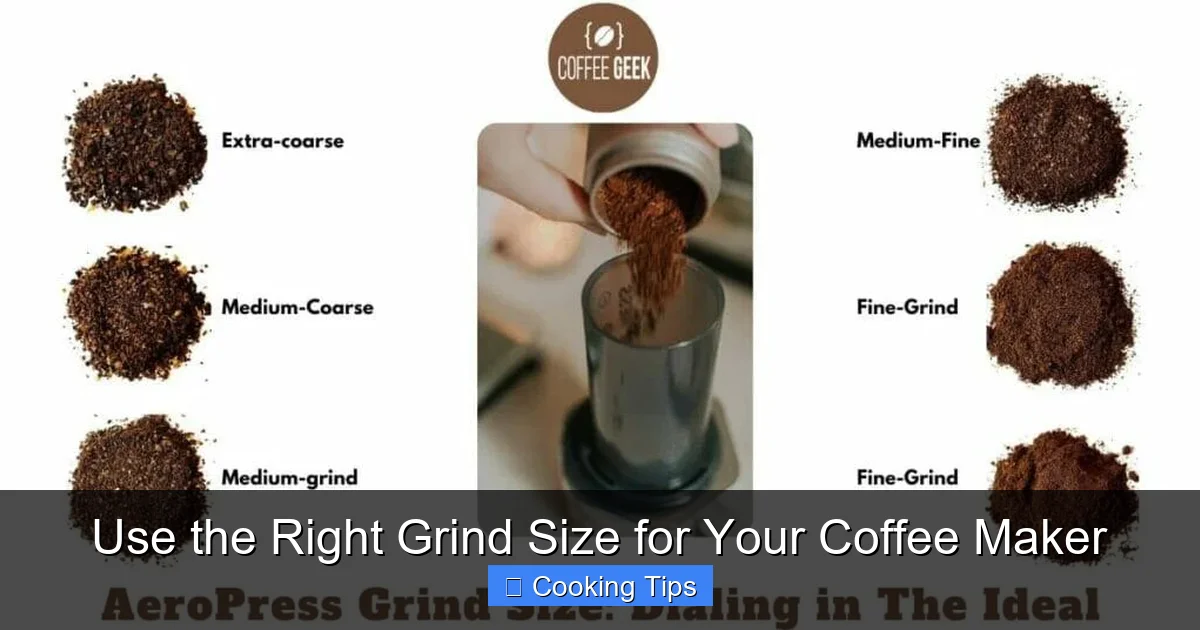
Visual guide about Use the Right Grind Size for Your Coffee Maker
Image source: coffeegeek.tv
1. Automatic Drip Coffee Makers
These are the workhorses of many kitchens. Water is heated and drips through coffee grounds held in a filter basket, then into a carafe. The brewing process typically takes several minutes.
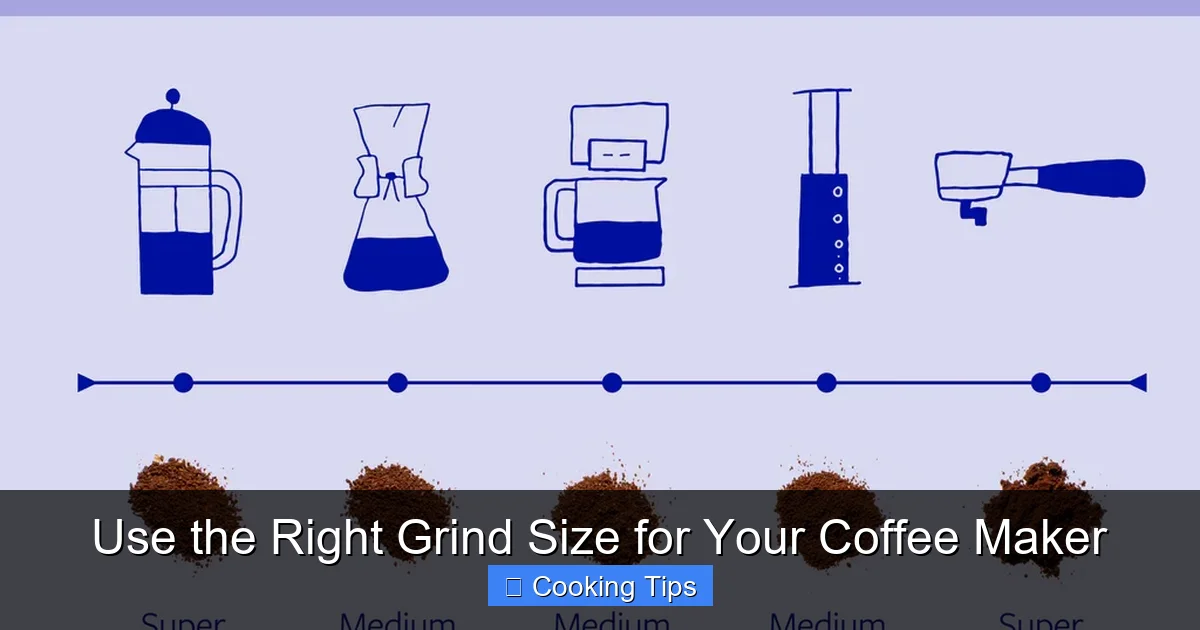
Visual guide about Use the Right Grind Size for Your Coffee Maker
Image source: cdn.shopify.com
Ideal Grind Size: Medium
For automatic drip coffee makers, you’re aiming for a grind that resembles coarse sand. The particles should be mostly uniform in size. This medium grind allows water to flow through at a steady pace, ensuring adequate contact time for balanced extraction.
- What to look for: If you rub a bit of the grounds between your fingers, they should feel slightly gritty but not powdery, and not so large that they look like pebbles.
- Common mistakes: Using a grind that’s too fine (like for espresso) will clog the filter, lead to over-extraction, and potentially overflow. A grind that’s too coarse will let water pass through too quickly, resulting in weak, under-extracted coffee.
2. French Press
The French press uses immersion brewing, where coffee grounds are steeped directly in hot water before being separated by a plunger and metal filter. This method involves a longer contact time.
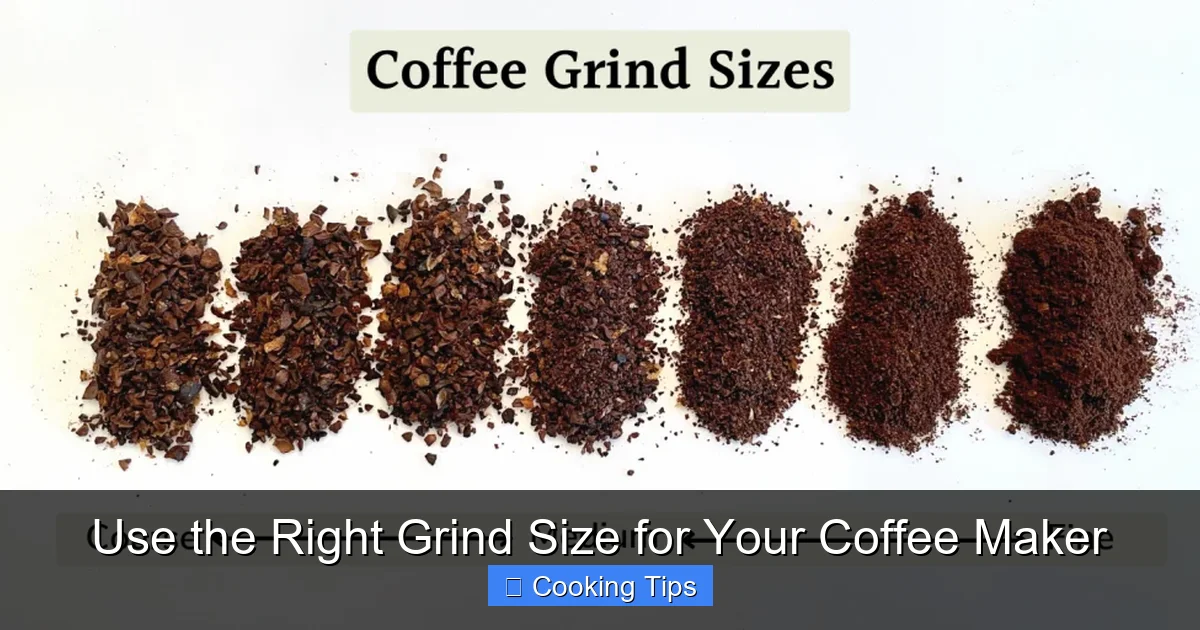
Visual guide about Use the Right Grind Size for Your Coffee Maker
Image source: craftcoffeespot.com
Ideal Grind Size: Coarse
A coarse grind, similar to sea salt, is perfect for a French press. The larger particles are essential because they prevent fine grounds from passing through the metal filter and ending up in your cup as sediment. The extended steeping time needs larger particles to avoid over-extraction.
- What to look for: The grounds should be chunky and distinct, like small pebbles or coarse grains of salt.
- Common mistakes: A fine grind will make plunging difficult, produce excessive sediment, and likely result in a very bitter cup. A grind that’s too coarse might lead to under-extraction and a weak brew, though this is less common than with fine grinds.
3. Pour-Over Coffee Makers (e.g., Chemex, V60)
Pour-over methods involve manually pouring hot water over coffee grounds in a filter. They offer a lot of control over the brewing process and are known for producing clean, nuanced cups of coffee.
Ideal Grind Size: Medium-Fine
For most pour-over devices, a grind that is slightly finer than drip, but still coarser than espresso, works best. Think of it as somewhere between granulated sugar and coarse sand. This grind size balances the manual pouring speed and the paper filter’s flow rate to achieve optimal extraction.
- What to look for: The grounds should feel a bit gritty, but with a noticeable lack of powdery dust. They’ll be smaller than drip grounds but larger than espresso grounds.
- Common mistakes: Too fine a grind can cause water to back up in the filter, leading to over-extraction and bitterness. Too coarse a grind will allow water to rush through too quickly, resulting in a weak and sour cup.
4. Espresso Machines
Espresso is made by forcing hot water at high pressure through finely-ground coffee. This process is very quick, typically lasting only 20-30 seconds.
Ideal Grind Size: Fine
Espresso requires a very fine grind, similar to powdered sugar or flour. This fine texture creates resistance against the high-pressure water, allowing for the necessary extraction time within the short brew cycle. The fine grind maximizes surface area for rapid flavor extraction.
- What to look for: The grounds should feel like soft powder and appear almost dust-like.
- Common mistakes: A grind that is too coarse will result in “channeling” (water finding fast paths through the puck) and a weak, watery shot. A grind that is too fine will create too much resistance, leading to a choked machine or a bitter, burnt-tasting shot with very little volume.
5. Moka Pot
The Moka pot, or stovetop espresso maker, uses steam pressure to force water through coffee grounds. It produces a strong, espresso-like coffee.
Ideal Grind Size: Fine to Medium-Fine
The ideal grind for a Moka pot is a bit more forgiving than for a true espresso machine, but it’s still on the finer side. Aim for a grind that is slightly coarser than espresso, but finer than drip. Think of it as being similar to table salt, or a very fine sand.
- What to look for: The grounds should be fine enough to create resistance, but not so fine that they clump excessively or prevent water from flowing.
- Common mistakes: Too fine a grind can clog the filter, causing too much pressure build-up and potentially a burnt taste. Too coarse a grind will result in weak, watery coffee.
6. Cold Brew Makers
Cold brew involves steeping coffee grounds in cold water for an extended period (12-24 hours). This process extracts different flavor compounds than hot brewing.
Ideal Grind Size: Coarse
Similar to the French press, a coarse grind is ideal for cold brew. The long steeping time means you want to avoid over-extraction. A coarse grind allows for a slow, even extraction without producing a cloudy or bitter concentrate.
- What to look for: Similar to French press grounds – chunky, like coarse sea salt.
- Common mistakes: A fine grind can lead to over-extraction, bitterness, and make your cold brew concentrate difficult to filter, leaving sediment behind.
How to Get the Right Grind Size
Now that you know the ideal grind sizes, how do you achieve them?
1. Invest in a Good Grinder
This is arguably the most important step. There are two main types of coffee grinders:
- Blade Grinders: These use a spinning blade to chop coffee beans. They are less expensive but produce an inconsistent grind with a wide range of particle sizes. This inconsistency is the enemy of balanced extraction.
- Burr Grinders: These use two revolving abrasive surfaces (burrs) to crush beans into uniform particles. Burr grinders, especially conical burr grinders, offer much more consistency and control over grind size. They are an investment, but well worth it for serious coffee drinkers.
2. Adjust Your Grinder
Once you have a burr grinder, you’ll need to learn how to adjust its settings. Most burr grinders have a dial or numerical setting that controls the distance between the burrs. Closer burrs create finer grinds; wider burrs create coarser grinds.
- Start with the recommended setting: Consult your grinder’s manual or online resources for recommended settings for different brew methods.
- Grind a small batch: Grind just enough beans to make a cup or two and visually inspect the grounds.
- Make small adjustments: If the grounds are too fine, widen the burrs slightly. If they are too coarse, bring them closer together.
3. Grind Freshly Before Brewing
Coffee begins to lose its flavor and aroma very quickly after being ground. For the best taste, grind your beans right before you plan to brew. This ensures you’re working with the freshest possible coffee particles.
Troubleshooting Common Grind Size Issues
Even with the best intentions, you might encounter problems. Here’s how to diagnose them:
Problem: Coffee is too bitter
Likely Cause: Over-extraction due to a grind that’s too fine for your brew method, or water that’s too hot, or brew time that’s too long.
Solution: Try a coarser grind. If you’re already at the recommended coarseness, check your water temperature and brew time. For drip, French press, and pour-over, a coarser grind is your first step.
Problem: Coffee is too weak or sour
Likely Cause: Under-extraction due to a grind that’s too coarse for your brew method, or water that’s not hot enough, or brew time that’s too short.
Solution: Try a finer grind. If you’re already at the recommended fineness, ensure your water is hot enough and that your brew time is sufficient. For drip, French press, and pour-over, a finer grind is your first step.
Problem: Espresso shot is too fast and watery
Likely Cause: Grind is too coarse.
Solution: Adjust your grinder to a finer setting. This is the most common cause of fast, weak espresso shots.
Problem: Espresso shot is too slow or choking the machine
Likely Cause: Grind is too fine.
Solution: Adjust your grinder to a coarser setting.
Conclusion
Mastering the right grind size for your coffee maker is a fundamental step toward brewing exceptional coffee at home. It’s not about rigid rules, but about understanding how grind size interacts with your specific brewing method to achieve optimal flavor extraction. By paying attention to the suggested grind sizes, investing in a quality burr grinder, and being willing to make small adjustments, you’ll unlock a world of richer, more balanced, and incredibly satisfying coffee experiences. So, go forth and grind wisely!
