

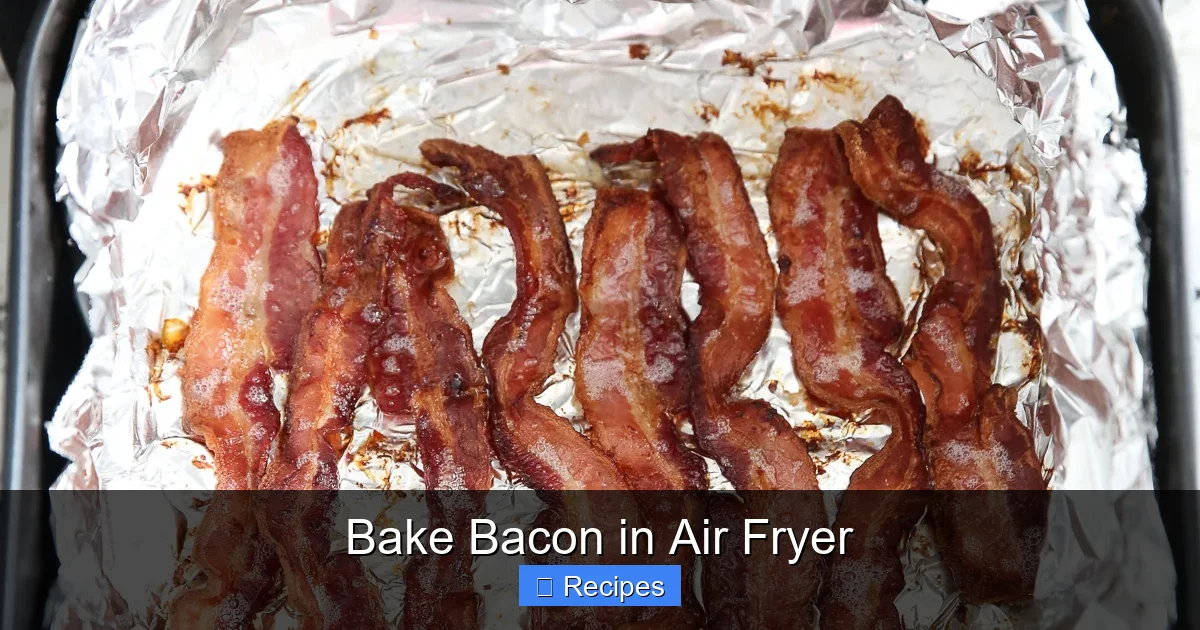
Baking bacon in an air fryer is a game-changer for home cooks who want crispy, delicious bacon without the grease and cleanup. This method delivers evenly cooked strips with less splatter, using up to 70% less oil than traditional pan frying. Whether you’re cooking full slices or turkey bacon, the air fryer makes it fast, foolproof, and perfect for busy mornings.
There’s something deeply satisfying about biting into a perfectly crisp strip of bacon—its rich, smoky flavor paired with that satisfying snap. But let’s be honest: traditional frying can be messy. Grease splatters, hot pans, and cleaning up afterward? Not ideal, especially on a Sunday morning when you just want coffee and toast.
That’s where the humble air fryer comes in. If you own one (or are thinking of getting one), you’re in luck. Baking bacon in an air fryer isn’t just possible—it’s arguably better than pan-frying. With rapid-circulating hot air, you get that same crispy exterior and tender interior without dousing your kitchen in grease. Plus, cleanup is a breeze because most of the fat drips into the drip tray instead of flying everywhere.
In this guide, we’ll walk you through everything you need to know about baking bacon in an air fryer: from prep tips and timing to troubleshooting common issues. Whether you’re feeding one person or a crowd, this method delivers consistent, restaurant-quality results every time.
Key Takeaways
- Minimal Cleanup: Air fryers trap grease inside, reducing kitchen mess compared to stovetop frying.
- Even Cooking: The circulating hot air ensures consistent crispiness from edge to edge.
- Healthier Option: Uses little to no oil while still achieving that classic bacon flavor and texture.
- Quick & Convenient: Most batches cook in under 15 minutes—perfect for breakfast rush hours.
- Versatile Settings: Works with regular, thick-cut, smoked, or even turkey bacon varieties.
- Batch-Friendly: Cook multiple servings at once without sacrificing quality or space on your plate.
- Safety First: Always use oven mitts and avoid overcrowding to prevent steam buildup and uneven results.
📑 Table of Contents
- Why Choose an Air Fryer for Bacon?
- What You’ll Need to Bake Bacon in an Air Fryer
- Step-by-Step Guide: How to Bake Bacon in an Air Fryer
- Tips for Perfect Crispiness Every Time
- Common Mistakes and How to Fix Them
- Can You Cook Turkey or Plant-Based Bacon Too?
- Cleaning Your Air Fryer After Making Bacon
- Frequently Asked Questions About Baking Bacon in an Air Fryer
Why Choose an Air Fryer for Bacon?
You might wonder why anyone would switch from tried-and-true stovetop methods. The answer lies in efficiency, safety, and convenience. When you cook bacon in an air fryer, you eliminate direct contact with hot oil, which means fewer splatters and less risk of burns. The enclosed environment also traps moisture and smoke, keeping your kitchen air fresh.
Another major perk? Even heat distribution. Unlike a skillet—where edges can burn before the center gets crispy—the air fryer surrounds each piece with consistent warmth. That translates to uniformly browned bacon with no cold spots or overcooked bits. And since you don’t need to flip every slice manually, it’s hands-off cooking at its finest.
Plus, if you’ve ever struggled to fit all your bacon on one pan without overlapping, the air fryer basket solves that problem. Just arrange them in a single layer (with a little space between each), and voilà—no more wrestling with a greasy mess.
What You’ll Need to Bake Bacon in an Air Fryer
Before we dive into the steps, let’s cover the essentials. Don’t worry—you probably already have most of these items lying around.
Essential Equipment
- Air Fryer: Any standard model works—Philips, Ninja, Cosori, or even basic digital units.
- Baking Sheet or Liner: While not always required, a silicone mat or parchment paper prevents sticking and makes cleanup extra easy.
- Tongs or Spatula: Useful for gently moving bacon during mid-cycle checks.
- Paper Towels: For blotting excess grease after cooking (optional but recommended).
Choosing Your Bacon
Not all bacon is created equal—and your choice affects both taste and cooking time. Here’s a quick breakdown:
– Regular Thin-Cut: Cooks fastest; ideal for quick breakfasts.
– Thick-Cut: Takes longer but yields chewier, meatier bites.
– Smoked vs. Unsmoked: Smoked adds depth; unsmoked gives milder flavor (both work great!).
– Turkey or Vegetarian Bacon: Lower in fat and calories; may require shorter cook times.
Pro tip: Avoid pre-cooked or fully rendered bacon—it won’t crisp up properly in the air fryer.
Step-by-Step Guide: How to Bake Bacon in an Air Fryer
Ready to make some crispy goodness? Follow these simple steps for foolproof results.
Prep Your Ingredients and Basket
Start by laying out your bacon strips on a clean surface. No need to thaw frozen bacon—just separate the slices carefully. Then, lightly coat the bottom of your air fryer basket with non-stick spray or a thin layer of olive oil if desired. This helps prevent sticking and promotes browning.
If you’re concerned about grease pooling, line the basket with parchment paper or a silicone mat. Just remember to trim any overhanging edges so they don’t block airflow.
Arrange the Bacon Properly
Spacing is key. Overcrowding leads to steaming instead of crisping. Aim for one layer only—don’t stack or overlap slices. If you’re making a large batch, consider doing two smaller rounds instead of one big one.
For added flavor, sprinkle a pinch of black pepper or brown sugar over the top before placing them in the basket. Just keep in mind that dry seasonings work best since wet marinades can cause sogginess.
Set the Temperature and Time
Most experts recommend starting at 350°F (175°C) for about 12–16 minutes. But here’s the trick: check at the 10-minute mark. That’s usually when thin cuts reach medium crispness, while thick cuts need another 3–5 minutes.
Remember, everyone’s air fryer runs slightly differently. If yours tends to run hotter or cooler, adjust accordingly. The goal is golden-brown with a slight curl—not burnt ends.
Gently Flip Halfway Through
About halfway through cooking (around minute 8–9), open the basket and flip each slice using tongs or a spatula. This ensures both sides crisp evenly. Some people skip flipping, but doing so reduces the chance of uneven texture.
After flipping, close the basket and finish cooking. Total time rarely exceeds 18 minutes, even for thick cuts.
Drain and Serve Immediately
Once done, transfer bacon to a plate lined with paper towels to absorb excess grease. Let it sit for a minute or two—this helps maintain crispiness longer on the plate. Serve hot with eggs, sandwiches, or crumbled over salads.
Leftovers? Store in an airtight container in the fridge for up to 4 days. Reheat in the air fryer for 2–3 minutes at 325°F to restore crunch.
Tips for Perfect Crispiness Every Time
Even seasoned air fryer users hit snags now and then. Here are pro-level hacks to ensure flawless bacon every single time.
Don’t Skip the Paper Towel Step
Blotting removes surface grease, which prevents sogginess. Think of it like wringing out a sponge—excess liquid ruins the final result.
Avoid Steam Buildup
Overfilling the basket traps steam, leading to limp bacon. Stick to one layer and cook in batches if needed. Also, never seal the basket too tightly—leave a small gap for airflow.
Use a Meat Thermometer (Optional)
While not necessary, a probe thermometer lets you monitor internal temps. For reference, bacon hits safe eating temperature at 145°F (63°C), but most prefer it closer to 160°F (71°C) for optimal crispness.
Experiment with Flavors
Add complexity with glazes: try maple syrup + cayenne, honey mustard, or even teriyaki before baking. Just apply sparingly so sugars don’t burn.
Common Mistakes and How to Fix Them
Even with the best intentions, things go sideways sometimes. Let’s tackle the most frequent pitfalls.
Mistake #1: Overcrowding the Basket
Result: Soggy, unevenly cooked bacon.
Fix: Cook in smaller batches. Two rounds take almost as long as one big load.
Mistake #2: Using Pre-Cooked Bacon
Result: Rubber-like texture, no crispness.
Fix: Always use raw, uncured, or traditionally cured bacon.
Mistake #3: Ignoring Mid-Cook Checks
Result: Burnt edges, underdone centers.
Fix: Open the drawer halfway through and assess doneness visually and by touch.
Mistake #4: Skipping the Drip Tray Cleaning
Result: Grease buildup affecting future meals.
Fix: Wipe out the tray after each use—especially important if you’re reheating leftovers later.
Can You Cook Turkey or Plant-Based Bacon Too?
Absolutely! In fact, alternative bacons often benefit from air frying because they lack the natural fat content of pork. Turkey bacon, for example, tends to dry out quickly on the stove, but the air fryer keeps it moist and tender.
Plant-based options (like those made from soy, pea protein, or mushrooms) also cook beautifully. Just watch closely—they can go from perfect to brittle in under 5 minutes. Start at 325°F for 8–10 minutes and check frequently.
One word of caution: avoid heavily seasoned or breaded varieties unless you’ve seen positive reviews for air fryer compatibility. The coating might not crisp as expected.
Cleaning Your Air Fryer After Making Bacon
Despite being “cleaner” than frying, bacon still leaves residue. Here’s how to handle post-meal cleanup like a champ.
1. **Unplug and cool completely** – Safety first!
2. **Remove the basket and drip tray** – These are often dishwasher-safe (check your manual).
3. **Soak greasy parts** – Fill with warm, soapy water for 15–20 minutes to loosen buildup.
4. **Scrub gently** – Use a soft brush or sponge; avoid abrasive pads that scratch nonstick coatings.
5. **Rinse and air dry** – Never force-dry with a cloth—moisture invites rust.
For stubborn spots, sprinkle baking soda directly onto damp surfaces and let sit before scrubbing.
Frequently Asked Questions About Baking Bacon in an Air Fryer
How long does it take to bake bacon in an air fryer?
Typically 12–16 minutes at 350°F. Thin cuts finish faster; thick cuts may need up to 18 minutes. Always check at the 10-minute mark and flip halfway through.
Do I need to preheat the air fryer before adding bacon?
Not strictly necessary, but preheating ensures immediate, even heat transfer—especially helpful if you’re cooking other foods simultaneously. For solo bacon runs, skipping preheat saves time.
Can I cook frozen bacon in an air fryer?
Yes! Frozen bacon cooks similarly to fresh, though it takes 2–3 minutes longer. Arrange in a single layer and avoid overcrowding. Note that frozen pieces may not crisp as well as thawed ones.
What temperature should I set my air fryer to for bacon?
The sweet spot is 350°F (175°C). Higher temps risk burning; lower ones lead to limp results. Adjust only if your appliance runs hot or cold.
Is air-fried bacon healthier than pan-fried?
Yes—significantly. Pan-frying uses gallons of oil and creates smoke, while air frying needs zero added fat. It also avoids potential carcinogens formed at high frying temps.
Can I reuse leftover bacon grease from the drip tray?
Definitely! Strain the collected fat through a coffee filter or cheesecloth, then store in a sealed jar for future use in roasting vegetables or sautéing potatoes.
Frequently Asked Questions
How long does it take to bake bacon in an air fryer?
Typically 12–16 minutes at 350°F. Thin cuts finish faster; thick cuts may need up to 18 minutes. Always check at the 10-minute mark and flip halfway through.
Do I need to preheat the air fryer before adding bacon?
Not strictly necessary, but preheating ensures immediate, even heat transfer—especially helpful if you’re cooking other foods simultaneously. For solo bacon runs, skipping preheat saves time.
Can I cook frozen bacon in an air fryer?
Yes! Frozen bacon cooks similarly to fresh, though it takes 2–3 minutes longer. Arrange in a single layer and avoid overcrowding. Note that frozen pieces may not crisp as well as thawed ones.
What temperature should I set my air fryer to for bacon?
The sweet spot is 350°F (175°C). Higher temps risk burning; lower ones lead to limp results. Adjust only if your appliance runs hot or cold.
Is air-fried bacon healthier than pan-fried?
Yes—significantly. Pan-frying uses gallons of oil and creates smoke, while air frying needs zero added fat. It also avoids potential carcinogens formed at high frying temps.
Can I reuse leftover bacon grease from the drip tray?
Definitely! Strain the collected fat through a coffee filter or cheesecloth, then store in a sealed jar for future use in roasting vegetables or sautéing potatoes.
