

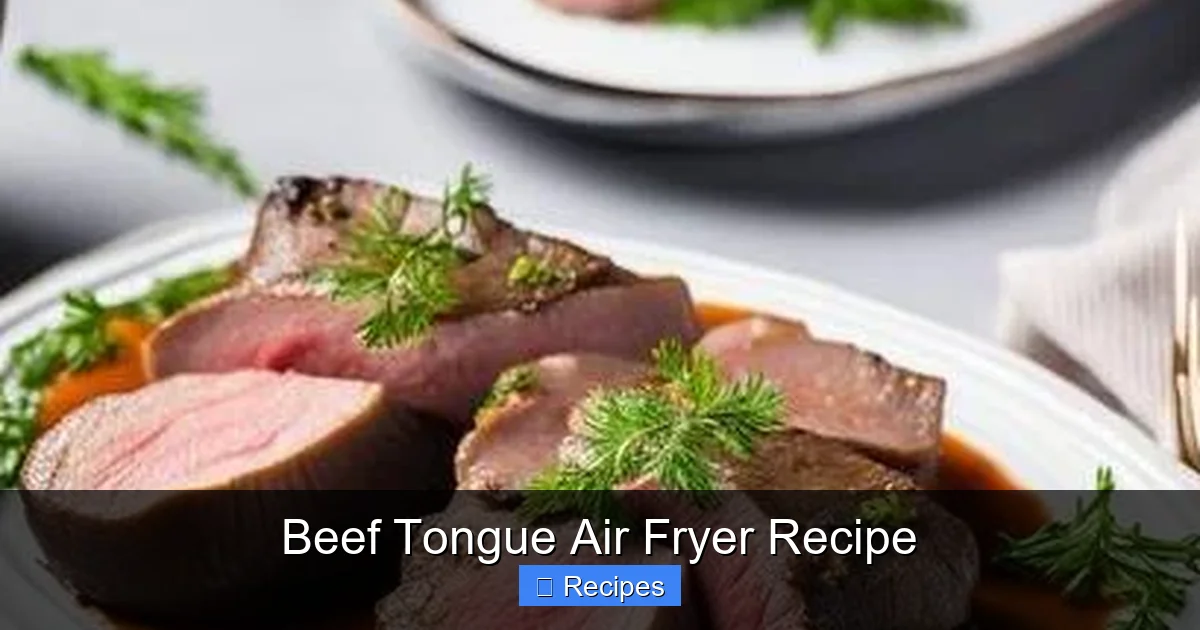
Cooking beef tongue in an air fryer might sound unusual, but it’s a quick, healthy way to enjoy this rich, gelatinous meat. With the right prep and timing, you can achieve a melt-in-your-mouth texture that rivals traditional slow cooking. This recipe walks you through every step, from soaking to seasoning, ensuring juicy, delicious results every time.
Have you ever heard someone say, “Beef tongue? Really?” I get it—when I first saw it at the butcher counter, I wasn’t exactly excited. But then I learned how rich, tender, and surprisingly versatile it could be. And when I discovered you can cook it in an air fryer? Game changer.
Unlike traditional methods that require hours of simmering or boiling, the beef tongue air fryer recipe delivers restaurant-quality results in under an hour. Yes, you read that right. With minimal oil and maximum flavor, this technique brings out the natural richness of the tongue while giving it a perfectly browned exterior. Whether you’re a curious home cook or a seasoned foodie looking to expand your repertoire, this recipe is worth trying.
What makes air frying so special here? It circulates hot air around the meat, creating a crispy, golden crust without adding excess fat. Plus, it’s hands-off once you’ve prepped everything. So let’s dive into how to turn this unusual cut into something extraordinary.
Key Takeaways
- Beef tongue is nutritious: Packed with protein, iron, and collagen, it’s a flavorful and wholesome choice.
- Air frying saves time: No long simmering required—this method cooks faster than stovetop or oven techniques.
- Proper prep is essential: Soaking and cleaning the tongue removes impurities and ensures even cooking.
- Seasoning enhances flavor: A mix of garlic, onion powder, and paprika creates a savory crust.
- Resting improves texture: Letting the cooked tongue rest helps retain moisture and tenderness.
- Slice thin for best results: Slicing thinly makes it easier to eat and pairs well with tacos, salads, or sandwiches.
- Clean-up is simple: Most air fryers come with dishwasher-safe trays—just wipe down after use.
📑 Table of Contents
- Why Choose Beef Tongue for Air Fryer Cooking?
- Preparing Beef Tongue for the Air Fryer
- Seasoning Your Beef Tongue
- Cooking Beef Tongue in the Air Fryer
- Serving Suggestions and Recipe Variations
- Storage and Leftovers
- Health Benefits of Eating Beef Tongue
- Tips for Perfect Air Fryer Results Every Time
- Conclusion: Why You Should Try This Recipe
Why Choose Beef Tongue for Air Fryer Cooking?
You might wonder why anyone would pick beef tongue over more common cuts like chicken breast or sirloin. The truth is, beef tongue offers a unique combination of texture and nutrition that’s hard to match. It’s naturally low in fat but high in protein and contains a generous amount of collagen—the same stuff that gives skin elasticity and joints strength.
When cooked properly, especially in an air fryer, beef tongue becomes incredibly tender. Think of it like brisket or pulled pork, where the connective tissue breaks down into gelatin, yielding a melt-in-your-mouth experience. The air fryer’s rapid heat circulation helps achieve that ideal balance between browning and softness, something traditional pots struggle with due to uneven exposure.
Another benefit? Portion control. One medium-sized tongue serves four to six people, making it ideal for family dinners or meal prep. You can slice it thinly and use it in tacos, salads, or even as a gourmet sandwich filling. Pair it with avocado, pickled onions, or chimichurri for a show-stopping dish.
The Science Behind Air Frying Meat
So how does an air fryer actually work on tough cuts like beef tongue? Unlike deep frying, which submerges food in oil, air frying uses a convection fan to blow hot air around the food. This process heats the surface quickly, triggering the Maillard reaction—the chemical process that creates flavorful browning and crispiness.
For dense meats like tongue, this means a beautiful crust forms on the outside while keeping the inside juicy and tender. Because there’s no submersion in water (like boiling), you avoid losing valuable flavor and nutrients. That’s why air frying is often called “healthy frying”—it reduces oil use by up to 80% while still delivering that satisfying crunch.
Preparing Beef Tongue for the Air Fryer
Before you pop anything into the basket, preparation matters. Raw beef tongue has a strong odor and a waxy texture that needs attention. Here’s how to get it ready:
First, rinse the tongue under cold running water to remove any surface debris. Then place it in a large bowl and cover it with cold water. Add a splash of white vinegar or lemon juice—this helps break down impurities and neutralize odors. Let it soak for at least 30 minutes, changing the water halfway through if needed.
Next, using a sharp knife, carefully peel off the outer layer of skin. This part isn’t edible and can be tough. Once peeled, pat the tongue dry thoroughly with paper towels. Dry surfaces help the air fryer create a better sear.
Now comes the optional but recommended step: blanching. Bring a pot of water to a boil, add a pinch of salt and a few bay leaves for flavor. Submerge the tongue and let it boil gently for 10–15 minutes. This softens the exterior slightly and removes any remaining blood or impurities. Drain and pat dry again before seasoning.
Choosing the Right Size Tongue
Not all tongues are created equal. Look for one that’s firm to the touch and has no unpleasant smell. Smaller tongues (around 1–1.5 pounds) work best for air frying since they cook evenly and fit comfortably in most baskets. Larger ones may need longer cooking times and could risk uneven heating.
If you’re buying frozen, thaw it completely in the fridge overnight. Never rush this step—partial thawing leads to steaming instead of browning.
Seasoning Your Beef Tongue
Flavor starts with seasoning. Since tongue is naturally mild, it benefits from bold spices and aromatics. A simple rub works wonders:
– 1 tablespoon olive oil (or avocado oil for higher smoke point)
– 1 teaspoon garlic powder
– 1 teaspoon onion powder
– ½ teaspoon smoked paprika
– ½ teaspoon black pepper
– 1 teaspoon kosher salt
Mix these together and rub the paste all over the tongue, covering every inch. For extra depth, add a crushed clove of garlic or a sprig of rosemary tucked underneath. Let it sit for 15–20 minutes at room temperature to absorb the flavors.
Avoid overloading with salt—tongue has enough sodium already. Instead, focus on enhancing its natural taste with herbs and spices.
Alternative Marinades for Extra Flavor
If you prefer marinades, try one of these:
– **Asian-inspired**: Soy sauce, grated ginger, sesame oil, and a touch of honey.
– **Mexican twist**: Adobo sauce, cumin, oregano, and lime zest.
– **Mediterranean style**: Oregano, thyme, lemon juice, and minced garlic.
Marinate for 30 minutes max—longer can make the tongue mushy. After marinating, rinse lightly and pat dry before air frying.
Cooking Beef Tongue in the Air Fryer
Now for the main event. Preheat your air fryer to 375°F (190°C). If your model has a preheat function, use it—consistent temperature is key.
Place the seasoned tongue in the air fryer basket. Don’t overcrowd; if yours is too small, consider cooking in batches or using a smaller appliance. Close the basket and set the timer for 25 minutes. Flip the tongue halfway through to ensure even browning.
After 25 minutes, check for doneness. The internal temperature should reach 160°F (71°C). Use a meat thermometer inserted into the thickest part for accuracy. If it’s not done, continue cooking in 5-minute increments until it hits the target.
Total cooking time typically ranges from 25 to 35 minutes depending on size and air fryer model. Some users report success with 30 minutes as a sweet spot.
Troubleshooting Common Issues
– **Not browning enough?** Increase temperature to 400°F or add a splash of Worcestershire sauce before cooking—it boosts caramelization.
– **Tongue sticking to basket?** Lightly grease the tray or line it with parchment paper.
– **Cooking unevenly?** Rotate the basket or flip the tongue more frequently.
Remember, every air fryer runs slightly differently. Keep an eye on it during the last 5 minutes to avoid drying out.
Serving Suggestions and Recipe Variations
Once cooked, remove the tongue and let it rest for 10–15 minutes. This allows juices to redistribute, keeping it moist. Then, using a sharp knife, slice it as thinly as possible—think deli-style.
Serve it warm on its own, or get creative:
– **Taco night**: Top with cabbage slaw, pico de gallo, and crema.
– **Sandwich upgrade**: Layer between sourdough with mustard and pickles.
– **Salad topping**: Dice and toss into arugula with cherry tomatoes and balsamic glaze.
– **Pizza topping**: Slice thinly, bake on pizza crust, and add mozzarella.
You can also shred it for tacos or wrap it in lettuce cups for a fresh option.
Recipe Variations to Try
– **Smoky BBQ version**: Brush with barbecue sauce during the last 5 minutes of cooking.
– **Spicy kick**: Add cayenne pepper or chili flakes to the seasoning rub.
– **Herb crusted**: Mix chopped parsley, dill, and chives into the oil-based rub.
These tweaks let you customize based on your taste preferences or what’s in your fridge.
Storage and Leftovers
Leftover cooked beef tongue keeps beautifully. Wrap slices tightly in plastic wrap or store in an airtight container. It stays fresh in the fridge for up to 4 days or in the freezer for up to 3 months.
To reheat, place slices back in the air fryer at 350°F for 3–5 minutes. Avoid microwaving—it dries out the meat.
You can also repurpose leftovers into new dishes: chop them into salads, fold into omelets, or blend into pâté for appetizers.
Meal Prep Tip
Cook multiple tongues at once and freeze portions. Thaw only what you need each week—perfect for busy schedules.
Health Benefits of Eating Beef Tongue
Beyond great taste, beef tongue offers real nutritional advantages. It’s an excellent source of complete protein, supporting muscle repair and growth. A single serving provides about 25 grams of protein with less saturated fat than ribeye.
It’s also rich in iron, which helps prevent anemia, and vitamin B12, crucial for nerve function and energy production. Plus, the collagen content supports joint health and may improve skin elasticity—yes, really!
Just keep portion sizes reasonable. While nutritious, it’s still a fatty cut, so balance it with vegetables and whole grains.
Tips for Perfect Air Fryer Results Every Time
To master any air fryer recipe—including this one—consistency is key. Here are my go-to tips:
– Always preheat. Skipping this leads to uneven cooking.
– Use a meat thermometer. Visual cues aren’t always reliable.
– Don’t stack items. Good airflow = better crispiness.
– Clean your basket regularly. Grease buildup affects performance over time.
– Experiment with rack positions. Some models allow stacking—check your manual.
And remember: practice makes perfect. The first time might not be flawless, but you’ll learn what works for your setup.
Pairing Ideas
Complement your beef tongue with sides that highlight its richness:
– Crispy air-fried potatoes
– Steamed broccoli or green beans
– Warm cornbread (try our air fryer cornbread recipe)
– Fresh fruit salad for contrast
These pairings balance the heartiness of the tongue without overwhelming it.
Conclusion: Why You Should Try This Recipe
Cooking beef tongue in an air fryer isn’t just a novelty—it’s a smart, efficient way to enjoy a nutrient-dense, flavorful meat that’s rarely seen on everyday menus. With just a few steps and your trusty appliance, you can transform an intimidating ingredient into a crowd-pleasing centerpiece.
Whether you’re hosting a dinner party or meal-prepping for the week, this recipe delivers on both front. It’s healthier than fried versions, tastier than boiled ones, and easier than traditional methods. Give it a try—you might just discover your new favorite cut.
And who knows? Next time you see beef tongue at the store, you’ll grab it with confidence. After all, cooking shouldn’t be intimidating. Sometimes, the most surprising ingredients make the best meals.
For more innovative air fryer ideas, check out our collection of air fryer dinner recipes. From chicken to seafood, we’ve got you covered.
Frequently Asked Questions
Can you cook beef tongue in an air fryer?
Yes, absolutely! While not the most common method, cooking beef tongue in an air fryer yields tender, flavorful results with less oil than traditional frying. It’s a fast and convenient way to prepare this unique cut.
How do you clean beef tongue before air frying?
Start by rinsing under cold water, then soak in vinegar-water solution for 30 minutes. Peel off the outer skin and blanch in boiling water for 10–15 minutes to remove impurities. Pat dry before seasoning.
What temperature should you air fry beef tongue?
Set your air fryer to 375°F (190°C). This temperature creates a nice sear while ensuring the inside cooks through without drying out. Adjust in 5-degree increments if needed.
How long does it take to cook beef tongue in an air fryer?
Typically 25 to 35 minutes total. Cook for 25 minutes, flip halfway, then check internal temperature—it should reach 160°F (71°C). Add 5 minutes at a time if undercooked.
Is beef tongue healthy to eat?
Yes, it’s rich in protein, iron, and collagen. It’s lower in fat than many red meats and supports muscle health and joint function. Moderation is key due to its richness.
Can leftover beef tongue be reheated in the air fryer?
Absolutely. Place sliced pieces back in the air fryer at 350°F for 3–5 minutes until warmed through. Avoid microwaving to prevent drying.
