

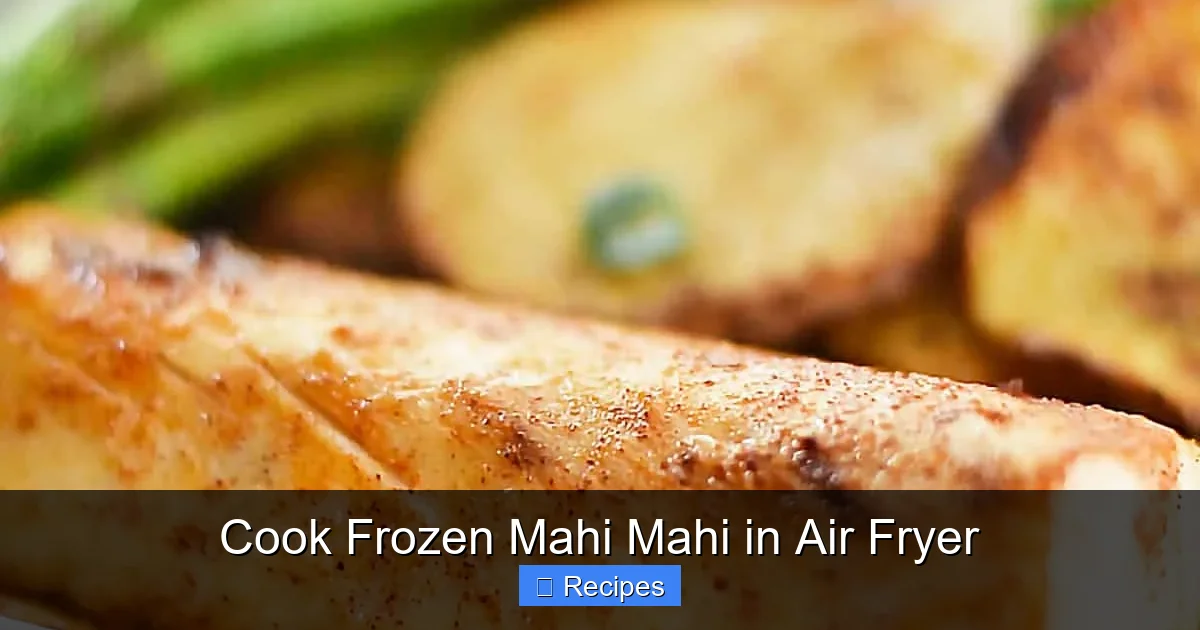
Cooking frozen mahi mahi in an air fryer is fast, healthy, and delivers restaurant-quality results without thawing. With minimal prep and just 12–15 minutes of cooking time, you’ll enjoy flaky, flavorful fish that’s crispy on the outside and moist within.
If you’ve ever stared into your freezer wondering what to make for dinner, frozen mahi mahi might just be your new best friend—especially if you own an air fryer. This mild, firm white fish is not only nutritious and versatile, but it also cooks up beautifully straight from frozen using your air fryer. No defrosting, no mess, no guesswork. Just season, slide into the basket, and let hot circulating air do the magic.
What makes mahi mahi so special? It’s lean, high in protein, low in mercury, and has a sweet, slightly buttery flavor that pairs well with almost any seasoning or sauce. And when cooked in an air fryer, it develops a delicate crispness on the outside while staying incredibly moist inside—something that’s hard to achieve with traditional baking or pan-frying. Whether you’re feeding a family, cooking for one, or prepping meals ahead of time, this method saves time, reduces cleanup, and delivers consistent results every single time.
Key Takeaways
- No thawing required: You can cook frozen mahi mahi directly in the air fryer—no need to plan ahead or wait for it to defrost.
- Cooking time is short: Most fillets take only 12–15 minutes at 400°F (200°C), making it ideal for quick weeknight meals.
- Healthier than frying: The air fryer uses little to no oil, reducing fat while keeping the fish tender and delicious.
- Easy seasoning options: A simple mix of salt, pepper, garlic powder, and lemon works wonders—or try Cajun, Italian herbs, or chili lime.
- Perfect texture every time: Air frying prevents sogginess and ensures a light, crispy exterior without overcooking the delicate fish.
- Great for meal prep: Cook multiple fillets at once and store leftovers for salads, tacos, or grain bowls.
- Safe and reliable: As long as internal temperature reaches 145°F (63°C), your mahi mahi is safe to eat and never dry.
📑 Table of Contents
Why Cook Frozen Mahi Mahi in an Air Fryer?
The air fryer has revolutionized home cooking by offering a healthier alternative to deep frying without sacrificing texture or taste. When it comes to frozen fish like mahi mahi, the benefits are even more pronounced. Unlike oven baking—which can leave fish rubbery or dry if not monitored closely—the air fryer’s rapid convection heating seals in moisture while creating a lightly golden crust.
Another major advantage? Convenience. Life gets busy, and nobody wants to remember to thaw fish 4–6 hours before dinner. With the air fryer, you skip that step entirely. Plus, because mahi mahi is a denser fish compared to cod or tilapia, it holds up well to high heat without falling apart. That means you get perfectly cooked fillets with minimal effort.
And let’s talk cleanup: just wipe down the basket when you’re done. No greasy stovetop, no splattered oil, no lingering fish smell in your kitchen. It’s no wonder so many home cooks are turning to their air fryers for seafood nights.
What You’ll Need
Before you start, gather these essentials:
Ingredients
- Frozen mahi mahi fillets (skin-on or skinless—both work)
- Olive oil spray or 1 teaspoon of oil (optional, for extra crispiness)
- Salt and freshly ground black pepper
- Your favorite seasonings (see below for ideas)
- Lemon wedges or zest (for serving)
Equipment
- Air fryer (any model—basket or tray style)
- Tongs or silicone spatula
- Instant-read thermometer (optional but recommended)
- Baking sheet or plate (for seasoning before cooking)
You don’t need fancy tools or hard-to-find ingredients. In fact, the beauty of this recipe is its simplicity. Even if you’re new to air frying, you’ll find this method foolproof.
Step-by-Step Instructions
Follow these easy steps for perfectly cooked frozen mahi mahi every time.
1. Preheat Your Air Fryer (Optional but Recommended)
While some recipes skip preheating, we recommend setting your air fryer to 400°F (200°C) and letting it run for 3–5 minutes. This ensures even cooking from the start, especially important when working with frozen food.
2. Season the Fish
Take your frozen mahi mahi fillets straight from the freezer—no need to thaw! Pat them lightly with a paper towel to remove any surface ice crystals (this helps seasoning stick). Then, place them on a plate and generously season both sides with salt, pepper, and your chosen spices. For a classic flavor, try garlic powder, onion powder, paprika, and a pinch of dried oregano. Want something bolder? Go for Cajun seasoning or a mix of chili powder, cumin, and lime zest.
If you like a bit of crunch, lightly spray both sides with olive oil or brush on a thin layer. This step is optional but enhances browning and texture.
3. Arrange in the Air Fryer Basket
Place the fillets in the air fryer basket in a single layer. Don’t overcrowd—leave a little space between each piece so hot air can circulate freely. If you’re cooking more than 2–3 fillets, consider doing it in batches for best results.
4. Cook at 400°F (200°C)
Air fry for 12–15 minutes, flipping the fillets halfway through (around the 6–7 minute mark). Thicker fillets may need closer to 15 minutes, while thinner ones could be done in 10–12. The fish is ready when it flakes easily with a fork and reaches an internal temperature of 145°F (63°C).
Pro tip: If your air fryer runs hot or cold, adjust time accordingly. Every model is slightly different!
5. Rest and Serve
Let the mahi mahi rest for 1–2 minutes after cooking. This allows the juices to redistribute, keeping the fish moist. Serve immediately with lemon wedges, fresh herbs, or your favorite side dish.
Seasoning Ideas and Flavor Variations
One of the best things about mahi mahi is how well it absorbs flavors. Here are a few tasty combinations to try:
- Mediterranean: Olive oil, garlic powder, dried oregano, lemon zest, and a pinch of red pepper flakes.
- Cajun Spice: Smoked paprika, garlic powder, onion powder, cayenne, thyme, and black pepper.
- Asian-Inspired: Soy sauce (lightly brushed), ginger powder, sesame oil spray, and green onions for garnish.
- Taco Night Ready: Chili powder, cumin, garlic powder, and a squeeze of lime before serving.
- Simple & Clean: Just salt, pepper, and a spritz of olive oil—let the natural flavor shine.
Feel free to get creative! You can also marinate the fish for 10–15 minutes before air frying (even while frozen) for deeper flavor penetration.
Serving Suggestions
Cooked mahi mahi is incredibly versatile. Try it in:
- Fish tacos with cabbage slaw and avocado crema
- Over a bed of quinoa or rice with steamed veggies
- In a citrusy salad with arugula, mango, and red onion
- Alongside roasted potatoes or air fryer fries for a complete meal
- With a side of air fryer broccoli for a healthy, balanced plate
For a quick sauce, whisk together mayo, lime juice, honey, and a dash of hot sauce—it pairs beautifully with the mild fish.
Tips for Best Results
- Don’t overcrowd the basket: This ensures even cooking and prevents steaming instead of crisping.
- Flip halfway through: This promotes uniform browning on both sides.
- Use a thermometer: Especially if you’re unsure about doneness, checking for 145°F guarantees safety and perfect texture.
- Avoid opening the basket too often: Each time you peek, heat escapes and cooking time increases.
- Pat dry if icy: Excess surface moisture can lead to sogginess, so a quick blot helps.
And remember: if you’re new to air frying fish, start with one fillet to test timing for your specific model. Once you nail it, you’ll be hooked!
How This Compares to Other Frozen Air Fryer Meals
Cooking frozen mahi mahi in an air fryer is just as easy—and often healthier—than other popular frozen options. Unlike frozen chicken wings, which can be high in sodium and preservatives, mahi mahi is naturally lean and clean. It also cooks faster than frozen burgers and doesn’t require flipping multiple times or worrying about uneven doneness.
Plus, compared to frozen potstickers or breaded items, plain mahi mahi lets you control the ingredients and keep things light. It’s a great way to enjoy seafood without the guilt or guesswork.
Conclusion
Cooking frozen mahi mahi in an air fryer is a game-changer for busy cooks who want healthy, delicious meals without the hassle. It’s fast, foolproof, and delivers consistently great results—whether you’re feeding one or four. With endless seasoning possibilities and minimal cleanup, this method deserves a permanent spot in your weekly rotation.
So next time you’re staring down a bag of frozen fish in your freezer, don’t stress. Grab your air fryer, add your favorite spices, and in under 20 minutes, you’ll have a restaurant-worthy dish that’s good for you and tastes even better. Give it a try—you might just find your new go-to weeknight dinner!
Frequently Asked Questions
Can I cook frozen mahi mahi in an air fryer without thawing?
Yes! One of the biggest advantages of using an air fryer is that you can cook mahi mahi straight from frozen. No thawing required—just season and cook for 12–15 minutes at 400°F.
How do I know when my mahi mahi is fully cooked?
The fish is done when it flakes easily with a fork and reaches an internal temperature of 145°F (63°C). Use an instant-read thermometer for accuracy, especially with thicker fillets.
Do I need to use oil when air frying frozen mahi mahi?
Oil is optional. A light spray or brush of olive oil helps create a crispier exterior, but the air fryer can still cook the fish perfectly without it—keeping it extra healthy.
Can I cook breaded frozen mahi mahi in the air fryer?
Absolutely! Follow the same temperature (400°F) but increase cooking time to 14–18 minutes, flipping halfway. Keep an eye on it to prevent burning.
Why is my mahi mahi dry after air frying?
This usually happens if it’s overcooked. Stick to the recommended time and use a thermometer. Also, avoid overcrowding the basket, as this can lead to uneven cooking and dryness.
What sides go well with air-fried mahi mahi?
Try it with air fryer broccoli, crispy fries, rice, or a fresh salad. It’s also amazing in tacos or grain bowls!
