

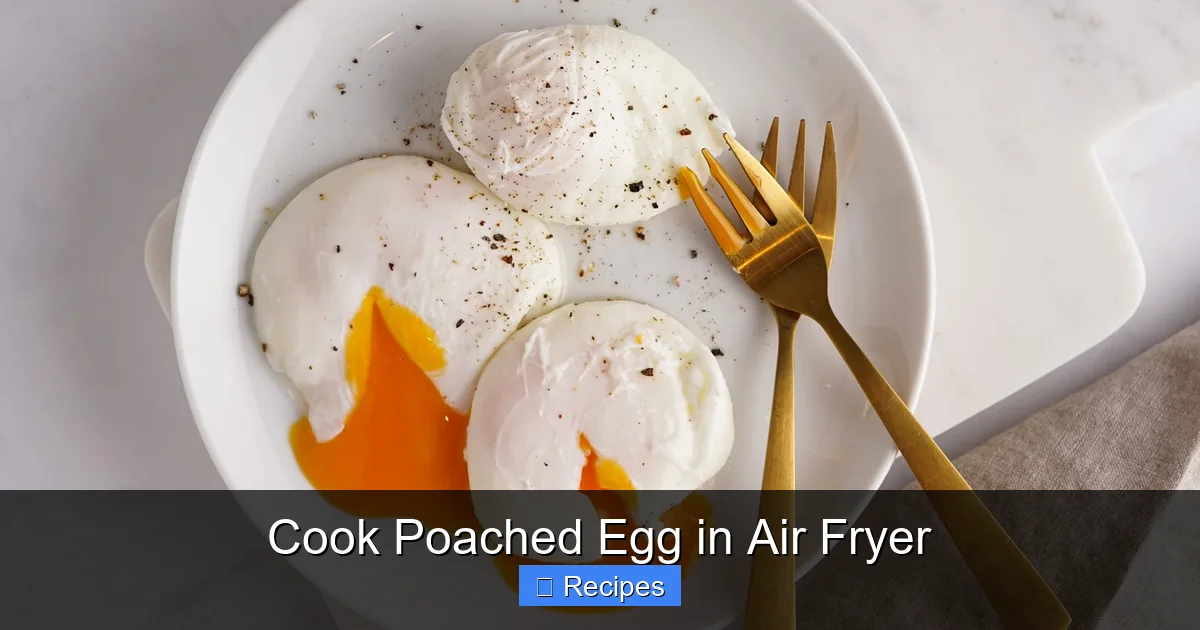
Cooking a poached egg in an air fryer is a game-changer for busy mornings. This method delivers silky, tender eggs without water or oil, using just a ramekin and your air fryer. It’s fast, foolproof, and perfect for beginners.
If you’ve ever tried poaching an egg the traditional way—standing over a pot of simmering water, nervously dropping in vinegar, and hoping the egg holds its shape—you know it can be tricky. Even experienced cooks sometimes end up with wispy, broken whites or overcooked yolks. But what if there was a simpler, cleaner, and more reliable way? Enter the air fryer.
Yes, your air fryer isn’t just for crispy fries and chicken wings. It can also make perfect poached eggs—no water, no mess, no stress. This method uses dry heat to gently cook the egg inside a small dish, resulting in a tender white and a creamy, runny yolk every time. Whether you’re a breakfast enthusiast or just looking to simplify your morning routine, cooking poached eggs in an air fryer is a skill worth mastering.
In this guide, we’ll walk you through everything you need to know: the right equipment, step-by-step instructions, timing tips, and creative ways to serve your air-fryer poached eggs. Plus, we’ll share troubleshooting advice and answer common questions so you can get it right on the first try.
Key Takeaways
- No water needed: Unlike traditional poaching, the air fryer uses dry heat to gently cook the egg, eliminating splashes and cleanup.
- Consistent results: The controlled environment ensures even cooking every time—no more runny yolks or overcooked whites.
- Quick and convenient: Ready in under 10 minutes, this method saves time compared to stovetop poaching.
- Uses minimal equipment: All you need is a small oven-safe dish, egg, and your air fryer.
- Healthier option: No added oil or butter required, making it a lighter alternative to fried or scrambled eggs.
- Great for meal prep: Cook multiple eggs at once and store them for quick breakfasts throughout the week.
- Versatile applications: Use air-fryer poached eggs in salads, on toast, or as part of a hearty breakfast bowl.
📑 Table of Contents
Why Use an Air Fryer for Poached Eggs?
Traditional poached eggs require precision. You need to bring water to a gentle simmer, add vinegar (which helps the egg whites coagulate), and carefully slide in the egg without breaking the yolk. It’s easy to overcook the egg or end up with a floating mess of wispy whites. And let’s not forget the cleanup—skimming the pot, washing extra utensils, and dealing with splatters.
The air fryer eliminates all that hassle. It uses circulating hot air to cook the egg evenly, mimicking the gentle heat of poaching without the liquid. This method is especially great for people who don’t have time for finicky techniques or who want a hands-off approach. Plus, it’s perfect for small kitchens or dorm rooms where stovetop space is limited.
Another advantage? Consistency. Air fryers maintain a steady temperature, so your eggs come out the same way every time. No more guessing if the water is at the right simmer or whether the egg will hold its shape. And because you’re not submerging the egg in water, there’s no risk of overcooking the yolk while trying to set the whites.
What You’ll Need
You don’t need fancy tools to cook poached eggs in an air fryer. Here’s a simple list of what to gather:
Essential Equipment
- Air fryer: Any standard model works—basket or oven-style.
- Small oven-safe ramekin or dish: Look for one that’s 3–4 inches in diameter and heat-resistant. Ceramic, glass, or silicone work best.
- Egg(s): Fresh eggs yield the best results, as the whites hold together better.
- Non-stick spray or butter (optional): Helps prevent sticking, especially if your dish isn’t non-stick.
Optional Add-ons
- Water: A tablespoon in the bottom of the air fryer basket can add moisture and prevent drying.
- Salt and pepper: For seasoning after cooking.
- Herbs or spices: Try chives, paprika, or everything bagel seasoning for extra flavor.
Pro tip: If you’re cooking multiple eggs, use separate ramekins to avoid overcrowding. Most air fryers can fit 2–3 small dishes at once, depending on size.
Step-by-Step Instructions
Now that you’re equipped, let’s get cooking. Follow these simple steps for perfect air-fryer poached eggs every time.
Step 1: Preheat the Air Fryer
Set your air fryer to 320°F (160°C) and let it preheat for 3–5 minutes. Preheating ensures even cooking from the start. If your model doesn’t have a preheat function, just run it empty for a few minutes before adding the egg.
Step 2: Prepare the Ramekin
Lightly grease the inside of your ramekin with non-stick spray or a small pat of butter. This step is crucial—without it, the egg may stick, especially if you’re using a plain ceramic dish. You can also line the dish with parchment paper for easy removal, though this isn’t always necessary.
Step 3: Crack the Egg
Crack a fresh egg directly into the prepared ramekin. Be careful not to break the yolk. If you’re nervous about shell fragments, crack the egg into a small bowl first, then transfer it to the dish.
Step 4: Place in the Air Fryer
Carefully place the ramekin in the air fryer basket. Make sure it sits level and doesn’t tip. If your air fryer has a rack, position the dish on the middle level for even heat distribution.
Step 5: Cook the Egg
Cook at 320°F (160°C) for 6–8 minutes, depending on your desired doneness:
- 6 minutes: Very runny yolk, soft white (great for dipping toast).
- 7 minutes: Creamy yolk, fully set white (most popular).
- 8 minutes: Firmer yolk, fully cooked white (ideal for salads or meal prep).
Avoid opening the air fryer too often, as this can cause temperature fluctuations and uneven cooking.
Step 6: Remove and Serve
Use tongs or oven mitts to carefully remove the hot ramekin. Let the egg rest for 30 seconds—this helps the white firm up slightly. Then, gently slide it onto toast, into a breakfast bowl, or over avocado slices.
Tips for Perfect Results
Even with a simple method, a few tweaks can elevate your air-fryer poached eggs from good to great.
Use Fresh Eggs
Fresh eggs have tighter whites, which hold their shape better during cooking. If your eggs are older, the whites may spread more in the dish.
Don’t Overfill the Ramekin
One egg per 3–4 inch dish is ideal. Overcrowding can lead to uneven cooking or spills.
Add a Splash of Water (Optional)
Placing a tablespoon of water in the bottom of the air fryer basket can create a bit of steam, helping the egg cook more gently. This is especially helpful if your air fryer runs hot.
Experiment with Timing
Every air fryer is different. Start with 6 minutes and check the egg. Add 30-second increments until you find your perfect doneness.
Season After Cooking
Salt can break down egg whites if added too early. Season with salt, pepper, or herbs after the egg is done for the best texture and flavor.
Serving Suggestions
Your air-fryer poached egg doesn’t have to be boring. Here are some delicious ways to enjoy it:
- On toast: Top sourdough or whole grain toast with a poached egg, avocado slices, and a sprinkle of red pepper flakes.
- In a breakfast bowl: Combine with sautéed spinach, roasted tomatoes, and crumbled feta.
- With smoked salmon: Serve on a bagel with cream cheese and capers for a luxurious brunch.
- Over grains: Place on quinoa, rice, or farro with steamed veggies and a drizzle of tahini.
- In a salad: Add to a mixed green salad with bacon, cherry tomatoes, and balsamic vinaigrette.
These eggs also store well. Cook a batch ahead of time, cool them, and refrigerate in an airtight container for up to 3 days. Reheat gently in warm water or the air fryer for 1–2 minutes.
Troubleshooting Common Issues
Even with the best method, things can go wrong. Here’s how to fix common problems:
Egg Sticks to the Dish
This usually happens if the ramekin isn’t properly greased. Always use non-stick spray or butter, and consider using a silicone dish for easier release.
Yolk Breaks During Cooking
Handle the egg gently when transferring it to the ramekin. If the yolk breaks, you can still eat it—it’ll just look more like a soft-cooked egg.
White Is Too Runny
Cook for an extra 1–2 minutes. The white should set fully by 7–8 minutes at 320°F.
Egg Tastes Dry
This can happen if the air fryer is too hot or the egg overcooks. Stick to 320°F and avoid going beyond 8 minutes.
Conclusion
Cooking poached eggs in an air fryer is a simple, smart, and satisfying way to enjoy one of breakfast’s greatest pleasures. It’s faster than stovetop poaching, requires minimal cleanup, and delivers consistent results every time. Whether you’re making a quick weekday meal or impressing guests at brunch, this method is a reliable go-to.
Once you master the basics, you can experiment with flavors, pairings, and even batch cooking for meal prep. And if you’re already using your air fryer for dishes like hash browns or bacon, adding poached eggs to the mix creates a complete, balanced breakfast with zero extra effort.
So next time you’re craving a perfectly cooked egg, skip the pot of water and reach for your air fryer instead. Your mornings—and your taste buds—will thank you.
Frequently Asked Questions
Can you really poach an egg in an air fryer?
Yes! While it’s not traditional poaching (which uses water), the air fryer cooks the egg gently using dry heat, resulting in a similar texture—tender white and creamy yolk—without the mess.
What temperature should I use?
Set your air fryer to 320°F (160°C). This low-and-slow temperature mimics the gentle heat of poaching and prevents overcooking.
How long does it take to cook a poached egg in an air fryer?
It takes 6–8 minutes, depending on how runny you like your yolk. Start checking at 6 minutes and add time in 30-second increments.
Do I need to add water to the air fryer?
No, but adding a tablespoon of water to the basket can create light steam and help cook the egg more evenly, especially in very dry models.
Can I cook multiple eggs at once?
Yes, as long as each egg has its own ramekin and there’s enough space in the air fryer. Avoid overcrowding to ensure even cooking.
Are air-fryer poached eggs healthy?
Absolutely. This method requires no added oil or butter, making it a low-fat, high-protein option perfect for healthy breakfasts or meal prep.
