

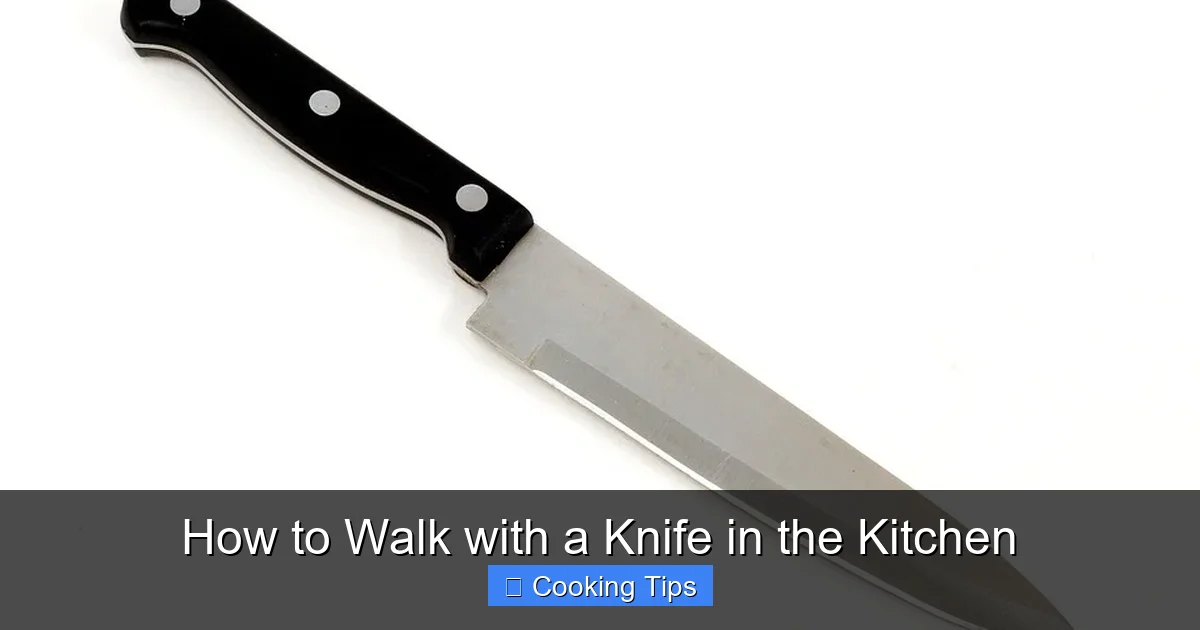
This guide provides essential instructions on how to safely walk with a knife in the kitchen. Learn the correct grip, carrying positions, and awareness techniques to prevent accidental cuts and injuries. Mastering these simple steps will significantly enhance your kitchen safety and confidence when handling sharp utensils.
How to Walk with a Knife in the Kitchen
Welcome to the essential guide on how to walk with a knife in the kitchen! Handling sharp knives is a fundamental part of cooking, but it also comes with inherent risks. One of the most common situations where accidents can happen is when you need to move a knife from one place to another. Whether you’re taking ingredients to the cutting board, heading to the sink to wash a knife, or moving to a different station, knowing the proper technique is crucial for your safety and the safety of those around you.
In this guide, we’ll break down the simple yet vital steps to ensure you can walk with a knife confidently and securely. We’ll cover everything from the best grip to how to navigate busy kitchen spaces. By the end of this article, you’ll have the knowledge to significantly reduce the risk of accidents and feel more at ease when handling your kitchen knives. Let’s get started on making your kitchen a safer place!
Key Takeaways
- Secure Grip is Paramount: Always hold the knife firmly by the handle, never the blade.
- Blade Point Down, Away: The safest way to carry a knife is with the blade pointing downwards and away from your body.
- Maintain Situational Awareness: Be aware of your surroundings, especially other people and obstacles.
- Move with Purpose: Walk deliberately, avoid rushing, and keep your eyes on your path.
- Know Your Destination: Have a clear idea of where you’re going and what you’ll do with the knife upon arrival.
- Communicate if Necessary: If navigating a crowded kitchen, announce your presence and intention.
- Regular Practice Builds Confidence: The more you practice safe carrying, the more natural it will become.
Understanding the Risks
Before we dive into the “how-to,” it’s important to understand why this skill is so important. Kitchens are often busy environments. People are moving, there are hot surfaces, and slippery floors can be present. A misplaced step or a moment of distraction while carrying a knife can lead to a serious injury. Even a small cut can be painful and require medical attention. The goal is to eliminate preventable accidents, and safe knife carrying is a cornerstone of that effort.
The Foundation: Proper Knife Grip
The first and most important step in safe knife carrying begins before you even take a step. It’s all about how you hold the knife.
The Pinch Grip
The most recommended grip for most kitchen knives, especially chef’s knives and utility knives, is the pinch grip. This involves:

Visual guide about How to Walk with a Knife in the Kitchen
Image source: henko-at.com
- Your thumb and index finger pinching the base of the blade, right where it meets the handle.
- The remaining fingers wrap around the handle for support and control.
Why this grip? It offers superior control over the blade. You have a direct connection to the sharp edge, allowing for precise movements and preventing the knife from slipping in your hand. Avoid gripping only the handle, as this offers less control, especially if your hands are wet or greasy.
Avoid Blade Contact
Never, ever hold the knife by its blade. This is a sure way to get cut. Your fingers should only ever be in contact with the handle. A firm, secure grip on the handle is essential.
The Safest Carrying Positions
Once you have a secure grip, you need to know how to position the knife for safe transport. There are two primary safe carrying positions.
Position 1: Blade Down, Away from Body
This is the universally recognized safest way to walk with a knife. Here’s how:
Visual guide about How to Walk with a Knife in the Kitchen
Image source: henko-at.com
- Grip the knife using the pinch grip, with your thumb and index finger at the base of the blade.
- Extend your arm slightly away from your body, but keep it close enough for good control.
- Crucially, point the blade DOWNWARDS, towards the floor.
- Ensure the sharp edge is facing away from your body and any other people.
Think of it like this: You are carrying a tool, not a weapon. The downward-pointing blade minimizes the risk of accidental contact if you stumble or bump into something. It also ensures that if you drop the knife (which you should try to avoid at all costs), the blade is less likely to cause injury upon impact.
Position 2: Tucked and Secured (for short distances or specific tasks)
This position is acceptable for very short distances, like moving from your cutting board to a nearby prep sink, or when placing a knife into a block. It requires a bit more vigilance.
- Maintain your secure pinch grip.
- Bring the knife in towards your body, but keep the blade angled downwards.
- Tuck the knife close to your side, with the blade pointing downwards and your hand holding the handle firmly.
- Keep your elbow bent and close to your body.
This is not ideal for long walks across a busy kitchen. It’s best for quick, controlled movements where you can maintain constant visual contact with the knife and your immediate surroundings. Always prioritize the “blade down, away from body” position when in doubt or when moving through more open spaces.
Navigating Your Kitchen Safely
Carrying the knife correctly is only half the battle. How you move through your kitchen is equally important.
Maintain Situational Awareness
This cannot be stressed enough. Always be aware of your surroundings. This includes:
Visual guide about How to Walk with a Knife in the Kitchen
Image source: henko-at.com
- Other people: Are there children or other cooks nearby?
- Obstacles: Are there spills on the floor? Are there chairs or bags in your path?
- Hot surfaces: Are you near the stovetop or oven?
Keep your eyes on where you are going. Don’t be looking at your phone, talking to someone else, or distracted by the television. Your focus should be on your safe passage.
Move with Purpose and Deliberation
Walk, don’t run. Rushing with a knife is a recipe for disaster. Move at a steady, controlled pace. This gives you time to react to unexpected situations.
- Take deliberate steps.
- Be mindful of your balance.
- Avoid sudden turns or stops.
Know Your Destination
Before you even pick up the knife, know where you are going and what you intend to do when you get there. Are you putting it in a knife block? Placing it in the sink for washing? Taking it to another counter for a specific task?
- Plan your route.
- Clear your path if necessary.
Communicate When Necessary
In a busy kitchen, it’s often a good idea to announce your presence, especially if you are moving with a knife.
- A simple, clear “Knife coming through” or “Watch out for the knife” can prevent accidents.
- Make eye contact with the person you are warning if possible.
This is particularly important in professional kitchens or when cooking with multiple people.
Troubleshooting Common Scenarios
What if something goes wrong? Here are a few common issues and how to handle them.
Dropping a Knife
If you feel yourself losing your grip or dropping the knife:
- Do NOT try to catch it. Your instinct might be to grab for it, but this is the most dangerous thing you can do.
- Let it fall. A knife falling to the floor is much less likely to cause a serious injury than a hand or foot trying to stop its descent.
- Step back immediately.
- Once it has landed, assess the situation before picking it up carefully by the handle.
Bumping into Someone
If you accidentally bump into someone while carrying a knife:
- Immediately stop moving.
- Apologize sincerely.
- Ensure the knife is still secure and pointing downwards.
- Re-assess your path and move away carefully.
Slippery Surfaces
If you notice a spill or a slippery area:
- Stop.
- Clean up the spill before proceeding, if possible.
- If you cannot clean it immediately, find an alternative, safer route.
- If you must walk over it, do so with extreme caution and at a much slower pace.
Putting It All Together: A Quick Checklist
Before you move with a knife, run through this mental checklist:
1. Is my grip secure? (Pinch grip, handle only)
2. Is the blade pointing DOWN?
3. Is the blade facing AWAY from me and others?
4. Am I aware of my surroundings?
5. Am I walking deliberately, not rushing?
6. Do I know exactly where I’m going?
If you can answer “yes” to all of these, you’re good to go!
Conclusion: Safety First, Always
Learning to walk with a knife in the kitchen is a fundamental skill that promotes safety and confidence. By adopting a secure pinch grip, always carrying the blade downwards and away from your body, and maintaining constant awareness of your surroundings, you can dramatically reduce the risk of accidents. Remember to move deliberately, communicate when necessary, and never, ever try to catch a falling knife.
These practices might seem simple, but their impact on your kitchen safety is profound. Make them a habit, and you’ll find yourself handling your knives with greater ease and security. Happy, and most importantly, safe cooking!
