

Many home cooks consider the chef’s knife the most dangerous kitchen tool due to its versatility and sharpness. This guide explores why it’s perceived as dangerous and provides crucial safety techniques to prevent accidents. By understanding proper handling, storage, and maintenance, you can confidently wield even the sharpest blades.
Key Takeaways
- The Chef’s Knife: A Double-Edged Sword: The chef’s knife, with its broad blade and sharp edge, is often deemed the most dangerous due to its frequent use and potential for severe cuts.
- Understanding Blade Design and Danger: The length, curve, and sharpness of a knife directly influence its inherent danger, requiring respect and careful handling.
- Mastering the Grip: Your First Line of Defense: A secure and proper grip, like the pinch grip, is paramount for control and preventing slips.
- The Safe Cutting Technique: Beyond the Blade: Learning to use the claw grip for your guiding hand ensures fingers are kept away from the sharp edge.
- Knife Storage: Preventing Accidental Encounters: Proper storage, such as in a knife block or on a magnetic strip, keeps blades protected and out of reach.
- Maintenance for Safety: A Sharp Knife is a Safer Knife: Regular honing and sharpening ensure blades cut efficiently, reducing the force needed and the likelihood of slips.
- Beyond the Chef’s Knife: Other Considerations: While the chef’s knife is primary, other sharp tools like serrated knives and boning knives also demand respect.
What Is The Most Dangerous Knife In The Kitchen?
Welcome to your ultimate guide to kitchen knife safety! If you’ve ever felt a shiver of apprehension when reaching for a sharp blade, you’re not alone. The kitchen, a place of culinary creativity and delicious meals, can also be a surprisingly hazardous environment if not approached with respect for its tools. When we talk about the “most dangerous” knife, it’s not about a specific model designed to inflict harm, but rather about the tool that, due to its design and how we use it, presents the greatest potential for injury. For most home cooks, that title undeniably belongs to the **chef’s knife**.
This comprehensive guide will demystify why the chef’s knife is often considered the most dangerous and, more importantly, equip you with the knowledge and techniques to handle it – and all your kitchen knives – with confidence and safety. We’ll cover everything from understanding knife anatomy to mastering safe cutting techniques and proper storage. By the end, you’ll be a more informed and safer cook, ready to tackle any recipe without fear.
Understanding the Chef’s Knife: Why It’s Considered Dangerous
The chef’s knife is the workhorse of the kitchen for a reason. Its broad, sturdy blade, typically ranging from 6 to 12 inches, makes it incredibly versatile. It’s designed for a multitude of tasks: chopping vegetables, slicing meats, mincing herbs, and so much more. This very versatility, combined with its inherent sharpness and weight, is what elevates its potential danger.
Blade Design and Sharpness
The characteristic forward curve of the chef’s knife allows for a rocking motion, making chopping efficient. However, this curve also means a larger portion of the blade is in contact with the cutting surface and, potentially, your fingers. Coupled with a razor-sharp edge, which is essential for clean cuts and reducing food waste, the chef’s knife requires a high level of control. A dull knife can be more dangerous than a sharp one because it requires more pressure, increasing the chance of the knife slipping off the food and onto your hand.
Frequency of Use
Because the chef’s knife is used for so many different tasks, it’s the knife you’ll reach for most often. The more you use a tool, the higher the probability of an accident, especially if your technique isn’t consistently safe. We can become complacent with familiar tools, and that’s when mistakes happen.
Mastering Knife Safety: Step-by-Step Techniques
Safety isn’t about avoiding knives; it’s about respecting them and using them correctly. Here’s how to make your time in the kitchen significantly safer:
Step 1: The Importance of the Grip
Your grip on the knife is your primary control. A loose or awkward grip is an invitation to disaster.
The Pinch Grip: For Superior Control
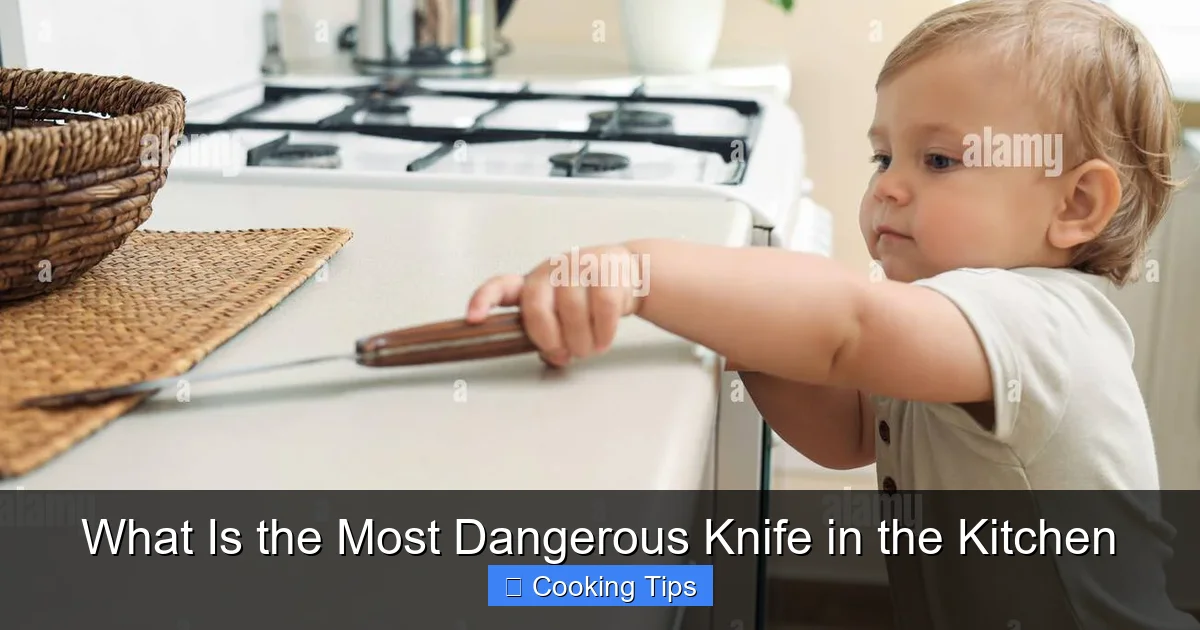
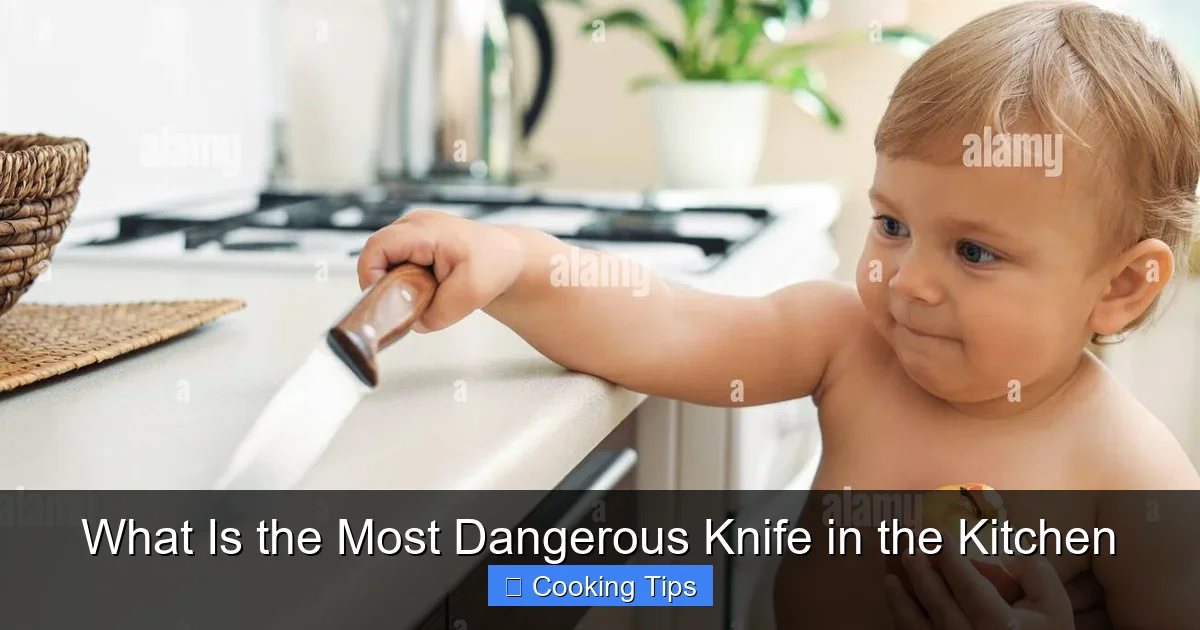
This is the most recommended grip for a chef’s knife. It involves pinching the base of the blade (just in front of the bolster, where the blade meets the handle) between your thumb and the side of your index finger. Your remaining three fingers wrap around the handle. This grip offers excellent control and dexterity.
Visual guide about What Is the Most Dangerous Knife in the Kitchen
Image source: c8.alamy.com
Visual guide about What Is the Most Dangerous Knife in the Kitchen
Image source: c8.alamy.com
Other Grips to Be Aware Of (and why they’re less ideal for a chef’s knife)
While you might see or use other grips for specific tasks with other knives (like a fist grip on a utility knife), for the chef’s knife, the pinch grip is superior for most cutting. A fist grip on a chef’s knife can lead to less precision and an increased risk of the knife slipping.
Step 2: The Safe Cutting Technique: The Claw Grip
Your non-knife hand plays a crucial role in safety. It’s not just holding the food; it’s also protecting your fingers.
The Claw Grip Explained
Curl your fingertips inward, tucking your knuckles forward. Your fingertips should be tucked under your knuckles. This creates a “claw” shape. Hold the food with this claw, using your knuckles as a guide for the blade. As you slice, move the claw backward, keeping your fingertips safely tucked away from the sharp edge.
How to Practice the Claw Grip
Start slowly. Practice on a soft, stable vegetable like a zucchini or a large mushroom. Focus on maintaining the claw shape and feeling your knuckles guide the knife. As you get more comfortable, gradually increase your speed. Remember, speed comes with practice and confidence, not by rushing the process.
Step 3: Using a Stable Cutting Board
A wobbly cutting board is a recipe for slips. Ensure your board is always stable before you begin cutting.
Preventing Board Slippage
If your cutting board is on a smooth countertop, place a damp paper towel or a thin, damp cloth underneath it. The moisture will create friction, holding the board firmly in place.
Choosing the Right Cutting Board
Wooden cutting boards are generally preferred for their durability and how they treat knife edges. However, ensure they are not warped. Plastic boards are also an option but can get deeply scored, creating places for bacteria to hide. Regardless of material, always ensure it’s clean and dry before use.
Step 4: Proper Knife Handling and Transport
How you move and handle knives is just as important as how you use them on the cutting board.
Carrying a Knife Safely
If you need to move a knife, carry it pointed down, with the blade facing behind you. Hold the handle firmly, keeping your fingers away from the blade. Walk slowly and be aware of your surroundings.
Passing a Knife
Never pass a knife by handing it directly to someone blade-first. The safest way is to place the knife on a stable surface and let the other person pick it up by the handle.
Knife Storage: Preventing Accidents When Not in Use
Proper storage is a crucial, often overlooked, aspect of kitchen knife safety. Leaving knives loose in a drawer is a significant hazard.
Why Drawer Storage is Dangerous
Knives jumbled in a drawer can bang against each other, dulling their edges and potentially causing the blades to chip or break. More importantly, reaching into a drawer without looking can lead to severe cuts as you encounter a sharp blade unexpectedly.
Visual guide about What Is the Most Dangerous Knife in the Kitchen
Image source: 2.bp.blogspot.com
Safe Storage Solutions
Knife Blocks
A classic and effective solution. Ensure the slots are appropriate for your knives and that they are stored with the blade facing up or sideways, not down where the edge can be damaged. Periodically clean your knife block to prevent bacteria build-up.
Magnetic Strips
A space-saving option that keeps knives visible and easily accessible. Ensure the magnet is strong enough to hold the knives securely. Place knives on and off the strip carefully, ensuring the blade doesn’t scrape against the strip.
In-Drawer Knife Organizers
These are designed to hold knives safely within a drawer, keeping them separate and preventing contact. They often have slots for individual knives.
Knife Guards (Sheaths)
If you must store knives in a drawer or transport them, use individual blade guards. These protect the edge and prevent accidental contact with the blade.
Maintenance for Safety: A Sharp Knife is a Safer Knife
It might sound counterintuitive, but a sharp knife is your best friend when it comes to safety.
The Dangers of Dull Knives
As mentioned, a dull knife requires more pressure to cut through food. This increased force makes it far more likely for the knife to slip off the food and potentially cut you. A sharp knife glides through food with minimal effort, offering superior control and precision.
Honing vs. Sharpening
Honing
Honing realigns the microscopic teeth of your knife’s edge. It doesn’t remove metal but rather straightens out the bent or jagged parts of the edge, making the knife feel sharper. You should hone your knife regularly, even before each use if you’re a frequent cook.
Sharpening
Sharpening actually removes a small amount of metal from the blade to create a new, sharp edge. This is done less frequently than honing, perhaps a few times a year depending on how much you use your knives and the quality of the steel.
How to Hone Your Knife (Briefly)
Hold the honing steel vertically or horizontally. Place the heel of the knife against the top of the steel at an angle (usually 15-20 degrees). Draw the blade down the steel in a smooth motion, maintaining the angle. Repeat on the other side of the steel. Do this 5-10 times per side.
Beyond the Chef’s Knife: Other Considerations
While the chef’s knife is the primary suspect for “most dangerous,” other knives in your kitchen demand respect and safe handling.
Serrated Knives
These knives, like bread knives, have a “saw-like” edge. They are excellent for cutting through tough exteriors and soft interiors without crushing. Their sawing motion can sometimes be less predictable than a straight edge, so maintain a firm grip and steady motion.
Boning and Filleting Knives
These are long, thin, and flexible knives designed for precise work, like removing meat from bones or skinning fish. Their flexibility can be an advantage for intricate tasks but requires a delicate touch and controlled movements to avoid bending the blade unnecessarily or slipping.
Peeling Knives
Small and sharp, these are used for paring fruits and vegetables. Their small size can sometimes lead to a death grip, which can be counterproductive. Maintain a relaxed but firm grip.
Troubleshooting Common Knife Safety Issues
* **Problem:** My knife keeps slipping off slippery foods (like tomatoes or onions).
* **Solution:** Ensure your knife is *very* sharp. Use the claw grip and guide the knife with your knuckles. For very round or slippery items, consider slicing them in half first to create a flat surface to work with.
* **Problem:** I’m afraid of cutting myself with my chef’s knife.
* **Solution:** Revisit the pinch grip and the claw grip. Practice slowly. Ensure your cutting board is stable. Consider taking a basic knife skills class if available.
* **Problem:** My knives are in a drawer, and I’m worried about cuts.
* **Solution:** Invest in a knife block, magnetic strip, or in-drawer organizer as soon as possible. In the meantime, use blade guards on all your knives.
Conclusion: Respect and Technique are Your Safest Tools
The most dangerous knife in the kitchen isn’t inherently evil; it’s simply a tool that demands respect, proper technique, and consistent safety practices. The chef’s knife, with its power and versatility, holds this title because of its frequent use and the potential for significant injury if mishandled. By mastering the pinch grip, employing the claw grip for your guiding hand, ensuring a stable cutting surface, and storing your knives safely, you drastically reduce the risk of accidents.
Remember, a sharp knife is a safe knife. Regular honing and sharpening will not only make your cooking more efficient but also safer. Embrace these techniques, and you’ll transform your relationship with your kitchen knives from one of apprehension to one of confident, capable control. Happy, and safe, cooking!
