

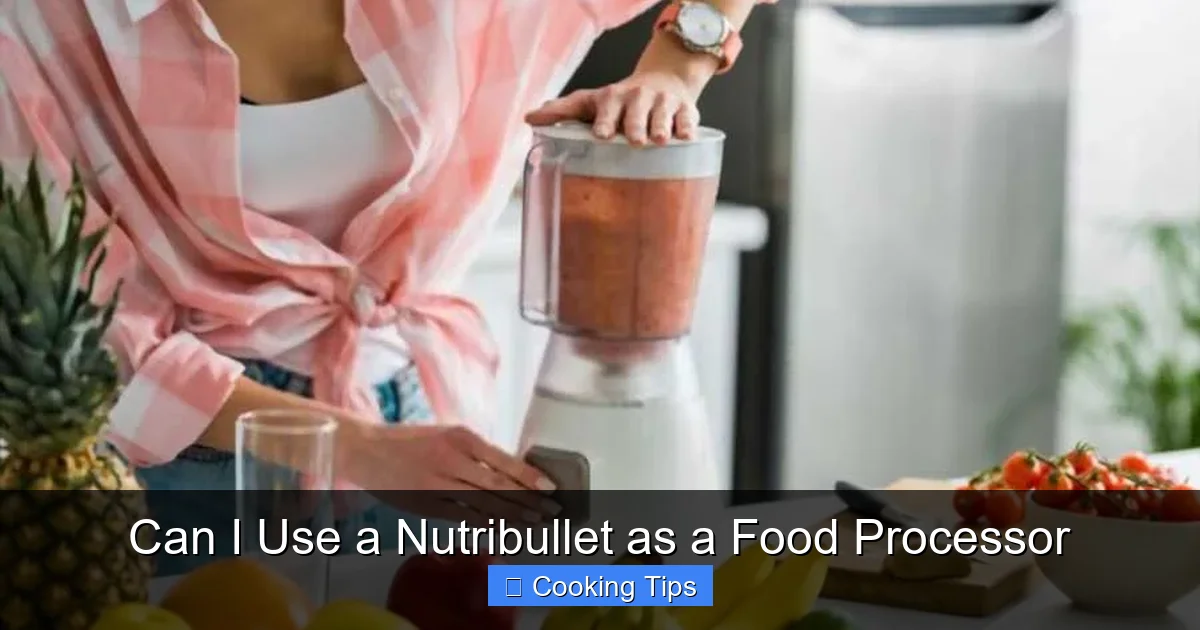
Wondering if your Nutribullet can replace a food processor? This guide reveals the answer. While not a direct replacement for all tasks, a Nutribullet can excel at chopping, pureeing, and emulsifying, making it a versatile kitchen tool for many food preparation needs. Discover its strengths and how to maximize its potential for processor-like results.
Can I Use a Nutribullet as a Food Processor?
In today’s fast-paced world, kitchen gadgets that can multitask are a true blessing. We love our blenders for whipping up smoothies, but what about those other kitchen tasks that usually call for a food processor? Specifically, can you use a Nutribullet as a food processor? It’s a common question, and the answer is a nuanced “yes, with limitations.”
Many of us have a trusty Nutribullet sitting on our countertops, and the idea of using it for more than just drinks is appealing. This guide will dive deep into the capabilities of your Nutribullet, comparing it to a traditional food processor and showing you how to get the best results for tasks that might otherwise require a dedicated processor.
Key Takeaways
- Nutribullets are primarily designed for blending, not traditional chopping. Their powerful motors and blade design are optimized for liquefying ingredients into smoothies and purees.
- They can effectively “process” softer ingredients. Think fruits, vegetables, herbs, and cooked grains, achieving a finely chopped or pureed consistency.
- Achieving a “food processor” texture requires specific techniques. Pulse blending, using smaller batches, and adding minimal liquid are key to controlling consistency.
- Nutribullets struggle with harder ingredients and large volumes. Attempting to process nuts, hard cheeses, or large quantities of dense vegetables may strain the motor or yield uneven results.
- Consider the task at hand. For simple chopping or pureeing, a Nutribullet can be a convenient alternative. For complex tasks like dough making or shredding, a dedicated food processor is essential.
- Always follow safe operating procedures. Ensure lids are secure and never overfill the cup to prevent leaks or motor damage.
Understanding Your Nutribullet’s Design
Before we explore its potential as a food processor, it’s crucial to understand what a Nutribullet is designed to do. Nutribullets are high-speed blenders, often referred to as “nutrient extractors.” Their defining feature is their powerful motor and unique blade design, which spins at high speeds to break down ingredients into a smooth, often drinkable consistency. The cyclonic action helps pull ingredients down towards the blades, ensuring thorough blending.
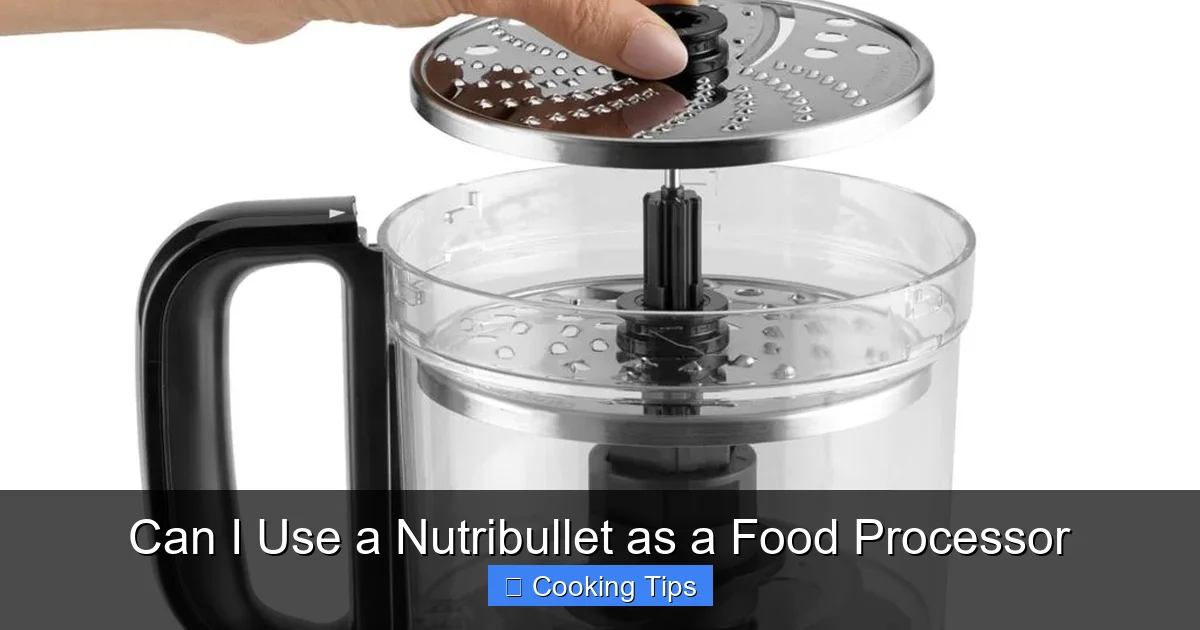
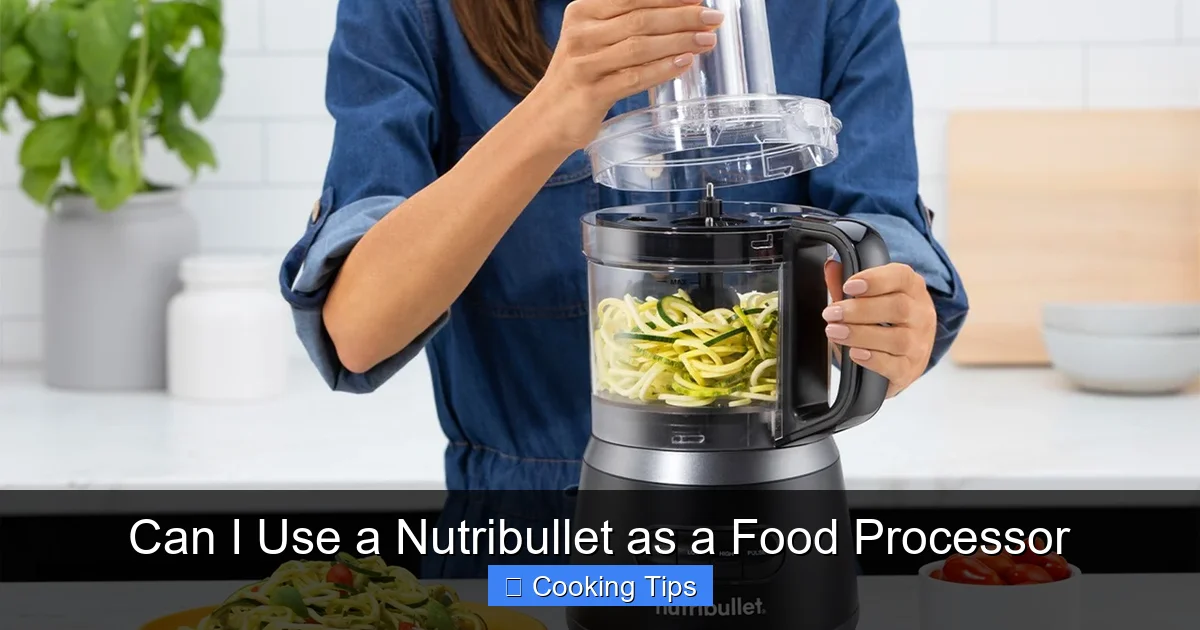
This design is excellent for liquefying, pureeing, and emulsifying. However, it’s fundamentally different from a food processor’s operation. Food processors typically use wider, S-shaped blades that chop and mix ingredients in a bowl, offering more control over texture and consistency, from coarse chopping to fine mincing.
When Your Nutribullet Can Act Like a Food Processor
While a Nutribullet won’t replace a food processor for every job, it can certainly handle many food preparation tasks surprisingly well, especially if you’re aiming for a finely chopped or pureed result.
Visual guide about Can I Use a Nutribullet as a Food Processor
Image source: smartkitchenimprovement.com
Chopping and Mincing
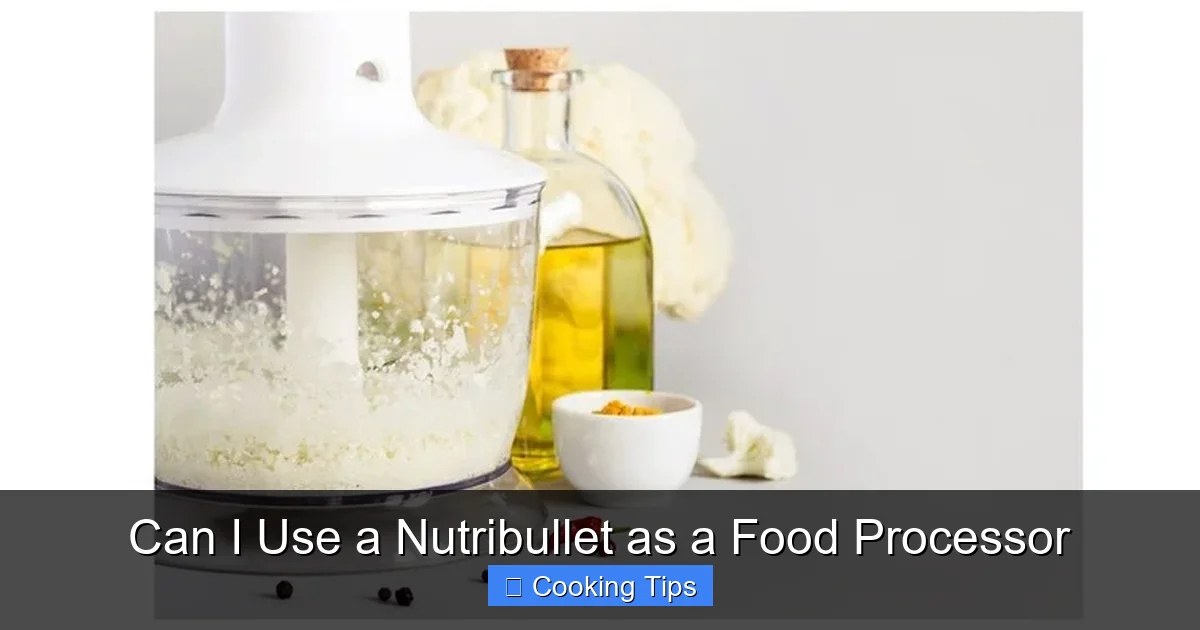
Your Nutribullet can be surprisingly effective at chopping and mincing softer ingredients. Think herbs, garlic, onions, bell peppers, and even cooked vegetables. The key here is technique and managing the batch size.
Step-by-Step Chopping Guide
- Prepare your ingredients: Wash and roughly chop larger items into manageable pieces that will fit easily into the Nutribullet cup. Remove tough stems from herbs.
- Add to the cup: Place your ingredients into the Nutribullet cup. Avoid overcrowding. For best results, fill the cup no more than halfway.
- Add a minimal amount of liquid (optional): For some ingredients, like onions or garlic, a tiny splash of water or oil can help them move around the blades and chop more evenly. For dry herbs, you might not need any liquid.
- Pulse blend: This is the most critical step. Instead of running the motor continuously, use short, pulsing bursts. Twist the cup on and off the base a few times. Listen to the sound; it will change as ingredients get chopped.
- Check consistency: After a few pulses, check the texture. If it’s not fine enough, pulse a few more times. Be careful not to over-process, or you’ll end up with a mushy paste.
- Scrape down if needed: If ingredients are sticking to the sides, remove the cup, scrape them down with a spatula, and continue pulsing.
Example: Need finely minced garlic for a marinade? Add a clove or two, a tiny drop of olive oil, and pulse. You’ll have perfectly minced garlic in seconds, without having to chop it by hand.
Pureeing and Making Pastes
This is where the Nutribullet truly shines and overlaps with food processor capabilities. Pureeing cooked vegetables for soups, making baby food, or creating fruit coulis are tasks your Nutribullet can handle with ease.
Step-by-Step Pureeing Guide
- Cook and cool ingredients: If you’re pureeing cooked items like vegetables or fruits, ensure they are cooled down to room temperature or slightly warm. Very hot liquids can create pressure and be dangerous.
- Add ingredients to the cup: Place your cooled, cooked ingredients into the Nutribullet cup.
- Add liquid: You’ll likely need some liquid to achieve a smooth puree. Start with a small amount of broth, water, milk, or cream and add more as needed to reach your desired consistency.
- Blend until smooth: For purees, you can typically run the Nutribullet continuously until the desired smoothness is achieved. This usually takes 30-60 seconds.
- Check and adjust: Open the lid carefully to check the consistency. If it’s too thick, add a little more liquid and blend again. If it’s too thin, you may need to add more of your main ingredient or accept a thinner consistency.
Example: Making a smooth tomato sauce base? Puree cooked tomatoes, a bit of onion, and garlic in your Nutribullet. You can then transfer this to a pot to simmer and finish.
Emulsifying
Creating emulsions, like salad dressings and mayonnaise, involves blending oil and liquid ingredients together until they form a stable mixture. The high-speed action of the Nutribullet is excellent for this.
Step-by-Step Emulsifying Guide
- Combine base ingredients: Add your non-oil ingredients (e.g., vinegar, mustard, egg yolk, lemon juice, spices) to the Nutribullet cup.
- Start blending: Secure the blade and lid, then start the Nutribullet.
- Slowly drizzle in oil: While the motor is running, *slowly* drizzle in your oil through the opening in the lid. This is crucial for proper emulsification. Think a thin, steady stream.
- Blend until thick: Continue blending until the mixture thickens and becomes emulsified.
Example: Homemade mayonnaise is achievable! Combine egg yolk, lemon juice, and mustard. With the Nutribullet running, slowly drizzle in oil until you have thick, creamy mayonnaise.
Limitations: What Your Nutribullet Can’t Do (or Does Poorly)
It’s essential to be realistic about your Nutribullet’s capabilities. There are several tasks where a dedicated food processor is a far superior tool.
Visual guide about Can I Use a Nutribullet as a Food Processor
Image source: reviewfoodprocessor.com
Hard Ingredients
While your Nutribullet can handle many fruits and vegetables, it will struggle with genuinely hard ingredients. Trying to chop raw carrots, dense nuts (without pre-soaking or very small quantities), or hard cheeses can:
- Strain the motor, potentially leading to overheating or premature wear.
- Result in uneven chopping or a gritty texture.
- Damage the blades if the ingredients are too tough.
Large Volumes
Nutribullet cups are designed for single servings or small batches. If you need to process a large quantity of ingredients, like chopping a whole batch of vegetables for a stew or making a large salad dressing, you’ll find yourself working in multiple small batches. This is time-consuming and less efficient than using a food processor with a larger bowl.
Dough and Pastry
Food processors have specific blades designed to handle the viscosity and structure of doughs. Nutribullets lack this capability. Attempting to make dough in a Nutribullet will likely result in an overworked, gummy mess or will simply not work at all.
Shredding and Slicing
Dedicated food processors often come with attachments for shredding (like cheese or carrots) and slicing (like cucumbers or potatoes). Your Nutribullet cannot replicate these functions. Its blades are designed for pulverizing, not for creating uniform slices or shreds.
Tips for Success When Using Your Nutribullet Like a Food Processor
To get the best results when using your Nutribullet for food processing tasks, keep these tips in mind:
Visual guide about Can I Use a Nutribullet as a Food Processor
Image source: storables.com
- Work in small batches: This is the golden rule. Overfilling the cup will lead to uneven processing and put a strain on the motor.
- Use the pulse function: For chopping, pulsing is your best friend. It gives you more control over the final texture.
- Control liquid addition: Add liquids gradually, especially when pureeing. You can always add more, but you can’t easily remove it if you add too much.
- Cut ingredients into uniform pieces: This helps them process more evenly.
- Scrape down the sides: Don’t be afraid to stop, remove the cup, and scrape down any ingredients that aren’t reaching the blades.
- Listen to your machine: If the motor sounds like it’s struggling or overheating, stop immediately.
- Clean your Nutribullet promptly: Food residue can be tough to clean once dried, especially around the blades.
Troubleshooting Common Issues
Even with careful use, you might encounter a few hiccups:
- Uneven chopping: This usually means the cup was too full, or the ingredients weren’t cut uniformly. Try smaller batches and pulse more.
- Ingredients stuck to the sides: Scrape them down. Sometimes, a tiny bit of liquid can help them move.
- Motor smells hot: You’re likely overworking the motor or processing too hard an ingredient. Stop immediately and let it cool down. Avoid dense, hard items.
- Leaking: Ensure the blade assembly is screwed on tightly to the cup and that you haven’t overfilled it past the “max fill” line.
Conclusion: Is a Nutribullet a Food Processor Replacement?
So, can you use a Nutribullet as a food processor? The answer is yes, for a specific range of tasks. If your primary needs involve making smoothies, sauces, dips, purees, or finely chopping herbs and aromatics, your Nutribullet can be a surprisingly capable tool.
However, it is not a direct replacement for a dedicated food processor. If you frequently need to shred cheese, slice vegetables, knead dough, or process large quantities of ingredients, investing in a food processor is still the best option. For many home cooks, though, the Nutribullet’s versatility in handling softer ingredients for chopping and pureeing makes it an invaluable addition to the kitchen, bridging the gap between simple blending and basic food processing.
