

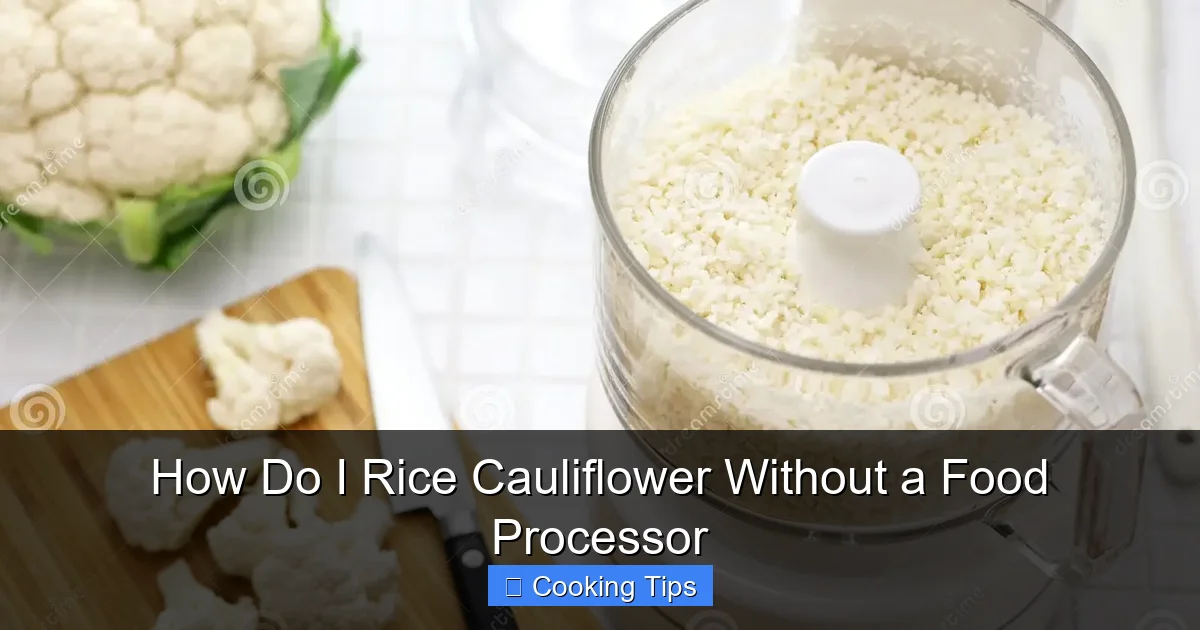
Discover how to achieve perfect cauliflower rice using common kitchen tools, bypassing the need for a food processor. This guide breaks down the process into easy-to-follow steps, offering practical tips for beginners and experienced cooks alike. Get ready to enjoy this versatile ingredient in all its fluffy, rice-like glory!
Key Takeaways
- Manual Grating: Use the large holes of a box grater for a quick and easy way to rice cauliflower.
- Knife Skills: With careful chopping, you can achieve a consistent cauliflower rice texture using just a knife.
- Blender (with caution): A blender can be a substitute, but requires pulsing to avoid over-processing into mush.
- Food Mill Method: A food mill can also transform cauliflower into a rice-like consistency if you have one.
- Preparation is Key: Ensure your cauliflower is clean, dry, and separated into florets before processing.
- Texture Control: Different methods yield slightly different textures; choose the one that best suits your recipe.
How Do I Rice Cauliflower Without a Food Processor
Welcome to the wonderful world of cauliflower rice! If you’re looking to incorporate more vegetables into your diet, reduce carbs, or simply explore new culinary horizons in 2026, cauliflower rice is an absolute game-changer. It’s a fantastic substitute for traditional rice in stir-fries, bowls, pilafs, and even as a base for pizza crust. But what if you don’t have a fancy food processor lying around? Don’t worry! Ricing cauliflower without one is entirely achievable, and this comprehensive guide will show you exactly how. You’ll learn several simple, effective methods using tools you likely already have in your kitchen.
Why Rice Cauliflower?
Before we dive into the “how,” let’s briefly touch on the “why.” Cauliflower rice is lower in calories and carbohydrates than white or brown rice. It’s packed with vitamins and fiber, making it a healthier choice. Plus, its mild flavor makes it incredibly versatile. It absorbs the flavors of your other ingredients beautifully, meaning you can transform it into a spicy Mexican-inspired side dish or a delicate herbed pilaf with ease. The texture, when prepared correctly, is light and fluffy, mimicking traditional rice surprisingly well.
Preparing Your Cauliflower
No matter which method you choose, proper preparation is crucial for success.
Step 1: Wash and Dry
Start by thoroughly washing your cauliflower head under cool running water. Remove any visible dirt or debris.
Step 2: Core and Separate
Once clean, place the cauliflower head on a cutting board. Using a sharp chef’s knife, cut the cauliflower into quarters. Then, carefully cut out the tough core from each quarter. This makes it easier to separate the florets.
Step 3: Cut into Florets
Break or cut the cauliflower into smaller, manageable florets. Aim for pieces that are roughly the same size. Smaller florets are easier to work with, especially for grating and chopping. Make sure the florets are completely dry before you proceed to the ricing stage. Excess moisture can make the cauliflower mushy and harder to process.
Now, let’s get to the exciting part – the actual ricing!
Method 1: The Box Grater – Your New Best Friend
Visual guide about How Do I Rice Cauliflower Without a Food Processor
Image source: tastingtable.com
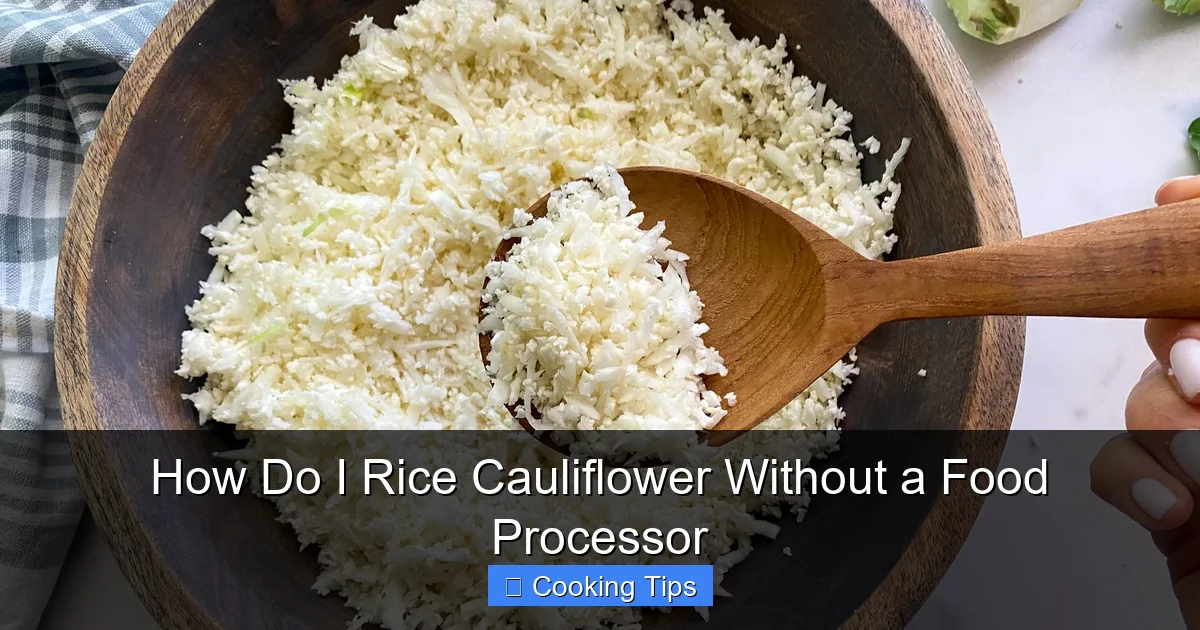
This is arguably the easiest and most common method for ricing cauliflower without a food processor. It requires minimal equipment and yields great results quickly.
Step 1: Select Your Grater
Grab your trusty box grater. You’ll want to use the largest holes, typically found on the side that looks like it has diamond-shaped openings. Avoid the shredding side, which can create too-fine pieces.
Step 2: Grate the Florets
Hold a floret firmly in one hand. With the other hand, press the floret against the large holes of the grater and move it in a downward motion. You’ll see the cauliflower begin to break down into small, rice-like pieces.
Step 3: Continue Until Done
Repeat this process with all of your prepared florets. You’ll want to grate until you’ve used up most of the floret, leaving just the tough stem. Be mindful of your fingers as you get closer to the end of each floret!
Step 4: Inspect and Refine (Optional)
Once you’ve grated all the cauliflower, you’ll have a bowl full of lovely cauliflower rice. Give it a quick look to ensure there aren’t any larger chunks you missed. If there are, you can either grate them again or simply chop them into smaller pieces with your knife.
Tip: For a more uniform texture, try to use florets that are similar in size to begin with.
Method 2: The Knife – Precision Chopping
Visual guide about How Do I Rice Cauliflower Without a Food Processor
Image source: fromthiskitchentable.com
If you enjoy a bit of knife work or don’t have a box grater, your chef’s knife can do the job admirably. This method requires a bit more patience but offers excellent control over the texture.
Step 1: Cut into Small Pieces
Take your cauliflower florets and chop them into very small, roughly 1/4-inch pieces. Imagine you’re trying to replicate the size of a grain of rice.
Step 2: Mince Further
Once you have a pile of finely chopped cauliflower, gather it together on your cutting board. Use your chef’s knife to continue mincing the pieces. You can do this by rocking the knife back and forth over the cauliflower.
Step 3: Aim for Uniformity
The goal is to create pieces that are as uniform in size as possible. This ensures even cooking. It might take a few minutes of persistent chopping, but the results will be worth it.
Example: For a stir-fry where you want the cauliflower rice to blend in, aim for a finer chop. For a side dish where you want a bit more texture, a slightly coarser chop is fine.
Method 3: The Blender – Pulse Power (Use With Caution!)
Visual guide about How Do I Rice Cauliflower Without a Food Processor
Image source: ihatemealprep.com
A blender can be used in a pinch, but it’s crucial to be careful. Over-processing cauliflower in a blender can quickly turn it into a mushy paste, which is not what we want for cauliflower rice.
Step 1: Work in Batches
Do NOT fill your blender to the brim. You’ll need to work in small batches. Place a single layer of florets in the blender jar.
Step 2: Pulse, Pulse, Pulse!
Secure the lid. Select the “pulse” function on your blender. Pulse for very short intervals – think 1-2 seconds at a time.
Step 3: Check Frequently
After each pulse, remove the lid and check the texture. You’re looking for small, rice-like pieces. If you see it starting to break down too much, stop immediately.
Step 4: Scrape and Repeat
Scrape down the sides of the blender jar as needed and repeat the pulsing process with the remaining florets.
Caution: This method requires your full attention. It’s easy to go from cauliflower rice to cauliflower purée in seconds.
Method 4: The Food Mill – An Underrated Tool
If you happen to have a food mill (often used for making applesauce or baby food), it can also be an effective tool for ricing cauliflower.
Step 1: Use Large Plate Setting
Attach the plate with the largest holes to your food mill.
Step 2: Process Florets
Place your cauliflower florets into the food mill. Turn the crank. The cauliflower will be pushed through the holes, creating a rice-like texture.
Step 3: Repeat as Needed
Continue feeding florets into the mill until you have your desired amount of cauliflower rice.
Tip: This method is great for producing a very consistent texture.
Troubleshooting Common Issues
* My cauliflower rice is too wet/mushy. This usually happens if the cauliflower wasn’t dried thoroughly after washing, or if it was over-processed (especially in a blender). Ensure your cauliflower is dry before starting, and be careful not to over-process. If it’s a little damp, spread it out on a clean kitchen towel or paper towels for a bit to air dry.
* My cauliflower rice has large chunks. This is easily fixed! You can either re-grate or re-chop the larger pieces. For the grating method, simply run them over the grater again. For the knife method, spend a few extra minutes mincing.
* It’s taking too long! If you’re finding any method to be too time-consuming, consider whether you’ve prepared your cauliflower into sufficiently small florets to begin with. Smaller florets are faster to grate or chop.
Cooking Your Cauliflower Rice
Once you’ve mastered the ricing process, cooking is a breeze! You can sauté it in a pan with a little oil and your favorite seasonings for about 5-7 minutes, or until tender-crisp. It can also be steamed or added directly to soups and stews.
Conclusion
Ricing cauliflower without a food processor is not only possible but also incredibly simple with the right techniques. Whether you choose the speed of a box grater, the precision of a knife, the controlled power of a blender, or the efficiency of a food mill, you can achieve delicious, healthy cauliflower rice with ease. So go ahead, embrace this versatile ingredient, and elevate your meals to new heights in 2026 and beyond! Happy cooking!
