

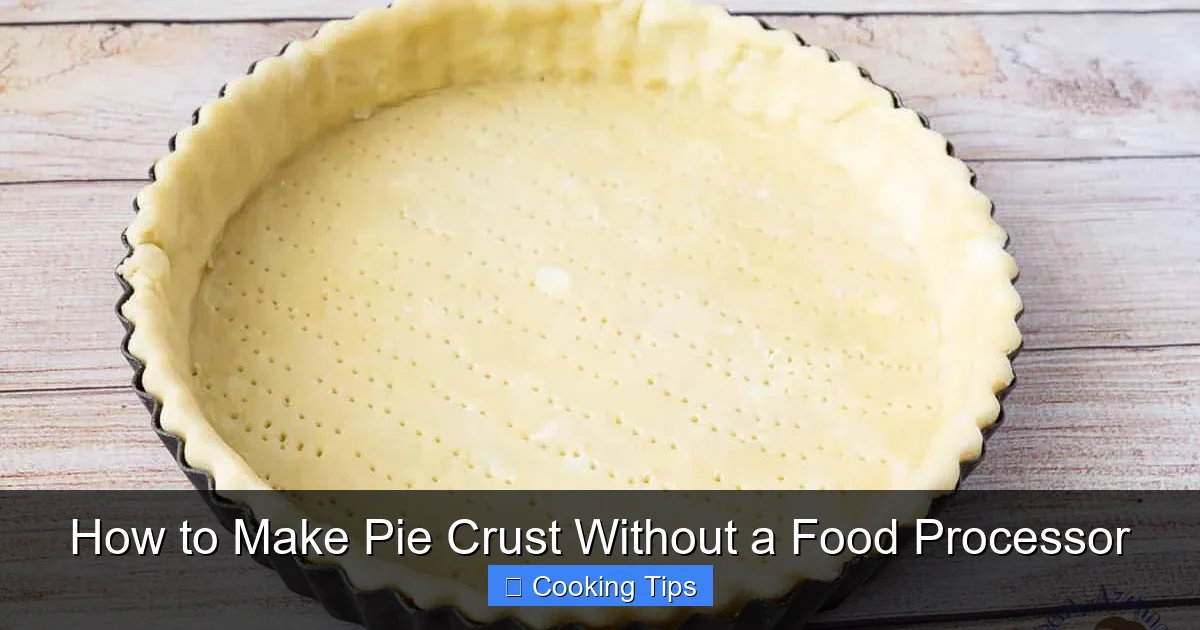
Making a delicious pie crust from scratch is achievable even without a food processor. This guide provides clear, step-by-step instructions for creating a flaky and tender crust using simple kitchen tools. Learn the secrets to achieving perfect pie crust texture with minimal fuss, ensuring your homemade pies are always a hit. Master the art of pie crust and impress your friends and family with your baking skills.
Making a truly amazing pie from scratch often starts with the perfect pie crust. And guess what? You don’t need fancy kitchen gadgets like a food processor to achieve that wonderfully flaky, buttery texture we all crave. In fact, many seasoned bakers swear by the traditional methods, finding them more intuitive and controllable. This guide will walk you through every step of making a delicious pie crust without a food processor. We’ll cover everything from choosing your ingredients to achieving that perfect golden-brown finish. Get ready to impress yourself and everyone who tastes your homemade pies!
## Understanding the Magic of Pie Crust
At its heart, a great pie crust is about the right balance of fat and flour, with minimal moisture and handling. The fat (usually butter or shortening) creates tiny pockets within the flour. When the pie bakes, the water in these pockets turns to steam, puffing up the dough and creating those coveted flaky layers. The key is to keep that fat cold and solid until it’s time to bake.
## Gathering Your Ingredients and Tools
Before we begin, let’s make sure you have everything you need. Precision is important in baking, so having your ingredients measured accurately is a great first step.
### Essential Ingredients
* **All-Purpose Flour:** This is your foundation. Make sure it’s fresh.
* **Cold, Unsalted Butter:** This is where the flavor and flakiness come from. Using unsalted butter gives you more control over the saltiness of your crust. It *must* be very cold. I like to cut my butter into cubes and pop it back in the freezer for about 15-20 minutes before I start.
* **Ice Water:** Yep, ice water! The colder, the better. It helps keep the butter solid.
* **Salt:** A pinch of salt enhances the flavor of the crust.
* **Optional: A little sugar:** For a slightly sweeter crust, you can add a tablespoon of sugar. This is especially nice for fruit pies.
### Essential Tools
* **Large Mixing Bowl:** For combining your dry ingredients and cutting in the butter.
* **Pastry Blender or Two Forks:** This is your primary tool for cutting the butter into the flour. A pastry blender is ideal, but two sturdy forks work well too.
* **Measuring Cups and Spoons:** For accuracy.
* **Plastic Wrap:** Essential for chilling the dough.
* **Rolling Pin:** For shaping your crust.
* **Bench Scraper or Spatula:** Helpful for gathering the dough.
## Step-by-Step: Making Your Pie Crust
Now, let’s get to the good stuff – making that dough! Remember, gentle hands and cold ingredients are your friends.
### Step 1: Combine Dry Ingredients
First, take your large mixing bowl. Add your all-purpose flour and salt (and sugar, if using). Give them a quick whisk to combine everything evenly. This ensures your salt is distributed throughout the flour.
### Step 2: Cut in the Cold Butter
This is a critical step for flakiness.
#### Using a Pastry Blender:
Place your very cold, cubed butter into the bowl with the flour mixture. Use your pastry blender to “cut” the butter into the flour. This means pressing down and twisting the blades, breaking the butter into smaller and smaller pieces. You want to work relatively quickly so the butter doesn’t warm up too much.
#### Using Two Forks:
If you don’t have a pastry blender, two dinner forks can do the job. Use them to vigorously toss and break up the butter chunks as you mix them with the flour. It takes a bit more elbow grease, but it’s effective.
Your goal here is to achieve a texture that looks like coarse crumbs with some pea-sized pieces of butter still visible. These larger pieces of butter are what will create those flaky layers when they melt in the oven. Don’t overdo it; you don’t want it to look like sand.
### Step 3: Add Ice Water
Now it’s time for the ice water. Start by adding about 4 tablespoons of ice water to the flour and butter mixture.
#### Mixing the Dough:
Use a fork or a spatula to gently mix the water into the dough. You’re not kneading here; you’re just bringing the ingredients together. Continue adding ice water, 1 tablespoon at a time, mixing after each addition. Stop as soon as the dough starts to come together. You might not need all the water, or you might need a tiny bit more, depending on your flour and the humidity. The dough should be shaggy but hold together when you squeeze a bit of it. If it’s too dry and crumbly, add a little more water. If it’s too wet and sticky, you might have added too much water or the butter warmed up.
#### The “Drizzle Test”:
A good way to check if you have enough water is to pinch a bit of the dough. If it holds together without being sticky, you’re good to go.
### Step 4: Gather and Chill the Dough
Once the dough is just combined, turn it out onto a clean, lightly floured surface.
#### Forming the Disc:
Gently bring the dough together with your hands, but don’t knead it. You want to form it into a cohesive ball. Then, flatten this ball into a disc about 1 inch thick. This disc shape makes it easier to roll out later.
#### Wrapping and Chilling:
Wrap the disc tightly in plastic wrap. This is crucial! Pop the wrapped dough into the refrigerator for at least 30 minutes. This chilling period does two important things: it allows the gluten in the flour to relax (preventing a tough crust) and it hardens the butter again, which is essential for flakiness. You can chill it for longer, up to 2 days, or even freeze it for later.
## Rolling Out Your Pie Crust
After the chilling period, your dough should be firm and easy to handle.
### Step 5: Roll Out the Dough
Lightly flour your work surface and your rolling pin.
#### Starting the Roll:
Place your chilled dough disc on the floured surface. Begin rolling from the center of the disc outwards, rotating the dough a quarter turn after each roll. This helps to ensure an even thickness and prevents sticking. If the dough cracks on the edges, don’t worry; you can gently press them back together.
#### Achieving the Right Size:
Roll the dough into a circle that is about 12 inches in diameter and about 1/8 inch thick. This is usually enough for a standard 9-inch pie plate.
#### Transferring to the Pie Plate:
This can be the trickiest part. Gently wrap the rolled-out dough around your rolling pin. Then, carefully unroll it over your pie plate, centering it as best you can.
#### Fitting the Dough:
Gently ease the dough into the pie plate. Don’t stretch it, as this can cause it to shrink during baking. Trim any excess dough, leaving about a 1-inch overhang.
### Step 6: Crimp the Edges and Chill Again
Now, it’s time to make it look pretty and give it one last chill.
#### Folding and Crimping:
Fold the overhang of the dough down and under the edge of the crust. Then, use your fingers or a fork to crimp the edges decoratively. This not only looks nice but also helps to seal the crust.
#### Final Chill (Optional but Recommended):
For an extra flaky and nicely shaped crust, place the prepared pie crust (lined in the pie plate) back in the refrigerator for another 15-30 minutes before filling and baking. This is especially important if you’re blind baking (pre-baking) the crust.
## Troubleshooting Common Pie Crust Issues
Even with the best intentions, sometimes things don’t go perfectly. Here are a few common problems and how to fix them.
### My Dough is Too Dry and Crumbly
* **Cause:** Not enough water was added, or the butter was cut too finely.
* **Fix:** Sprinkle a tiny bit more ice water (1 teaspoon at a time) over the dough and gently press it together until it just comes together. Be careful not to add too much.
### My Dough is Too Sticky
* **Cause:** Too much water was added, or the butter got too warm.
* **Fix:** Lightly dust your hands and the work surface with flour. Gently knead a *tiny* bit of flour into the dough until it’s manageable. Chill it for a bit longer to firm it up.
### My Dough Tears When I Roll It
* **Cause:** The dough might be too cold and stiff, or you’re being too forceful.
* **Fix:** Let the dough sit at room temperature for a few minutes to soften slightly. If it tears, you can usually patch it by pressing the edges back together. For a large tear, you can roll out a separate piece of dough and use it to patch the hole, trimming any excess.
### My Crust Shrinks During Baking
* **Cause:** The gluten wasn’t relaxed (dough wasn’t chilled enough) or the dough was stretched when being placed in the pie plate.
* **Fix:** Ensure you chill your dough thoroughly before rolling. When placing the dough in the pie plate, gently ease it in without pulling or stretching.
## Conclusion
Making pie crust without a food processor is entirely achievable and incredibly rewarding. By focusing on keeping your ingredients cold, using a pastry blender or forks effectively, and handling the dough gently, you’ll create a flaky, tender, and delicious crust that will elevate any pie you bake. Practice makes perfect, so don’t be discouraged if your first attempt isn’t magazine-worthy. The most important ingredient is your love and effort, and that will shine through in every delicious slice. Happy baking!
Key Takeaways
- Master the Pastry Blender: This essential tool is your best friend for cutting cold butter into flour, creating the flaky layers characteristic of a perfect pie crust.
- Embrace the Cold: Keeping your butter and water ice-cold is paramount. This prevents the butter from melting into the flour and ensures steam pockets form during baking, leading to flakiness.
- Don’t Overwork the Dough: Gentle handling is key. Overworking develops the gluten too much, resulting in a tough, chewy crust instead of a tender one.
- Rest is Best: Chilling the dough before and after rolling is crucial. This allows the gluten to relax and the fat to re-solidify, making it easier to handle and contributing to a better texture.
- Water is a Variable: The amount of ice water needed can change based on humidity and flour type. Start with the minimum and add more only as needed.
- Troubleshooting Tips Included: Learn how to fix common issues like dough that’s too dry, too sticky, or tears during rolling.
