

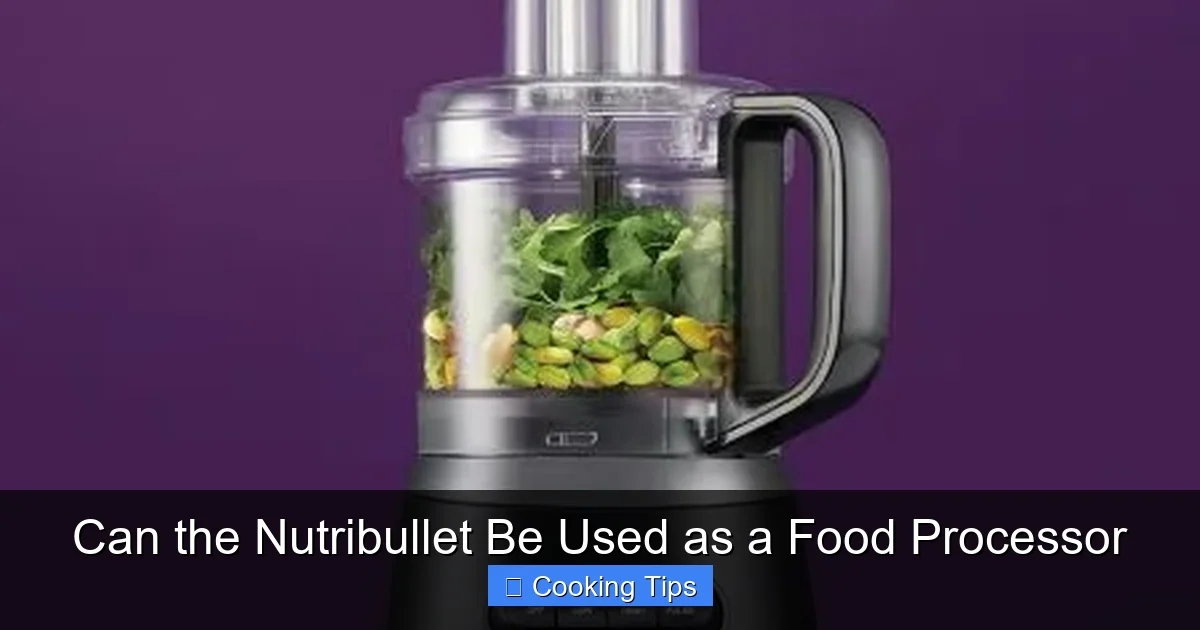
Thinking about using your Nutribullet as a food processor? This guide dives deep into its capabilities and limitations. You’ll learn how to effectively use your Nutribullet for tasks like chopping vegetables and pureeing ingredients, and understand when it’s best to stick to its intended blending functions. Discover if the Nutribullet is your next kitchen workhorse!
Key Takeaways
- Nutribullets excel at blending and pureeing, not fine chopping: Their design is optimized for liquid-based preparations like smoothies and sauces.
- Achieving “food processor” results requires smart techniques: Pulse sparingly and use the right ingredients to avoid over-processing.
- Ideal tasks for a Nutribullet “food processor” include: Making pesto, hummus, baby food, and finely chopping herbs or nuts.
- Limitations exist for tougher or drier ingredients: Whole onions, large chunks of hard vegetables, or dry grains are generally not suitable.
- Proper blade selection and cup size matter: The standard Extractor Blade is versatile, but smaller cups can offer more control.
- Cleanliness is crucial: Always wash your Nutribullet components thoroughly after each use to maintain hygiene and performance.
Can the Nutribullet Be Used as a Food Processor
In the modern kitchen of 2026, efficiency and versatility are key. Many of us are looking to maximize the use of our appliances, and the Nutribullet, a popular personal blender, often sparks a question: can it step in for a dedicated food processor? While it’s not a direct replacement, with the right approach, your Nutribullet can handle many food processor tasks surprisingly well. This guide will walk you through its capabilities, limitations, and how to get the most out of your Nutribullet for chopping, pureeing, and beyond.
Understanding the Nutribullet’s Design
Before we dive into how to use your Nutribullet as a food processor, it’s essential to understand its primary function. The Nutribullet is designed for high-speed blending, breaking down ingredients into a smooth, drinkable consistency. Its powerful motor and cyclonic action create a vortex that pulverizes fruits, vegetables, and other components, making it ideal for smoothies, shakes, and nutrient-rich juices. This design, however, is optimized for liquid-heavy mixtures, which differs from the cutting and chopping action of a traditional food processor.
When Can Your Nutribullet Act Like a Food Processor?
Your Nutribullet can indeed perform many tasks you’d typically assign to a food processor, especially when it comes to softer ingredients or achieving specific textures. The key is to understand what it can do well and how to guide its action.
Chopping Vegetables and Aromatics
While a food processor is designed for consistent, uniform chopping, your Nutribullet can achieve a similar result for smaller quantities or certain types of vegetables.
Step-by-Step Chopping Guide
1. Prepare Your Ingredients: Wash and roughly chop your vegetables into smaller, manageable pieces. For tougher vegetables like carrots or celery, aim for pieces no larger than an inch. For softer items like bell peppers or zucchini, you can go slightly larger.
2. Select the Right Cup: Use one of the smaller cups provided with your Nutribullet. This gives you more control over the processing and prevents ingredients from becoming over-processed too quickly.
3. Add Ingredients to the Cup: Place your chopped vegetables into the Nutribullet cup. Do not overfill; leave at least an inch or two of space at the top.
4. Secure the Blade and Turn Upside Down: Screw on the Extractor Blade tightly. Then, invert the cup and place it onto the power base.
5. Pulse for Control: This is the most crucial step for achieving a chopped texture. Instead of holding the cup down continuously, use short, rapid pulses. Press down for a second or two, then release. Repeat this process.
6. Check Consistency Regularly: After a few pulses, lift the cup off the base and check the texture of your vegetables. You can achieve a coarse chop, a fine mince, or something in between depending on how many times you pulse.
7. Avoid Continuous Blending: Holding the cup down will quickly turn your chopped vegetables into a puree or mush. Pulsing gives you the control to stop at your desired chopped consistency.
Practical Examples for Chopping
* Herbs: Finely mince fresh herbs like parsley, cilantro, or basil for garnishes or recipes.
* Garlic and Onions: For recipes that call for minced garlic or a finely chopped onion (for sauces or dips where extreme fineness isn’t critical), the Nutribullet can work. Add a tablespoon of oil to help it process more smoothly.
* Bell Peppers and Zucchini: Chop these into small pieces for adding to salads, stir-fries, or omelets.
Pureeing Ingredients
This is where the Nutribullet truly shines and can easily replace a food processor for many pureeing tasks.
Step-by-Step Pureeing Guide
1. Cook or Prepare Ingredients (if necessary): For cooked vegetables (like roasted peppers or steamed squash) or soft fruits, you can often process them directly. For raw, harder vegetables, you might need to soften them first by steaming or boiling.
2. Add to Nutribullet Cup: Place your ingredients into the Nutribullet cup.
3. Add Liquid (if needed): For smoother purees, you might need to add a small amount of liquid. This could be water, broth, oil, or even a bit of the cooking liquid from boiled vegetables. The amount of liquid will determine the final consistency of your puree.
4. Secure Blade and Blend: Screw on the Extractor Blade and place the cup on the power base.
5. Blend Until Smooth: For purees, you can generally hold the cup down until the desired smoothness is achieved. The powerful motor of the Nutribullet is designed for this.
6. Scrape Down Sides (if necessary): If ingredients stick to the sides, remove the cup from the base, give it a gentle shake, or use a spatula to scrape them down before blending again.
Practical Examples for Pureeing
* Hummus: Puree chickpeas, tahini, lemon juice, and garlic into a smooth hummus. You might need to add a little water or olive oil to achieve the desired consistency.
* Baby Food: Create smooth purees of fruits and vegetables for your little ones. Cooked fruits and vegetables blend exceptionally well.
* **Sauces and Dips**: Make smooth tomato sauces, pesto (with basil, pine nuts, garlic, and olive oil), or creamy dips.
* **Nut Butters**: While a food processor can make larger batches, a Nutribullet can make small portions of nut butter. Roast your nuts first for easier processing, and add a little oil if needed.
Making Pesto and Other Sauces
Your Nutribullet is fantastic for small batches of pesto, chimichurri, or other fresh herb-based sauces. The key is to add ingredients in stages and allow the motor to work.
Step-by-Step Pesto Guide
1. Add Nuts and Garlic First: Place pine nuts (or walnuts) and garlic cloves into the Nutribullet cup. Pulse a few times to break them down.
2. Add Herbs and Cheese: Add fresh basil leaves and Parmesan cheese.
3. Drizzle in Olive Oil: Slowly drizzle in olive oil while the motor is running on a low setting (if your model allows, otherwise pulse). This emulsifies the sauce.
4. Blend Until Desired Consistency: Continue to pulse or blend until you reach your preferred texture.
Grinding Spices and Grains (with Caution)
While not ideal, you can use the Nutribullet to grind small amounts of spices or certain grains.
Important Considerations
* **Dryness**: Ensure ingredients are completely dry.
* **Small Batches**: Grind very small quantities to avoid straining the motor.
* **Dedicated Blade (if available)**: If you have a separate blade for dry goods, use that. Otherwise, clean the Extractor Blade thoroughly.
* **Texture**: You won’t get a super-fine powder like with a dedicated spice grinder. Expect a coarser grind.
* **Heat**: Grinding can create heat, which can affect the flavor of delicate spices. Work in short bursts.
Limitations of Using a Nutribullet as a Food Processor
It’s important to be realistic about what your Nutribullet can and cannot do.
What It’s NOT Good For:
* Large Quantities: Nutribullets are personal blenders. They are not designed to process large amounts of food like a full-sized food processor.
* **Tough, Raw Vegetables in Large Chunks**: Trying to chop a whole onion or large chunks of raw carrots will likely strain the motor and won’t yield good results.
* **Dough Making**: The motor and blade design are not suitable for kneading dough.
* **Slicing and Shredding**: A food processor has specific blades for slicing and shredding, which the Nutribullet lacks.
* **Dry Grains for Flour**: While it can grind small amounts of spices, trying to make flour from large quantities of grains will likely be ineffective and could damage the appliance.
Troubleshooting Common Issues
* **Motor Overheating**: If the motor feels hot or smells burnt, stop immediately. You may have overfilled the cup, processed for too long, or tried to blend something too tough. Let it cool down before trying again with smaller quantities or softer ingredients.
* **Inconsistent Chopping**: Ensure you are pulsing correctly and not overcrowding the cup. For very fine chopping, you might need to pulse more times.
* **Ingredients Stuck to the Sides**: This can happen with dry ingredients. Add a tablespoon of liquid (oil or water) and pulse again. You can also use a spatula to scrape down the sides when the unit is off.
* **Leaking**: Make sure the Extractor Blade is screwed on tightly and that the rubber gasket is clean and properly seated.
Maintaining Your Nutribullet
After using your Nutribullet for any task, proper cleaning is essential.
Cleaning Your Nutribullet Components
1. Disassemble: Separate the cup, blade, and any lids.
2. Rinse Immediately: Rinse all parts under warm running water as soon as possible after use to prevent food from drying on.
3. Wash Thoroughly: Wash the cup and lids with warm, soapy water. For the Extractor Blade, use a brush to carefully clean around the blades. Be very cautious as the blades are sharp.
4. **Dishwasher Safe (Check Manual)**: Many Nutribullet cups and lids are top-rack dishwasher safe, but always check your specific model’s manual. The Extractor Blade is usually *not* recommended for the dishwasher, as it can dull the blades.
5. Dry Completely: Allow all parts to air dry completely before reassembling or storing.
Conclusion
So, can the Nutribullet be used as a food processor? The answer is a qualified yes. For specific tasks like pureeing soft ingredients, making small batches of dips and sauces, and finely chopping herbs or smaller vegetables, your Nutribullet can be a surprisingly capable kitchen assistant. It’s about understanding its strengths and limitations. By using the pulsing technique for chopping and adding a little liquid for smooth purees, you can extend the versatility of this popular appliance. While it won’t replace a dedicated food processor for heavy-duty tasks or large quantities, the Nutribullet can certainly help you conquer many everyday kitchen preparations, making it a true multi-tasker in your 2026 kitchen.
