

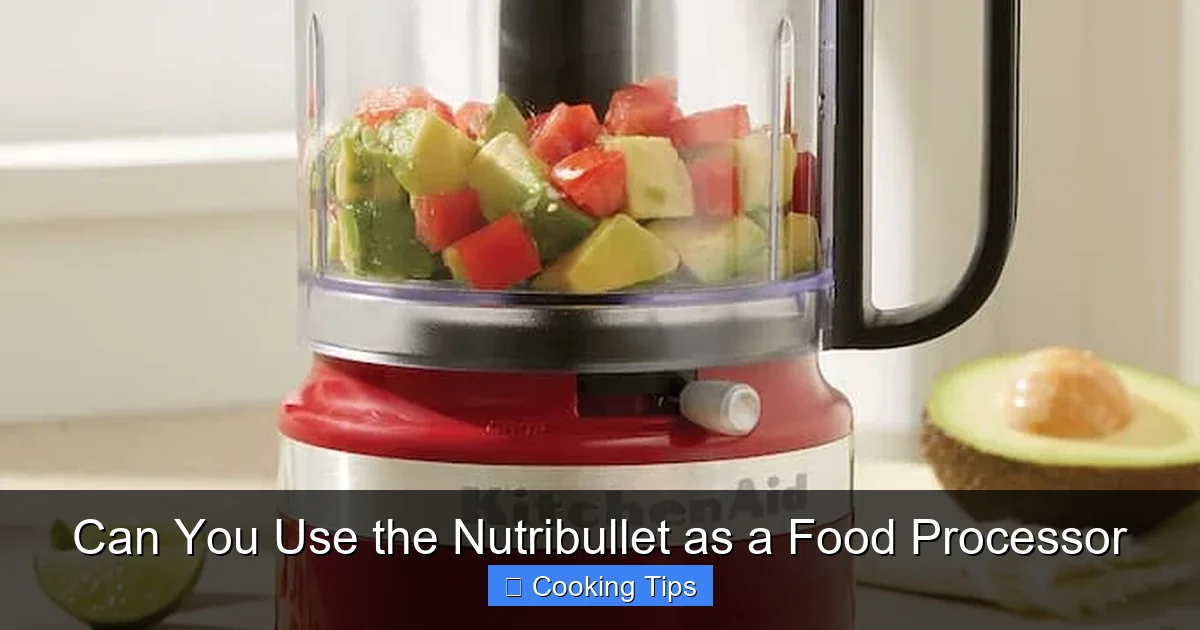
Unsure if your Nutribullet can handle tasks typically done by a food processor? This guide explores its surprising versatility. While not a direct replacement, you can achieve many food processor functions like chopping vegetables, pureeing sauces, and making dips with the right techniques. Learn the optimal settings and ingredient preparation for successful results.
Key Takeaways
- Nutribullets excel at pureeing and liquefying: They are designed for smooth textures, making them ideal for sauces, smoothies, and dips.
- Limited chopping power: While they can chop softer ingredients, they struggle with tough, fibrous, or large pieces that a food processor handles easily.
- Patience and pulsed blending are key: For chopping, short bursts of blending and stopping to scrape down sides are crucial.
- Ingredient preparation matters: Smaller, uniform pieces yield better results when attempting to “chop” with a Nutribullet.
- Not for doughs or large batches: Tasks requiring significant kneading or processing large volumes are beyond the Nutribullet’s capacity.
- Consider your needs: If your primary need is chopping and dicing, a dedicated food processor is a better investment.
Can You Use the Nutribullet as a Food Processor?
The Nutribullet has revolutionized kitchens, becoming a go-to appliance for quick smoothies and nutrient-packed drinks. But what about other kitchen tasks? Many people wonder, “Can you use the Nutribullet as a food processor?” The answer is a nuanced “yes, with limitations.” While it’s not a direct replacement for a full-sized food processor, your Nutribullet can certainly take on many of the jobs that a food processor does, especially when it comes to pureeing, chopping softer ingredients, and creating dips.
In this comprehensive guide, we’ll dive deep into how you can leverage your Nutribullet for food processor-like tasks. We’ll explore what it’s best at, what to avoid, and the techniques you need to master to get the most out of your versatile blender. By the end, you’ll be equipped with the knowledge to transform your Nutribullet into a surprisingly capable kitchen assistant.
Understanding Your Nutribullet’s Strengths
Before we jump into the “how-to,” it’s essential to understand what makes a Nutribullet unique. These blenders are designed for high-speed, nutrient extraction, which means they excel at breaking down ingredients into very fine, smooth textures. This powerful blending action is perfect for liquefying fruits and vegetables for smoothies, but it also translates well to making smooth sauces, creamy dips, and finely pureed baby food.
Pureeing and Liquefying
This is where your Nutribullet truly shines and most closely resembles a food processor’s function.
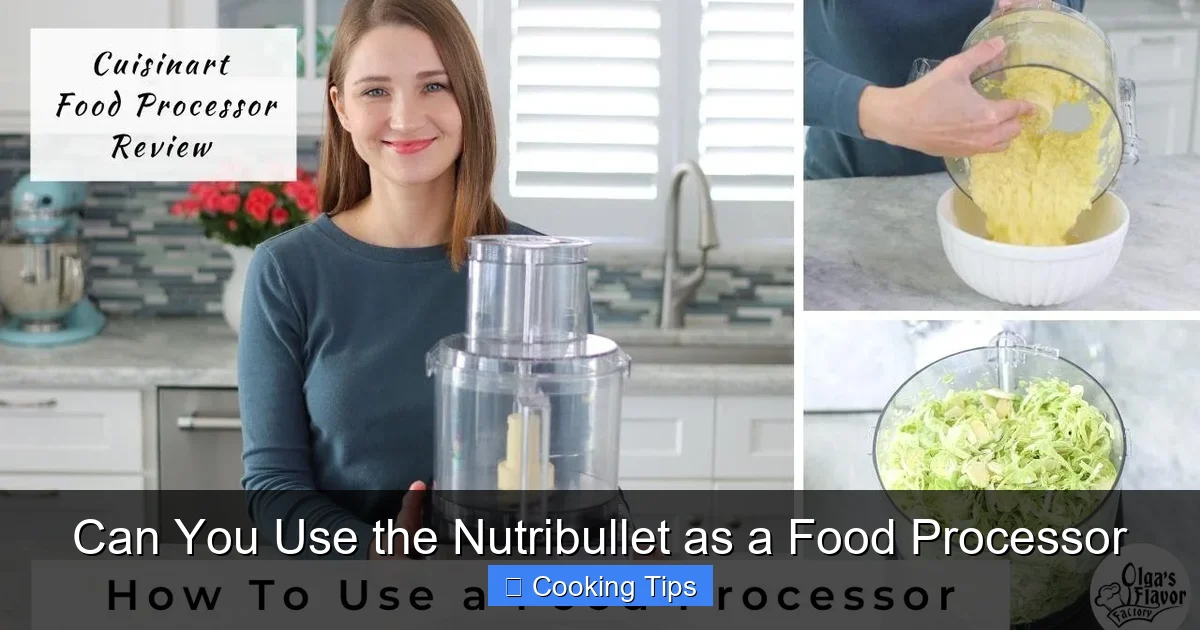
When it comes to creating smooth textures, your Nutribullet is an absolute star. It can effortlessly transform ingredients into a silky consistency. Think about making pesto, hummus, or even smooth soups. These tasks are well within its capabilities. The powerful motor and cyclonic action ensure that everything is blended thoroughly and uniformly.
Visual guide about Can You Use the Nutribullet as a Food Processor
Image source: i.ytimg.com
Nutrient Extraction
The core design of a Nutribullet is to break down cell walls to release nutrients.
This intense blending action means that tougher ingredients, when processed correctly, can be broken down into very fine particles, mimicking the fine chopping or mincing achievable with some food processors. However, this is not the same as dicing or cubing.
When Your Nutribullet Can Mimic a Food Processor
While you won’t be dicing onions with precision or kneading bread dough, your Nutribullet can perform several food processor functions with the right approach.
1. Chopping Softer Vegetables and Fruits
This is perhaps the most common “food processor” task people try with a Nutribullet. It works best for softer items like bell peppers, zucchini, mushrooms, cooked potatoes, and ripe tomatoes. For harder vegetables like carrots or celery, you’ll need to cut them into very small, uniform pieces first.
Visual guide about Can You Use the Nutribullet as a Food Processor
Image source: manua.ls
Step-by-Step Chopping Technique
Achieving a “chopped” consistency requires a different approach than simply blending for a smoothie.
- Prepare your ingredients: Wash and roughly chop your vegetables or fruits into manageable pieces. For harder items, aim for pieces no larger than 1 inch.
- Add to the Nutribullet cup: Place the prepared ingredients into the Nutribullet cup. Do not overfill; leave some space at the top.
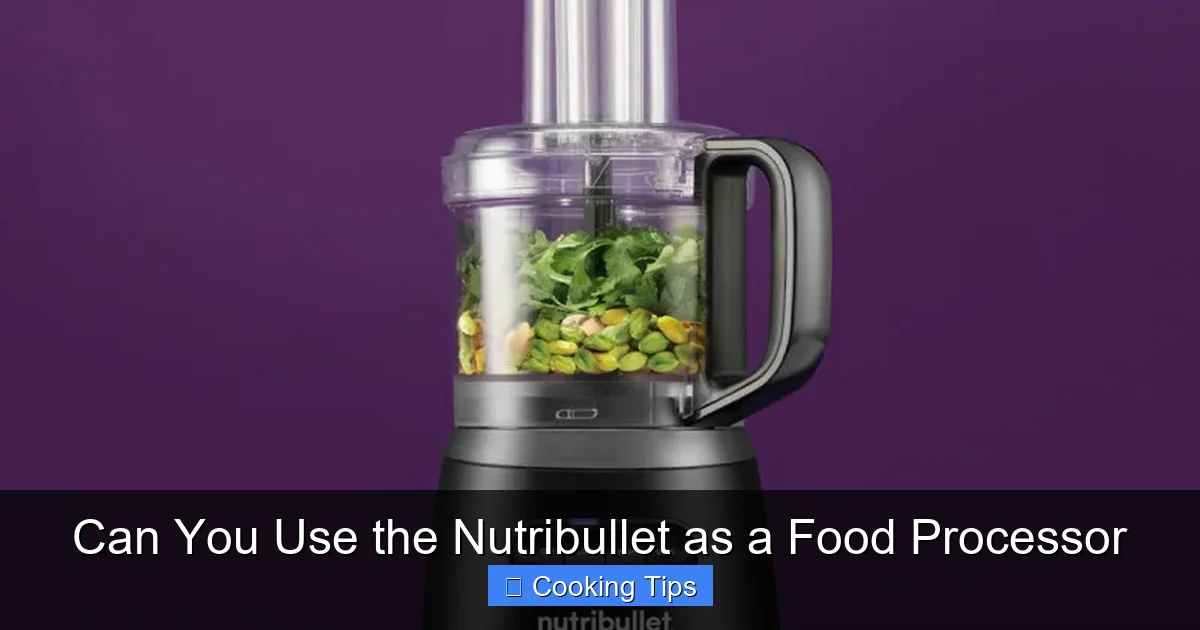
- Secure the blade: Screw the extractor blade firmly onto the cup.
- Pulse and blend: This is the crucial step. Instead of running the Nutribullet continuously, use short bursts of power. Press the cup down for a few seconds, then release. Repeat this pulsing action.
- Check consistency: After a few pulses, unscrew the blade and check the texture. If it’s not fine enough, reassemble and pulse again. You may need to stop and scrape down the sides of the cup with a spatula a few times to ensure even processing.
- Don’t over-process: The goal is chopped, not pureed. Be mindful of the texture and stop as soon as you reach your desired consistency.
Example: To make a quick salsa base, you could pulse chopped tomatoes, onions, and jalapeños until they are finely minced but still have some texture. This takes practice and careful observation.
2. Making Dips and Spreads
Hummus, guacamole, bean dips, and even pesto are perfect for your Nutribullet. Its ability to create smooth, creamy textures is ideal for these applications.
Step-by-Step Dip Creation
- Gather ingredients: For hummus, this would include cooked chickpeas, tahini, lemon juice, garlic, and olive oil.
- Add to the Nutribullet cup: Place the solid ingredients in first (chickpeas, garlic), then add liquids and softer ingredients.
- Blend until smooth: Secure the blade and blend continuously until you achieve a creamy, uniform consistency. You might need to stop and scrape down the sides to ensure all ingredients are incorporated.
- Adjust seasoning: Taste and add more lemon juice, salt, or spices as needed, blending briefly to combine.
Tip: For exceptionally smooth dips, you can add a little extra liquid (like water or olive oil) to help the Nutribullet blend more effectively.
3. Pureeing Sauces and Soups
Whether you’re making a fresh tomato sauce from scratch or pureeing cooked vegetables for a creamy soup, your Nutribullet can handle it.
Step-by-Step Sauce/Soup Pureeing
- Cook and cool: Ensure your ingredients are cooked to a point where they are easily broken down. If making soup, allow it to cool slightly before transferring to the Nutribullet cup, as hot liquids can create pressure.
- Add to the Nutribullet cup: Fill the cup about halfway to two-thirds full. Add any liquids like broth or water.
- Blend until smooth: Secure the blade and blend until you achieve your desired smoothness.
- Return to pot: Pour the pureed mixture back into your saucepan to reheat or combine with other ingredients.
Safety Note: Never fill the Nutribullet cup more than two-thirds full with hot liquids. Blending hot liquids can build up steam and pressure, leading to spills or potential injury. Always let hot ingredients cool down considerably.
4. Making Nut Butters (Small Batches)
While a dedicated food processor is better for large batches of nut butter, you can make small amounts of nut butter in your Nutribullet.
Step-by-Step Nut Butter Creation
- Roast nuts: Roasting nuts brings out their flavor and makes them easier to break down. Ensure they are completely cooled.
- Add to Nutribullet cup: Fill the cup with your cooled nuts.
- Blend continuously: This will take time. You’ll see the nuts go from whole to crumbly, then pasty. You will need to stop frequently, scrape down the sides, and re-blend.
- Add oil if needed: If the mixture becomes too thick and isn’t blending, add a teaspoon of neutral oil (like vegetable or sunflower oil) to help it along.
Patience is key! This process can take several minutes, with frequent scraping and blending.
What Your Nutribullet Cannot Do (That a Food Processor Can)
It’s crucial to recognize the limitations of your Nutribullet to avoid disappointment or damage to the appliance.
1. Large Batch Processing
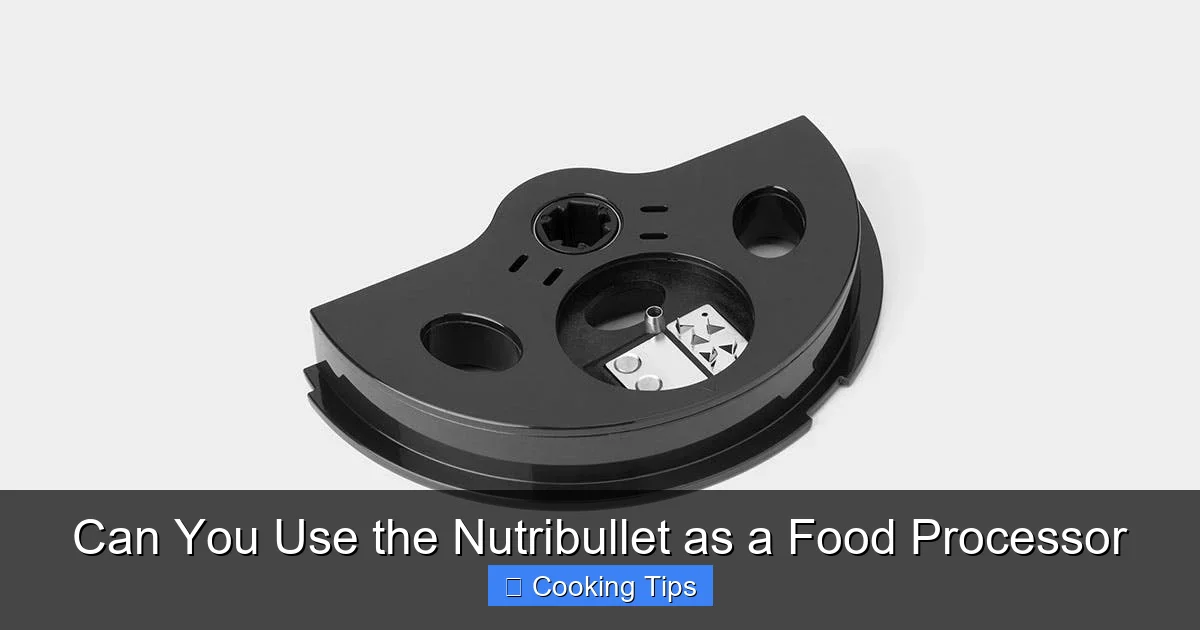
Nutribullet cups are relatively small. If you need to process large quantities of ingredients, a food processor is a must. Trying to cram too much into your Nutribullet will strain the motor and lead to uneven results.
Visual guide about Can You Use the Nutribullet as a Food Processor
Image source: nbmedia.imgix.net
2. Kneading Dough
The motor and blade design of a Nutribullet are not suited for kneading dough. This requires a different type of mechanical action and a much more robust motor. Food processors with dough blades are designed for this specific task.
3. Fine Dicing or Slicing
While you can achieve a “chopped” texture, your Nutribullet cannot produce the uniform dice or clean slices that a food processor with its specialized blades can. It will always be more of a minced or pureed consistency.
4. Processing Hard, Fibrous Ingredients in Large Quantities
Things like tough root vegetables (e.g., raw sweet potatoes, large amounts of raw carrots), fibrous greens in large amounts, or hard cheeses are best left to a dedicated food processor. Your Nutribullet’s motor can overheat, and the blades might struggle.
Tips for Success
* Cut ingredients small: For any task that isn’t pureeing, start by cutting your ingredients into smaller, uniform pieces. This helps the Nutribullet work more efficiently.
* Don’t overfill: Respect the fill lines on your Nutribullet cup. Overfilling can lead to motor strain and poor blending.
* Pulse, don’t just blend: For anything you want chopped rather than pureed, pulsing is your best friend.
* Scrape down the sides: This is essential for even processing. Stop, unscrew the blade, and use a spatula to push ingredients from the sides and bottom back into the main vortex.
* Clean immediately: Nutribullets are easiest to clean right after use. Rinse the cup and blade, and wash with warm, soapy water.
Troubleshooting Common Issues
* Ingredients not blending evenly: This is usually due to overfilling or not scraping down the sides. Ensure ingredients are cut uniformly and stop to scrape.
* Motor overheating: You might be processing too much at once, or the ingredients are too tough. Let the motor cool down for at least 15-20 minutes before trying again.
* Leaking: Ensure the extractor blade is screwed on tightly and that the cup is not overfilled. Check the gasket on the blade for any damage.
Conclusion
So, can you use the Nutribullet as a food processor? Yes, for many tasks! It excels at pureeing, creating dips, and making smooth sauces. With careful technique, it can even chop softer ingredients. However, it’s vital to understand its limitations. For large batches, precise dicing, slicing, or dough kneading, a dedicated food processor remains the superior tool. By learning these techniques and respecting your Nutribullet’s capabilities, you can expand its usefulness in your kitchen significantly, making it an even more valuable appliance.
