

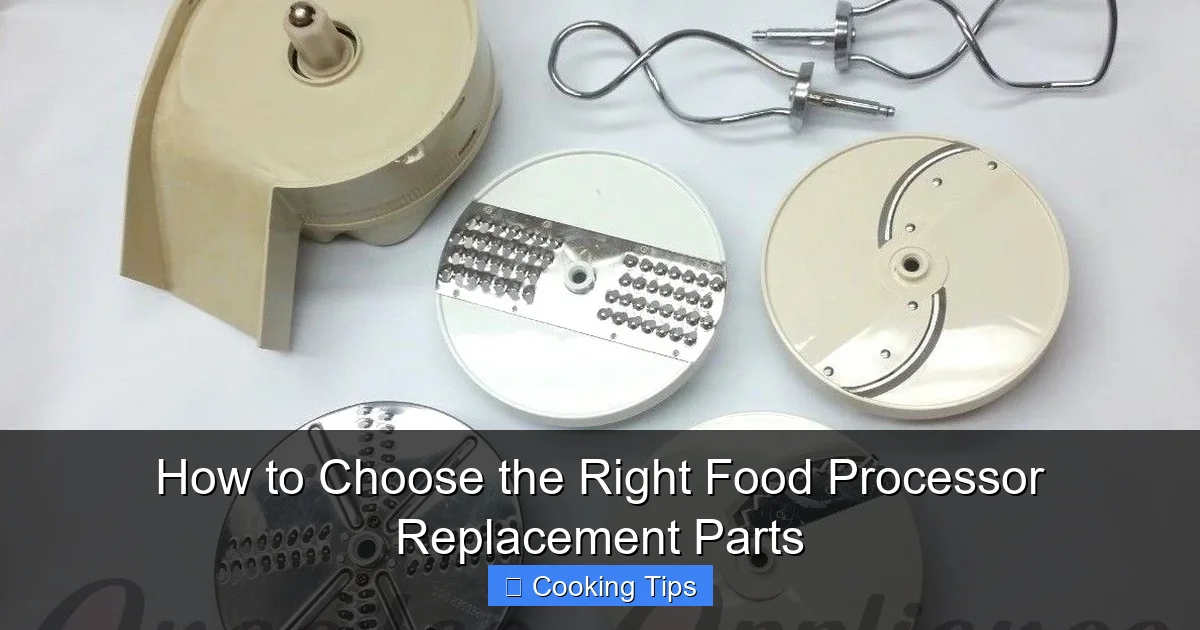
Keep your kitchen running smoothly by learning how to choose the right food processor replacement parts. This guide covers identifying your model, understanding part types, and where to find genuine and compatible options. Don’t replace your entire appliance when a simple part can fix it! This article empowers you to make informed decisions, saving you time and money.
How to Choose The Right Food Processor Replacement Parts
Your trusty food processor is a culinary workhorse, transforming raw ingredients into delicious meals with ease. But like any hard-working appliance, its parts can wear out or break. Before you consider replacing the entire unit, understand that often, a simple replacement part can breathe new life into your food processor. In 2026, with sustainability and smart spending at the forefront, knowing how to choose the right food processor replacement parts is more important than ever. This comprehensive guide will walk you through everything you need to know to get your kitchen back in full swing.
Key Takeaways
- Identify Your Food Processor Model: Accurately knowing your brand and model number is crucial for finding compatible replacement parts.
- Understand Part Types: Familiarize yourself with common food processor parts like blades, bowls, lids, gears, and motors to pinpoint what needs replacing.
- Prioritize Genuine Parts: Opting for original equipment manufacturer (OEM) parts ensures the best fit, performance, and longevity.
- Consider Reputable Aftermarket Options: When OEM parts aren’t available or are too expensive, look for high-quality, compatible parts from trusted third-party brands.
- Check Part Numbers and Specifications: Always cross-reference part numbers and compare detailed specifications to avoid costly mistakes.
- Read Reviews and Warranties: Customer feedback and warranty information can guide your decision and provide peace of mind.
Why Replace Food Processor Parts?
Food processors are designed for durability, but consistent use can lead to wear and tear. Blades can become dull, bowls can crack, lids can snap, and gears can strip. Replacing a single component is often much more cost-effective than buying a brand-new food processor. It’s also a more environmentally friendly choice, reducing waste and extending the lifespan of your existing appliance.
Step 1: Identify Your Food Processor
This is the most critical first step. You can’t find the right part if you don’t know what you’re looking for!
Find the Model Number and Brand
Your food processor will have a label, usually on the bottom of the base or sometimes on the back. This label contains vital information:
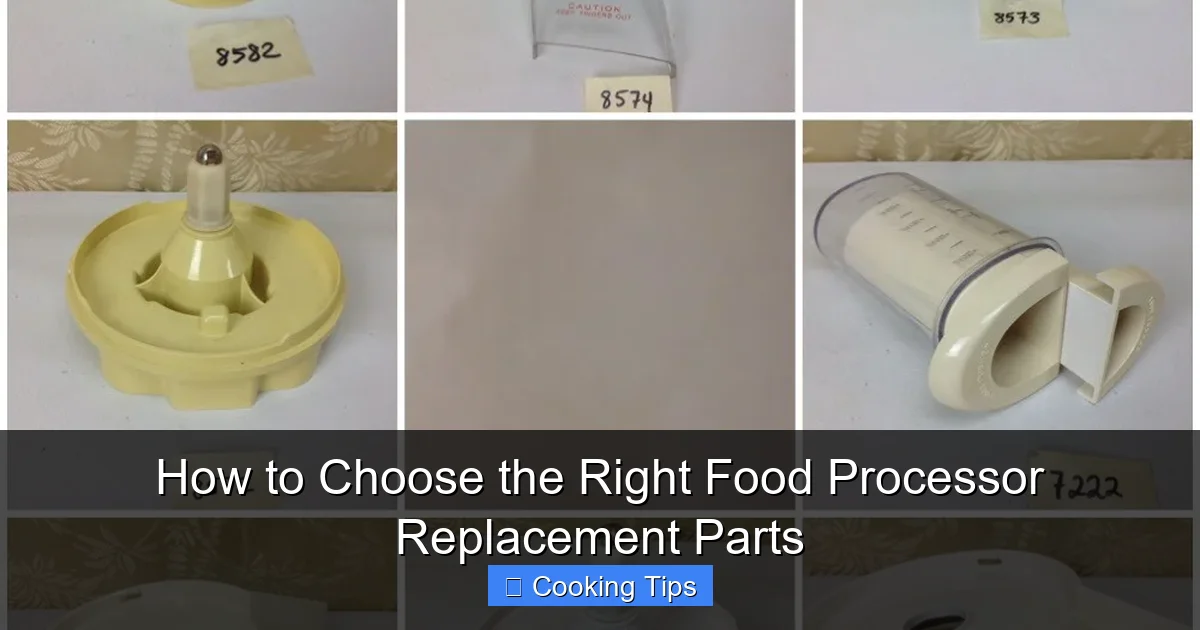
Visual guide about How to Choose the Right Food Processor Replacement Parts
Image source: i.ebayimg.com
- Brand Name: (e.g., Cuisinart, KitchenAid, Breville, Braun)
- Model Number: This is a unique alphanumeric code that precisely identifies your specific model. It might be labeled as “Model,” “M/N,” or “Product Number.”
Example: If your food processor is a Cuisinart, the label might say “Cuisinart DLC-8SY Pro Custom 11-Cup Food Processor.” The “DLC-8SY” is your model number.
Locate the Original Manual
If you still have the owner’s manual, it will almost always list the brand and model number prominently. It may also contain diagrams of your food processor and lists of its parts, sometimes with specific part numbers.
Step 2: Diagnose the Problem and Identify the Part
Once you know your model, you need to figure out exactly what needs replacing.
Common Food Processor Parts That Need Replacement
- Blades: These are the workhorses. S-shaped chopping blades, dough blades, and discs (slicing, shredding) can become dull, bent, or broken.
- Bowls and Lids: Cracks, chips, or missing locking mechanisms are common issues. Lids often have safety interlocks that can fail.
- Pushers and Feed Tubes: These can be lost or broken.
- Gears and Drive Sockets: The small plastic gear on the blade or the drive socket on the motor base can wear out or strip, preventing the appliance from working.
- Seals and Gaskets: If your processor is leaking, a worn-out seal might be the culprit.
- Cord and Plug: Damage to the power cord can be a safety hazard.
Visual Inspection
Carefully examine your food processor. What looks damaged, broken, or missing? If a blade is dull, you’ll need a new blade assembly. If the bowl has a crack, you’ll need a replacement bowl.
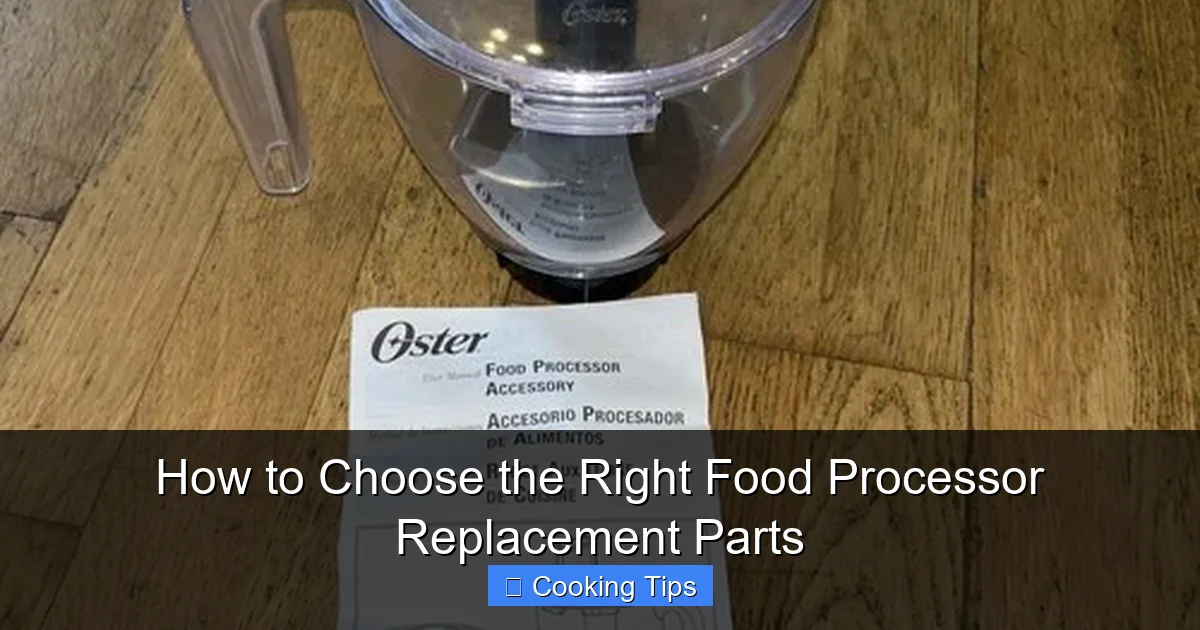
Visual guide about How to Choose the Right Food Processor Replacement Parts
Image source: i.ebayimg.com
Step 3: Where to Find Replacement Parts
Now that you know what you need and for which model, it’s time to source your parts.
Option 1: Original Equipment Manufacturer (OEM) Parts
OEM parts are made by the original manufacturer of your food processor. They are guaranteed to fit and function as intended.
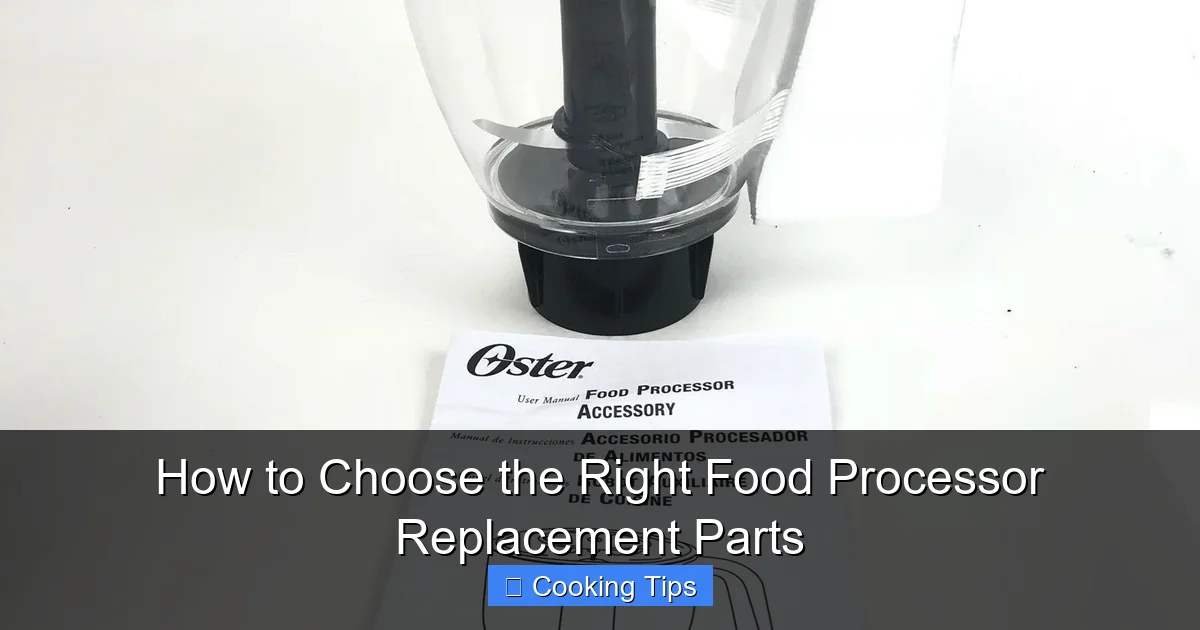
Visual guide about How to Choose the Right Food Processor Replacement Parts
Image source: i.pinimg.com
- Pros:
- Guaranteed compatibility and perfect fit.
- Highest quality and durability.
- Maintain your appliance’s performance.
- Often come with a manufacturer’s warranty.
- Cons:
- Can be more expensive.
- Availability may be limited for older models.
Option 2: Reputable Aftermarket or Compatible Parts
These parts are made by third-party companies but are designed to be compatible with specific food processor models.
- Pros:
- Often more affordable than OEM parts.
- Can be more readily available, especially for discontinued models.
- Cons:
- Quality can vary significantly.
- Fit might not be as precise as OEM.
- May not perform as well.
- Warranty coverage can be less comprehensive.
Step 4: Searching for and Purchasing Parts
Here’s how to navigate the purchasing process effectively.
Search Online Retailers
Major online retailers are excellent resources:
- Manufacturer Websites: Check the official website of your food processor brand. They usually have a “Parts & Accessories” section.
- Specialty Appliance Part Stores: Websites like RepairClinic.com, AppliancePartsPros.com, and Parts.ApplianceFactoryParts.com often carry a wide selection of both OEM and compatible parts.
- General Online Marketplaces: Amazon, eBay, and other similar platforms have numerous sellers offering replacement parts. Be cautious and read seller reviews carefully.
Tips for Effective Searching
- Use Your Exact Model Number: This is non-negotiable. Type it into the search bar precisely as it appears on your appliance.
- Use the Part Number (If Known): If your manual or the broken part itself has a part number, use that. This is the most accurate way to find the correct item.
- Be Specific with Part Descriptions: Instead of “food processor blade,” search for “Cuisinart DLC-8SY chopping blade” or “KitchenAid KFP750 bowl lid.”
- Compare Images: Carefully compare the images of the replacement part with your broken component. Look for subtle differences in shape, size, and connection points.
Step 5: Verifying Compatibility and Quality
Don’t buy the first part you find! Take these steps to ensure you’re making a good purchase.
Read Product Descriptions Carefully
Pay close attention to the detailed descriptions. Does it explicitly state it’s compatible with your model number? Are there any notes about specific features or variations?
Check Customer Reviews
For both OEM and aftermarket parts, read what other customers have to say. Look for reviews that mention:
- Ease of installation
- Fit and finish
- Performance after installation
- Durability over time
- Customer service from the seller
Look for Warranties and Return Policies
A good seller will offer a reasonable return policy if the part doesn’t fit or is defective. Also, check if the part comes with any warranty. This is especially important for more expensive components like motor drive gears.
Troubleshooting Common Issues
Sometimes, the problem isn’t as simple as a broken part.
My Food Processor Still Won’t Work After Replacing a Part
This could indicate:
- Another Part is Damaged: The motor itself might be the issue, or another gear component could have failed.
- Incorrect Part: Even with careful searching, an incompatible part can be purchased.
- Assembly Error: Ensure all parts are correctly seated and locked into place according to your manual. Many food processors have safety mechanisms that prevent them from operating if not assembled correctly.
Tip: Refer back to your owner’s manual for correct assembly instructions. If unsure, contact the seller or the manufacturer.
The New Part Doesn’t Fit Perfectly
This is a common issue with aftermarket parts. If it’s a minor gap and the part still functions securely, you might be able to use it. However, if it prevents proper operation or creates a safety concern (like a lid not locking securely), you should contact the seller for a return or exchange. For OEM parts, a poor fit usually means you’ve ordered the wrong part number.
Conclusion
Choosing the right food processor replacement parts doesn’t have to be a daunting task. By systematically identifying your appliance, diagnosing the issue, and diligently searching for compatible and quality components, you can significantly extend the life of your beloved kitchen gadget. Whether you opt for genuine OEM parts or reputable aftermarket alternatives, always prioritize accuracy in model and part numbers. With a little patience and these guidelines, you’ll be back to effortlessly chopping, slicing, and pureeing in no time, saving money and contributing to a more sustainable kitchen. Happy cooking!
