


Selecting the ideal cutting board for meat ensures both food safety and knife care. This guide will delve into the best materials, from wood to composite, explaining why some are superior for handling raw meats and preventing cross-contamination. We’ll also cover essential maintenance and cleaning practices to keep your cutting boards hygienic and your knives sharp.
What Type of Cutting Board Is Best for Meat
Welcome to our comprehensive guide on selecting the best cutting board for your meat preparation needs. In 2026, with an ever-increasing focus on food safety and efficient kitchen practices, the humble cutting board plays a more critical role than ever. Chopping, slicing, and dicing raw meat can be a messy business, and the right cutting board can make all the difference in preventing the spread of bacteria, protecting your valuable knives, and ensuring a smooth cooking experience.
This guide will walk you through the various types of cutting boards available, weighing their pros and cons specifically for meat handling. We’ll cover material science, hygiene considerations, and practical advice to help you make an informed decision. By the end, you’ll know exactly what to look for to equip your kitchen with the best cutting board for all your meaty culinary adventures.
- Wooden cutting boards, especially end-grain maple or walnut, are excellent for meat due to their natural antimicrobial properties and ability to self-heal minor knife marks.
- Plastic cutting boards are a budget-friendly and non-porous option, making them easy to sanitize, but they can dull knives more quickly.
- Avoid glass or stone cutting boards for raw meat as they are extremely harsh on knife edges and can lead to bacteria being trapped in microscopic chips.
- Dedicated cutting boards for raw meat are essential to prevent cross-contamination with other foods, especially produce and ready-to-eat items.
- Proper cleaning and sanitizing are vital for all cutting boards used for meat, involving hot, soapy water and a sanitizing solution.
- Regular maintenance, like oiling wooden boards, extends their lifespan and maintains their hygienic qualities.
Understanding the Importance of the Right Cutting Board for Meat
Before we dive into specific materials, let’s establish why this choice is so important. Raw meat can harbor harmful bacteria like Salmonella, E. coli, and Listeria. Proper handling on a suitable cutting board is the first line of defense against cross-contamination, ensuring that these bacteria don’t transfer to other foods or surfaces. Additionally, the material of your cutting board directly impacts the sharpness and longevity of your knives. A board that’s too hard can quickly dull a blade, while one that’s too soft can be a breeding ground for bacteria.
Exploring Cutting Board Materials: Pros and Cons for Meat
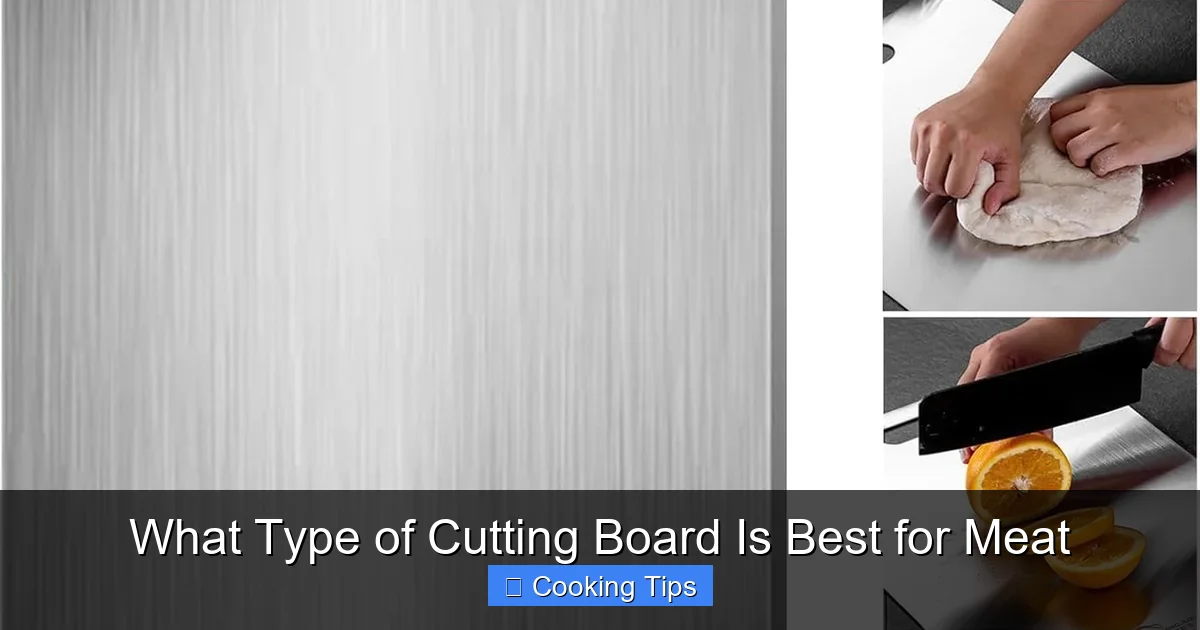
Visual guide about What Type of Cutting Board Is Best for Meat
Image source: m.media-amazon.com
The world of cutting boards offers a variety of materials, each with its own set of advantages and disadvantages when it comes to preparing meat.
Wood Cutting Boards
Wood has been a staple in kitchens for centuries, and for good reason.
Types of Wood and Their Suitability for Meat
* Hardwoods are generally preferred. Maple, walnut, and cherry are excellent choices. These woods are dense enough to resist deep scratches from knives, which can harbor bacteria.
* End-grain construction is superior to edge-grain for meat. In end-grain boards, the wood fibers are oriented vertically. This means that when you cut into the board, the knife edge slips *between* the fibers rather than slicing *through* them. This “self-healing” property makes the board more durable and less prone to deep gouges, which are problematic for hygiene. Edge-grain boards, where the wood fibers run horizontally, are more susceptible to damage.
* Bamboo is a popular, sustainable option, but it’s much harder than other woods. While it’s dense and can be good for knives to some extent, it can also be harder on knife edges than maple or walnut. Its porous nature also requires diligent cleaning and sealing.
Advantages of Wood for Meat
* Natural Antimicrobial Properties: Studies have shown that certain types of wood, like maple, possess natural antimicrobial properties. Bacteria introduced to the surface of a wooden board tend to die off over time, unlike on plastic where they can persist.
* Kind to Knives: The slightly yielding nature of wood is much gentler on your knife blades than harder materials. This helps maintain the sharpness of your knives, saving you time and money on sharpening.
* Aesthetic Appeal: Wooden cutting boards often add a warm, professional touch to a kitchen.
Disadvantages of Wood for Meat
* Porous Nature: Wood is inherently porous and can absorb moisture and odors if not properly sealed and maintained. This is particularly a concern with raw meat juices.
* Requires More Maintenance: Wooden boards need regular oiling (with food-grade mineral oil) to prevent drying, cracking, and warping. They also require more careful washing and drying to prevent damage.
* Can Stain and Scrape: While end-grain boards self-heal to some extent, they can still show knife marks over time and can stain from highly pigmented foods.
Plastic (Polyethylene) Cutting Boards
Plastic cutting boards are a common sight in many kitchens, especially those prioritizing budget and ease of use.
Types of Plastic and Their Suitability for Meat
* Polyethylene (PE) is the most common material. It’s durable, relatively inexpensive, and available in various colors.
* Color-coding is a significant advantage for food safety. You can designate specific colors for raw meat (often red), vegetables (green), poultry (yellow), and seafood (blue), drastically reducing the risk of cross-contamination.
Advantages of Plastic for Meat
* Non-Porous and Easy to Sanitize: Unlike wood, plastic is completely non-porous, meaning it doesn’t absorb liquids or odors. This makes it incredibly easy to clean and sanitize thoroughly, often in a dishwasher.
* Budget-Friendly: Plastic boards are generally much more affordable than high-quality wooden boards.
* Lightweight and Easy to Handle: They are usually lighter, making them easier to maneuver and clean.
Disadvantages of Plastic for Meat
* **Harsh on Knives**: Plastic is significantly harder than wood and can dull your knife edges much faster. You’ll likely find yourself sharpening your knives more frequently.
* Scratches Can Harbor Bacteria: While non-porous, plastic boards *will* get knife marks. These grooves, even if shallow, can trap bacteria, and while they can be sanitized, deep scratches are problematic. For this reason, plastic boards should be replaced when they become heavily grooved.
* Can Warp in Dishwashers: Some plastic boards can warp or melt if exposed to high heat in a dishwasher, so always check the manufacturer’s instructions.
Other Cutting Board Materials to Consider (and Generally Avoid for Meat)
* Glass and Stone (Marble, Granite, Quartz): While visually appealing and very hygienic (non-porous), these materials are extremely hard. They will quickly destroy the edge of your good knives. They are best reserved for tasks like rolling out pastry.
* Composite Boards: These boards are made from wood fibers and resin. They are often dishwasher safe and less prone to staining than wood. However, like plastic, they can be harder on knives, and their long-term durability compared to good wood or dedicated plastic boards can vary.
The Best Cutting Board Recommendations for Meat in 2026
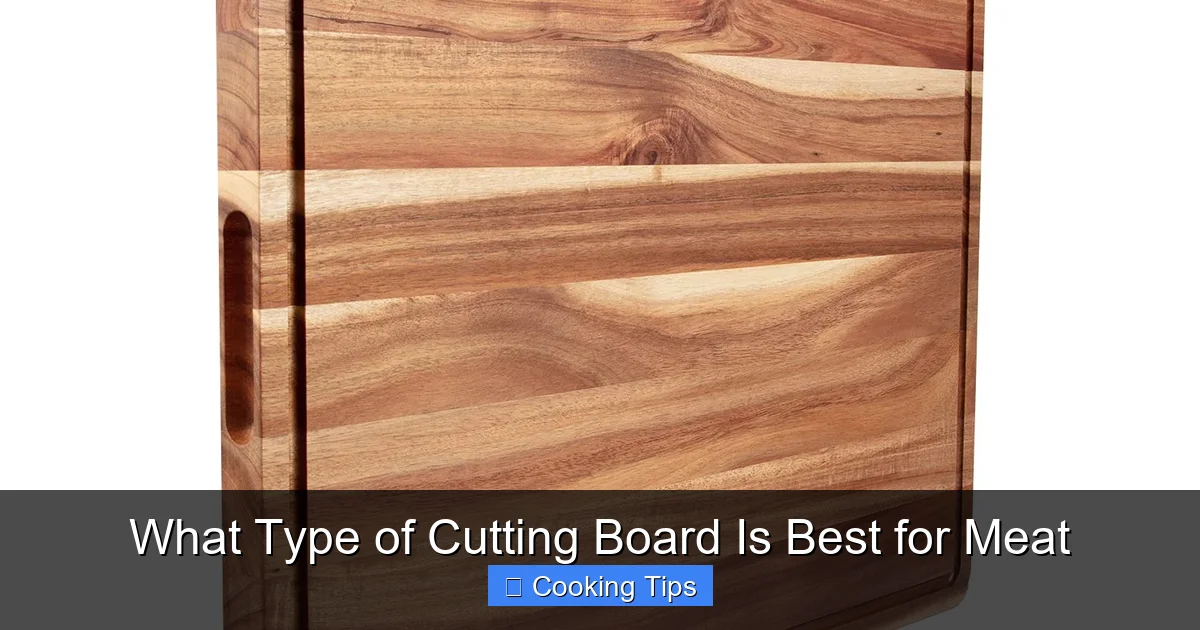
Visual guide about What Type of Cutting Board Is Best for Meat
Image source: m.media-amazon.com
Based on the pros and cons, here are our top recommendations for cutting boards when preparing meat:
Recommendation 1: The High-Quality Wooden Cutting Board (End-Grain)
For the serious home cook who values knife longevity and natural hygiene, a thick, well-made end-grain wooden cutting board is often considered the gold standard.
* **Best Woods:** Maple, Walnut, Cherry.
* **Why it’s best for meat:** Its ability to self-heal minor cuts, natural antimicrobial properties, and gentleness on knives make it ideal for repeated use with raw meat.
* **Considerations:** It requires more diligent care and investment upfront.
Recommendation 2: The Dedicated Color-Coded Plastic Cutting Board Set
For ultimate food safety and ease of cleaning, a set of high-quality polyethylene cutting boards with a color-coding system is an excellent choice, especially if budget is a concern or if you entertain frequently and worry about cross-contamination.
* **Why it’s best for meat:** The non-porous surface is easy to sanitize, and dedicated boards prevent cross-contamination with produce or other items.
* **Considerations:** You’ll need to replace them more frequently as they get scratched, and they will dull your knives faster than wood.
Essential Practices: Cleaning and Maintenance for Meat Cutting Boards

Visual guide about What Type of Cutting Board Is Best for Meat
Image source: goldfieldscatering.co.za
Regardless of the material you choose, proper cleaning and maintenance are paramount when dealing with raw meat.
Daily Cleaning Routine
1. **Scrape Off Debris**: Use a bench scraper or the back of your knife to remove any large food particles.
2. **Wash with Hot, Soapy Water**: Use a stiff brush or sponge with hot water and a good dish soap. Scrub both sides of the board thoroughly.
3. **Rinse Thoroughly**: Make sure all soap residue is washed away.
4. **Sanitize**:
* For Plastic Boards: You can often run them through a hot dishwasher cycle. Alternatively, spray them with a diluted bleach solution (1 tablespoon bleach per quart of water) or a commercial food-safe sanitizer. Let it sit for a few minutes, then rinse.
* For Wooden Boards: White vinegar is a good natural sanitizer. Spray it on, let it sit, then rinse. You can also use diluted bleach solution sparingly, but ensure it’s rinsed extremely well and follow up with oiling.
5. **Dry Thoroughly**: This is crucial for all boards, but especially wood. Stand wooden boards on their edge to allow air to circulate and dry them completely. Do not leave them lying flat or submerged in water.
Deep Cleaning and Maintenance for Wooden Boards
* **Oiling**: Once a month, or whenever the board looks dry, apply a generous amount of food-grade mineral oil to the entire surface. Let it soak in for several hours or overnight, then wipe off any excess. This replenishes the oils in the wood, preventing drying, cracking, and staining. You can also use specialized cutting board conditioners.
* **Conditioning**: Occasionally, you might want to use a cutting board conditioner that contains a blend of oil and wax (like beeswax) for extra protection and a smooth finish.
When to Replace Your Cutting Board
* **Plastic Boards**: Replace them when they become heavily grooved, discolored, or warped. Deep scratches are a sign that the surface is compromised and can harbor bacteria.
* **Wooden Boards**: While more durable, if a wooden board develops deep, irreparable cracks or splits, it’s time for a replacement. However, with proper care, a good wooden board can last a lifetime.
Troubleshooting Common Cutting Board Issues
* Stains on Wooden Boards: Lemon juice and salt can be a natural stain remover. Sprinkle salt on the stained area, rub with half a lemon, let it sit for a few minutes, then rinse and dry. For stubborn stains, a very diluted bleach solution might be necessary, followed by thorough rinsing and oiling.
* **Persistent Odors**: For wooden boards, a baking soda paste can help absorb odors. For plastic, thorough sanitizing with a bleach solution or vinegar is usually effective.
* **Warped Plastic Boards**: Unfortunately, once warped, plastic boards are difficult to fix. It’s best to replace them to ensure a stable and hygienic cutting surface.
Conclusion
Choosing the best cutting board for meat is a decision that impacts both your kitchen’s hygiene and the longevity of your knives. While plastic boards offer ease of cleaning and affordability with color-coding for safety, high-quality end-grain wooden boards, particularly those made from maple or walnut, provide superior knife care and natural antimicrobial benefits with proper maintenance.
In 2026, we advocate for a dual approach for many kitchens: a beautiful, well-maintained wooden board for general chopping and carving, and a set of color-coded plastic boards for raw meats, poultry, and seafood to maximize food safety and minimize cross-contamination. Whichever you choose, remember that consistent, thorough cleaning and appropriate maintenance are the keys to ensuring your cutting boards remain a safe and effective tool in your culinary arsenal for years to come.
