


Buying an air fryer in 2026? Avoid these common mistakes to ensure you get a model that truly fits your needs. From understanding capacity and features to considering cleaning and noise, this guide will help you make an informed decision. Don’t get caught out by overlooking crucial aspects – invest wisely for delicious, crispy food every time.
What to Avoid When Buying an Air Fryer
Air fryers have revolutionized home cooking, offering a healthier and often faster way to achieve that irresistible crispy texture on everything from fries to chicken wings. As we move through 2026, the market is brimming with more options than ever before. But with so many choices, it’s easy to make a mistake that leads to buyer’s remorse. This guide is your essential roadmap to navigating the air fryer landscape and ensuring you make a purchase you’ll truly love. We’ll walk you through the common pitfalls to avoid, helping you choose an air fryer that perfectly suits your kitchen and your culinary aspirations.
Key Takeaways
- Don’t Overlook Size and Capacity: A small air fryer might be too cramped for families or entertaining, while an oversized one can take up valuable counter space and be inefficient for single servings.
- Beware of Overly Complicated Controls: While advanced features can be nice, excessively complex digital interfaces can be frustrating. Opt for intuitive controls that make cooking easy.
- Skip Models with Poor Build Quality: Cheaply made air fryers can have uneven heating, flimsy baskets, and a shorter lifespan. Look for sturdy construction and reputable brands.
- Ignore “One-Size-Fits-All” Claims: Not all air fryers are created equal. The “best” air fryer depends on your cooking habits, family size, and kitchen space.
- Don’t Underestimate Cleaning Needs: Some air fryers are a breeze to clean, while others are a nightmare. Check for dishwasher-safe parts and non-stick coatings.
- Be Wary of Excessive Noise Claims: Air fryers inherently make some noise. Don’t expect silence, but avoid models known for being excessively loud or annoying.
1. Don’t Be Swayed by Size Alone
The first impulse for many is to either go for the smallest, most compact model to save space, or the largest, assuming bigger is always better. Both can be a mistake. The right size air fryer is crucial for efficiency and effectiveness.
Consider Your Household Size
If you’re cooking for one or two people, a smaller, 2-quart to 3-quart air fryer might be perfectly adequate. It will take up less counter space and heat up quicker. However, if you’re a family of four or more, or if you frequently entertain, a small air fryer will lead to endless batches, making cooking a chore rather than a joy. You’ll be cooking in shifts, and the food won’t stay hot.
Think About Counter Space
Conversely, an enormous air fryer, perhaps a 7-quart or larger model, might be overkill if you only cook for yourself. These larger units can dominate your countertops, and when used for small portions, they can be less efficient, taking longer to preheat and cook.
Tip:
Measure your typical portion sizes and consider your future needs. Many manufacturers provide capacity guidelines for the number of servings. Aim for a capacity that can comfortably cook 1-2 servings for individuals or couples, and 3-5+ servings for families.
2. Ignore Overly Complicated Controls
Technology is fantastic, but sometimes more isn’t better. Air fryers are meant to simplify cooking, not create a new learning curve.

Visual guide about What to Avoid When Buying an Air Fryer
Image source: dadongny.com
The Allure of Advanced Features
Many modern air fryers boast touchscreens, dozens of preset programs (for “chicken,” “fish,” “cake,” etc.), and Wi-Fi connectivity. While these can be appealing, they can also be overwhelming and often underutilized. If you’re not a tech-savvy individual or you prefer a more hands-on approach to cooking, these complex interfaces can be more of a hindrance than a help.
Intuitive vs. Intimidating
Look for models with clear, easy-to-understand controls. Dials for temperature and time are often the most straightforward. If a digital interface is preferred, ensure it’s responsive and the icons are easily recognizable. Preset programs can be convenient, but they often don’t account for specific ingredients or desired crispiness levels. You’ll likely find yourself manually adjusting settings anyway.
Tip:
If you see a sea of buttons and complex menus, ask yourself if you’ll genuinely use all those features. For many, a simple dial system or a clean digital display with fewer, well-defined presets is more practical and user-friendly.
3. Steer Clear of Poor Build Quality
An air fryer is an investment. Like any appliance, its longevity and performance depend heavily on its construction.

Visual guide about What to Avoid When Buying an Air Fryer
Image source: tableandflavor.com
The Dangers of Cheap Materials
Air fryers that feel flimsy or are made from cheap plastic are often a sign of poor internal components and uneven heating. This can lead to food that’s burnt in some spots and undercooked in others, no matter how well you arrange it. Look for sturdy exteriors and robust basket mechanisms.
Testing the Build
When possible, physically inspect the air fryer. Does the basket slide in and out smoothly? Does the unit feel stable when you move it? Are there any rattles or loose parts? For online purchases, read reviews specifically mentioning durability and material quality.
Reputable Brands Matter
While it’s tempting to go for the cheapest option, consider established brands known for quality kitchen appliances. They often have better quality control, more reliable customer support, and products that are built to last. A slightly higher initial cost can save you money in the long run by avoiding premature replacement.
Tip:
Don’t just look at the price tag. Consider the materials used. Stainless steel accents, a solid-feeling plastic casing, and a well-constructed basket are good indicators of a quality air fryer.
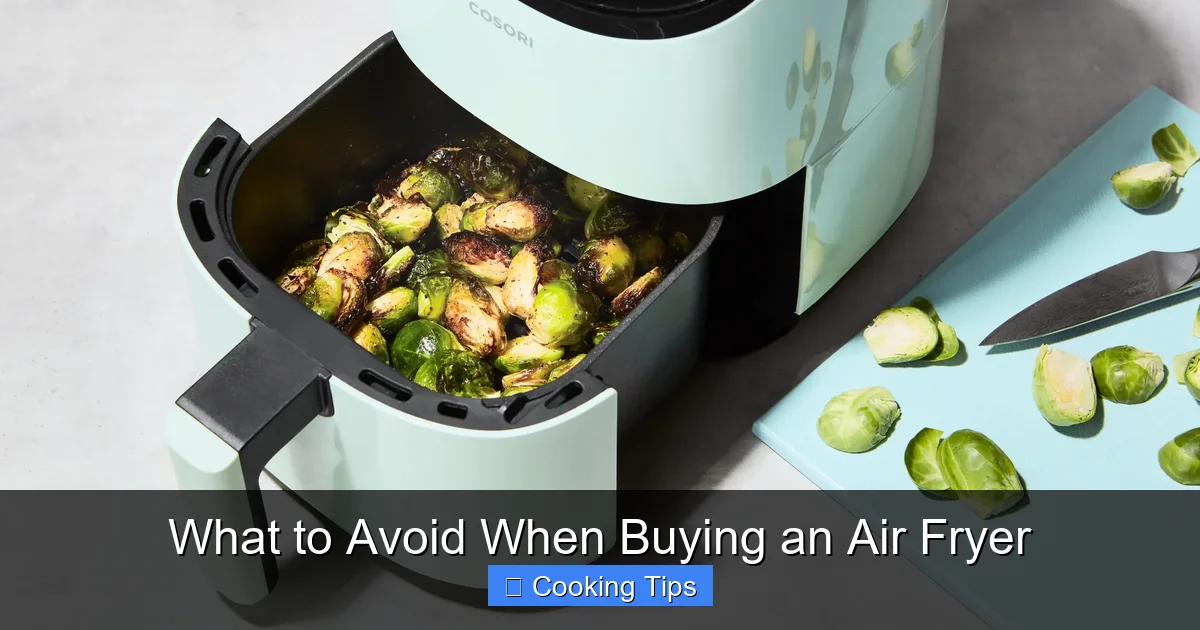
4. Don’t Assume All Air Fryers Cook the Same
The term “air fryer” can be a bit of a misnomer. It’s essentially a compact convection oven that circulates hot air. However, the effectiveness of this circulation varies significantly between models.
Visual guide about What to Avoid When Buying an Air Fryer
Image source: assets.epicurious.com
Heating Element and Fan Quality
The most crucial components are the heating element and the fan. A powerful fan is essential for creating that crisp, fried-like texture. Some lower-end models might have weaker fans, resulting in food that’s more baked than air-fried. Read reviews that discuss how evenly the air fryer cooks and how crispy the food gets.
Basket Design
The design of the basket also plays a role. Some baskets have perforated bottoms to allow for better air circulation, while others are solid. While solid baskets can be easier to clean, perforated ones often lead to a crispier result by allowing hot air to reach all sides of the food.
Tip:
Look for air fryers with strong heating elements and powerful fans. Reviews that highlight consistent results and excellent crispiness are your best indicators of good performance.
5. Underestimate the Importance of Cleaning
Nobody enjoys cleaning kitchen appliances, but some air fryers are significantly easier to maintain than others. This is a critical factor to consider for long-term satisfaction.
Dishwasher-Safe Parts
This is a game-changer. If the basket and any internal trays are dishwasher-safe, cleaning becomes a breeze. You can simply toss them in the dishwasher after use. Check the product description carefully to confirm this feature.
Non-Stick Coatings
A good quality non-stick coating on the basket and tray will prevent food from sticking, making manual washing much easier. However, be aware that some non-stick coatings can degrade over time, especially if abrasive cleaning tools are used.
Hard-to-Reach Areas
Some air fryer designs have nooks and crannies that are difficult to access for cleaning. Food particles can get trapped, leading to unpleasant odors and potential health issues. Look for models with smooth surfaces and easily removable parts.
Tip:
Prioritize models with dishwasher-safe baskets and trays. If manual cleaning is required, opt for designs with fewer complex parts and a robust non-stick coating.
6. Be Wary of Unrealistic Noise Expectations
Air fryers work by circulating hot air rapidly. This process inherently creates some noise. Don’t expect a silent kitchen appliance.
The Sound of Air Circulation
The fan is the primary source of noise. While some models are quieter than others, they all will produce a noticeable hum or whirring sound when in operation. This is normal and a sign that the appliance is working effectively.
What to Avoid:
Be skeptical of marketing that claims an air fryer is “whisper quiet” or “virtually silent.” While some might be quieter than others, true silence is impossible. Extremely loud or high-pitched noises, however, could indicate a faulty fan or motor and should be a red flag.
Tip:
Read user reviews that comment on the noise level. Look for descriptions like “a moderate hum” or “noticeable but not bothersome.” If multiple reviews mention excessive or annoying noise, it’s best to steer clear.
Conclusion
Purchasing an air fryer in 2026 doesn’t have to be a gamble. By understanding what to avoid, you can confidently select a model that will serve you well for years to come. Prioritize practicality over flashy features, consider your household needs, and always check for quality construction and ease of cleaning. With this guide, you’re well-equipped to make a smart air fryer purchase, unlocking a world of delicious, crispy, and healthier meals right in your own kitchen.
