

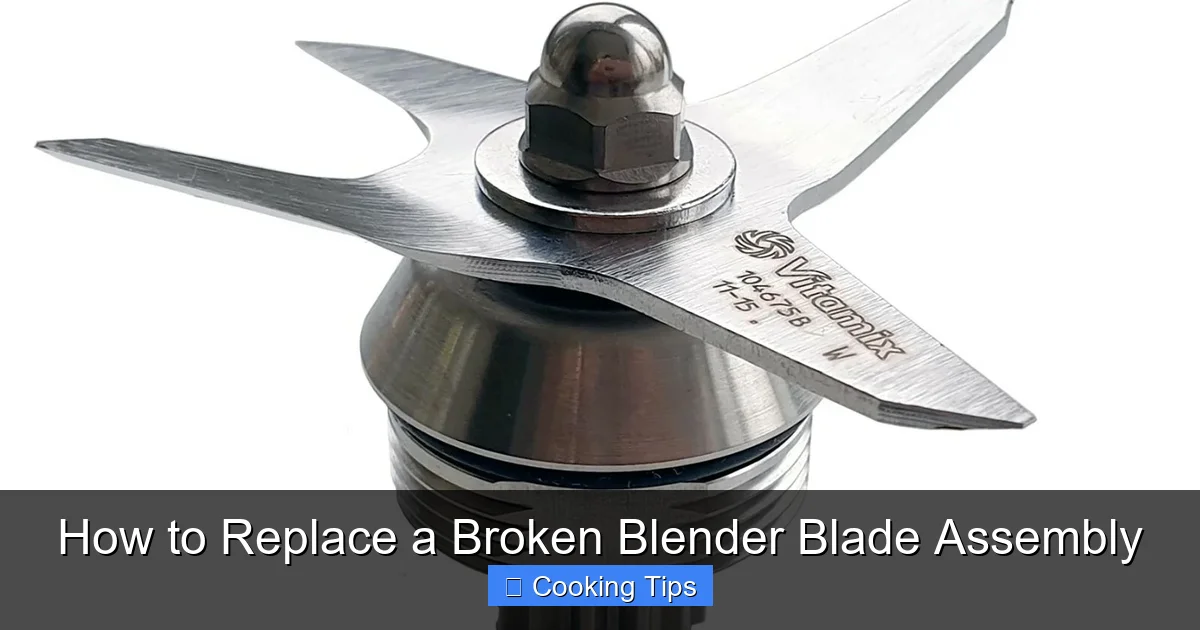
A broken blender blade assembly can leave you with a useless appliance. This comprehensive guide will walk you through replacing your blender’s broken blade assembly, ensuring you can get back to making smoothies, sauces, and more. We cover everything from identifying the problem to safely installing the new part, making it an easy DIY fix. Save money and reduce waste by repairing instead of replacing your entire blender.
Key Takeaways
- Identify the problem correctly: Confirm the blade assembly is indeed broken and not just a loose connection or a dull blade.
- Gather necessary tools and the replacement part: Ensure you have the correct replacement blade assembly for your blender model and basic tools like a wrench or pliers.
- Safety first: Always unplug the blender and detach the pitcher from the base before starting any repair to prevent accidental injury.
- Follow manufacturer instructions: Refer to your blender’s manual for specific disassembly and reassembly steps tailored to your model.
- Proper alignment is crucial: Ensure the new blade assembly is seated correctly and securely to prevent leaks and ensure efficient blending.
- Test thoroughly: After replacement, run the blender with water to check for leaks and proper functioning before use with food.
How to Replace a Broken Blender Blade Assembly
It’s a common kitchen catastrophe: you’re halfway through making your favorite smoothie, and your blender suddenly grinds to a halt or makes a strange, ominous noise. Upon closer inspection, you realize the unthinkable – your blender blade assembly is broken. This can feel like a major setback, especially if you rely on your blender for daily meals and drinks. But don’t despair! Replacing a broken blender blade assembly is a surprisingly manageable DIY project that can save you the cost of a new appliance and reduce waste. In this 2026 guide, we’ll walk you through every step, making it simple to get your blender back in prime working condition.
Understanding the Problem
Before we dive into the replacement process, it’s essential to confirm that the blade assembly is indeed the culprit. Sometimes, a blender might seem broken due to a loose jar, a power issue, or simply dull blades.
Common Signs of a Broken Blade Assembly:
- Visible damage: Look for cracks, chips, or bent blades on the assembly itself.
- Unusual noises: Grinding, scraping, or rattling sounds that weren’t there before can indicate damaged blades or a loose bearing.
- Leaking: If liquid seeps from the bottom of the jar when blending, the seals within the blade assembly might be compromised.
- Ineffective blending: If your blender struggles to break down ingredients it used to handle with ease, the blades may be damaged or dull.
If you observe any of these issues, it’s highly likely that your blender blade assembly needs replacing.
Step 1: Safety First – Unplug and Disassemble
This is the most critical step. Never attempt any repair with the blender plugged in.
Unplug the Blender
Locate the power cord and unplug the blender from the wall outlet. Ensure it’s completely disconnected. Even if the motor doesn’t turn on, a loose wire or faulty switch could still pose a risk.
Detach the Jar
Most blenders have a pitcher that screws or locks onto the base. Carefully twist or unlatch the jar from the motor base. Place the jar aside. Be mindful of any remaining liquid inside.
Step 2: Accessing the Blade Assembly
The method for accessing the blade assembly varies slightly between blender models. Generally, the assembly is attached to the bottom of the jar.
Locate the Blade Assembly Nut
Turn the jar upside down. You should see a large plastic or metal nut at the bottom, holding the blade assembly in place. This nut is often textured for grip.
Loosen and Remove the Nut
This is where you might need a tool.
- For Hand Tightening: Some blender jars are designed so the nut can be loosened by hand. Try applying firm counter-clockwise pressure.
- Using Tools: If hand-tightening doesn’t work, you’ll likely need a wrench or a specialized blender jar opener tool. The nut is typically a large hexagonal shape. Place the wrench around the nut and turn it counter-clockwise. Be firm but avoid excessive force that could damage the jar. Some blenders have specific removal tools that might be included in the original packaging or available for purchase separately.
Carefully Remove the Blade Assembly
Once the nut is completely loosened, you should be able to carefully pull the old blade assembly out from the inside of the jar. Be cautious, as the blades will still be sharp.
Step 3: Cleaning and Inspection
Before installing the new assembly, take this opportunity to thoroughly clean the jar and inspect other components.
Clean the Jar Interior
Wash the inside of the blender jar with warm, soapy water. Rinse it thoroughly and dry it completely. Any lingering residue can affect the new assembly’s performance or cleanliness.
Inspect Seals and Gaskets
The blade assembly usually has rubber gaskets or seals that prevent leaks. Check these for signs of wear, cracks, or degradation. If they appear damaged, it’s a good idea to replace them along with the blade assembly, even if they aren’t explicitly part of the broken component.
Step 4: Installing the New Blade Assembly
Now comes the exciting part – putting in the replacement!
Obtain the Correct Replacement Part
This is crucial. You need to ensure you have the exact replacement blade assembly for your specific blender model. Check the model number on your blender’s base or in its manual. Websites of blender manufacturers or reputable appliance parts stores are excellent resources for finding the correct part. Generic parts might not fit properly and could cause further damage.
Prepare the New Assembly
Gently unpackage the new blade assembly. Some new assemblies might come with pre-installed seals; ensure they are properly seated. If your replacement comes with separate seals, make sure to fit them correctly onto the new blade assembly unit before insertion.
Insert the New Assembly into the Jar
From the inside of the jar, carefully place the new blade assembly into its designated spot. Ensure it sits flush and is oriented correctly. The blades should face inward towards the jar’s opening.
Secure the Blade Assembly Nut
Place the large nut back onto the threaded portion of the blade assembly from the outside of the jar.
- Hand Tighten First: Screw the nut on by hand as tightly as you can. This helps ensure it’s not cross-threaded.
- Final Tightening: Use your wrench or blender jar opener tool to tighten the nut firmly. Again, be firm but avoid over-tightening, which could crack the plastic jar or strip the threads. The goal is a snug fit that creates a watertight seal.
Step 5: Reassemble and Test
You’re almost there! Time to put everything back together and give it a spin.
Reattach the Jar to the Base
Place the jar back onto the blender’s motor base. Ensure it’s properly aligned and locked or screwed in place according to your blender’s design.
Perform a Water Test
Before you blend your expensive ingredients, fill the jar with a small amount of water (about 1-2 cups). Place the lid on securely.
- Low Speed Test: Start the blender on its lowest setting for a few seconds.
- Inspect for Leaks: Carefully check the bottom of the jar and around the blade assembly for any signs of water leakage. If you see even a small drip, unplug the blender immediately and re-check the tightness of the blade assembly nut. You may need to re-seat the seals or tighten the nut further.
- Higher Speed Test: If there are no leaks, gradually increase the speed and run the blender for about 30 seconds to ensure everything is functioning smoothly.
Troubleshooting Common Issues
Even with the best intentions, you might encounter a hiccup.
Leaking After Replacement
Problem: The blender leaks after you’ve replaced the blade assembly.
Solution: This is almost always due to an improperly seated seal, an improperly tightened nut, or a damaged seal. Unplug the blender, disassemble, and carefully inspect the seal. Ensure it’s clean, correctly positioned, and free of damage. Re-tighten the nut firmly but not excessively. If the seal looks worn, replace it.
The Nut Won’t Tighten or Feels Loose
Problem: The nut on the blade assembly feels loose even when tightened, or it won’t thread properly.
Solution: This could indicate cross-threading or damaged threads on either the nut or the blade assembly. Unplug and disassemble. Carefully inspect the threads for any debris or damage. If threads are damaged, you might need to replace the entire blade assembly unit again, or in rare cases, the jar itself.
Blender Still Not Working Properly
Problem: The new blade assembly is installed, but the blender still makes odd noises or blends poorly.
Solution: Ensure you have the correct replacement blade assembly for your model. Sometimes, even if it looks similar, it might not be compatible. If the part is correct, the issue might be with the motor base itself, which is a more complex repair.
Conclusion
Replacing a broken blender blade assembly is a practical and cost-effective solution that empowers you to keep your favorite kitchen appliance running. By following these steps carefully, prioritizing safety, and ensuring you have the correct replacement parts, you can successfully tackle this DIY repair. Remember, a well-maintained blender is a gateway to delicious and healthy creations. So, don’t let a broken blade stop you – get your blender back in action and enjoy all the culinary possibilities it offers!
