

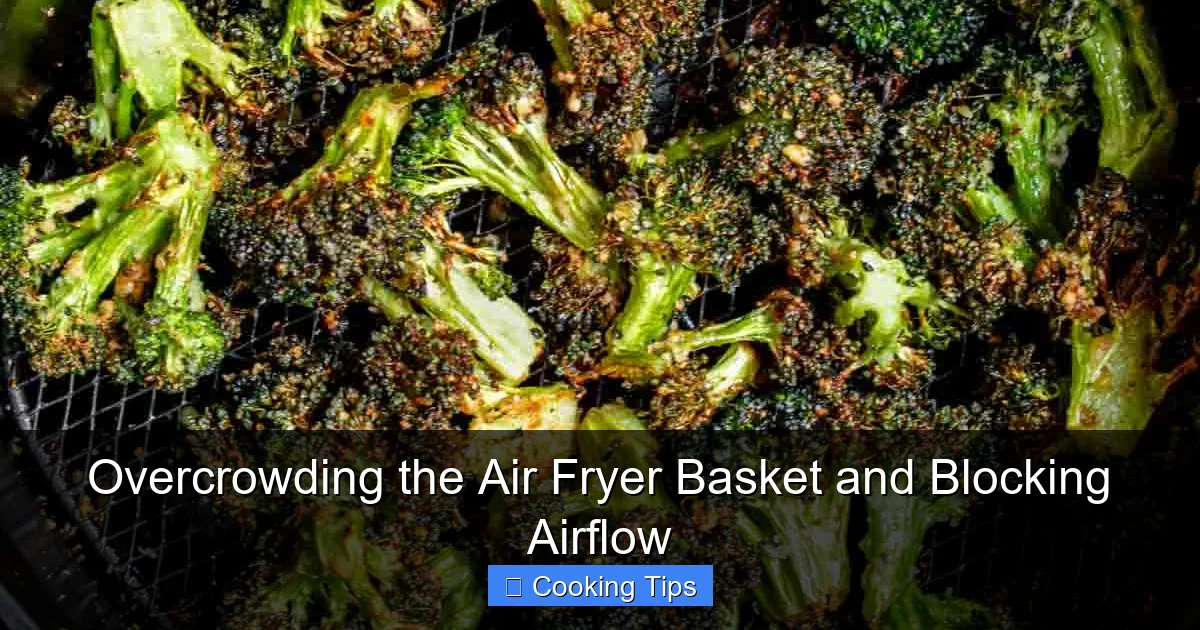
Overcrowding your air fryer basket is a common mistake that leads to soggy, unevenly cooked food. This guide explains the critical role of proper airflow in achieving those coveted crispy results. By understanding the science behind air frying and following simple, actionable tips, you’ll transform your air fryer cooking experience and enjoy perfectly cooked meals every time.
Overcrowding the Air Fryer Basket and Blocking Airflow
The air fryer has become a kitchen staple for a reason. It promises crispy, delicious food with less oil, all cooked in a fraction of the time compared to traditional ovens. But have you ever found yourself disappointed with your air fryer results? Perhaps your fries aren’t as crispy as you’d hoped, or your chicken wings are a little pale and soggy in places. The culprit might be closer than you think: overcrowding the air fryer basket.
In this comprehensive guide, we’ll dive deep into why overcrowding your air fryer basket is detrimental to your cooking. We’ll explain the science behind how air fryers work, the crucial role of airflow, and provide you with practical, easy-to-follow strategies to ensure your food is always perfectly cooked and wonderfully crispy. By the end of this guide, you’ll be a pro at maximizing your air fryer’s potential and banishing soggy food forever.
Key Takeaways
- The Importance of Airflow: Air fryers work by circulating hot air rapidly, similar to convection ovens. Blocking this airflow with too much food prevents even cooking and crisping.
- Signs of Overcrowding: Look for pale, soggy, or undercooked food, especially in the center of the basket, which indicates poor air circulation.
- Single Layer Cooking is Key: For optimal results, arrange food in a single layer, allowing space between each piece for hot air to reach all surfaces.
- Batch Cooking is Your Friend: Don’t be tempted to fit everything in at once. Cooking in multiple smaller batches ensures better quality and consistency.
- Shake and Flip for Evenness: Regularly shaking the basket or flipping food halfway through the cooking time helps expose different sides to the hot air.
- Consider Food Type and Size: Denser or larger items may require more space than smaller, lighter items. Adjust accordingly.
Understanding How Air Fryers Work: The Power of Airflow
Before we tackle the problem of overcrowding, it’s essential to understand the magic behind your air fryer. At its core, an air fryer is a powerful, compact convection oven. It works by heating up rapidly and then circulating that hot air at high speeds around your food. This rapid circulation is what creates that desirable crispy exterior, mimicking the effects of deep frying without submerging your food in oil.
Think of it like a miniature, super-charged whirlwind of hot air. This whirlwind needs space to move. When you fill the basket to the brim, you’re essentially creating a traffic jam for that hot air. The air can’t circulate freely, and that’s where the problems begin.
The Consequences of an Overcrowded Air Fryer Basket
When you cram too much food into your air fryer basket, you are directly impeding the flow of hot air. This leads to several undesirable outcomes:
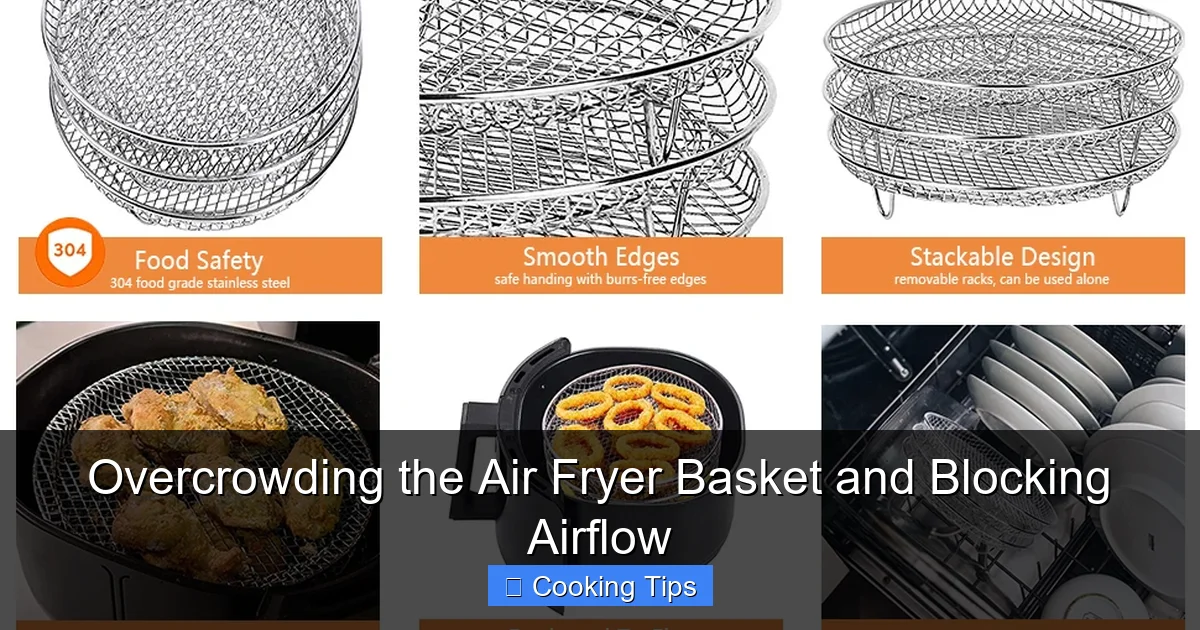
Visual guide about Overcrowding the Air Fryer Basket and Blocking Airflow
Image source: m.media-amazon.com
- Uneven Cooking: Some pieces of food will be exposed to enough hot air to cook properly and crisp up, while others, hidden away in the middle or buried beneath other items, will receive little to no direct heat. This results in a mix of cooked, undercooked, and unevenly browned food.
- Soggy, Limp Food: Instead of crisping, food that isn’t adequately exposed to hot air will steam. The moisture trapped within the food has nowhere to go, leading to a soggy texture rather than a satisfying crunch.
- Longer Cooking Times: Because the hot air can’t circulate efficiently, your food will take significantly longer to cook. You might find yourself increasing the temperature or cooking time, which can then lead to burnt exteriors on the pieces that *are* getting heat, while the insides remain undercooked.
- Reduced Crispy Factor: The primary reason many people love air fryers is for their ability to produce crispy results. Overcrowding directly counteracts this, preventing the Maillard reaction (the browning process) and the dehydration of the food’s surface that leads to crispiness.
Recognizing the Signs of an Overcrowded Basket
How can you tell if you’re making the overcrowding mistake? The signs are usually quite clear:
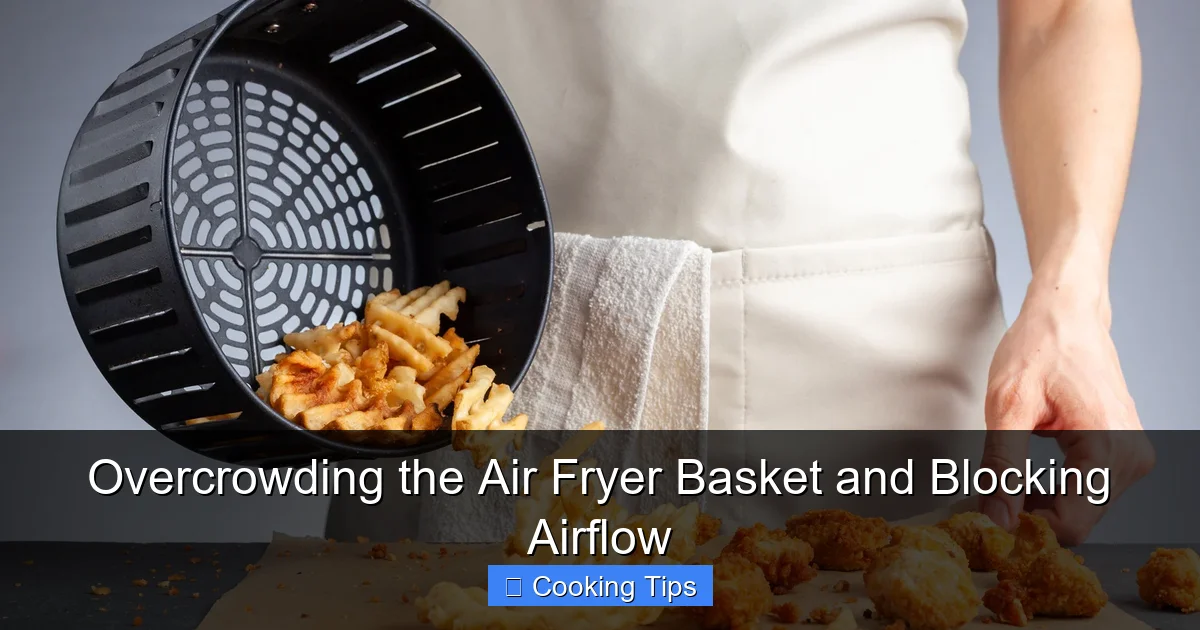
Visual guide about Overcrowding the Air Fryer Basket and Blocking Airflow
Image source: thedailymeal.com
- Pale, Untouched Spots: Examine your food after cooking. If you see areas that are pale, not browned, or look “steamed” rather than “fried,” your basket was likely too full.
- Soggy Bottoms: Especially with items like fries or vegetables, a soggy bottom is a sure sign that the air couldn’t circulate underneath.
- Uneven Browning: Some pieces might be beautifully golden, while others are still the color of raw food.
- Food Sticking Together: If your food pieces have fused together, it’s a sign they were packed too tightly.
- Excessive Steam: Opening the air fryer to a cloud of steam can indicate that moisture is trapped and food is steaming rather than crisping.
How to Prevent Overcrowding: Your Step-by-Step Guide to Air Fryer Success
Now that you understand the ‘why,’ let’s get to the ‘how.’ Implementing these simple strategies will revolutionize your air fryer experience.
Visual guide about Overcrowding the Air Fryer Basket and Blocking Airflow
Image source: missvickie.com
Step 1: Respect the Single Layer Rule
This is the golden rule of air frying. For the best results, your food should be arranged in a single layer in the air fryer basket. This means no stacking!
- Why it matters: A single layer allows the hot air to reach every surface of each piece of food. This ensures even cooking, browning, and that coveted crispiness from all sides.
- Practical tip: Imagine you’re arranging food on a baking sheet for optimal roasting. The same principle applies here. There should be space between each item.
Step 2: Batch Cook Strategically
It can be tempting to try and cook a large batch of food all at once, especially if you’re feeding a family. Resist the urge!
- The strategy: Cook your food in multiple smaller batches. It might take a little longer overall, but the quality of your food will be exponentially better.
- Example: If you want to make fries for four people, instead of filling the basket to the top, cook two batches, or even three smaller ones if needed.
- Time-saving tip: While the first batch is cooking, you can prepare the next one. Some people even keep the second batch warm in a low oven while the first batch cooks.
Step 3: Don’t Fear the Shake or Flip
Even with a single layer, some items benefit from a little help to ensure maximum exposure to the circulating air.
- For smaller items (fries, vegetables, nuggets): About halfway through the cooking time, pull out the basket and give it a good shake. This tumbles the food, exposing different sides to the hot air.
- For larger items (chicken wings, fish fillets): If you can’t shake them, use tongs to flip each piece over. This ensures both sides get equally browned and crispy.
Step 4: Consider Food Type and Size
Not all foods are created equal, and their size and density play a role in how much space they need.
- Smaller, lighter items: Like broccoli florets or french fries, can sometimes be cooked slightly closer together than larger, denser items. However, still adhere to the single-layer principle.
- Larger, denser items: Such as chicken breasts or potato wedges, require more individual space to ensure the hot air can penetrate and cook them through without drying out the exterior.
- Cut to size: If you’re cutting your own vegetables or potatoes, aim for relatively uniform sizes. This helps them cook more evenly.
Step 5: Adjust for Different Foods in the Same Batch (Use Caution!)
While it’s generally best to cook one type of food at a time for optimal results, sometimes you might want to cook a protein and a vegetable together. If you choose to do this, be extra mindful of spacing and cooking times.
- Prioritize the longest cooking item: Place items that require longer cooking times at the bottom or in areas where they’ll receive consistent heat.
- Ensure ample space: This is even more critical when cooking multiple types of food.
- Be prepared to remove items early: If one item is cooked before the other, remove it so it doesn’t overcook while the other finishes.
- Best practice: For perfect results, cook proteins and vegetables separately.
Troubleshooting: Common Air Fryer Problems and Solutions
Even with the best intentions, you might encounter issues. Here’s how to troubleshoot:
My food is still soggy, even though I didn’t overfill the basket.
Possible causes and solutions:
- Not enough cooking time or too low a temperature: Double-check your recipe recommendations and ensure you’re using the correct settings. Increase cooking time by a few minutes or slightly increase the temperature.
- Too much moisture on the food: Pat your food dry thoroughly with paper towels before cooking, especially for items like french fries or breaded chicken. This removes excess surface moisture that can lead to steaming.
- Food is too wet from marinade: If you’re marinating, consider patting the food dry after marinating and before air frying. You can also reapply some of the marinade after cooking if desired.
My food is burnt on the edges but undercooked in the middle.
Possible causes and solutions:
- Overcrowding: This is the most common culprit. Ensure you are using a single layer with space between items.
- Cooking at too high a temperature: If the temperature is too high for the cooking time, the outside can burn before the inside cooks. Try reducing the temperature slightly and increasing the cooking time.
- Uneven heat distribution: Ensure your air fryer is preheated properly and give the basket a good shake or flip the food halfway through.
My air fryer is smoking.
Possible causes and solutions:
- Grease buildup: Regularly clean the heating element and the inside of your air fryer. Food particles and grease can accumulate and burn.
- Using oil that smokes at high temperatures: Opt for oils with a high smoke point, like avocado oil or grapeseed oil. Avoid olive oil for high-temperature air frying.
- Overcrowding: When food is packed too tightly, fat and grease can drip down and accumulate on the heating element, causing smoke.
Conclusion: Embrace the Space for Crispy Perfection
Mastering the art of air frying isn’t just about selecting the right recipe; it’s about understanding how your appliance works and respecting its needs. Overcrowding the air fryer basket is the most common pitfall that prevents users from achieving the crispy, golden-brown results they desire. By remembering the simple principle of airflow and adhering to the single-layer rule, you’re setting yourself up for success.
Take the time to cook in smaller batches, shake or flip your food midway, and always give your ingredients room to breathe. It might seem like a small change, but it will make a world of difference in the texture and taste of your air-fried creations. So, the next time you reach for your air fryer, remember: more space equals more crispiness, and a happier, tastier meal.
