

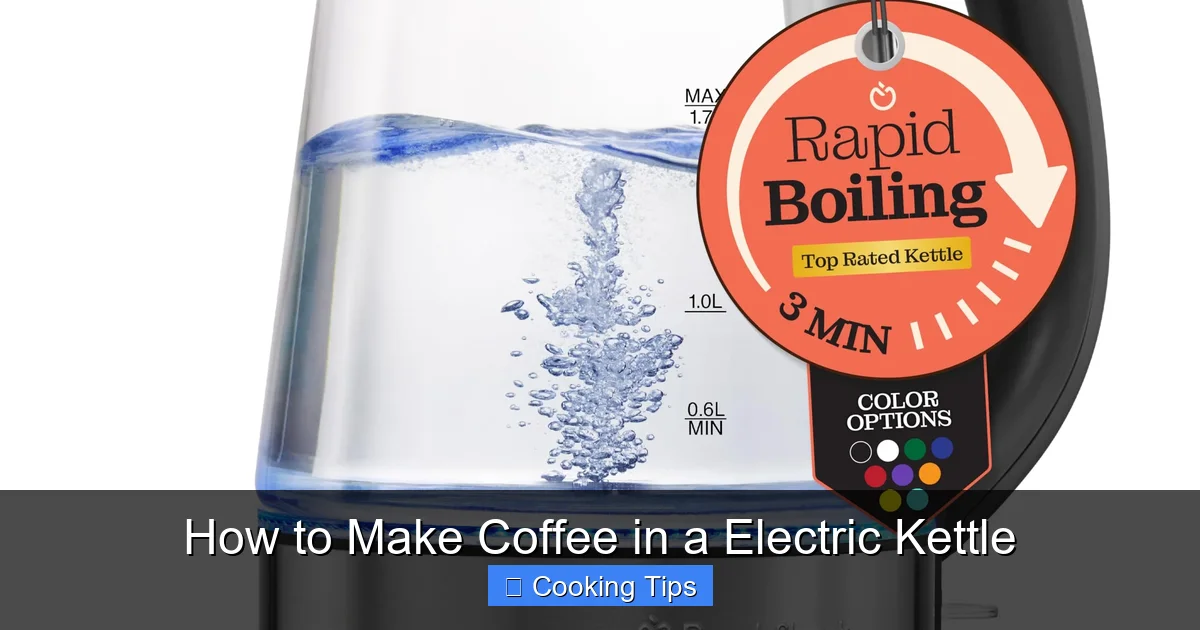
Discover the surprisingly simple art of making coffee with an electric kettle. This guide will walk you through the most straightforward methods, proving you don’t need fancy equipment for a great cup. Master the basics and enjoy a delicious, quick brew anytime. We cover everything from water heating to steeping for the perfect result.
# How to Make Coffee in an Electric Kettle
Welcome to the future of coffee brewing, where simplicity meets great taste! In 2026, we’re all about efficiency and enjoying life’s simple pleasures. And what’s more pleasurable than a perfectly brewed cup of coffee to start your day or power through an afternoon slump? You might think you need a fancy espresso machine or a complex pour-over setup to achieve a delicious brew. But what if we told you that your trusty electric kettle can be your secret weapon?
That’s right! Making excellent coffee with an electric kettle is not only possible, but it’s also incredibly straightforward and satisfying. This guide will equip you with the knowledge and techniques to transform your electric kettle from a mere water heater into a vital component of your coffee-making ritual. We’ll explore the simplest, most effective methods to brew a rich, flavorful cup, proving that you don’t need a lot of gadgets to enjoy fantastic coffee at home. Get ready to unlock the potential of your electric kettle and elevate your home-brewed coffee game.
## Understanding the Basics of Coffee Brewing with an Electric Kettle
Before we dive into the step-by-step process, it’s important to understand why an electric kettle is such a useful tool for coffee brewing. Unlike stovetop kettles, many electric kettles offer precise temperature control. This is a game-changer for coffee. Different coffee beans and brewing methods perform best at specific water temperatures. Boiling water can scorch the coffee grounds, leading to a bitter taste, while water that’s too cool won’t extract enough flavor, resulting in a weak, sour cup.
Your electric kettle allows you to heat water to the ideal brewing temperature, typically between 195°F and 205°F (90°C to 96°C). This precision ensures optimal extraction of those wonderful coffee flavors. Plus, electric kettles heat water much faster than their stovetop counterparts, significantly reducing your waiting time.
## Essential Tools You’ll Need
To make coffee in an electric kettle, you’ll need a few simple items:
* **Electric Kettle:** Your star player! Look for one with temperature control if possible, but any electric kettle will work.
* **Freshly Roasted Coffee Beans:** The quality of your beans is paramount.
* **Coffee Grinder:** A burr grinder is ideal for consistent grounds, but a blade grinder will do in a pinch.
* **Brewing Device:** This could be a French press, a pour-over cone (like a V60 or Kalita Wave), a Chemex, or even just a fine-mesh sieve or coffee filter.
* **Mug or Carafe:** To collect your delicious coffee.
* **Scale (Optional but Recommended):** For precise coffee-to-water ratios.
* **Timer:** To track your brewing time.
## Method 1: The Simple French Press Immersion
The French press is arguably one of the most accessible and forgiving methods for making coffee, and it pairs perfectly with an electric kettle. It’s a full-immersion brewing method, meaning the coffee grounds steep directly in the hot water.
### Step 1: Heat Your Water
1. **Fill the Electric Kettle:** Add fresh, cold water to your electric kettle. The amount will depend on how many cups of coffee you want to make. A good starting point for a single cup is about 250-300 ml (8-10 ounces) of water per 15 grams of coffee.
2. **Set the Temperature (If Applicable):** If your electric kettle has temperature control, set it to your desired brewing temperature, ideally around 200°F (93°C). If not, bring the water to a boil and let it sit for about 30-60 seconds off the heat to cool slightly.
3. **Boil the Water:** Turn on your electric kettle and let it heat the water.
### Step 2: Grind Your Coffee
1. **Measure Your Beans:** While the water heats, weigh your coffee beans. A common ratio is 1:15 (1 gram of coffee to 15 grams of water), but you can adjust this to your preference. For a standard mug (around 300ml), aim for about 20 grams of coffee.
2. **Grind Coarsely:** Grind your coffee beans to a coarse consistency, similar to breadcrumbs or sea salt. This is crucial for French press brewing; too fine a grind will result in sediment in your cup and over-extraction.
### Step 3: Assemble and Steep
1. **Preheat the French Press:** Pour a little hot water into your French press to warm it up. Swirl it around and discard the water. This helps maintain the brewing temperature.
2. **Add Coffee Grounds:** Place the coarsely ground coffee into the bottom of the preheated French press.
3. **Bloom the Coffee:** Once your water reaches the target temperature, pour just enough hot water over the grounds to saturate them completely. You should see the coffee grounds puff up and release gases – this is called the bloom. Let it bloom for about 30 seconds.
4. **Add Remaining Water:** Gently pour the rest of the hot water into the French press, ensuring all grounds are submerged.
5. **Steep:** Place the lid on the French press, but don’t press the plunger down yet. Let the coffee steep for 4 minutes.
### Step 4: Plunge and Serve
1. **Press Slowly:** After 4 minutes, slowly and steadily press the plunger all the way down. This separates the coffee grounds from the liquid.
2. **Serve Immediately:** Pour your freshly brewed coffee into your mug. Avoid letting the coffee sit in the French press with the grounds, as it will continue to extract and can become bitter.
## Method 2: Simple Pour-Over with an Electric Kettle
A pour-over method offers a cleaner, brighter cup of coffee by allowing the water to filter through the grounds and a paper filter. Your electric kettle is perfect for controlling the water flow.
### Step 1: Heat Your Water
Follow the same water heating steps as in Method 1. Aim for that ideal 200°F (93°C) temperature.
### Step 2: Prepare Your Pour-Over Setup
1. **Place Filter:** Insert a paper filter into your pour-over cone (V60, Kalita, etc.) and place the cone over your mug or carafe.
2. **Rinse the Filter:** Pour some hot water through the paper filter to rinse away any papery taste and to preheat your brewing device and mug. Discard this rinse water.
3. **Measure and Grind Coffee:** For a standard mug (around 300ml), use about 20 grams of coffee beans. Grind them to a medium consistency, similar to granulated sugar.
### Step 3: The Pour-Over Process
1. **Add Grounds:** Add your medium-ground coffee to the rinsed filter. Gently shake the cone to level the bed of grounds.
2. **Bloom:** Pour just enough hot water from your electric kettle over the grounds to saturate them. Wait about 30 seconds for the bloom.
3. **First Pour:** Begin pouring the remaining hot water in slow, steady, concentric circles, starting from the center and moving outwards. Try to avoid pouring water directly onto the filter paper. Aim to keep the water level consistent.
4. **Subsequent Pours:** Continue pouring in stages, allowing the water to drip through. The entire brewing process should take about 2 to 3 minutes. You’ll want to finish pouring all the water within this time frame.
### Step 4: Enjoy
Once the water has fully dripped through, remove the pour-over cone. Your clean, aromatic coffee is ready to be enjoyed!
## Method 3: The “Cowboy Coffee” (No Filter Required)
This is the most basic method, perfect for when you’re truly minimalist. It requires no special brewing equipment beyond your electric kettle.
### Step 1: Heat Your Water
Heat your water in the electric kettle to a boil, then let it cool for about 30-60 seconds.
### Step 2: Grind and Mix
1. **Grind Finely:** Grind your coffee beans to a fine consistency, similar to espresso grounds.
2. **Combine:** Add your finely ground coffee directly into your mug. A good starting ratio is about 1-2 tablespoons of coffee per 8 ounces of water.
3. **Add Water:** Pour the hot (not boiling) water from your electric kettle into the mug with the coffee grounds. Stir briefly to ensure all grounds are wet.
### Step 3: Steep and Settle
1. **Steep:** Let the coffee steep for about 4-5 minutes.
2. **Settle:** After steeping, let the mug sit undisturbed for another minute or two. The fine grounds will settle to the bottom of the mug. You can also add a tablespoon of cold water, which can help the grounds settle faster.
### Step 4: Sip Carefully
Sip your coffee slowly and carefully, trying not to disturb the grounds at the bottom. It’s not the cleanest cup, but it’s a satisfying brew when you’re in a pinch.
## Practical Tips for Electric Kettle Coffee
* **Use Fresh, Filtered Water:** The quality of your water significantly impacts the taste of your coffee.
* **Invest in a Burr Grinder:** For consistent grind sizes, a burr grinder is superior to a blade grinder. This consistency is key to even extraction and better flavor.
* **Experiment with Ratios:** Don’t be afraid to adjust the coffee-to-water ratio. If your coffee is too strong, use less coffee or more water. If it’s too weak, do the opposite.
* **Time Your Brews:** Consistent brewing times lead to consistent results. Use a timer!
* **Clean Your Kettle:** Limescale buildup can affect the taste of your water and, consequently, your coffee. Descale your electric kettle regularly.
## Troubleshooting Common Issues
* **Coffee is Bitter:**
* **Cause:** Water too hot, grind too fine, or over-extraction (steeped too long).
* **Solution:** Lower water temperature slightly, try a coarser grind, or shorten steeping time.
* **Coffee is Weak or Sour:**
* **Cause:** Water too cool, grind too coarse, or under-extraction (not steeped long enough).
* **Solution:** Increase water temperature, try a finer grind, or steep for a bit longer.
* **Too Much Sediment in the Cup:**
* **Cause:** Grind is too fine for the brewing method (especially for French press), or the plunger/filter isn’t sealing properly.
* **Solution:** Use a coarser grind, ensure your French press plunger is fully seated, or try a different filter for pour-over.
## Conclusion
Who knew that your everyday electric kettle could be such a versatile coffee companion? By understanding a few basic principles of brewing and utilizing the precise heating capabilities of your electric kettle, you can consistently create delicious coffee at home. Whether you prefer the rich, full-bodied taste of a French press, the clean clarity of a pour-over, or the rugged simplicity of cowboy coffee, your electric kettle is ready to help. So, next time you crave a great cup of coffee, reach for your electric kettle. You’ll be surprised at how easy and rewarding it can be. Happy brewing in 2026!
Key Takeaways
- No Special Equipment Needed: An electric kettle and basic coffee-making tools are all you require.
- Precise Water Temperature: Electric kettles allow for controlled heating, crucial for optimal coffee extraction.
- Versatile Methods: You can adapt several brewing techniques, from simple immersion to basic pour-over, using an electric kettle.
- Speed and Convenience: Electric kettles heat water rapidly, making coffee preparation faster and easier.
- Taste Control: By adjusting grind size, coffee-to-water ratio, and steep time, you can customize your coffee’s flavor.
- Cleanliness is Key: Regularly cleaning your kettle and brewing tools ensures a pure coffee taste.
