

Learn the essential techniques for safely carrying a knife in your kitchen. This guide covers proper handling, transporting, and storing knives to prevent accidents and improve your culinary workflow. Discover how to move with confidence and efficiency, ensuring a safer cooking experience.
How to Carry a Knife in the Kitchen
Welcome to the heart of your culinary journey! In the kitchen, a knife is more than just a tool; it’s an extension of your hand, essential for chopping, slicing, dicing, and preparing countless delicious meals. But with great utility comes great responsibility. Understanding how to carry a knife safely and efficiently is a fundamental skill for every home cook, from the novice to the seasoned chef. In 2026, kitchen safety is more important than ever, and mastering knife handling is a cornerstone of that safety.
This guide will equip you with the knowledge and techniques to carry your kitchen knives with confidence and security. We’ll cover everything from the basic grip to moving around your kitchen without incident. By the end of this article, you’ll understand what it means to carry a knife properly, why it’s so important, and how to integrate these practices into your daily cooking routine. Let’s sharpen your skills!
Key Takeaways
- Safe Transport is Paramount: Always carry a knife with the blade pointed downwards and away from your body, ensuring a secure grip.
- Verbal Cues Matter: Announce “knife!” or “hot pan!” to alert others and prevent collisions.
- Clear Your Path: Before moving with a knife, ensure your walking path is clear of obstacles and people.
- Understand Different Carry Methods: Learn the “forearm carry” for short distances and the “sheath/block carry” for longer or more secure transport.
- Proper Storage is Crucial: Never leave knives loose; use knife blocks, magnetic strips, or sheaths to keep them safe.
- Maintain Your Knives: Sharp knives are safer knives; learn basic maintenance to ensure optimal performance and reduced risk.
- Awareness is Key: Always be mindful of your surroundings and the knife’s position to avoid accidents.
Why Proper Knife Carrying Matters
Before we dive into the “how,” let’s briefly touch on the “why.” Improper knife carrying is a leading cause of kitchen accidents, resulting in cuts and injuries that can range from minor to severe. Beyond personal safety, a well-carried knife contributes to a more organized and efficient kitchen. When you know how to handle your tools, you move with more grace and less distraction. This, in turn, leads to a more enjoyable and productive cooking experience. In a fast-paced kitchen environment, clarity and control are essential.
The Fundamentals of a Safe Grip
The way you hold a knife is the first step to carrying it safely. A secure grip ensures the knife won’t slip, and you have maximum control over its movement.
The Pinch Grip
This is the most common and recommended grip for most kitchen tasks.
1. Index Finger and Thumb: Place your thumb on one side of the blade’s bolster (the thick part where the blade meets the handle) and your index finger on the other. You are essentially pinching the blade.
Visual guide about How to Carry a Knife in the Kitchen
Image source: kitchenprofy.com
2. The Handle: Wrap your remaining fingers comfortably around the handle. This grip offers excellent control and precision.
The Handle Grip
While less common for precision tasks, this grip is sometimes used for heavier chopping or when transitioning.
1. Wrap Your Fingers: Simply wrap all your fingers around the handle of the knife, as you would with any other tool.
2. Thumb Placement: Your thumb can rest either on the side of the handle or along the top of the handle, depending on the task and knife design.
Tip: Regardless of the grip, ensure your hand is dry and free from grease or other slippery substances. A firm, confident grip is key to preventing accidents.
How to Carry a Knife Safely
Now that you have a secure grip, let’s talk about moving with your knife. There are a few primary methods for carrying a knife in the kitchen, each suited for different situations.
Method 1: The Forearm Carry (For Short Distances)
This is the go-to method for moving a knife from one side of the counter to another, or when you need to pass it to someone nearby. It’s about keeping the knife close and controlled.
Step-by-Step Forearm Carry:
1. Secure Your Grip: Hold the knife using the pinch grip, with your index finger and thumb firmly on the blade.
Visual guide about How to Carry a Knife in the Kitchen
Image source: m.media-amazon.com
Visual guide about How to Carry a Knife in the Kitchen
Image source: s3.amazonaws.com
2. Blade Down and Away: Point the tip of the knife downwards, towards the floor, and keep the blade angled away from your body. Never carry a knife with the blade pointing upwards or towards yourself.
3. Keep it Close: Hold the knife close to your side, with the blade resting against your forearm. This keeps the knife contained and prevents it from swinging out.
4. Announce Your Presence: As you move, especially if others are around, clearly announce, “Knife!” or “Coming through with a knife!” This alerts anyone nearby to your presence and the potential hazard.
5. Clear Your Path: Before you even start moving, quickly scan your surroundings. Ensure your path is clear of people, pets, or any obstacles that could cause you to stumble or collide with someone.
Example: You’re at the cutting board and need to move your chef’s knife to the sink to rinse it. You’d adopt the forearm carry, blade down and away, and walk slowly and deliberately to the sink, announcing your movement if anyone is close by.
Method 2: The Sheath or Block Carry (For Longer Distances or Storage)
If you need to transport a knife across a larger kitchen, to a different room, or simply want an extra layer of security when not actively using it, a sheath or a knife block is ideal.
Step-by-Step Sheath/Block Carry:
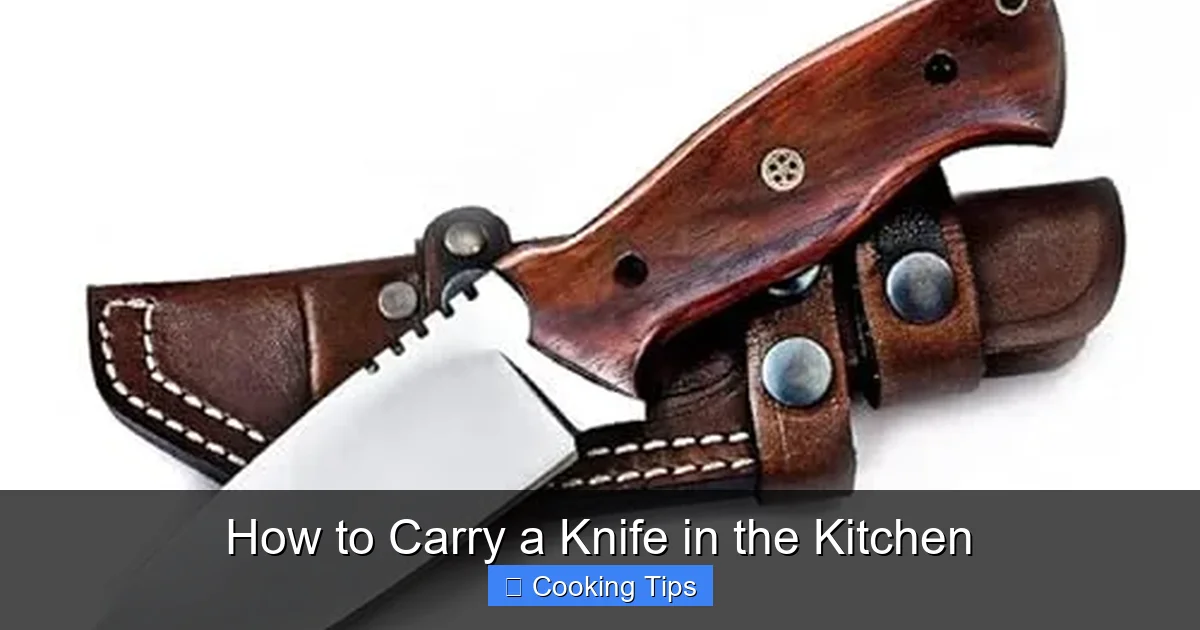
1. Use a Sheath: If your knife has a protective sheath designed for it, slide the knife carefully into the sheath until it is fully enclosed. Ensure the sheath is securely fastened if it has a closure.
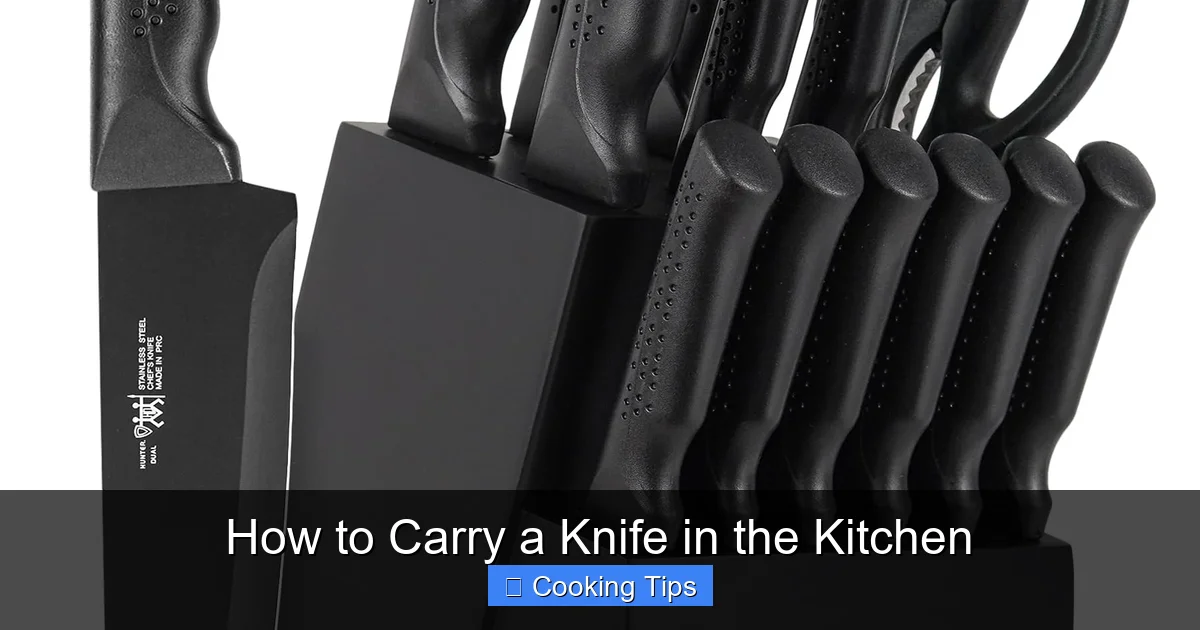
2. Use a Knife Block: If you are moving a knife from its block, choose the appropriate slot. Gently slide the knife into the designated slot. Never force a knife into a slot.
3. Carry Securely: Once sheathed or in its block, carry the knife close to your body, in a stable position. If using a sheath, you might hold it vertically by the handle. If carrying a block, hold it firmly with both hands.
4. Continued Awareness: Even with a sheath or block, remember to be aware of your surroundings. Announce your movement if necessary, especially if carrying a block through a busy area.
Example: You’ve finished chopping vegetables on the far end of your kitchen island and need to put your chef’s knife away. Instead of carrying it precariously in your hand, you’d place it in its designated slot in the knife block on the island and then carefully carry the block to where you need it, or leave it there if that’s its storage spot.
Tips for Enhanced Knife Safety
Beyond the basic carrying methods, these tips will further enhance your kitchen knife safety:
- Never Toss or Throw: This should go without saying, but never throw or toss a knife to someone. Hand it over carefully, or have them retrieve it from a safe spot.
- One Knife at a Time: When moving from your workspace to the sink or dishwasher, carry only one knife at a time. This prevents accidental cuts and reduces the risk of dropping multiple knives.
- Clean as You Go: A clean workspace is a safer workspace. Wash and dry knives immediately after use, or place them in a secure location like a knife block or on a magnetic strip.
- Be Mindful of Children and Pets: Always be aware of where children and pets are. Keep knives out of their reach, and never leave them unattended on countertops where they could be accessed.
- Sharp Knives are Safer Knives: This might sound counterintuitive, but a sharp knife requires less force to cut. This means less chance of slipping. Keep your knives properly sharpened and maintained.
- Use a Cutting Board: Always use a stable cutting board on a non-slip surface. This provides a consistent and safe place for your knife to work.
Troubleshooting Common Knife Carrying Issues
Sometimes, even with the best intentions, challenges arise. Here are a few common scenarios and how to handle them:
Scenario 1: Someone walks unexpectedly into your path while you’re carrying a knife.
Solution: Stop immediately. Hold the knife steady and away from both yourself and the other person. Wait for them to pass. Re-assess your path before continuing.
Scenario 2: You accidentally drop a knife.
Solution: Do NOT try to catch it. Step back immediately and let it fall. Once it has stopped moving, assess the situation and retrieve it safely.
Scenario 3: Your hand is wet or greasy, making the knife slippery.
Solution: Stop what you are doing and dry your hands thoroughly. If the knife is also wet or greasy, wipe it clean as well. Then, re-establish your secure grip before continuing.
Conclusion
Mastering the art of carrying a kitchen knife is a vital step towards becoming a more confident and capable cook. By understanding the fundamental principles of a safe grip, employing appropriate carrying methods like the forearm carry or sheath/block carry, and consistently practicing good kitchen hygiene and awareness, you significantly reduce the risk of accidents. Remember, safety is not an afterthought; it’s an integral part of the culinary process. In 2026 and beyond, let these practices become second nature, ensuring your time in the kitchen is always productive, enjoyable, and most importantly, safe. Happy cooking!
