

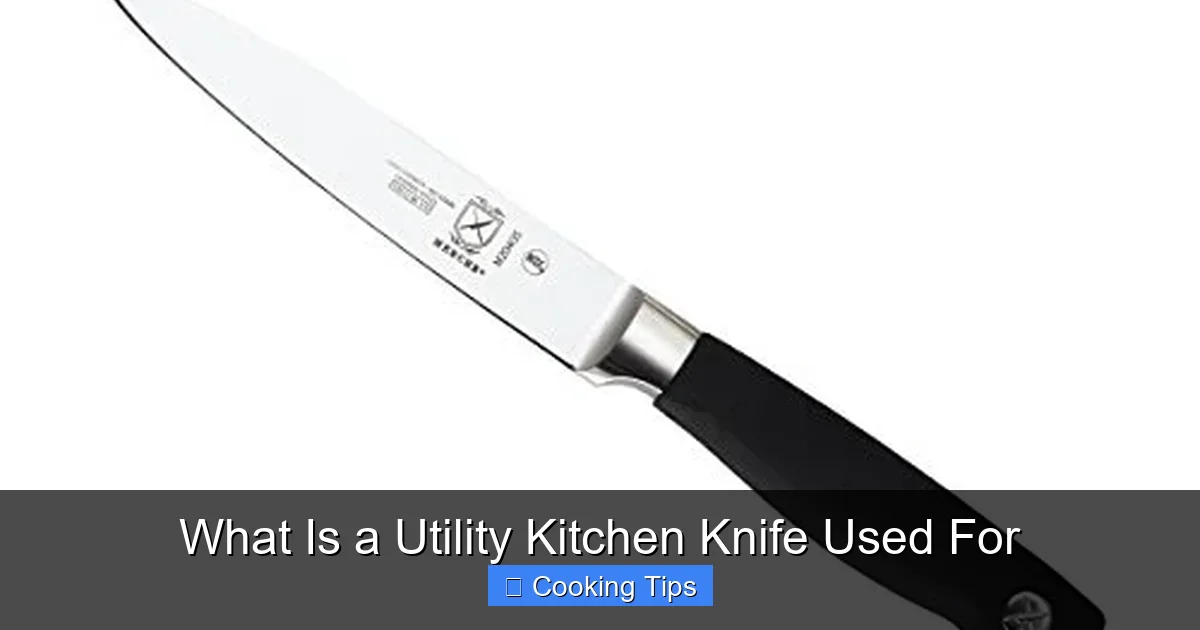
The utility kitchen knife is your go-to tool for everyday tasks. It’s smaller than a chef’s knife but larger than a paring knife, making it ideal for a wide range of chopping, slicing, and dicing. Mastering its use will streamline your cooking prep and help you tackle everything from fruits and vegetables to smaller cuts of meat with confidence. This guide will demystify the utility knife and show you why it deserves a prime spot in your kitchen.
# What Is a Utility Kitchen Knife Used For?
Welcome to the heart of your kitchen prep! In the world of culinary tools, there’s a certain hero that often gets overlooked, yet plays an indispensable role in countless recipes. This unsung hero is the utility kitchen knife. You might have one lurking in your knife block, perhaps even used it without knowing its true potential. In this comprehensive guide, we’re going to unlock the secrets of the utility knife, explore exactly what it’s used for, and help you become more confident and efficient in your kitchen.
By the end of this guide, you’ll understand why this knife is called a “utility” knife, what makes it different from other kitchen knives, and how to leverage its unique design to make your cooking process smoother and more enjoyable. We’ll cover everything from its ideal uses to tips for picking the right one and keeping it in top condition.
## Understanding the Utility Knife: Your Kitchen’s MVP
Before we dive into its uses, let’s get acquainted with the utility knife itself. Think of it as the middle child of the knife family – not as grand as the chef’s knife, but far more capable than the humble paring knife.
### Blade Size and Shape
The most distinguishing feature of a utility knife is its blade. It typically measures between 4 to 7 inches in length. This size is crucial; it’s large enough to handle tasks that a paring knife finds challenging, yet small enough to offer more control and maneuverability than a full-sized chef’s knife. The blade is often narrower than a chef’s knife and can come in various forms, including a straight edge or a serrated edge. The straight edge is your all-rounder, while the serrated version is fantastic for tasks involving tough exteriors and soft interiors.
### Handle Ergonomics
A good utility knife will have a comfortable handle designed for a secure grip. This is essential for safety and control, especially when performing more delicate cutting tasks. The handle material can vary, from classic wood to modern synthetic materials, each offering a different feel and grip.
## What Tasks Does a Utility Knife Excel At?
The “utility” in its name isn’t just a catchy phrase; it truly reflects its broad range of applications. This knife is designed to be your go-to for a multitude of everyday kitchen tasks.
### Slicing Fruits and Vegetables
This is where the utility knife truly shines. For fruits and vegetables that are too large for a paring knife but don’t require the heft of a chef’s knife, the utility knife is perfect.
* **Citrus Fruits:** Slicing lemons, limes, and oranges for garnishes or juice is a breeze. The nimble blade allows for precise, thin slices.
* **Small to Medium Vegetables:** Think dicing onions, chopping shallots, mincing garlic, slicing mushrooms, or preparing bell peppers. The utility knife offers better control than a chef’s knife for these finer preparations.
* **Tomatoes and Avocados:** Achieving perfect, clean slices of tomatoes without squishing them, or carefully halving and pitting avocados, is made easy with the precision of a utility knife.
* **Herbs:** While a chef’s knife is often used for large quantities of herbs, a utility knife can be great for finely chopping smaller amounts or for more delicate herbs.
### Preparing Smaller Cuts of Meat and Poultry
While a chef’s knife is your primary tool for butchering and large meat preparation, the utility knife is excellent for smaller, more precise tasks.
* **Trimming Fat:** Carefully trimming excess fat from smaller cuts of meat, like chicken breasts or pork chops.
* **De-boning Small Items:** For smaller poultry or fish, a utility knife can help navigate around bones.
* **Slicing Cooked Meats:** Thinly slicing cooked chicken, turkey, or ham for sandwiches or salads.
* **Removing Silverskin:** The sharp, precise tip can be used to get under and remove tough silverskin from meat.
### Other Versatile Uses
The utility knife’s versatility extends beyond just produce and meat.
* **Sandwich Preparation:** Cutting sandwiches in half or quarters neatly.
* **Slicing Cheese:** For firm to semi-firm cheeses, a utility knife can provide clean cuts.
* **Peeling and Trimming:** While not its primary function, it can be used for some peeling tasks on firmer vegetables where a paring knife might feel too small.
* **Garnishing:** Creating decorative cuts on fruits and vegetables.
## Choosing the Right Utility Knife for Your Kitchen
With so many options available, selecting the best utility knife can feel overwhelming. Here are some factors to consider to ensure you get a knife that fits your needs.
### Blade Material
* **Stainless Steel:** This is the most common material. It’s durable, rust-resistant, and relatively easy to maintain. High-carbon stainless steel offers a good balance of sharpness and durability.
* **Carbon Steel:** This type of steel can achieve a superior edge and is easier to sharpen. However, it is more prone to rust and discoloration, requiring more diligent care.
### Blade Edge
* **Straight Edge:** The most common type. It’s versatile and suitable for a wide range of cutting, slicing, and chopping tasks.
* **Serrated Edge:** This edge has saw-like teeth. It’s ideal for cutting through foods with a tough exterior and a soft interior, such as tomatoes, bread, or citrus fruits, without crushing them. A serrated utility knife is a fantastic addition for specific tasks.
### Handle Comfort and Grip
The handle is where your hand will spend most of its time.
* **Material:** Look for materials that offer a good grip, even when wet. Synthetic materials like ABS or POM are often durable and easy to clean. Wood handles offer a classic look and feel but require more care.
* **Ergonomics:** The handle should feel balanced in your hand and allow for a comfortable grip without causing fatigue during prolonged use. Consider the shape and contours.
### Brand and Price
Reputable knife brands often offer better quality and durability. While you don’t need the most expensive knife, investing in a well-made utility knife from a trusted manufacturer will pay dividends in performance and longevity. Look for reviews and consider your budget.
## Mastering Utility Knife Techniques: Safety and Efficiency
Using any knife safely and effectively is paramount in the kitchen. The utility knife is no exception.
### The Proper Grip
There are two primary grips to consider for a utility knife:
* **Handle Grip:** This is the most common grip, where you hold the handle firmly. Ensure your fingers are wrapped securely around the handle, and your thumb provides support on the side.
* **Pinch Grip:** For more precise tasks, many chefs prefer a pinch grip. Here, your index finger and thumb pinch the blade just above the handle. This offers enhanced control and dexterity. Whichever grip you choose, ensure it feels comfortable and secure.
### Cutting Motions
* **Rocking Motion:** For many tasks, especially chopping vegetables, a rocking motion is efficient. Keep the tip of the blade on the cutting board and use a smooth, rocking motion to slice through the food.
* **Slicing Motion:** For longer items or when creating thin slices, use a smooth, forward-and-back slicing motion. Avoid sawing vigorously unless using a serrated blade on appropriate food.
* **Controlled Dicing:** For dicing, guide the knife with your non-dominant hand (using the “claw” technique with your fingertips tucked under) and make consistent cuts.
### Using a Cutting Board
Always use a stable cutting board. This protects your countertops, keeps your knife sharp, and most importantly, prevents accidents. A damp paper towel placed under the cutting board can prevent it from slipping.
## Maintaining Your Utility Knife for Peak Performance
A well-maintained knife is a safe and effective knife. Here’s how to care for your utility knife.
### Cleaning
* **Hand Wash Only:** Never put your utility knife in the dishwasher. The high heat and harsh detergents can damage the blade and the handle.
* **Gentle Soap and Water:** Wash the knife immediately after use with warm, soapy water.
* **Dry Thoroughly:** After washing, dry the knife completely with a soft cloth to prevent rust and water spots.
### Sharpening
* **Regular Sharpening:** A sharp knife is a safe knife. A dull knife requires more pressure, increasing the risk of slips. Aim to sharpen your utility knife every few months, or more frequently if you use it daily.
* **Honing Steel:** Use a honing steel regularly (even weekly) to realign the blade’s edge between sharpenings.
* **Sharpening Stone or Electric Sharpener:** When your knife truly needs sharpening, use a whetstone or a quality electric knife sharpener. Follow the manufacturer’s instructions carefully.
### Storage
* **Knife Block:** A knife block is an excellent way to store your knives, protecting the blades from damage and keeping them organized.
* **Magnetic Strip:** A magnetic strip on the wall is another popular storage solution, keeping knives easily accessible and preventing blades from touching each other.
* **Blade Guards:** If storing knives in a drawer, use blade guards to protect the edge and prevent accidental cuts when reaching into the drawer.
## Troubleshooting Common Utility Knife Issues
Even with the best care, you might encounter a few issues.
### Blade Rust or Discoloration
* **Cause:** Often due to improper drying after washing or prolonged exposure to moisture.
* **Solution:** For minor rust spots, you can often remove them with a paste of baking soda and water or a specialized rust eraser. For discoloration, especially on carbon steel, it’s a sign of oxidation and can sometimes be cleaned off with a mild abrasive. Ensure thorough drying in the future.
### Dull Blade
* **Cause:** Regular use dulls the blade over time.
* **Solution:** This is where regular sharpening comes in. If you notice you’re having to force the knife, it’s time to sharpen.
### Loose Handle
* **Cause:** The rivets or screws holding the handle together may loosen over time, especially with frequent exposure to water.
* **Solution:** For knives with visible rivets, a qualified knife repair service or a skilled DIYer might be able to re-rivet or tighten them. For other types, this can be a sign the knife is nearing the end of its useful life.
## Conclusion: Embrace Your Utility Knife
The utility kitchen knife is a testament to thoughtful design, offering a perfect balance of size, sharpness, and maneuverability for a vast array of everyday kitchen tasks. It’s not just a knife; it’s a workhorse that can significantly improve your efficiency and enjoyment in the kitchen. By understanding its purpose, choosing wisely, using it correctly, and maintaining it diligently, you’ll find this versatile tool becoming one of your most frequently reached-for companions. So, next time you’re prepping a meal, reach for your utility knife – you’ll be amazed at what it can do!
- Versatile Middle Ground: The utility knife bridges the gap between a chef’s knife and a paring knife, offering adaptability for various tasks.
- Ideal for Mid-Sized Jobs: It excels at slicing fruits, vegetables, and smaller portions of meat that are too large for a paring knife but too small for a chef’s knife.
- Precision and Control: Its smaller blade size compared to a chef’s knife allows for greater precision and control, especially for intricate cuts.
- Everyday Prep Essential: From dicing onions to slicing sandwiches, the utility knife is perfect for daily kitchen preparations.
- Proper Technique Matters: Learning the correct grip and cutting motions ensures efficiency, safety, and the best results.
- Maintenance for Longevity: Regular sharpening and proper cleaning will keep your utility knife performing at its best for years to come.
