

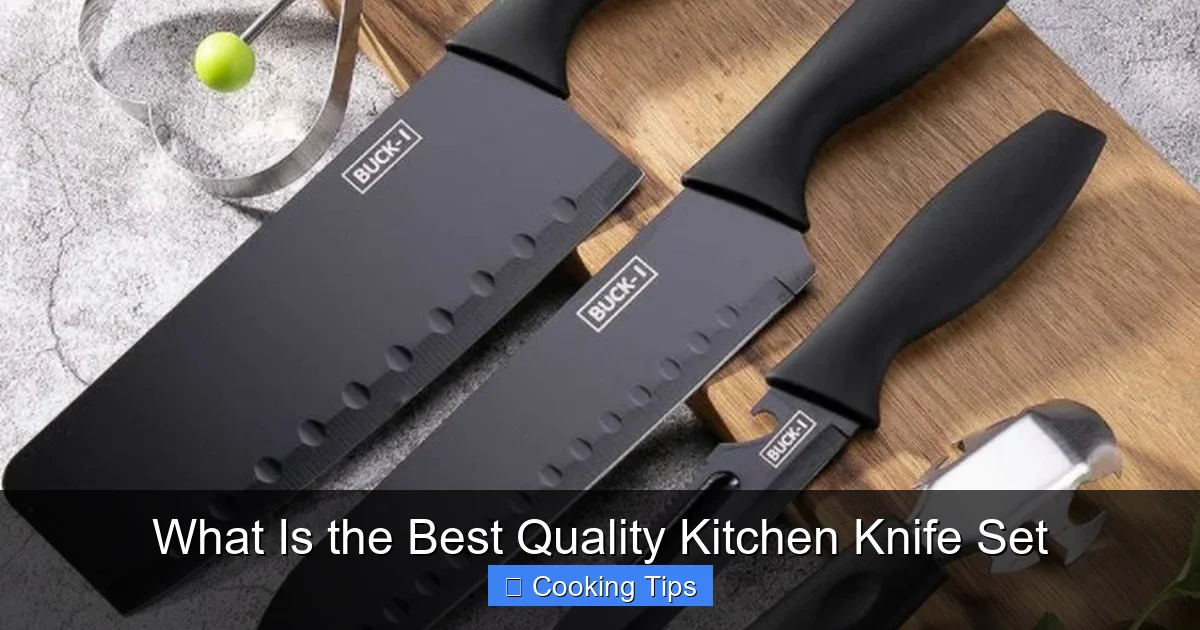
Navigating the world of kitchen knife sets can be daunting, but this guide demystifies the process for 2026. We’ll help you understand key factors like steel type, blade construction, and handle ergonomics to ensure you invest wisely. By the end, you’ll know precisely what defines a high-quality kitchen knife set and how to select the one that best suits your cooking style and budget.
# What Is the Best Quality Kitchen Knife Set?
Are you ready to elevate your culinary adventures? A truly exceptional kitchen knife set is the cornerstone of any successful kitchen, transforming mundane prep work into a fluid, enjoyable experience. In 2026, the market is brimming with options, but distinguishing the truly superior from the merely adequate can feel like a challenge. This comprehensive guide is designed to cut through the confusion. We’ll equip you with the knowledge to identify the hallmarks of a best-quality kitchen knife set, ensuring your investment empowers your cooking for years to come.
By the end of this guide, you’ll understand:
* What makes a kitchen knife set high-quality.
* The crucial role of steel and blade construction.
* How to assess handle comfort and design.
* Which knives are essential for every kitchen.
* Tips for making the right choice for your needs and budget.
Let’s dive in and find the best quality kitchen knife set for you!
## Understanding the Core Elements of a Quality Knife
Before we even look at specific sets, it’s vital to grasp what separates a good knife from a great one. It’s a combination of materials, craftsmanship, and design.
### The Importance of Steel: The Blade’s Backbone
The steel used in a knife blade is arguably its most critical component. It dictates sharpness, edge retention, durability, and resistance to rust.
#### High-Carbon Stainless Steel: The Gold Standard
In 2026, the best quality kitchen knife sets almost universally feature high-carbon stainless steel. This blend offers the best of both worlds:
* Carbon: This element makes the steel harder, allowing it to hold a sharp edge for longer.
* Chromium: This element provides stainless properties, preventing rust and corrosion, which is essential for kitchen use.
Look for specific steel types. Some top-tier examples include:
* VG-10: A popular Japanese steel known for its exceptional sharpness, edge retention, and corrosion resistance.
* SG2 (R2): Even harder than VG-10, offering superior edge retention and durability, though it can be slightly more brittle.
* German Stainless Steel (e.g., X50CrMoV15): A reliable and durable choice, often found in mid-range to high-end Western-style knives. It offers a good balance of sharpness, edge retention, and ease of sharpening.
Avoid knives made from generic stainless steel or carbon steel alone, as they will either rust easily or struggle to maintain an edge.
### Blade Construction: How the Knife is Made
Beyond the steel itself, how the blade is constructed plays a significant role in its performance and longevity.
#### Full Tang vs. Partial Tang
This is a non-negotiable for quality.
* Full Tang: The metal of the blade extends all the way through the handle. You can usually see the metal strip (the tang) running along the length of the handle, often with rivets.
* Benefits: Superior balance, enhanced durability, increased strength, and better control.
* Partial Tang: The tang is shorter and doesn’t extend fully into the handle.
* Drawbacks: Can lead to poor balance and is more prone to breaking over time.
Always opt for a full tang.
#### Forged vs. Stamped Blades
Both can produce excellent knives, but there are differences:
* Forged Blades: Made by heating a single piece of steel and hammering it into shape. This process is more labor-intensive and typically results in a stronger, more durable blade with better balance. They often have a bolster (a thick metal collar) between the blade and handle.
* Stamped Blades: Cut from a large sheet of steel using a die, like a cookie cutter. They are generally less expensive to produce and can be very sharp, but might lack the same level of balance and durability as forged blades.
High-end sets often feature forged blades, but a well-made stamped blade from quality steel can still be excellent.
## The Handle: Comfort, Grip, and Control
A beautiful, sharp blade is useless if the handle is uncomfortable or provides a poor grip. The handle is your connection to the knife, and its design is crucial for safety and efficiency.
### Material Matters
Common handle materials include:
* Pakkawood/Resin-Impregnated Wood: Durable, water-resistant, and offers a warm, comfortable grip. A popular choice for high-quality sets.
* POM (Polyoxymethylene): A durable, synthetic material that is resistant to heat, moisture, and impact. Often found on professional-grade knives for its robustness.
* G10: A strong composite material made of fiberglass and epoxy resin, offering excellent durability and grip.
* Stainless Steel: Can be sleek and hygienic, but may become slippery when wet.
### Ergonomics and Balance
This is where personal preference comes into play.
* Shape: The handle should fit comfortably in your hand. Some prefer a rounded profile, while others like a more contoured or ergonomic shape.
* Grip: The handle should provide a secure grip, even when wet. Textured surfaces or finger grooves can enhance this.
* Balance: A well-balanced knife feels like an extension of your hand. The balance point is typically around where the blade meets the handle.
Try to hold knives from a set if possible. If not, read reviews that specifically mention handle comfort and balance.
## Essential Knives in a Set
A “best-quality” kitchen knife set doesn’t necessarily mean one with dozens of pieces. Often, a few high-quality, versatile knives are far more useful than a large set of mediocre ones.
### The Core Trio
Most home cooks will find these three knives indispensable:
1. Chef’s Knife (8-inch): The workhorse of the kitchen. Perfect for chopping, slicing, dicing, and mincing.
2. Paring Knife (3-4 inch): Ideal for small, intricate tasks like peeling, trimming, and coring.
3. Serrated Knife (8-10 inch): Essential for slicing bread, tomatoes, and other foods with a tough exterior and soft interior.
### Other Useful Additions
Depending on your cooking habits, consider sets that also include:
* Santoku Knife: A Japanese-style chef’s knife, often with a granton edge (dimples) to prevent food from sticking.
* Utility Knife: A mid-size knife, useful for slicing sandwiches or smaller fruits and vegetables.
* Boning Knife: For separating meat from bone.
* Bread Knife: A longer, more robust serrated knife.
Be wary of sets packed with obscure specialty knives you’ll likely never use. Focus on the quality of the core pieces.
## Choosing Your Best Quality Kitchen Knife Set: A Step-by-Step Approach
Now that you understand the components, let’s walk through selecting your set.
### Step 1: Define Your Needs and Budget
* How often do you cook? A casual cook needs less than a passionate home chef.
* What types of food do you prepare? Lots of vegetables? Lots of meat? Baking?
* What is your budget? High-quality kitchen knife sets can range from $150 to over $1000. Decide on a realistic price point. Remember, you often get what you pay for with knives.
### Step 2: Research Materials and Construction
* Prioritize high-carbon stainless steel. Look for specific alloys like VG-10, SG2, or good quality German steel.
* Insist on full tang construction. This is crucial for durability and balance.
* Consider forged vs. stamped based on your budget and preference. Both can be high quality if done well.
### Step 3: Evaluate Handle Design and Comfort
* Read reviews focusing on handle ergonomics.
* If possible, hold the knives. How do they feel in your hand? Is the grip secure?
* Consider the handle material. Does it suit your preference for aesthetics and grip?
### Step 4: Examine the Set Composition
* Does it contain the essential knives (chef’s, paring, serrated)?
* Are the additional knives useful for your cooking?
* Avoid sets with too many filler knives.
### Step 5: Check Brand Reputation and Warranty
* Look for reputable brands known for their quality and craftsmanship in cutlery.
* A good warranty (lifetime limited warranty is common for quality sets) indicates the manufacturer’s confidence in their product.
### Step 6: Read Reviews and Seek Recommendations
* Look for reviews from trusted culinary sites and experienced home cooks.
* Pay attention to recurring comments about sharpness, edge retention, durability, and comfort.
## Practical Tips for Knife Care
Once you’ve invested in a quality set, proper care is essential to maintain their performance.
### Honing vs. Sharpening
* Honing: This is done regularly (even daily) to realign the microscopic edge of the blade. A honing steel (often made of steel, ceramic, or diamond) is used. It doesn’t remove metal.
* Sharpening: This removes metal to create a new edge. It’s done less frequently, when the knife feels dull. Tools include sharpening stones, electric sharpeners, or professional sharpening services.
### Cleaning and Storage
* Hand Wash Only: Never put your good knives in the dishwasher. The high heat, harsh detergents, and banging against other items will dull the blade and damage the handle.
* Dry Immediately: After washing, dry your knives thoroughly with a soft cloth.
* Proper Storage:
* Knife Block: A classic choice, but ensure knives are placed with blades facing upwards to avoid nicking the edge when removing them.
* Magnetic Strip: A space-saving option that keeps knives visible and accessible. Ensure the magnet is strong enough.
* In-Drawer Knife Organizer: Keeps knives safe and protects the blades.
## Troubleshooting Common Knife Issues
* My knife feels dull: It’s time to sharpen it. If you’ve honed it recently and it’s still not cutting well, sharpening is needed.
* My knife is rusting: You’re likely not drying it thoroughly or are washing it in the dishwasher. Clean and dry it immediately. For minor rust spots, a paste of baking soda and water can help.
* My handle feels loose: This is rare with full tang, quality construction. If it happens, contact the manufacturer. It might be a manufacturing defect.
## Conclusion: Your Culinary Companion Awaits
Choosing the best quality kitchen knife set in 2026 is an investment in your passion for cooking. By understanding the critical elements of steel, construction, and handle design, you can confidently select a set that will not only perform exceptionally but also bring joy to your kitchen tasks. Prioritize essential knives, opt for durable materials like high-carbon stainless steel and full tang construction, and remember that comfort and balance are key. With proper care, your chosen set will become an indispensable tool, a true culinary companion that empowers your creativity for years to come. Happy cooking!
Key Takeaways
- High-Quality Steel is Paramount: The best kitchen knife sets utilize high-carbon stainless steel alloys like VG-10, SG2, or German stainless steel for superior edge retention, durability, and corrosion resistance.
- Full Tang Construction Offers Superior Balance and Durability: A full tang means the metal of the blade extends all the way through the handle, providing better balance, strength, and longevity.
- Blade Grind and Honing are Crucial: Look for knives with a fine grind for sharpness and a consistent angle. A well-honed edge is easier to maintain and performs better.
- Handle Comfort and Ergonomics Matter: The best kitchen knife sets feature handles that are comfortable to grip, well-balanced, and provide excellent control, reducing hand fatigue during prolonged use.
- Consider Your Cooking Needs: A versatile chef’s knife, paring knife, and serrated knife form the core of most sets. Avoid sets with too many specialized knives unless you truly need them.
- Reputation and Warranty Signal Quality: Reputable brands often offer longer warranties and stand behind their products, indicating confidence in their manufacturing quality.
- Budget Reflects Quality (Generally): While not always true, exceptionally cheap knife sets often compromise on materials and construction. Expect to invest a reasonable amount for a truly high-quality kitchen knife set.
