

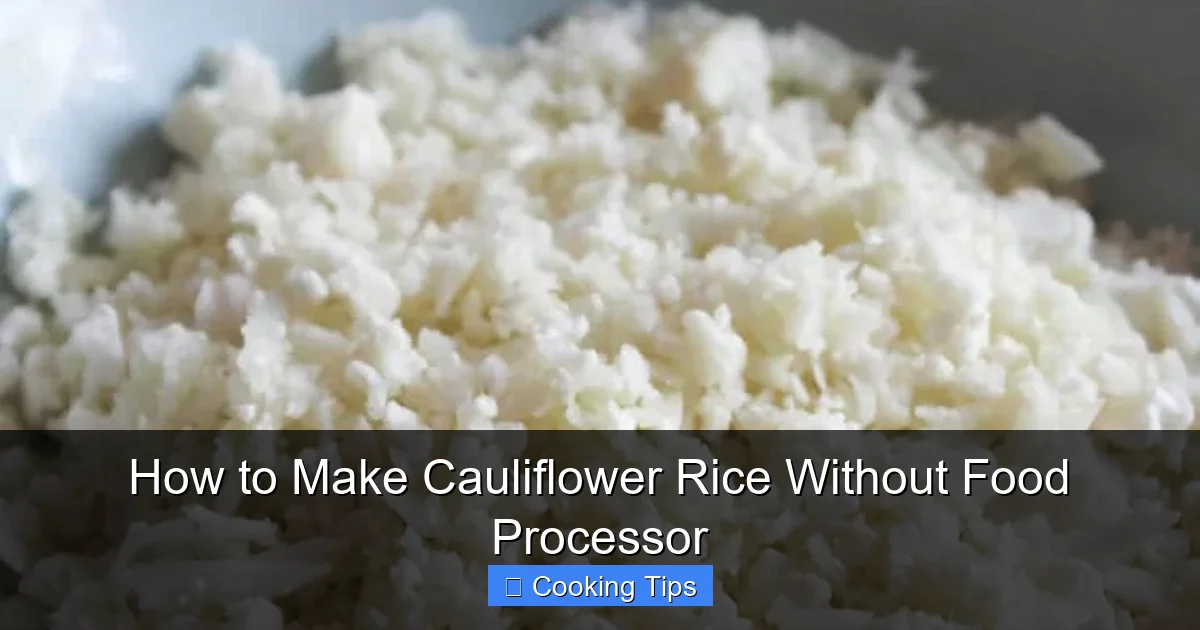
Don’t have a food processor? No problem! This guide shows you how to create perfect cauliflower rice using simple kitchen tools. You’ll learn how to break down the cauliflower into rice-like grains for a delicious and healthy alternative to traditional rice. Master this technique and enjoy a versatile, low-carb staple in your meals.
Key Takeaways
- Master the Grating Method: Using a box grater is an effective and accessible way to transform cauliflower florets into tiny rice-like pieces.
- Embrace the Knife Technique: With patience and precision, a sharp chef’s knife can also achieve excellent cauliflower rice consistency.
- Prep is Key: Ensure your cauliflower is clean, dry, and cut into manageable pieces before you start processing it manually.
- Don’t Over-Process: Aim for a rice-like texture, avoiding mushy results by working in batches and not over-handling the cauliflower.
- Proper Storage: Learn how to store your homemade cauliflower rice to maintain freshness and prevent sogginess.
- Versatile Applications: Discover the many ways you can use your cauliflower rice in various dishes, from stir-fries to salads.
How to Make Cauliflower Rice Without Food Processor
Welcome to your ultimate guide on creating delicious and healthy cauliflower rice, even if you don’t have a fancy food processor! In today’s health-conscious culinary landscape, cauliflower rice has become a superstar. It’s a fantastic low-carb, gluten-free, and nutrient-packed alternative to traditional grains. But what if your kitchen is missing that essential appliance? Fear not! This guide is here to equip you with simple, effective methods to transform a humble head of cauliflower into fluffy, versatile “rice” using tools you likely already own. Get ready to elevate your meals with this incredibly adaptable ingredient.
We’ll walk you through two primary, proven methods: the trusty box grater and the precise chef’s knife. Both require a little elbow grease, but the results are undeniably worth it. So, let’s dive in and unlock the magic of homemade cauliflower rice!
Method 1: The Box Grater – Your New Best Friend
This is arguably the easiest and most popular method for making cauliflower rice without a food processor. The box grater, a staple in most kitchens, does all the heavy lifting for you. It’s quick, efficient, and yields a beautifully consistent texture.
Step 1: Prepare Your Cauliflower
Start with a fresh head of cauliflower. Remove the outer green leaves and the thick core at the bottom. You want to be left with the white florets. Wash the cauliflower thoroughly under cool running water and then pat it completely dry with paper towels or a clean kitchen towel. Moisture is the enemy of good cauliflower rice, so this step is crucial.
Step 2: Break Down the Cauliflower
Now, it’s time to get your hands (or the grater) dirty. Break the cauliflower head into smaller, manageable florets. You don’t need to be precise here; the goal is to create pieces that will fit comfortably into the holes of your grater.
Step 3: Grate Away!
Grab your box grater. Most box graters have different-sized holes. For cauliflower rice, you’ll want to use the larger holes – typically those designed for shredding cheese. Hold a floret firmly and grate it against the box grater. Imagine you’re grating cheese or a large carrot. The cauliflower will shred into small, rice-like pieces.
Tip: Work in sections. Grate one floret at a time, ensuring consistent pressure. As you grate, the cauliflower “rice” will fall away from the grater. You can collect it directly into a bowl placed underneath the grater.
Tip: Don’t try to grate the thick stem part of the floret; focus on the looser, more tender parts. You might need to hold the smaller bits with your fingers, so be careful not to grate your knuckles!
Step 4: Process in Batches
Continue this process until you have a bowl full of shredded cauliflower. You might find that some pieces are a bit larger than others. That’s perfectly normal! The goal is a texture that mimics rice, not perfect uniformity. If you have a lot of cauliflower, work in batches to avoid overwhelming the grater and your workspace.
Method 2: The Chef’s Knife – For the Patient and Precise
If you don’t have a box grater or prefer a more hands-on approach, a sharp chef’s knife can also work wonders. This method requires a bit more time and precision, but the control over the texture is excellent.
Step 1: Prepare Your Cauliflower
Just like with the grater method, start with a clean, dry head of cauliflower. Remove the leaves and core. Wash and thoroughly pat dry your cauliflower florets.
Step 2: Cut into Manageable Pieces
Break the cauliflower into smaller florets. Then, using your chef’s knife, cut each floret into smaller, bite-sized pieces. This initial chopping will make the next step much easier.
Step 3: Finely Chop into “Rice”
This is where the magic (and the work) happens. Take a small chunk of cauliflower and hold it steady on your cutting board with one hand. With your chef’s knife in the other hand, begin to finely chop the cauliflower. You want to make very small, consistent cuts, essentially dicing the cauliflower into rice-sized grains. Think of it as mincing.
Tip: Use a rocking motion with your chef’s knife. Place the tip of the knife on the cutting board and lift the heel, then rock the blade down to cut through the cauliflower. Repeat this motion rapidly to create a fine chop.
Tip: Work with small amounts of cauliflower at a time. This allows for better control and ensures a more uniform chop. You might need to gather the chopped pieces and re-chop them if they are too large.
Step 4: Repeat and Refine
Continue this fine chopping process with all your cauliflower florets. You’ll be amazed at how quickly you can achieve a rice-like consistency with a good, sharp knife and some patience. Periodically gather the chopped cauliflower and give it another pass with the knife to ensure all the pieces are roughly the same size.
Practical Tips for Perfect Cauliflower Rice
Regardless of the method you choose, a few tips will ensure your cauliflower rice is a resounding success:
- Use Fresh Cauliflower: Fresher cauliflower is firmer and easier to grate or chop. Older, softer cauliflower can become mushy.
- Dry is Best: I cannot stress this enough! Any excess moisture will make your cauliflower rice steam rather than “fry” or steam dry, leading to a soggy texture.
- Don’t Overwork It: Whether grating or chopping, stop when you achieve a rice-like consistency. Over-processing will turn your cauliflower into mush.
- Cook It Right: Cauliflower rice cooks very quickly. Aim for a tender-crisp texture. Overcooking will also lead to mushiness.
- Flavor is Key: Plain cauliflower rice is a blank canvas. Sauté it with garlic, onions, herbs, spices, or your favorite sauces to bring it to life.
Troubleshooting Common Cauliflower Rice Issues
Even with the best intentions, sometimes things don’t go as planned. Here are solutions to common problems:
- Problem: My cauliflower rice is too wet/soggy.
Solution: This is usually due to insufficient drying of the cauliflower before processing, or from cooking it too long without proper ventilation. Ensure you dry it thoroughly. When cooking, consider using a well-seasoned non-stick pan over medium-high heat, stirring frequently to allow moisture to evaporate. If you’re steaming it, leave the lid slightly ajar. - Problem: My cauliflower rice is too mushy.
Solution: You likely over-processed it or overcooked it. Be mindful of how much you’re grating or chopping. For cooking, aim for a shorter cooking time until it’s tender-crisp. - Problem: My cauliflower rice has large chunks.
Solution: This is common, especially with the knife method if you’re still developing your technique. For the grater method, use the larger holes. If using a knife, simply go back over the larger pieces and chop them smaller. You can also pick out the largest pieces and set them aside to chop again.
Storing Your Homemade Cauliflower Rice
If you’ve made a big batch, you’ll be happy to know that cauliflower rice stores well.
Raw Cauliflower Rice: Place the uncooked cauliflower rice in an airtight container or a resealable plastic bag. Store it in the refrigerator for up to 3-4 days. It’s a great way to prep ahead for quick meals.
Cooked Cauliflower Rice: Once cooked, allow it to cool completely before storing. Store in an airtight container in the refrigerator for 2-3 days. Reheat gently in a skillet or microwave.
Conclusion
And there you have it! Making delicious, healthy cauliflower rice without a food processor is entirely achievable with a little bit of effort and the right techniques. Whether you opt for the speed of a box grater or the precision of a chef’s knife, you’re on your way to enjoying this incredibly versatile ingredient. This low-carb staple can transform countless dishes, offering a lighter, more nutritious alternative to grains. So next time you’re craving a healthy side or a base for a flavorful meal, remember these simple methods and embrace the power of homemade cauliflower rice. Happy cooking!
