

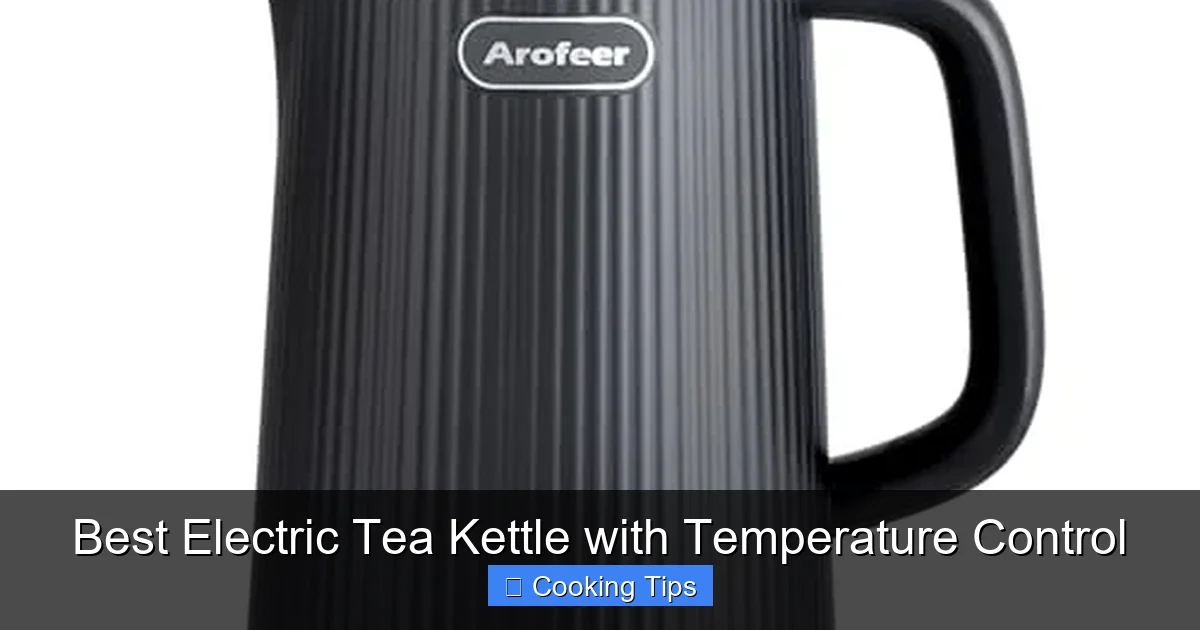
Unlock the secret to the perfect cup of tea with a temperature-controlled electric kettle. This guide will walk you through choosing the ideal model, mastering its features, and ensuring optimal performance. Say goodbye to burnt tea leaves and hello to consistently delicious brews, from delicate white teas to robust black teas, all at the perfect temperature.
Key Takeaways
- Precise Temperature is Key: Different teas require specific water temperatures for optimal flavor extraction. An electric kettle with temperature control eliminates guesswork.
- Material Matters: Stainless steel, glass, and BPA-free plastic are common materials, each with pros and cons regarding durability, aesthetics, and potential taste transfer.
- Features to Consider: Look for pre-set temperature options, keep-warm functions, speed of boiling, capacity, and ease of cleaning.
- Understanding Your Needs: Evaluate how much tea you typically brew, your kitchen space, and your budget to make an informed decision.
- Proper Usage for Best Results: Always use fresh, cold water and follow the manufacturer’s instructions for heating and maintenance.
- Care and Maintenance: Regular descaling and cleaning will ensure your kettle functions efficiently and your tea tastes pure.
Mastering Your Brew: The Ultimate Guide to the Best Electric Tea Kettle with Temperature Control
Are you a tea lover? If so, you know that the perfect cup of tea is more than just tea leaves and hot water. It’s about nuance, precision, and unlocking the full flavor potential of your favorite blends. For too long, many of us have relied on guesswork, pouring boiling water over delicate green teas and wondering why they tasted bitter. The secret weapon for any discerning tea drinker is an electric tea kettle with temperature control.
This guide is your comprehensive roadmap to understanding, choosing, and using the best electric tea kettle with temperature control. We’ll demystify the technology, explore the essential features, and equip you with the knowledge to make every brew a masterpiece. Get ready to elevate your tea experience from ordinary to extraordinary.
Why Temperature Control Matters for Your Tea
Before we dive into choosing a kettle, let’s understand why water temperature is so crucial. Different types of tea have evolved to thrive at specific temperatures. Exposing them to water that’s too hot can scald the leaves, releasing bitter tannins and destroying delicate aromas. Too cool, and you won’t extract enough flavor, resulting in a weak, uninspired brew.
Here’s a general guideline for common tea types:
- White Tea: 160-175°F (70-80°C)
- Green Tea: 170-185°F (75-85°C)
- Oolong Tea: 180-195°F (80-90°C)
- Black Tea: 195-212°F (90-100°C)
- Herbal Infusions: 212°F (100°C)
An electric tea kettle with temperature control takes the guesswork out of this entirely. It heats water to your exact specifications, ensuring you achieve the optimal flavor extraction for every single cup. This precision is what separates a good cup of tea from a truly exceptional one.
Choosing Your Perfect Temperature-Controlled Kettle: A Step-by-Step Approach
Selecting the right kettle can feel overwhelming with so many options available. We’ll break down the key factors to consider to help you find the perfect match for your needs.
Step 1: Assess Your Tea Drinking Habits
The first step is to think about how you use your kettle.
How Much Tea Do You Drink?
If you’re a solo tea drinker or typically make one cup at a time, a smaller capacity kettle (0.8 to 1.2 liters) might be ideal. If you often entertain guests or have a household of tea enthusiasts, a larger capacity (1.5 to 1.7 liters) will be more convenient.
What Types of Tea Do You Prefer?
Consider the range of temperatures you’ll need. If you primarily drink black tea and herbal infusions, you might not need the ultra-low temperature settings required for delicate white teas. However, if you’re an adventurous tea drinker exploring various origins, a kettle with a wide temperature range and precise settings is a must.
Step 2: Evaluate Material and Construction
The material of your kettle affects its durability, how it looks on your countertop, and even the taste of your water.
Stainless Steel Kettles
* Pros: Durable, resistant to rust and staining, easy to clean, often offers excellent heat retention.
* Cons: Can sometimes impart a slight metallic taste if not of high quality, can be heavier.
Look for food-grade stainless steel for the best results.
Glass Kettles
* Pros: Aesthetically pleasing, allows you to see the water level and boil, doesn’t impart any taste, often BPA-free.
* Cons: Can be more fragile, may show water spots, heating elements can be exposed, making cleaning around them tricky.
Many glass kettles come with a stainless steel base for durability.
BPA-Free Plastic Kettles
* Pros: Lightweight, generally more affordable, can offer good insulation.
* Cons: Concerns about potential chemical leaching (ensure it’s BPA-free), can sometimes develop odors or stains over time, not as durable as metal or glass.
If you opt for plastic, prioritize kettles specifically labeled as BPA-free and food-grade safe.
Step 3: Decode the Features and Functions
This is where the “temperature control” aspect truly shines. Beyond the basic heating element, several features can enhance your kettle’s usability.
Pre-set Temperature Buttons
Most temperature-controlled kettles come with several pre-programmed buttons for common tea types (e.g., Green Tea, Black Tea, Oolong). This makes selecting the right temperature incredibly simple and fast.
Adjustable Temperature Control
For ultimate flexibility, look for kettles that allow you to manually adjust the temperature in increments (e.g., 1-degree Fahrenheit or Celsius). This is perfect for experimenting or brewing teas with very specific temperature requirements.
Keep-Warm Function
This is a game-changer for busy households or when you want to savor your tea over a longer period. The keep-warm function maintains the water at your selected temperature for a set duration (often 30 minutes to an hour), so your water is ready when you are.
Boil-Dry Protection
A crucial safety feature! This automatically shuts off the kettle if it detects there’s no water inside, preventing damage to the heating element and potential fire hazards.
Speed of Boiling
While not directly related to temperature control, how quickly your kettle heats water can be important. Most modern electric kettles boil water in 3-6 minutes, depending on the capacity and wattage.
Capacity
As mentioned in Step 1, consider the volume of water you typically need to heat. Standard capacities range from 0.5 liters to 1.7 liters.
Cordless Design and 360-Degree Swivel Base
Most electric kettles feature a cordless design where the kettle lifts off its power base. A 360-degree swivel base allows you to place the kettle on the base from any angle, making it user-friendly for both right-handed and left-handed individuals.
Lid Design and Pouring Spout
A well-designed lid should open easily for filling and cleaning. A drip-free pouring spout ensures a clean pour into your mug, minimizing spills.
Ease of Cleaning
Look for kettles with a wide opening for easy access to the interior. Removable filters for limescale are also a helpful feature.
Step 4: Consider Your Budget
Electric tea kettles with temperature control can range from around $30 to over $150. Generally, you’ll find more robust build quality, precise temperature accuracy, and more advanced features in the higher price range. However, many excellent and affordable options exist. Determine your budget and then look for the best combination of features within that range.
Using Your Temperature-Controlled Electric Kettle for Optimal Results
Once you’ve chosen your ideal kettle, proper usage is key to unlocking its full potential and ensuring delicious tea.
Step 1: Always Use Fresh, Cold Water
Never refill your kettle with hot water. Always start with fresh, cold water from the tap or filtered water. This ensures the purest taste for your tea and helps the kettle heat efficiently. Using previously boiled water can result in a duller taste.
Step 2: Fill to the Minimum and Maximum Levels
Most kettles have marked minimum and maximum fill lines. Ensure you fill the water above the minimum line to activate the heating element and below the maximum line to prevent overflow during boiling.
Step 3: Select Your Temperature Accurately
This is where the magic happens!
Using Pre-sets
If your kettle has pre-set buttons, simply select the button corresponding to your tea type. For example, press the “Green Tea” button for green tea.
Manual Temperature Selection
If you’re manually adjusting, use the temperature control buttons (often +/- or up/down arrows) to set your desired temperature. Refer to the tea guidelines mentioned earlier or the manufacturer’s recommendations.
Step 4: Allow the Kettle to Reach Temperature
The kettle will heat the water to your selected temperature and then typically beep or switch to its keep-warm mode. Avoid opening the lid immediately after it reaches temperature if you’re brewing very delicate teas, as steam can escape.
Step 5: Pour and Brew Immediately
Once the water is at the correct temperature, pour it over your tea leaves promptly. Holding the water at temperature for too long, even in keep-warm mode, can sometimes affect the water’s oxygen content, subtly altering the taste.
Care and Maintenance for Longevity
To keep your electric tea kettle with temperature control performing at its best and your tea tasting pure, regular cleaning and maintenance are essential.
Step 1: Descaling Regularly
Hard water can leave mineral deposits (limescale) inside your kettle, affecting its efficiency and potentially imparting an off-flavor to your water.
How to Descale
1. Vinegar Method: Fill the kettle with a mixture of one part white vinegar to two parts water. Let it sit for at least 30 minutes (or longer for heavy buildup). Boil the mixture. Discard and rinse thoroughly. You may need to boil a few cycles of fresh water to remove any lingering vinegar smell.
2. Lemon Juice Method: Similar to vinegar, use a solution of lemon juice and water, boil, and rinse.
3. Commercial Descalers: Follow the manufacturer’s instructions for specific kettle descalers. These are often very effective.
**Frequency:** Descale your kettle every 1-3 months, depending on the hardness of your water and how often you use it.
Step 2: Regular Cleaning of the Interior and Exterior
After each use, allow the kettle to cool and wipe down the interior with a damp cloth. For the exterior, use a soft, damp cloth. Avoid abrasive cleaners or scouring pads, which can scratch the surface.
Step 3: Cleaning the Filter (If Applicable)
Many kettles have a small mesh filter near the spout to catch limescale. If yours does, remove it according to the manufacturer’s instructions and rinse it under running water. You can gently scrub it with a soft brush if needed.
Step 4: Inspecting the Heating Element
Ensure the heating element at the bottom of the kettle is clean and free from debris. If you have a glass kettle, you can easily see if any buildup has occurred.
Troubleshooting Common Issues
Even the best appliances can encounter minor hiccups. Here are a few common issues and how to address them:
Kettle Not Heating
* **Check Power:** Ensure the kettle is correctly seated on its power base and that the base is plugged into a working electrical outlet.
* **Reset Button:** Some kettles have a reset button, often located on the base. Consult your manual.
* **Boil-Dry Protection Engaged:** If the kettle has been run dry, the boil-dry protection might have activated. Allow it to cool completely and try again.
Water Not Reaching Desired Temperature
* **Mineral Buildup:** Limescale can insulate the heating element, reducing efficiency. Descale the kettle.
* **Capacity:** Ensure you haven’t overfilled the kettle, as this can affect heating time and accuracy.
* **Ambient Temperature:** In very cold environments, it might take slightly longer to reach high temperatures.
Kettle Leaking
* **Overfilling:** Ensure you haven’t filled the kettle beyond the maximum fill line.
* **Damaged Seal:** Check if the lid seal or any other rubber seals are damaged or out of place. Contact the manufacturer if a seal needs replacement.
Weird Smells or Tastes
* **Residue:** Thoroughly clean and descale the kettle. Boil a few cycles of fresh water to flush out any lingering residues or smells.
* **Plastic Components:** If the smell persists with a new plastic kettle, it might be the “new plastic smell.” Ensure it’s BPA-free and continue running cycles of hot water.
Always refer to your kettle’s specific user manual for detailed troubleshooting steps and contact customer support if you cannot resolve an issue.
Conclusion: Your Journey to the Perfect Brew Begins Now
Investing in an electric tea kettle with temperature control is an investment in your daily ritual, your well-being, and your appreciation for the nuanced world of tea. By understanding what makes these kettles special, carefully considering your needs, and employing proper care and usage, you’re well on your way to consistently brewing tea that delights your senses.
Say goodbye to lukewarm or scalding brews. Embrace the precision, the convenience, and the sheer joy of achieving the perfect temperature for every single cup. Your taste buds will thank you. Happy brewing!
