


Choosing the right mixer grinder is crucial for efficient Indian cooking. This comprehensive guide explores top-rated mixer grinders designed for the demands of Indian kitchens, helping you understand key features like motor power, jar types, and blade design. Learn how to select the perfect appliance to streamline your grinding, blending, and mixing tasks for delicious meals every time.
Top Rated Mixer Grinders for Indian Kitchens
Are you tired of the endless chopping, grinding, and blending that goes into preparing authentic Indian meals? A good mixer grinder isn’t just an appliance; it’s a kitchen superhero, especially in India where culinary traditions demand everything from fine spice powders to smooth batters. With so many options on the market, picking the right one can feel overwhelming. But don’t worry! This guide is here to help you navigate the world of mixer grinders and find the perfect, top-rated companion for your Indian kitchen.
We’ll dive deep into what makes a mixer grinder excel for Indian cooking, from the essential motor power to the types of jars and blades that make a difference. Whether you’re a seasoned home cook or just starting your culinary journey, this guide will equip you with the knowledge to make an informed decision. Get ready to transform your kitchen experience and whip up delicious dishes with ease!
Key Takeaways
- Understand Motor Power: Higher wattage (750W+) is generally better for Indian kitchens, especially for tough grinding tasks like making idli/dosa batter or grinding whole spices.
- Prioritize Jar Quality and Types: Look for stainless steel jars with sturdy handles and lids. Different jar sizes (small chutney jar, medium grinding jar, large liquidizing jar) are essential for versatility.
- Blade Design Matters: Different blades are designed for specific tasks. Ensure the mixer grinder comes with a variety of high-quality, sharp stainless steel blades for effective grinding, blending, and pureeing.
- Safety Features are Paramount: Always check for features like overload protection, a secure locking mechanism, and a stable base to prevent accidents during operation.
- Brand Reputation and Warranty: Reputable brands often offer better durability and after-sales service. A good warranty (typically 2-5 years on the motor) provides peace of mind.
- Consider Your Specific Needs: Think about the types of dishes you prepare most often. This will help you decide on the ideal motor power and the number and type of jars required.
Understanding What Makes a Mixer Grinder “Top Rated” for Indian Kitchens
Before we look at specific models, let’s understand the key features that truly matter for Indian kitchens. Indian cooking involves a wide range of tasks, from grinding dry spices to making wet batters. A mixer grinder needs to handle these diverse needs efficiently and reliably.
Motor Power: The Heart of Your Mixer Grinder
Motor power, measured in Watts (W), is perhaps the most critical factor. For Indian kitchens, a powerful motor is non-negotiable. You’ll often encounter motors ranging from 500W to 1200W or even higher.
- 500W – 650W: Suitable for light tasks like making fruit purees, grinding soft ingredients, and making chutneys from softer ingredients. These might struggle with tougher grinding jobs.
- 750W – 950W: This is the sweet spot for most Indian households. These motors can handle grinding dry spices, making batters for idli and dosa, and pureeing vegetables efficiently.
- 1000W and above: These are heavy-duty performers. They are excellent for continuous grinding, processing hard ingredients like turmeric or soaked grains for extended periods, and can significantly speed up your cooking prep.
Tip: Look for a motor that can maintain its performance even under load. Some brands mention “peak wattage” which is different from continuous wattage. Focus on the continuous power output.
Jar Materials and Capacity
The jars are where the magic happens. For Indian cooking, you need variety and durability.
- Stainless Steel Jars: This is the standard and preferred material. Stainless steel is durable, rust-proof, easy to clean, and doesn’t retain odors or flavors.
- Polycarbonate Jars: Some liquidizing jars might be made of polycarbonate. They are lighter and you can see the contents. However, they can scratch over time and may not be as durable as stainless steel for heavy grinding.
- Jar Types and Sizes: Most good mixer grinders come with a set of 3-4 jars:
- Small Chutney Jar (0.5L – 1L): Perfect for making small batches of chutneys, grinding ginger-garlic paste, or small amounts of spices.
- Medium Grinding Jar (1L – 1.5L): Versatile for grinding masalas, making pastes, and smaller batter preparations.
- Large Liquidizing Jar (1.5L – 2L): Ideal for making juices, smoothies, pureeing larger quantities of ingredients, and preparing larger batches of batter.
- Wet Grinding Jar (sometimes included): A larger jar specifically designed for wet grinding, like for idli or dosa batter.
Tip: Ensure the jars have sturdy, comfortable handles and tight-fitting lids. Lids often have a small opening to add ingredients while the machine is running, which is very convenient.
Blade Design and Material
The blades are the workhorses. Their design and material determine how effectively they grind, blend, or puree.
- Stainless Steel Blades: Always opt for high-quality stainless steel blades. They are sharp, durable, and resistant to corrosion.
- Blade Configurations: Different blades are designed for specific tasks:
- Slicing/Shredding Blades: Used for juicing and making smoothies.
- Grinding Blades: These are typically multi-edged and designed to pulverize dry ingredients into fine powders.
- Whisking/Mixing Blades: For lighter tasks like whipping cream or mixing batters.
- Centrifugal Juicing Blades: Specifically for extracting juice from fruits and vegetables.
Tip: Check if the blades are detachable for easy cleaning. The sharpness and angle of the blades play a significant role in the fineness of the grind.
Safety Features
Safety should never be compromised. A good mixer grinder will have several safety mechanisms.
- Overload Protection: This feature protects the motor from overheating by automatically shutting off the appliance if it’s overloaded or runs for too long.
- Jar Locking System: Ensures that the jar is securely locked in place before the appliance can be switched on.
- Sturdy Base: A non-slip, stable base prevents the mixer grinder from vibrating excessively or moving around on the countertop.
- Circuit Breaker: Similar to overload protection, this prevents damage to the motor and the appliance.
Tip: Always ensure the lid is securely on the jar and the jar is properly locked before starting the mixer grinder.
Durability and Build Quality
A mixer grinder is an investment. It should be built to last.
- Motor Housing: Look for sturdy ABS plastic or metal housing.
- Coupling: The coupler at the base of the jar that connects to the motor should be made of durable material, often metal or tough plastic.
- AC vs. DC Motors: Most domestic mixer grinders use AC motors. However, some high-end models might use DC motors which are generally quieter and more efficient, but also more expensive.
Tip: Read user reviews to gauge the long-term durability of a particular model.
Top Rated Mixer Grinders for Indian Kitchens (Based on Features and Popularity)
While “top-rated” can be subjective and change with new models, certain brands and models consistently perform well and are highly regarded by Indian consumers for their performance and durability. Here are some popular choices and what makes them stand out.
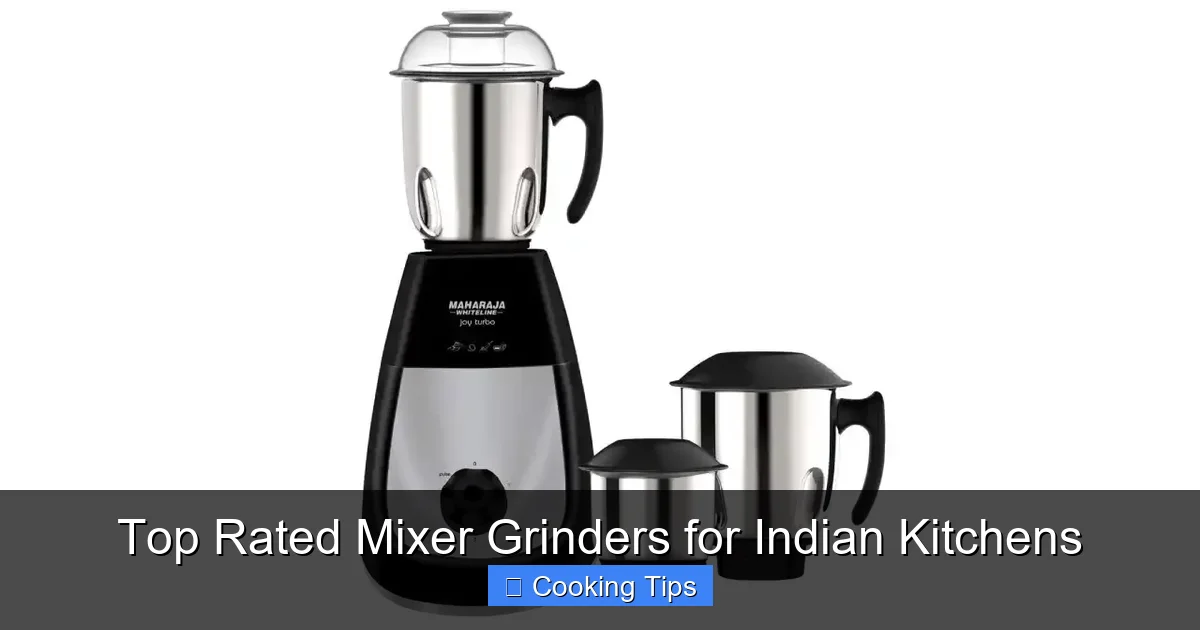
Visual guide about Top Rated Mixer Grinders for Indian Kitchens
Image source: static.digit.in
1. Sujata Dynamix DX (900 Watts)
Sujata is a name synonymous with reliable mixer grinders in India. The Dynamix DX is a perennial favorite for its robust build and powerful performance.
- Motor: 900 Watts, known for its durability and ability to handle tough grinding jobs continuously.
- Jars: Typically comes with 3 stainless steel jars – a chutney jar, a medium jar, and a larger liquidizing jar.
- Blades: Sharp, high-quality stainless steel blades for efficient grinding.
- Key Strengths: Exceptional durability, powerful motor for wet and dry grinding, excellent for idli/dosa batter, good value for money.
- Considerations: Can be a bit noisy compared to some newer models.
2. Preethi Galaxy (750 Watts) / Preethi Blue Leaf (750 Watts)
Preethi is another leading brand, and its Galaxy and Blue Leaf series are highly popular. They offer a good balance of performance, features, and aesthetics.
- Motor: 750 Watts, powerful enough for most Indian kitchen tasks.
- Jars: Usually includes a chutney jar, a grinding jar, and a liquidizing jar. Some models offer additional jars.
- Blades: Specially designed blades for efficient grinding and blending.
- Key Strengths: Smooth operation, good grinding consistency, attractive design, overload protection, reliable brand.
- Considerations: The plastic components might feel less premium than some competitors.
3. Philips Daily Collection HL7756/00 (700 Watts)
Philips offers sleek designs and reliable performance. The Daily Collection series is a good entry-level to mid-range option.
- Motor: 700 Watts, suitable for everyday grinding and blending needs.
- Jars: Comes with 3 jars made of high-quality stainless steel.
- Blades: Sharp and durable blades for efficient processing.
- Key Strengths: Compact design, easy to clean, good performance for common tasks, often features advanced air ventilation for motor cooling.
- Considerations: Might not be the best for very heavy-duty or continuous wet grinding tasks compared to higher wattage models.
4. Bajaj Rex (500 Watts / 750 Watts)
Bajaj offers a range of mixer grinders, and the Rex series is a popular choice for its affordability and decent performance.
- Motor: Available in different wattages, with 750W being a good option for general use.
- Jars: Typically comes with 3 stainless steel jars.
- Blades: Sharp blades for effective grinding.
- Key Strengths: Budget-friendly, reliable for basic tasks, good brand recognition.
- Considerations: Build quality might not be as robust as premium models; prolonged heavy use might be challenging for lower wattage variants.
5. Bosch TrueMixx Mixer Grinder (750 Watts / 1000 Watts)
Bosch is known for its engineering and build quality. The TrueMixx series is designed for high performance and durability.
- Motor: Available in 750W and 1000W, offering good power for tough jobs.
- Jars: Usually comes with 3 jars, including a unique “Active Flow Hopper” design in some models for better grinding.
- Blades: Sharp, specialized blades, often with a unique blade design for efficient grinding.
- Key Strengths: Robust build, excellent grinding performance, noise reduction features, good brand trust for quality.
- Considerations: Can be on the pricier side compared to some competitors.
How to Choose the Right Mixer Grinder for Your Kitchen
Now that you know what to look for, let’s break down the selection process into actionable steps.
Step 1: Assess Your Cooking Needs
This is the most crucial step. Think about:
- Frequency of Use: Will you use it daily or only occasionally?
- Types of Grinding: Do you primarily grind spices, make batters, or prepare pastes? Are you grinding hard ingredients like turmeric or urad dal for extended periods?
- Quantity: How much batter or paste do you typically need to prepare at once?
Example: If you make idli and dosa batter frequently, you’ll need a mixer grinder with at least 750W power, preferably 900W or more, with a good quality wet grinding jar and sharp blades.
Step 2: Determine the Ideal Wattage
Based on your needs from Step 1:
- Light Use (chutneys, occasional spice grinding): 500W – 650W might suffice.
- Medium Use (daily spices, pastes, small batters): 700W – 800W is a good choice.
- Heavy Use (frequent batters, tough grinding, continuous use): 850W – 1000W+ is recommended.
Step 3: Select the Right Number and Type of Jars
Consider the typical volume of ingredients you process. A set of 3 jars is usually sufficient for most Indian kitchens: one small for chutneys/pastes, one medium for dry grinding/masalas, and one large for liquidizing or larger batter batches.
Tip: If you plan to make large quantities of idli/dosa batter, look for a model that explicitly mentions a “wet grinding jar” or a jar specifically designed for this purpose.
Step 4: Check for Safety Features
Always prioritize safety. Ensure the model includes:
- Overload protection
- Secure jar locking mechanisms
- A stable, non-slip base
Tip: Never compromise on safety features, even if it means a slightly higher price.
Step 5: Evaluate Brand Reputation and Warranty
Stick with reputable brands that have a good track record for durability and after-sales service. A longer warranty period, especially on the motor (typically 2-5 years), is a good indicator of the manufacturer’s confidence in their product.
Step 6: Read Reviews and Compare Prices
Once you’ve narrowed down your options, read user reviews on e-commerce sites and appliance review websites. Pay attention to comments on grinding efficiency, durability, noise levels, and customer service. Compare prices from different retailers to get the best deal.
Maintaining Your Mixer Grinder for Longevity
A little care goes a long way in ensuring your mixer grinder serves you well for years.
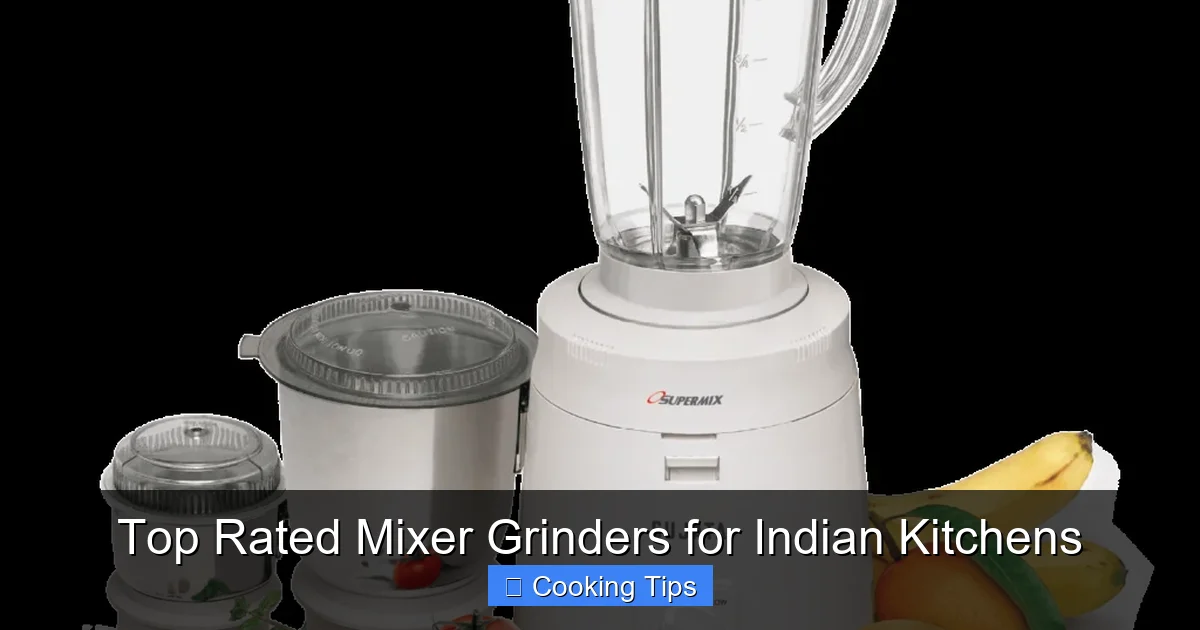
Visual guide about Top Rated Mixer Grinders for Indian Kitchens
Image source: sujataappliances.com
- Clean Immediately: Wash the jars, lids, and blades immediately after use. Residue can become difficult to remove and can affect performance.
- Dry Thoroughly: Ensure all parts are completely dry before reassembling or storing to prevent rust.
- Avoid Overloading: Do not fill the jars beyond the recommended maximum capacity. Overloading puts a strain on the motor.
- Don’t Run Continuously for Too Long: For dry grinding, avoid running the mixer for more than 30-60 seconds at a time, allowing it to cool down in between. For wet grinding, refer to the manual; most can run for longer durations (e.g., 4-5 minutes).
- Check the Coupler: The coupler at the base of the jar that connects to the motor is a common wear-and-tear part. Inspect it occasionally for damage and replace if needed.
- Store Properly: Store the jars and blades separately or with lids loosely on to prevent odors from getting trapped. Keep the main unit clean and dry.
Troubleshooting Common Mixer Grinder Issues
Even the best appliances can face minor issues.
- Motor Not Starting:
- Check if the power cord is properly plugged in.
- Ensure the jar is correctly locked in place.
- Check if the overload protector has tripped (usually a small red button on the base). Press it to reset.
- If none of these work, the motor might have an issue; contact customer service.
- Weak Grinding:
- The blades might be dull or damaged. Consider replacement.
- The motor might be underpowered for the task.
- Ensure you are using the correct blade for the task and not overloading the jar.
- Excessive Noise or Vibration:
- Ensure the mixer grinder is on a flat, stable surface.
- Check if the jar and lid are securely fitted.
- The blades or bearing might be worn out.
- Smoke from Motor:
- This is a serious issue. It usually indicates motor burnout. Immediately switch off the appliance and contact the service center. This can happen due to overloading or prolonged running.
Conclusion
Selecting the right mixer grinder for your Indian kitchen is a decision that significantly impacts your daily cooking experience. By understanding the importance of motor power, jar versatility, blade efficiency, and safety features, you can confidently choose a top-rated appliance that meets your specific needs. Brands like Sujata, Preethi, Philips, Bajaj, and Bosch offer excellent options that cater to various budgets and requirements.
Remember to assess your cooking habits, prioritize durable materials, and always consider safety. With the right mixer grinder, you’ll spend less time on tedious prep work and more time enjoying delicious, home-cooked Indian meals. Happy grinding!
