

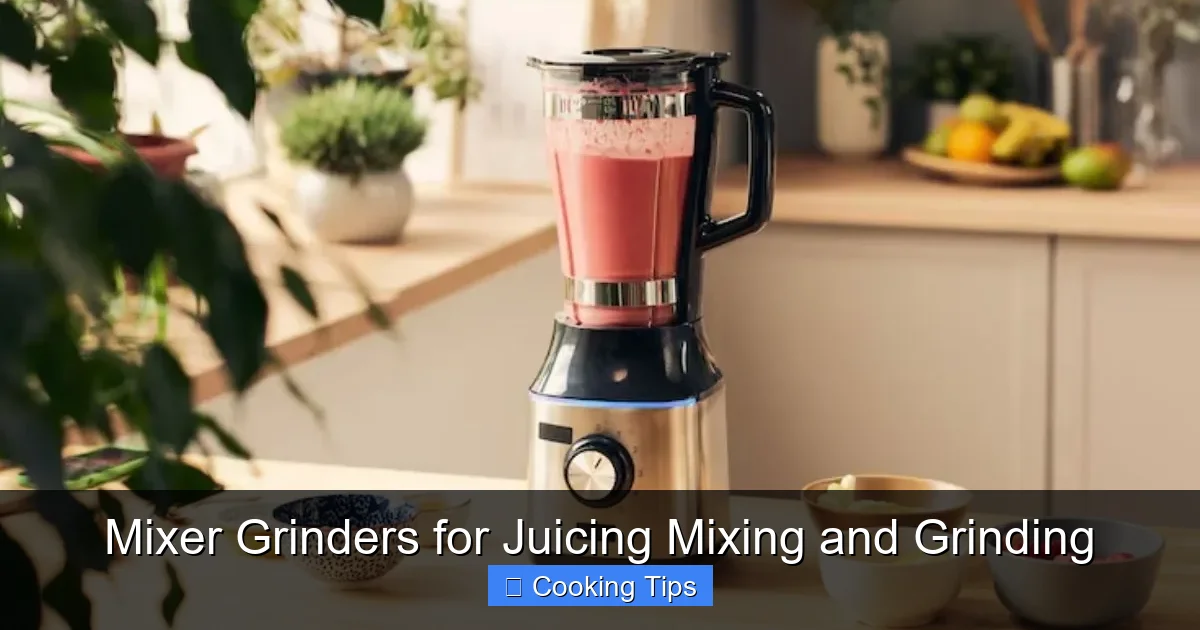
Unlock the full potential of your mixer grinder with this comprehensive guide. Learn how to effectively use your appliance for juicing, mixing, and grinding a variety of ingredients. We’ll cover everything from understanding different jar types to essential maintenance for longevity, ensuring you achieve perfect culinary results every time.
Key Takeaways
- Understand Your Mixer Grinder’s Capabilities: Not all mixer grinders are created equal; learn to identify which models are best suited for juicing, mixing, and grinding, and what limitations to expect.
- Master Juicing Techniques: Discover the right blades and techniques for extracting fresh, pulp-free juices from various fruits and vegetables.
- Perfect Mixing for Every Recipe: Learn how to utilize different speeds and jar attachments for smooth batters, creamy dips, and finely blended sauces.
- Achieve Ideal Grinding Consistency: From spices to chutneys, understand how to get the perfect grind for your culinary needs with the right settings and jar selection.
- Essential Safety Precautions: Prioritize safety by understanding proper usage, handling of blades, and ensuring the appliance is stable during operation.
- Effective Cleaning and Maintenance: Proper care will extend the life of your mixer grinder; learn best practices for cleaning blades, jars, and the motor base.
Mixer Grinders for Juicing, Mixing, and Grinding: Your Ultimate Kitchen Companion
The humble mixer grinder is a true workhorse in any modern kitchen. It’s a versatile appliance that can simplify a multitude of culinary tasks, from preparing baby food to grinding spices for your favorite curry. But can it truly handle juicing, mixing, and grinding with equal finesse? Absolutely! With the right knowledge and a little practice, you can unlock the full potential of your mixer grinder and transform your cooking experience. This comprehensive guide will walk you through everything you need to know to master your mixer grinder for juicing, mixing, and grinding, ensuring delicious and effortless results every time.
We’ll delve into the nuances of different mixer grinder types, understand the functions of various attachments, and provide step-by-step instructions for each primary function. We’ll also share practical tips to get the most out of your appliance, address common issues, and offer advice on maintenance to keep your mixer grinder running smoothly for years to come.
Understanding Your Mixer Grinder
Before we dive into the specifics of juicing, mixing, and grinding, it’s crucial to understand the basic components of your mixer grinder and how they contribute to its functionality. Most mixer grinders consist of a motor base, which houses the powerful motor, and interchangeable jars with different blade assemblies. The speed settings on the motor base control the rotational speed of the blades, allowing for varying degrees of processing. Understanding these parts is the first step to effectively using your mixer grinder.

Visual guide about Mixer Grinders for Juicing Mixing and Grinding
Image source: stories.watanz.com
The Motor Base: The Heart of the Machine
The motor base is where the magic happens. It contains the electric motor that drives the blades in the jars. You’ll typically find speed control knobs or buttons on the base. These usually range from a low speed for gentle mixing to a high speed for efficient grinding.
- Speed Settings: Most mixer grinders offer at least three speed settings, plus a pulse function. The pulse function provides short bursts of power, useful for controlled chopping or breaking down tough ingredients.
- Wattage: The wattage of the motor is a good indicator of its power. Higher wattage generally means a more powerful motor, capable of handling tougher tasks like grinding hard spices or large quantities of ingredients.
- Overload Protection: Many modern mixer grinders come with overload protection. This feature automatically shuts off the motor if it overheats, preventing damage. Ensure you understand where this reset button is located.
The Jars and Blades: Your Processing Tools
The variety of jars and blades is what gives a mixer grinder its versatility. Most come with a set of jars, each designed for specific tasks.
- Wet Grinding Jar: These are typically taller jars with robust blades designed for grinding wet ingredients like soaked lentils for idli or dosa batter.
- Dry Grinding Jar: Shorter, wider jars with sharper, flatter blades are ideal for grinding dry ingredients like spices, nuts, and coffee beans.
- Chutney Jar: A small, compact jar, often with smaller, sharper blades, perfect for making chutneys, purees, and grinding small quantities of ingredients.
- Juicer Jar/Attachment (if applicable): Some high-end mixer grinders come with a dedicated juicer attachment or a specific juicer jar that uses centrifugal force or a pulp separator to extract juice.
The blades are crucial. They are usually made of stainless steel and vary in design to suit different purposes. Sharpness and blade angle play a significant role in the efficiency of grinding, mixing, or juicing.
Mastering Juicing with Your Mixer Grinder
While dedicated juicers are often the go-to for juicing, many modern mixer grinders, especially those with a juicer attachment or a well-designed wet grinding jar, can produce delicious, fresh juices. It’s important to note that the type of juice you can extract may vary.

Visual guide about Mixer Grinders for Juicing Mixing and Grinding
Image source: images.herzindagi.info
Using a Dedicated Juicer Attachment
If your mixer grinder comes with a dedicated juicer attachment, this will offer the closest experience to a standalone juicer.
- Preparation is Key: Wash your fruits and vegetables thoroughly. For larger items like apples or carrots, cut them into manageable pieces that will fit into the juicer chute. Remove any pits or large seeds.
- Assemble the Juicer: Follow your appliance’s manual to correctly assemble the juicer attachment onto the motor base. Ensure all parts are securely fitted.
- Feed Ingredients Gradually: Turn on the mixer grinder to the recommended speed (usually high). Feed the prepared fruits and vegetables into the chute one by one.
- Collect Your Juice: The juice will be extracted into a container placed below the spout, while the pulp will be collected in a separate compartment.
- Clean Immediately: Juicer attachments, like any juicer, are best cleaned immediately after use to prevent pulp from drying and sticking.
Juicing with a Wet Grinding Jar (for softer fruits/vegetables)
For softer fruits like berries, ripe mangoes, or even to extract pulp from cooked vegetables, a wet grinding jar can be surprisingly effective. This method will likely produce a more pulpy juice or puree, similar to a smoothie.
- Prepare Ingredients: Wash and cut fruits and vegetables. For very soft fruits, you might not need to peel them. For vegetables that need cooking, boil or steam them until tender before processing. Remove any large seeds or cores.
- Add a Little Liquid (Optional): For smoother results, especially with tougher fruits or cooked vegetables, you can add a small amount of water or other liquid.
- Select the Right Jar: Use your largest wet grinding jar.
- Process on High Speed: Secure the lid tightly. Start the mixer grinder on a medium to high speed. Process until the ingredients are fully liquefied.
- Strain for Clearer Juice (Optional): If you prefer a clearer juice without pulp, you can strain the processed mixture through a fine-mesh sieve or cheesecloth.
Tip: For tougher vegetables like carrots or beets, it’s generally better to use a dedicated juicer or a high-powered blender. Mixer grinders are best suited for softer fruits and pre-cooked vegetables for juicing.
Effortless Mixing with Your Mixer Grinder
Mixing is perhaps the most common use for a mixer grinder, and it excels at creating batters, pastes, and purees.

Visual guide about Mixer Grinders for Juicing Mixing and Grinding
Image source: images.herzindagi.info
Creating Smooth Batters (Cakes, Pancakes, Dosa)
- Combine Dry and Wet Ingredients Separately: For best results, mix your dry ingredients (flour, sugar, leavening agents) and wet ingredients (eggs, milk, oil) in separate bowls first.
- Add Wet to Dry Gradually: Put the dry ingredients into the appropriate mixer grinder jar. Gradually add the wet ingredients while the mixer is on a low setting.
- Use Pulse for Control: For initial incorporation, use the pulse function to prevent overmixing.
- Mix to Desired Consistency: Once ingredients are roughly combined, switch to a medium speed and mix until you achieve a smooth, lump-free batter. Be careful not to overmix, as this can lead to tough baked goods.
- Scrape Down Sides: Stop the mixer periodically and scrape down the sides of the jar with a spatula to ensure all ingredients are incorporated.
Making Pastes and Dips (Ginger-Garlic Paste, Hummus)
- Prepare Ingredients: Chop ingredients roughly. For pastes like ginger-garlic, peel and roughly chop the ginger and garlic. For hummus, ensure your chickpeas are cooked and drained.
- Add a Little Liquid: A small amount of oil, water, or lemon juice often helps in achieving a smoother paste or dip.
- Use the Chutney Jar or Small Wet Jar: These smaller jars are ideal for making concentrated pastes.
- Process on Medium to High Speed: Start with a medium speed and increase to high as needed. Use the pulse function to break down larger pieces.
- Achieve Desired Smoothness: Continue processing until you reach your desired consistency. For very smooth pastes, you might need to process for a minute or two.
Tip: For dry ingredients that you want to paste, like soaked lentils, ensure they are well-drained before adding them to the mixer grinder. Excess water can make the grinding process difficult.
Perfect Grinding with Your Mixer Grinder
Grinding is where the true power of a mixer grinder shines. From whole spices to nuts, achieving the right grind is essential for flavor and texture.
Grinding Dry Spices
- Dry the Spices: Ensure your whole spices are completely dry. Moisture can cause them to clump and lead to an uneven grind. You can lightly toast whole spices on a pan for a few minutes (and then cool them completely) to enhance flavor and ensure dryness.
- Use the Dry Grinding Jar: This jar is specifically designed for dry ingredients.
- Don’t Overfill: Fill the jar only about halfway. Overfilling will prevent the blades from effectively grinding the spices and can strain the motor.
- Grind in Short Bursts: Use the pulse function for the initial grinding, followed by short bursts on a high setting. This prevents the spices from overheating (which can affect their flavor) and ensures a finer grind.
- Shake and Grind Again: Stop the grinder, shake the jar gently, and then continue grinding. Repeat this process until you achieve the desired fineness.
- Cool Before Storing: Let the ground spices cool down completely before transferring them to an airtight container. Warm spices can lose their aroma quickly.
Grinding Nuts and Seeds
- Remove Shells and Skins: Ensure nuts are shelled and any papery skins (like for almonds) are removed.
- Process in Batches: Grind nuts in small batches to avoid creating nut butter unintentionally.
- Use the Pulse Function: For chopped nuts, use the pulse function. For a finer grind, use short bursts on a high setting.
- Watch for Consistency: Keep a close eye on the texture. Nuts can quickly turn into a paste if over-processed.
- Add a Little Sugar (Optional): For grinding nuts for sweet preparations, adding a tablespoon of sugar can help prevent them from clumping and create a finer powder.
Tip: For very hard ingredients like turmeric root or whole peppercorns, your mixer grinder might struggle. Consider breaking them into smaller pieces before grinding, or invest in a grinder specifically designed for tough spices.
Essential Safety Precautions
Safety is paramount when operating any electrical appliance, especially one with sharp blades.
- Read the Manual: Always refer to your appliance’s user manual for specific operating instructions and safety guidelines.
- Ensure Stable Placement: Place the mixer grinder on a flat, stable, and dry surface before use.
- Secure the Jar Lid: Always ensure the jar lid is securely locked in place before starting the motor. Some models have safety interlocks that prevent operation if the lid isn’t properly attached.
- Don’t Overload: Avoid overfilling the jars, as this can strain the motor and lead to overheating.
- Insert and Remove Blades Carefully: Blades are extremely sharp. Handle them with care when assembling or disassembling the jars.
- Unplug Before Cleaning: Always unplug the mixer grinder from the power outlet before cleaning or attempting to remove any stuck food particles.
- Keep Away from Water: The motor base is an electrical component and should never be immersed in water or exposed to excessive moisture.
- Supervise Children: Keep children away from the mixer grinder while it is in operation.
Cleaning and Maintenance for Longevity
Proper cleaning and maintenance are crucial for extending the lifespan of your mixer grinder and ensuring hygienic operation.
Daily Cleaning After Use
- Unplug First: Always unplug the appliance before cleaning.
- Disassemble Jars: Carefully remove the jars and blades.
- Wash Jars and Lids: Wash the jars and lids with warm, soapy water. Use a soft brush or sponge. Avoid abrasive scrubbers that can scratch the plastic.
- Clean Blades: Rinse the blades under running water. For stubborn residue, you can use a soft brush. Be extremely cautious when handling sharp blades.
- Wipe the Motor Base: Use a damp cloth to wipe down the motor base. Never use water to clean the motor base itself. Ensure no liquid seeps into the motor housing.
- Dry Thoroughly: Ensure all parts are completely dry before reassembling or storing them.
Deep Cleaning and Maintenance
- Check for Wear and Tear: Periodically inspect the power cord, plug, and jar gaskets for any signs of damage. Replace them if necessary.
- Lubrication (if applicable): Some older or heavy-duty models might require occasional lubrication. Refer to your user manual.
- Jar Gaskets: Ensure the rubber gaskets on the jar lids are clean and intact. Worn-out gaskets can lead to leaks.
- Motor Ventilation: Keep the ventilation slots on the motor base clear of dust and debris. This ensures proper airflow and prevents overheating.
Troubleshooting Common Issues
- Motor Not Starting: Check if the appliance is plugged in. Ensure the jar and lid are correctly locked in place (if your model has safety interlocks). Check if the overload protection has tripped and press the reset button if available.
- Leaking from Jar: Ensure the lid is tightly secured and the gasket is properly seated. Check the gasket for damage.
- Uneven Grinding/Mixing: Avoid overfilling the jar. Cut ingredients into smaller pieces. Ensure the correct jar and blade are used for the task.
- Overheating: Stop the mixer grinder and let it cool down. Avoid prolonged continuous operation, especially with tough ingredients. Ensure ventilation slots are clear.
Conclusion
Your mixer grinder is a remarkably versatile kitchen appliance that can significantly simplify your cooking and food preparation. By understanding its components, mastering the techniques for juicing, mixing, and grinding, and adhering to safety and maintenance guidelines, you can confidently tackle a wide range of culinary tasks. From whipping up healthy smoothies and delicious batters to grinding your own fresh spices, your mixer grinder is ready to be your ultimate kitchen companion. Embrace its capabilities, experiment with different ingredients, and enjoy the convenience and delicious results it brings to your table.
