

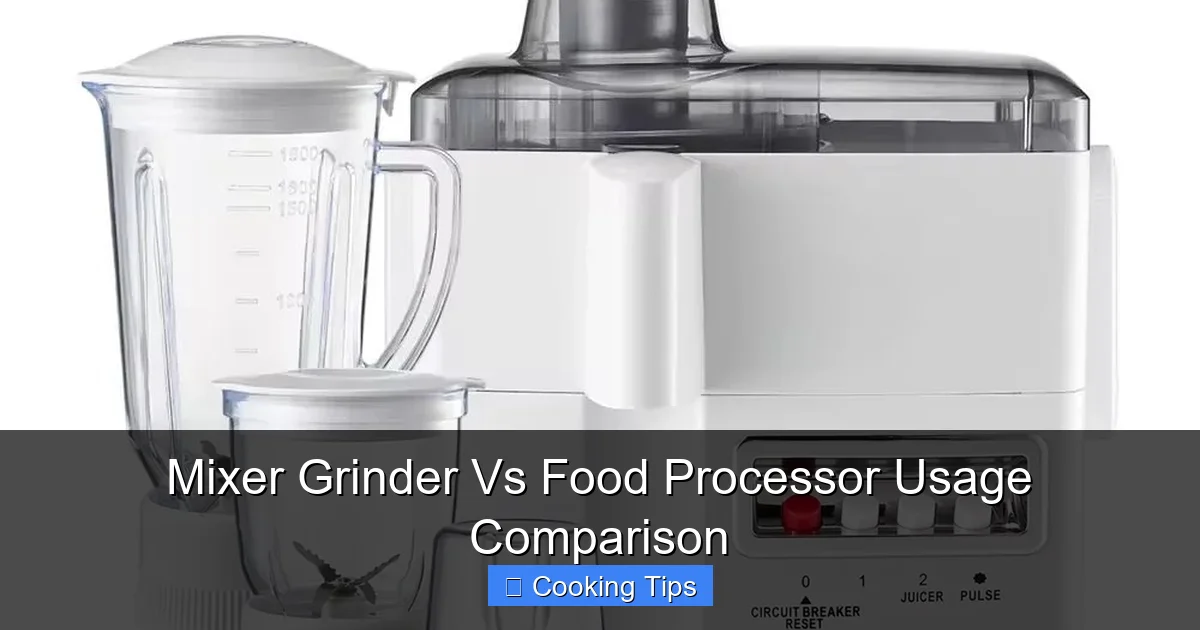
Deciding between a mixer grinder and a food processor can be confusing. This guide clarifies their distinct roles in the kitchen. A mixer grinder excels at grinding tough ingredients and making pastes, while a food processor is a versatile workhorse for chopping, slicing, and pureeing. Understanding their core functionalities will help you choose the right appliance for specific cooking needs, saving you time and effort.
Mixer Grinder Vs Food Processor Usage Comparison
Welcome to your ultimate guide for understanding the difference between a mixer grinder and a food processor! If you’ve ever stood in the kitchen appliance aisle, or even just stared at your own countertops, wondering which of these powerful machines to use for a specific task, you’re not alone. Both appliances are designed to make our lives easier, but they have distinct strengths and purposes. In this guide, we’ll break down exactly what each appliance does best, how to use them effectively, and help you decide which one is your kitchen’s true best friend for various culinary adventures. Let’s dive in and demystify these essential kitchen tools!
Key Takeaways
- Mixer Grinders are Powerful Grinders: Their primary strength lies in their robust motor and sharp blades designed for wet and dry grinding of spices, grains, and even tough ingredients to a fine paste or powder.
- Food Processors are Versatile Choppers and Mixers: These appliances are designed for a wider range of tasks including chopping vegetables, slicing fruits, shredding cheese, kneading dough, and making purees or batters.
- Blade Design and Functionality Differ: Mixer grinders typically come with fixed blades for grinding, while food processors offer interchangeable blades and discs for various cutting and mixing functions.
- Motor Power vs. Versatility: Mixer grinders often boast higher wattage motors for intense grinding, whereas food processors prioritize motor speed and torque for diverse processing tasks.
- Capacity and Jar Types: Mixer grinders usually have smaller, sturdier jars for grinding, while food processors typically feature larger bowls suitable for processing bigger batches.
- Ease of Use for Specific Tasks: For making dosa batter or grinding masalas, a mixer grinder is superior. For chopping onions, shredding cabbage, or making dough, a food processor is the better choice.
Understanding the Core Functionality
Before we get into the nitty-gritty of usage, it’s crucial to grasp the fundamental purpose of each appliance. Think of them as specialists versus generalists.
The Mixer Grinder: The Grinding Champion
A mixer grinder is primarily built for one main purpose: grinding. It’s designed to take ingredients and transform them into a fine powder or a smooth paste. This is achieved through its powerful motor and specially designed, sharp blades that spin at high speeds. Mixer grinders usually come with a set of jars, each optimized for different grinding tasks.
* Dry Grinding: This is for making spice powders like garam masala, chili powder, or grinding grains like rice or lentils for flours.
* Wet Grinding: This is for creating pastes like ginger-garlic paste, coconut paste, or batters for dishes like idli and dosa. The motor’s strength is key here, as it needs to handle the friction and consistency of wet ingredients.
The key here is the intense, focused power for pulverizing ingredients.
The Food Processor: The Versatile Workhorse
A food processor, on the other hand, is a jack-of-all-trades. While it can do some grinding, its real strength lies in its versatility. It’s designed to perform a multitude of tasks with the help of various attachments.
* Chopping: From rough chops to fine minces, it can handle onions, garlic, herbs, and vegetables quickly.
* Slicing and Shredding: With interchangeable discs, you can slice fruits and vegetables uniformly or shred cheese and cabbage for salads and coleslaws.
* Pureeing: It can create smooth purees for sauces, baby food, or dips like hummus.
* Kneading Dough: Many food processors come with a dough blade, allowing you to mix and knead dough for bread or pizza efficiently.
* Mixing: It can also mix batters for cakes or quick breads.
The food processor excels at manipulating ingredients in various ways, rather than just breaking them down to their smallest form.
When to Use a Mixer Grinder
The mixer grinder is your go-to appliance when you need to achieve a specific texture, primarily a fine powder or a smooth, consistent paste.
Making Spice Powders
If you’re a fan of fresh spices, a mixer grinder is indispensable. Grinding whole spices like cumin, coriander, or peppercorns just before use releases incredible aroma and flavor.
How to Use:
- Ensure the spice is completely dry.
- Add a small quantity to the appropriate grinding jar (usually the smallest, sturdiest one). Don’t overfill, as this hinders effective grinding.
- Secure the lid tightly.
- Start the mixer grinder on a low setting and gradually increase the speed.
- Pulse or run for short bursts, stopping to shake the jar if needed. This helps in achieving a uniform powder.
- Continue until the desired fineness is reached.
Tip: For best results, grind spices in small batches. Overheating can affect the flavor.
Creating Pastes
For Indian cooking, a smooth ginger-garlic paste or a spicy chili paste is a staple. A mixer grinder is perfect for this. It can also handle ingredients like coconut, nuts, and herbs.
How to Use:
- Add your ingredients (e.g., peeled ginger, garlic cloves, chilies) to the wet grinding jar.
- Add a small amount of liquid (like water or oil) if needed, just enough to help the blades catch the ingredients.
- Secure the lid.
- Run the mixer grinder continuously, stopping occasionally to scrape down the sides with a spatula.
- Continue until you achieve a smooth, lump-free paste.
Tip: For very tough ingredients, you might need to chop them into smaller pieces before grinding. Add liquid sparingly to avoid a watery paste.
Preparing Batters
Dishes like idli, dosa, and vada require batters with a specific, smooth, and slightly fluffy consistency. Mixer grinders, especially those with high torque motors, excel at this.
How to Use:
- Soak your lentils and rice as per your recipe.
- Drain them well and add them to the wet grinding jar, along with any other required ingredients.
- Add minimal water, just enough to get the grinding started.
- Grind in short bursts, stopping frequently to scrape the sides and use the pusher if provided.
- The goal is a smooth, thick, but pourable batter.
Tip: The consistency of the batter is crucial. Too much water will make it runny, affecting the final dish.
When to Use a Food Processor
The food processor shines when you need to process ingredients in multiple ways, saving you manual chopping, slicing, or mixing time.
Chopping Vegetables and Herbs
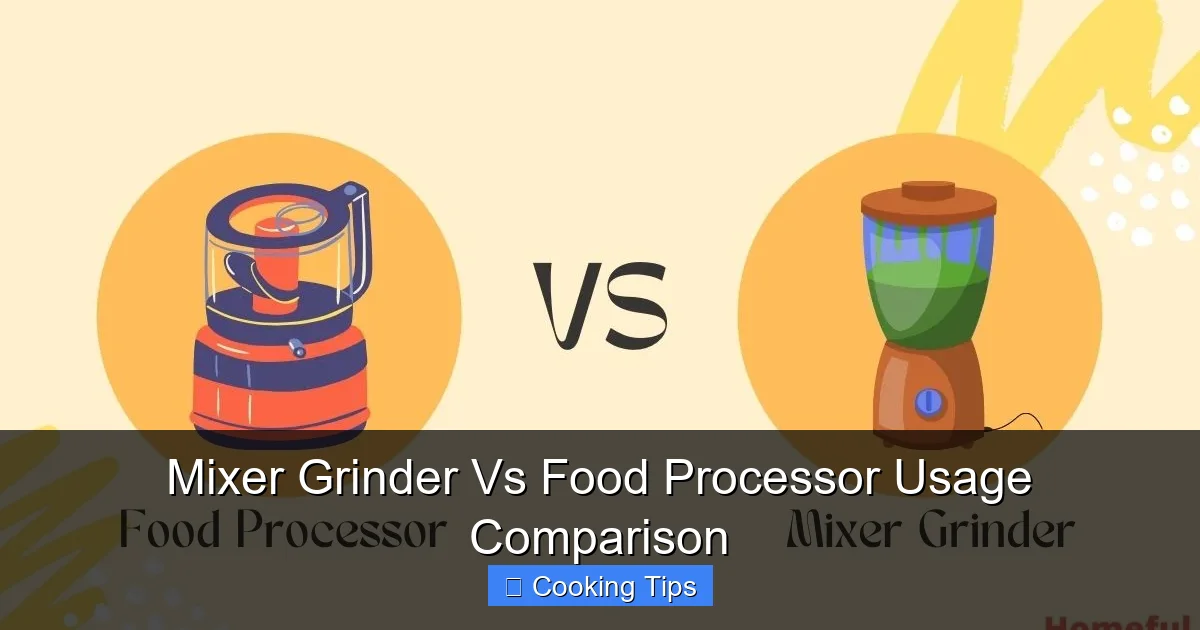
This is where the food processor truly shines for everyday cooking. Need finely chopped onions for a curry base, or evenly diced vegetables for a stir-fry? The food processor is your friend.
Visual guide about Mixer Grinder Vs Food Processor Usage Comparison
Image source: homeful.in
How to Use:
- Wash and roughly chop your vegetables into manageable pieces that fit through the feed chute.
- Place the S-shaped blade in the bowl.
- Add the vegetables to the bowl.
- Secure the lid and process. For chopping, pulsing is key. Pulse a few times for a coarse chop, or process longer for finer results.
- Stop and scrape down the sides as needed.
Tip: For very fine chopping of herbs, process them with a drizzle of oil to prevent them from turning into a paste too quickly.
Slicing and Shredding
Forget wrestling with a grater or trying to get perfectly uniform slices of cucumber for a salad. The food processor with its dedicated discs makes this effortless.
How to Use:
- Attach the desired slicing or shredding disc to the spindle.
- Place the lid on the bowl and ensure it’s securely locked.
- Insert the food into the feed chute.
- Turn on the food processor and gently push the food down the chute using the food pusher.
- Do not force the food. Let the machine do the work.
Tip: Ensure your vegetables are firm and cold for best slicing results. Soggy or warm produce can lead to messy cuts.
Kneading Dough
Making bread or pizza dough from scratch can be time-consuming. A food processor with a dough blade significantly reduces the effort and time.
How to Use:
- Add the flour and other dry ingredients to the food processor bowl with the dough blade.
- Briefly pulse to combine.
- Add the wet ingredients (water, oil, yeast) and process until a cohesive ball of dough forms.
- Continue processing for the recommended time (usually 1-2 minutes) to knead the dough.
Tip: Be careful not to over-knead, as this can result in tough dough. The dough should be smooth and elastic.
Making Purees and Sauces
While a mixer grinder can make pastes, a food processor is often preferred for larger batches of purees and sauces, especially those with a chunkier texture, like chunky tomato sauce or pesto.
How to Use:
- Add cooked vegetables, fruits, or nuts to the food processor bowl with the S-blade.
- Process until smooth.
- You can add liquids like water, broth, or oil to achieve the desired consistency.
- Scrape down the sides as needed.
Tip: For very smooth purees, you might still want to finish with a blender for an ultra-silky texture.
Key Differences in Design and Operation
The physical design and operational nuances further highlight the distinct roles of these appliances.
Motor Power and Speed
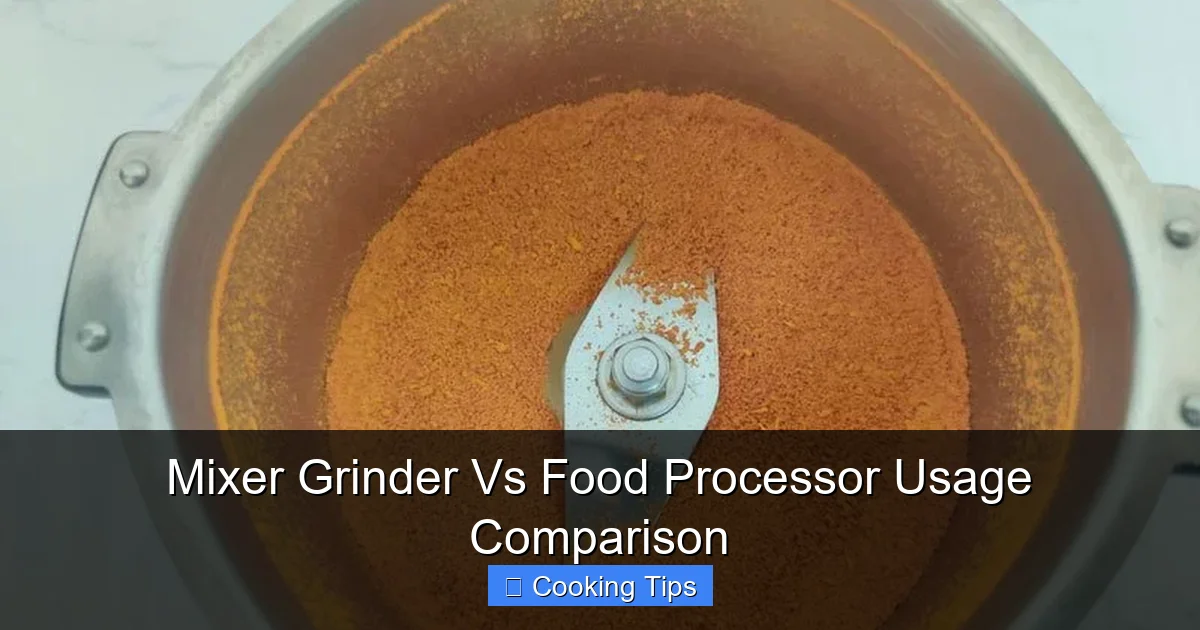
Mixer Grinders: Typically have higher wattage motors (often 750W and above) designed for sustained power and torque to break down tough ingredients. The speed is optimized for grinding.
Visual guide about Mixer Grinder Vs Food Processor Usage Comparison
Image source: everythingbetter.in
Food Processors: Motors vary widely, but they are designed for speed and efficiency in various tasks. While powerful, their focus is on versatility rather than brute force grinding for extended periods.
Blades and Attachments
Mixer Grinders: Come with a fixed set of sharp, durable blades designed for grinding. The jars themselves are part of the grinding mechanism.
Food Processors: Feature interchangeable blades and discs. The standard is an S-shaped blade for chopping and mixing. Additional discs are used for slicing, shredding, and sometimes grating.
Jar/Bowl Capacity and Material
Mixer Grinders: Usually have smaller, robust jars made of stainless steel, designed to withstand the intense grinding process. They are optimized for smaller quantities that achieve fine textures.
Food Processors: Typically come with a larger processing bowl, often made of transparent polycarbonate, allowing you to see the contents. This larger capacity is ideal for processing bigger batches of ingredients.
Troubleshooting Common Issues
Even the best appliances can have hiccups. Here are some common problems and how to solve them.
Mixer Grinder Not Grinding Effectively
- Problem: Ingredients are not breaking down or are sticking to the sides.
- Solution:
- Ensure you are not overloading the jar. Process in smaller batches.
- Add a tiny amount of liquid if wet grinding, or shake the jar for dry grinding.
- Check if the blades are securely attached and sharp.
- Ensure the jar is correctly locked onto the base.
Food Processor Not Chopping Evenly
- Problem: Some pieces are finely chopped, while others remain large.
- Solution:
- Cut ingredients into uniform sizes before adding them.
- Use the pulse function. Continuous processing can lead to unevenness.
- Stop the machine and scrape down the sides of the bowl periodically to ensure all ingredients are processed.
Appliance Overheating
- Problem: The motor feels hot, or the appliance stops working.
- Solution:
- Allow the appliance to cool down.
- For mixer grinders, avoid running for extended periods, especially when grinding very tough ingredients.
- For food processors, ensure you are not exceeding the recommended processing times for specific tasks.
- Check for any obstructions that might be causing the motor to strain.
Conclusion: Making the Right Choice for Your Kitchen
The choice between a mixer grinder and a food processor ultimately depends on your primary cooking needs and the types of dishes you prepare most often.
If your kitchen routine involves making a lot of spice powders, fresh pastes, and batters for traditional South Indian cuisine, a **mixer grinder** will be an indispensable tool. Its focused power for grinding will save you significant time and effort.
However, if you’re looking for an all-rounder that can chop vegetables for salads, slice potatoes for gratins, shred cheese, knead dough for baking, and make smooth purees for sauces and dips, a **food processor** is the more versatile choice. It will streamline a wide array of prep tasks.
Many modern kitchens benefit from having both! If space and budget allow, they complement each other beautifully, covering the entire spectrum of ingredient preparation. By understanding their core functions and specific uses, you can confidently choose the appliance that best suits your culinary aspirations and makes your time in the kitchen more efficient and enjoyable. Happy cooking!
