

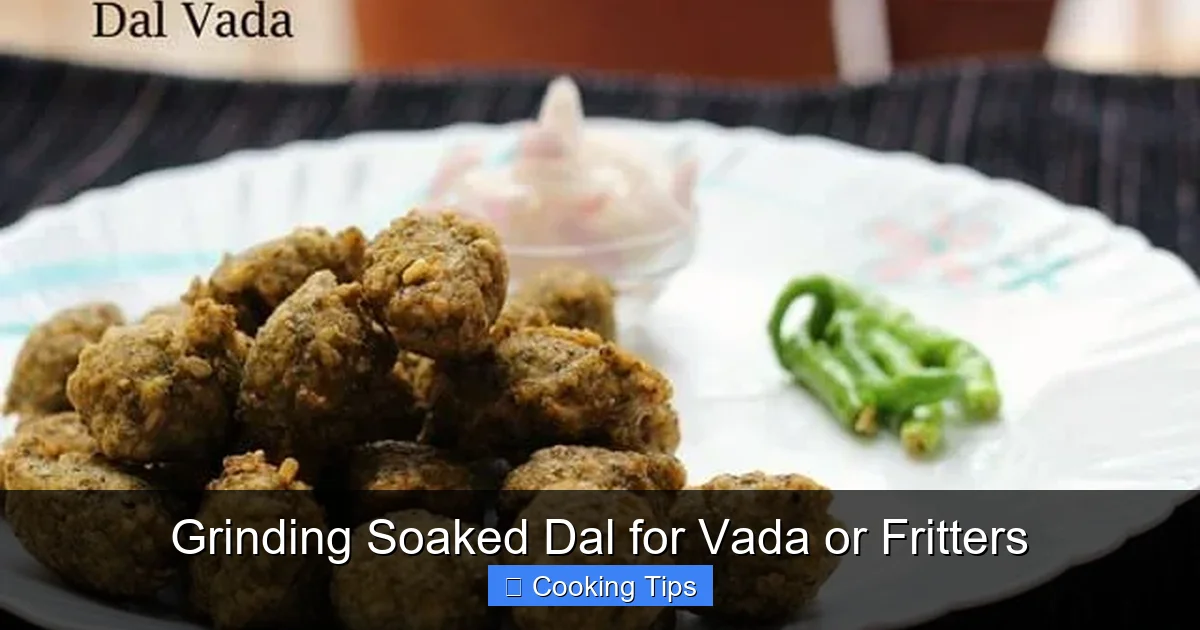
Unlock the secret to perfectly crispy and flavorful vadas and fritters with this comprehensive guide to grinding soaked dal. We’ll walk you through the entire process, from selecting the right dal and soaking techniques to achieving the ideal grinding consistency. Follow these steps to transform simple lentils into delicious, golden-brown delights every time.
Key Takeaways
- Choosing the Right Dal: Urad dal (split black gram) is the most common and ideal choice for vadas due to its creamy texture when ground. Other dals like chana dal or moong dal can be used for different fritters but have distinct results.
- Proper Soaking is Crucial: Soaking the dal hydrates it, making it easier to grind into a smooth paste and contributing to a lighter, airier vada.
- Water Management During Grinding: Adding water gradually is key. Too much water leads to a runny batter, affecting the vada’s shape and crispness; too little results in a coarse, dry paste.
- Achieving the Right Consistency: The ideal batter should be thick but pourable, with a slightly coarse texture for vadas, not completely smooth like a puree. This helps them hold their shape and fry up beautifully.
- Don’t Over-Grind: Over-grinding can whip too much air into the batter, causing it to spread excessively while frying and resulting in oily, flat vadas.
- Immediate Use or Refrigeration: Ground dal batter is best used fresh. If you need to store it, refrigerate it for a maximum of 24 hours and be prepared to whisk it again before use.
Grinding Soaked Dal for Vada or Fritters
Vadas and fritters are beloved snacks across many cuisines, celebrated for their crispy exteriors and soft, flavorful interiors. Whether you’re making savory lentil fritters like the South Indian medu vada, or sweet crispy delights, the foundation of their success lies in the preparation of the dal. Specifically, how you soak and grind the soaked dal is the single most important factor determining the final texture and taste of your delicious creations.
This comprehensive guide will take you through every step of grinding soaked dal for vadas and fritters. You’ll learn how to choose the right lentils, the best soaking practices, the nuances of grinding for that perfect consistency, and how to troubleshoot common issues. By the end, you’ll be confident in your ability to create perfectly textured, mouthwatering vadas and fritters every time.
Understanding the Role of Dal
The type of dal you choose significantly impacts the final texture. For most traditional vadas, particularly the popular South Indian varieties, split black gram, known as urad dal, is the gold standard. Urad dal has a naturally creamy texture and becomes incredibly soft and fluffy when ground, allowing it to absorb flavors beautifully and create a light, airy fritter.
Other dals can also be used for fritters, but they yield different results. For instance, chana dal (split chickpeas) makes a sturdier, more robust fritter, often found in dishes like pakoras. Moong dal (split yellow lentils) can be used for lighter, sometimes sweeter fritters. However, for that quintessential vada texture – light, fluffy, and melt-in-your-mouth – urad dal is unparalleled.
Step 1: Choosing Your Dal
As mentioned, urad dal is the primary choice for most vadas. Look for good quality whole urad dal or split urad dal (known as urad dal dhuli). The whole urad dal often yields a slightly better texture but requires longer soaking and grinding. Split urad dal is quicker to prepare.
If your recipe calls for other fritters, ensure you’re using the correct dal specified. Always inspect your dal for any impurities or signs of spoilage before proceeding.
Step 2: Washing the Dal
Before soaking, it’s essential to wash the dal thoroughly. This removes any dust, debris, or surface starch that might affect the texture.
How to Wash
Place the dry dal in a bowl. Add enough clean water to generously cover it. Swirl the dal with your hands, observing the water becoming cloudy. Drain this cloudy water. Repeat this washing process at least 3-4 times, or until the water runs relatively clear. A clean dal is the first step to a clean-tasting vada.
Step 3: Soaking the Dal
Soaking is a critical step. It hydrates the lentils, making them soft and easier to grind into a smooth, workable batter. It also helps in developing the characteristic lightness of vadas. The soaking time can vary depending on the type of dal and its age.
Soaking Time Guidelines
- Urad Dal: Generally, urad dal requires soaking for about 4 to 6 hours. If you are using very old urad dal, you might need to soak it for a bit longer, up to 8 hours.
- Chana Dal: Chana dal usually needs about 2 to 3 hours of soaking.
- Moong Dal: Moong dal also requires a shorter soaking time, around 1 to 2 hours.
The Soaking Process
After washing, drain all the water from the dal. Place the washed dal in a clean bowl and cover it with fresh, clean water. Ensure the water level is at least two inches above the dal, as it will absorb water and swell up. You can soak it at room temperature. If you live in a very hot climate, you might want to refrigerate it during the soaking period to prevent fermentation.
Step 4: Draining the Dal
Once the soaking time is complete, it’s crucial to drain the dal thoroughly. Excess water clinging to the dal can make the batter too wet, leading to flat, oily vadas.
How to Drain
Use a fine-mesh sieve or a colander to drain all the soaking water. Let the dal sit in the sieve for a few minutes to allow as much water as possible to drip away. You can even gently pat the dal with a clean kitchen towel to remove any residual moisture, especially if you are using a high-powered blender that grinds quickly.
Step 5: Grinding the Dal
This is arguably the most important step. The consistency of the ground dal directly influences the texture of your vadas. You can use a traditional wet grinder, a high-powered blender (mixer grinder), or a food processor.
Using a Wet Grinder (Traditional Method)
Wet grinders are specifically designed for grinding batters like those for idli and vada. They have grinding stones that provide a consistent, smooth yet slightly coarse texture.
- Process: Add the drained dal to the wet grinder. Start the grinder. Add water very sparingly, a tablespoon at a time, only if absolutely necessary to keep the stones moving. The goal is to grind the dal into a thick, fluffy paste.
- Ideal Consistency: The batter should be thick enough to hold its shape when scooped, with a slightly grainy or coarse texture. It shouldn’t be completely smooth and watery.
Using a High-Powered Blender/Mixer Grinder
High-powered blenders can achieve a similar result but require more attention to water management.
- Process: Add the drained dal to the blender jar. Start blending on a low speed. Add water, a teaspoon at a time, only when the blades struggle to move the dal. Scrape down the sides of the jar periodically to ensure even grinding.
- Beware of Heat: Blenders can generate heat, which can cook the dal slightly and affect the texture. Grind in short bursts, allowing the blender to cool down between pulses.
- Ideal Consistency: Aim for a thick, fluffy paste that’s not too smooth. It should still have a slight texture to it.
Using a Food Processor
A food processor can also be used, but it might be more challenging to achieve the desired vada consistency compared to a wet grinder or a powerful blender.
- Process: Add the drained dal to the food processor. Pulse initially to break down the dal, then process continuously. Add water very cautiously, a teaspoon at a time, only if the mixture isn’t moving.
- Challenges: Food processors can sometimes over-process or not grind fine enough for vadas.
- Ideal Consistency: Similar to other methods, aim for a thick paste with some texture.
Achieving the Perfect Grinding Consistency for Vadas
The ideal batter for vadas is thick, fluffy, and has a slightly coarse or grainy texture. Think of it as a very thick pancake batter, but with a bit more body. When you scoop it with a spoon, it should hold its shape reasonably well and not spread out immediately.
Test for Consistency: Take a small spoonful of the batter and drop it into a bowl of water. If it floats, the batter is likely light and airy enough. If it sinks, it might be too dense, and you might need to whip it further or adjust the water.
Step 6: Seasoning the Batter
Once the dal is ground to the perfect consistency, it’s time to season it. This is where you add flavor to your vadas.
Common Seasonings
- Salt: To taste. Add salt just before you plan to fry the vadas, as salt can draw out moisture and make the batter watery if left for too long.
- Finely Chopped Onions: A popular addition for flavor and texture.
- Green Chillies: Finely chopped for a hint of heat.
- Ginger: Grated or finely chopped for a pungent kick.
- Curry Leaves: Finely chopped for an aromatic flavor.
- Coriander Leaves: Finely chopped for freshness.
- Asafoetida (Hing): A pinch for digestive properties and a subtle savory note.
Gently mix these seasonings into the batter. Be careful not to overmix, as this can deflate the batter.
Troubleshooting Common Grinding Issues
Even with the best intentions, you might encounter a few challenges. Here’s how to address them:
My batter is too watery:
This is a common problem. If your batter is too runny, it will spread out and become oily when fried. Don’t add more water than necessary. If it’s already too watery, you can try to:
- Add a little bit of rice flour or semolina (sooji): These absorb excess moisture. Start with a tablespoon and mix well. Let it sit for a few minutes to see if it thickens. Be careful not to add too much, as it can change the texture.
- Add a little more soaked and drained urad dal (if you have any extra): Grind this extra dal very dry and then mix it into the watery batter.
- Refrigerate the batter: Sometimes, chilling the batter can help it firm up slightly.
My batter is too coarse/dry:
If the batter is too dry, it will be difficult to shape and the vadas might be dense and hard.
- Add water gradually: Add water, a teaspoon at a time, and mix thoroughly until you reach the desired consistency.
- Grind for a bit longer: If you are using a blender, try grinding for a few more seconds, adding minimal water if needed.
My vadas are spreading too much while frying:
This usually indicates a batter that is too thin or has too much air whipped into it.
- Check the consistency: Ensure the batter is thick and holds its shape.
- Avoid over-whipping: When grinding, don’t run the blender for excessively long periods.
- Let the batter rest (briefly): Sometimes, letting the batter rest for about 10-15 minutes after grinding can help it settle.
- Ensure oil is hot: Frying in oil that is not hot enough can cause vadas to absorb oil and spread.
My vadas are oily:
This can happen due to several reasons:
- Batter consistency: Too watery batter leads to oil absorption.
- Oil temperature: If the oil is not hot enough, the vadas will absorb oil and become greasy. If the oil is too hot, the outside will brown too quickly while the inside remains uncooked. Aim for a medium-hot oil.
- Frying in batches: Don’t overcrowd the frying pan. Fry vadas in small batches to maintain the oil temperature.
Storing Ground Dal Batter
Ground dal batter is best used fresh, ideally within a few hours of grinding. This is because the grinding process introduces air, and the batter can start to ferment, affecting its taste and texture.
Short-term Storage
If you must store the batter, transfer it to an airtight container and refrigerate it immediately. It should be consumed within 24 hours. Before using, you will likely need to whisk it vigorously again to reincorporate air and revive its fluffiness.
Long-term Storage
It is generally not recommended to freeze ground dal batter, as the texture can degrade significantly upon thawing. It’s best to grind the dal just before you plan to make your vadas or fritters.
Conclusion
Mastering the art of grinding soaked dal is fundamental to creating delicious and authentic vadas and fritters. By paying close attention to the type of dal, the soaking process, and most importantly, the grinding consistency, you unlock the potential for perfectly light, crispy, and flavorful snacks. Remember that patience and a gentle touch are your best allies. Don’t be discouraged by initial challenges; with practice, you’ll develop an intuitive feel for the perfect batter. So, go forth, soak your dal, and grind your way to culinary success with these delightful fritters!
