

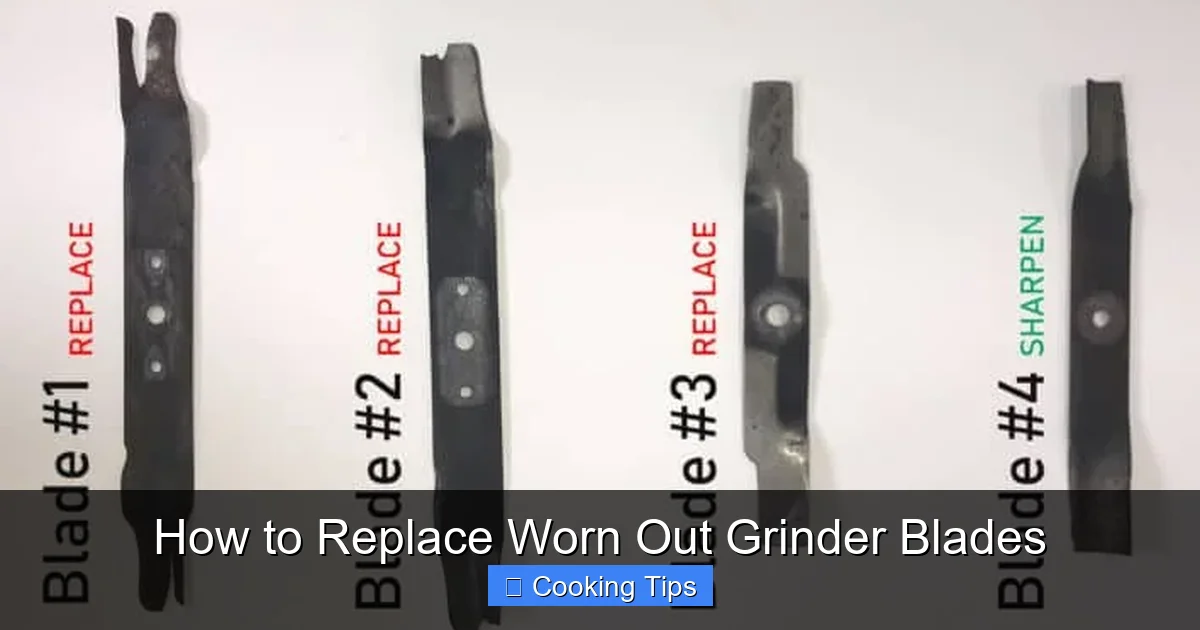
Worn-out grinder blades can compromise performance and safety. This comprehensive guide provides step-by-step instructions on how to safely and effectively replace grinder blades for various types of grinders. Learn to identify worn blades, gather the right tools, and perform the replacement process correctly to ensure your grinder operates at its best.
How to Replace Worn Out Grinder Blades
Is your trusty grinder struggling to chop, mince, or grind ingredients like it used to? Do you find yourself running it for longer periods just to achieve a decent result? If so, it’s likely time to consider replacing those worn-out grinder blades. Dull or damaged blades don’t just make your kitchen tasks more frustrating; they can also be a safety hazard and lead to inefficient operation. But don’t worry! Replacing grinder blades is a straightforward process that can breathe new life into your appliance. This guide will walk you through everything you need to know, from identifying when your blades are past their prime to safely installing new ones.
We’ll cover different types of grinders, offering practical tips and clear, step-by-step instructions. By the end of this guide, you’ll be equipped to tackle this common kitchen maintenance task with confidence, ensuring your grinder continues to be a valuable asset in your culinary adventures.
Key Takeaways
- Identify Worn Blades: Recognize dullness, chipping, or visible damage as signs your grinder blades need replacement for optimal performance and safety.
- Safety First: Always unplug the grinder and wear protective gloves and eyewear before starting any maintenance or blade replacement.
- Gather Necessary Tools: Ensure you have the correct replacement blades, a screwdriver set, pliers, a cleaning cloth, and potentially a brush or lubricant.
- Follow Manufacturer Instructions: Refer to your specific grinder’s manual for model-specific disassembly and reassembly procedures.
- Proper Blade Installation: Install new blades ensuring they are seated correctly and securely, with no wobbling or misalignment.
- Clean While You’re At It: Use blade replacement as an opportunity to thoroughly clean the grinder’s interior to prevent buildup and maintain efficiency.
- Test After Replacement: After reassembly, cautiously test the grinder to ensure smooth operation and proper function before returning to regular use.
Understanding When to Replace Your Grinder Blades
Before you can replace your grinder blades, you need to know when they’ve reached the end of their useful life. Several signs indicate that it’s time for a change. Regularly inspecting your blades can prevent unexpected failures and ensure consistent performance.
Signs of Worn-Out Blades
- Dullness: This is the most common indicator. If your grinder requires excessive force or multiple passes to process ingredients, the blades are likely dull. Ingredients might be mangled rather than cleanly cut.
- Visible Damage: Look for chips, nicks, cracks, or bends in the blades. Even minor damage can affect the grinder’s efficiency and create an uneven grind. This is especially critical for safety.
- Uneven Grinding: If your grinder starts producing inconsistently sized particles, it’s a sign that the blades are no longer cutting uniformly.
- Increased Grinding Time: When it takes significantly longer to achieve the desired texture, it’s a clear signal that the blades are losing their sharpness.
- Unusual Noises: While some motor noise is normal, a grinding or straining sound that wasn’t there before could indicate the blades are struggling to cut.
Safety First: Essential Precautions
Working with blades, even in a kitchen appliance, requires a commitment to safety. Always prioritize these precautions to avoid injuries.
Visual guide about How to Replace Worn Out Grinder Blades
Image source: shahraradecor.com
Before You Begin
- Unplug the Grinder: This is the absolute most crucial step. Ensure the grinder is completely disconnected from the power source before attempting any disassembly.
- Wear Protective Gear: Always wear cut-resistant gloves to protect your hands from sharp blades. Safety glasses are also recommended to prevent any debris from entering your eyes.
- Work on a Stable Surface: Use a well-lit, stable, and clean work area. This will prevent the grinder from slipping and ensure you have enough space to work.
- Understand Your Grinder: Familiarize yourself with your specific grinder model. If you don’t have the manual, search for it online. Different grinders have unique mechanisms.
Gathering Your Tools and Replacement Blades
Having the right tools and the correct replacement blades ready before you start will make the process much smoother and more efficient. Don’t start the job only to realize you’re missing something important.
Visual guide about How to Replace Worn Out Grinder Blades
Image source: shahraradecor.com
Essential Tools
- Replacement Blades: Ensure you have the correct replacement blades for your specific grinder model. These are usually available from the manufacturer or reputable appliance parts retailers. Always verify the model number.
- Screwdriver Set: You might need various sizes of Phillips head or flathead screwdrivers. Some grinders may use Torx screws.
- Pliers: Needle-nose pliers can be helpful for grasping small parts or stubborn screws.
- Cleaning Cloth: A soft, clean cloth for wiping down parts. Microfiber cloths are excellent for this.
- Small Brush: An old toothbrush or a small cleaning brush can help remove debris from crevices.
- Lubricant (Optional): For some models, a food-grade lubricant might be recommended for reassembly, especially around seals or moving parts. Check your manual.
- Bowl or Container: To hold small screws and parts so they don’t get lost.
Step-by-Step Guide to Replacing Grinder Blades
The process for replacing grinder blades can vary slightly depending on the type of grinder you have (e.g., coffee grinder, meat grinder, spice grinder, blender blades). However, the general principles remain similar. We’ll focus on common configurations.
Visual guide about How to Replace Worn Out Grinder Blades
Image source: shuntool.com
Step 1: Disassembly of the Grinder
This is where you carefully take the grinder apart to access the blades. The goal is to remove only what’s necessary to reach the blades.
H3: Removing the Grinding Chamber or Blade Assembly
For Coffee/Spice Grinders:
- Most coffee and spice grinders have a removable lid or a grinding cup that detaches from the base.
- Turn the grinder upside down. The blades are often attached to a central spindle at the bottom of the grinding cup or directly to the motor shaft if it’s a more integrated design.
- Look for a locking mechanism, a screw, or a threaded base that holds the blade assembly in place.
- If there’s a screw, use the appropriate screwdriver to remove it. Keep track of this screw!
- Some blade assemblies might simply twist off or be held by a retaining ring.
For Blender Blade Assemblies (Common in Immersion Blenders and some Countertop Blenders):
- For immersion blenders, the blade unit usually detaches from the wand by twisting or pressing a release button.
- For countertop blenders, the blade assembly is typically located at the bottom of the jar. You’ll usually need to unscrew a collar or a nut that secures the blade assembly. This can sometimes be very tight.
- Tip: If you have a countertop blender and the collar is difficult to unscrew, you might need a special tool or a strong grip. Sometimes, a rubber jar opener can provide extra traction. Ensure the blender jar is empty and stable.
For Meat Grinders (More Complex):
- Meat grinders are often more complex and have multiple parts.
- Remove the grinding head or hopper first.
- You will typically find a threaded collar or nut that holds the grinding plates and the knife (blade) in place. Unscrew this collar.
- Carefully remove the components in order: the knife, then the grinding plate, then the feed screw. Make notes or take pictures of the order in which they come off.
Step 2: Removing the Old Blades
Once the blade assembly is accessible, you can remove the old blades. Handle them with extreme care.
H3: Detaching the Worn Blades
Coffee/Spice Grinders:
- If the blades are attached to a spindle, they might be press-fit or secured by small screws.
- Gently try to wiggle the blades off the spindle. If they don’t budge, check for any tiny screws you might have missed.
- Caution: Avoid excessive force, which could damage the spindle or the housing.
Blender Blade Assemblies:
- In most blender assemblies, the blades are integrated into the assembly itself and cannot be individually removed. You are replacing the entire blade assembly unit.
- If your blender allows for individual blade replacement (rare), it would be secured by small pins or screws.
Meat Grinders:
- The knife (blade) in a meat grinder usually sits against the grinding plate. It’s often shaped like a four-pointed star.
- Carefully lift the knife off the spindle. It should slide off relatively easily if it’s in good condition.
- The grinding plate is usually a flat disc with holes. It sits behind the knife.
- Important: Note the orientation of both the knife and the grinding plate. The knife’s sharp edge should face outward towards the plate, and the plate’s textured or grooved side often faces the knife. This is critical for proper grinding.
Step 3: Cleaning the Grinder Components
This is the perfect opportunity to give your grinder a thorough cleaning. Grime buildup can affect performance and hygiene.
H3: Thorough Cleaning Process
- Use your cleaning cloth and small brush to remove any food residue, dust, or grease from all the parts you’ve disassembled.
- Pay close attention to crevices and areas where food particles tend to accumulate.
- For stubborn residue, you can use a damp cloth (not wet) or a mild, food-safe detergent solution. Ensure all parts are thoroughly dried before reassembly.
- For Meat Grinders: Ensure all metal parts are completely dry to prevent rust. Some recommend a light coating of food-grade mineral oil on metal parts after drying.
Step 4: Installing the New Blades
Now comes the satisfying part: installing the new, sharp blades!
H3: Proper Placement of New Blades
Coffee/Spice Grinders:
- Align the new blades with the spindle or mounting point.
- If they are press-fit, gently push them on until they are secure. There should be no wobbling.
- If there are screws, reinsert and tighten them securely.
Blender Blade Assemblies:
- For blenders where you replace the entire assembly, align the new unit with the jar opening.
- Screw the collar or retaining nut back on. Tighten it firmly, but avoid overtightening, which could damage the threads or the jar. Ensure the seal is correctly seated.
Meat Grinders:
- Reassemble in the reverse order of disassembly.
- First, place the feed screw back into the grinding chamber.
- Next, place the grinding plate onto the feed screw. Ensure its orientation is correct (the textured side usually faces the knife).
- Place the new knife (blade) onto the spindle. Make sure its sharp edge faces outwards towards the grinding plate. The flat side of the knife should rest against the grinding plate.
- Ensure the knife is seated firmly against the plate.
- Reinstall the retaining collar or nut and tighten it snugly. This is what holds the knife and plate firmly against the feed screw.
Step 5: Reassembly of the Grinder
Putting your grinder back together correctly ensures it functions as intended and is safe to use.
H3: Securing All Parts
- Carefully reattach any components you removed, making sure they click, lock, or screw into place correctly.
- Double-check that all screws are tightened and all parts are securely fitted.
- Refer back to your notes or photos if you disassembled a complex appliance like a meat grinder.
Step 6: Testing the Grinder
After reassembly, it’s essential to test your grinder to ensure everything is working correctly and safely.
H3: Post-Replacement Check
- Ensure the grinder is placed on a stable surface.
- Plug the grinder in.
- Turn it on for a short period (a few seconds) without any ingredients. Listen for any unusual noises or vibrations.
- If everything sounds normal, try grinding a small amount of a soft ingredient (like a few coffee beans or a piece of soft vegetable) to see how it performs.
- Check for any leaks or loose parts.
Troubleshooting Common Issues
Even with careful work, you might encounter minor issues. Here are a few common problems and how to address them.
Issue: Grinder still not grinding effectively.
Possible Causes:
- The new blades are incorrect or not compatible.
- The blades are not installed correctly (e.g., reversed orientation in a meat grinder, not seated properly).
- A part was reassembled incorrectly, causing friction or misalignment.
- The motor itself is failing.
Solutions: Re-check the blade compatibility and installation. Disassemble and reassemble, paying close attention to the order and orientation of parts. If the issue persists, consult your grinder’s manual or contact customer support.
Issue: Grinder is making strange noises after replacement.
Possible Causes:
- Loose screws or components.
- Blades are rubbing against the housing or other parts.
- Debris is caught in the mechanism.
Solutions: Unplug and re-check all screws and connections. Ensure blades spin freely without obstruction. Clean the grinder again thoroughly.
Issue: Grinder is leaking (especially meat grinders or blenders).
Possible Causes:
- Seals are not properly seated or are damaged.
- The retaining collar or nut is not tight enough.
Solutions: Unplug. Disassemble the relevant section and carefully re-seat all seals and gaskets. Tighten the retaining collar or nut securely.
Conclusion
Replacing worn-out grinder blades is a rewarding DIY task that can significantly improve your grinder’s performance, extend its lifespan, and ensure it operates safely. By following these steps, you can confidently tackle this maintenance job. Remember, safety should always be your top priority. Keep your grinder clean, inspect your blades regularly, and don’t hesitate to replace them when they show signs of wear. A sharp blade is a happy blade, and a happy blade means better food preparation for you!
Investing a little time in this maintenance can save you from buying a new appliance and ensure your current grinder continues to be a reliable workhorse in your kitchen. Happy grinding!
