

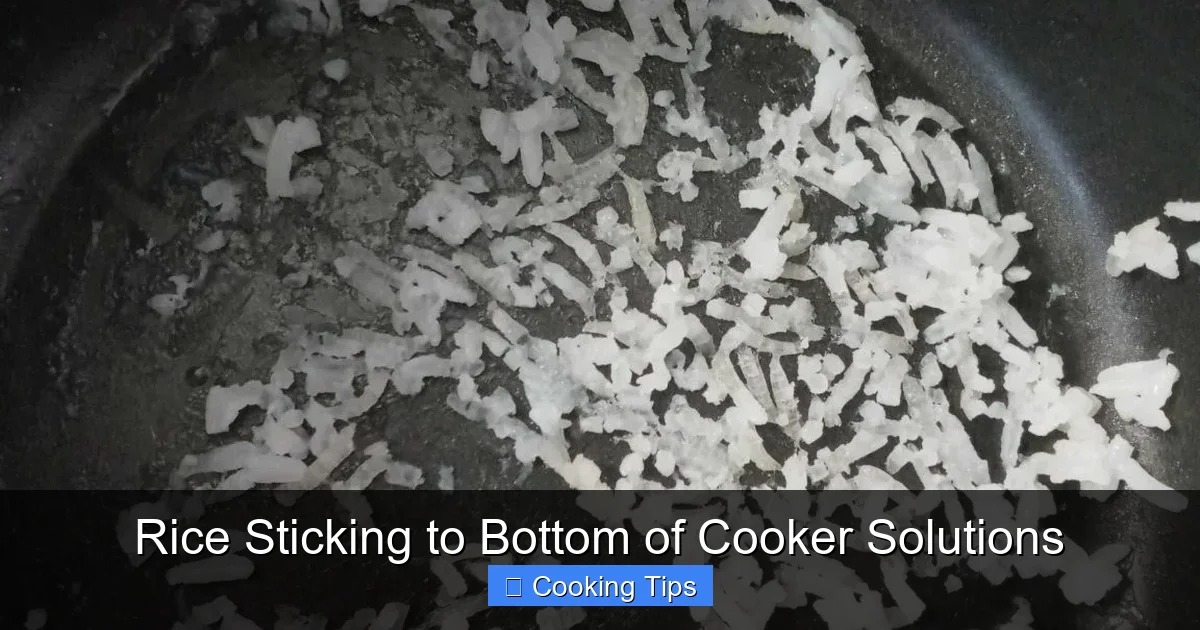
Tired of burnt rice stuck to your cooker’s bottom? This guide offers practical solutions for preventing and fixing this common cooking frustration. Discover effective techniques to ensure fluffy, perfectly cooked rice, from proper rinsing to the right water-to-rice ratios and post-cooking care. Say goodbye to stubborn burnt bits and hello to delicious, easy-to-serve rice!
# Rice Sticking to Bottom of Cooker Solutions
It’s a familiar scene for many home cooks: you lift the lid of your rice cooker, anticipating fluffy, perfectly cooked grains, only to be met with a disheartening layer of rice stubbornly fused to the bottom. Burnt rice stuck to the cooker’s bottom can be frustrating, making serving difficult and cleanup a chore. But don’t despair! This comprehensive guide is here to help you conquer this common culinary challenge. We’ll explore why rice sticks in the first place and, more importantly, equip you with a range of effective solutions to prevent and remove it. By the end of this guide, you’ll be well on your way to consistently achieving perfectly cooked, easy-to-serve rice every single time.
## Understanding Why Rice Sticks
Before we dive into solutions, it’s helpful to understand the root causes of rice sticking to the bottom of your cooker. There are a few key culprits:
* **Excess Starch:** Rice, especially varieties like short-grain or Arborio, contains a significant amount of starch on its surface. If this starch isn’t rinsed away, it can become gummy and adhesives when heated, leading to sticking.
* **Incorrect Water-to-Rice Ratio:** Too little water, and the rice will dry out and scorch. Too much water, and it can become mushy, also contributing to sticking. The balance is crucial.
* **Heat Distribution:** Some cookers have hot spots. If the heat isn’t distributed evenly, certain areas can overheat, causing the rice to burn and stick.
* **Cooker Surface Issues:** Over time, non-stick coatings can wear down, especially if abrasive cleaning methods have been used. A damaged surface offers less protection.
* **Leaving Rice in the Cooker Too Long:** While many rice cookers have a “keep warm” function, leaving rice on this setting for extended periods can dry out the bottom layer, making it more prone to sticking.
## Prevention: The Best Defense Against Stuck Rice
The most effective way to deal with burnt rice is to prevent it from happening in the first place. Here are your primary preventative measures:
### 1. The Art of Rinsing Your Rice
This is arguably the most critical step for preventing rice from sticking. Thorough rinsing removes the surface starch that causes stickiness.
#### How to Rinse Rice Properly
1. **Measure Your Rice:** Start by measuring the amount of rice you need.
2. **Place Rice in a Bowl:** Put the measured rice into a large mixing bowl.
3. **Add Cold Water:** Fill the bowl with cold water, enough to cover the rice by a few inches.
4. **Swirl Gently:** With your hand, gently swirl the rice around. You’ll notice the water immediately becoming cloudy and milky. This is the starch releasing.
5. **Drain and Repeat:** Carefully pour off the cloudy water. Be sure to hold the rice back with your hand or a fine-mesh sieve so it doesn’t escape.
6. **Continue Rinsing:** Repeat steps 3-5 several times. The water will gradually become clearer. You want to rinse until the water is only slightly cloudy or nearly clear. For most white rice varieties, 4-6 rinses are usually sufficient. Brown rice generally has less starch and may require fewer rinses.
7. **Drain Thoroughly:** Once rinsed, drain the rice very well. You can let it sit in the fine-mesh sieve for a few minutes to ensure excess water drains away.
### 2. Mastering the Water-to-Rice Ratio
Getting the water ratio right is essential for perfectly cooked rice. While most rice cooker manuals provide specific guidelines, here are some general rules of thumb:
#### General Water-to-Rice Ratios
* **White Rice (long-grain like Basmati or Jasmine):** Typically a 1:1.5 or 1:1.75 ratio of rice to water. So, for 1 cup of rice, use 1.5 to 1.75 cups of water.
* **White Rice (medium-grain):** Often requires slightly more water, around 1:1.75 or 1:2.
* **Brown Rice:** Needs more water and a longer cooking time. A common ratio is 1:2 or 1:2.5.
* **Sushi Rice:** Usually requires a 1:1.1 ratio for its characteristic sticky texture.
#### Tips for Measuring Water
* **Use the Cooker’s Lines:** Most rice cooker pots have internal measurement lines. Use these in conjunction with the markings for your specific type of rice.
* **Consistent Measuring Tools:** Always use the same measuring cup for both rice and water.
* **Adjust for Altitude:** If you live at a high altitude, you might need slightly more water as water boils at a lower temperature.
### 3. The Power of a Pre-Cooked Coat
A simple, yet often overlooked, preventative step is to create a barrier between the rice and the cooker’s surface.
#### Lightly Oiling the Cooker Pot
* **Use a Neutral Oil:** A small amount of neutral cooking oil, such as vegetable, canola, or grapeseed oil, works well. You can also use a tiny bit of butter or margarine.
* **Apply Sparingly:** Use a paper towel or a pastry brush to lightly coat the inside of the cooker pot, focusing on the bottom and lower sides. You don’t need much – just a thin sheen.
* **Benefit:** This creates a slippery surface that makes it harder for rice grains to adhere.
### 4. The Importance of Immediate Fluffing
Once your rice is cooked, don’t just leave it sitting there. Promptly fluffing the rice helps release steam and prevents the bottom layer from becoming dense and sticky.
#### How to Fluff Rice
1. **Let it Rest:** After the cooker signals it’s done, let the rice rest undisturbed for about 10-15 minutes. This allows the steam to redistribute and the rice to finish cooking.
2. **Open the Lid:** Carefully open the lid.
3. **Gently Separate Grains:** Use a rice paddle or a fork to gently lift and separate the grains from the bottom up. Start at the edges and work your way towards the center. Avoid vigorous stirring, which can break the grains.
4. **Vent Steam:** This process also helps release excess steam, preventing condensation from making the rice soggy and the bottom layer sticky.
## Solutions for Rice That Has Already Stuck
Despite your best efforts, sometimes rice still sticks. Don’t fret! Here are effective methods to tackle those stubborn burnt bits.
### 1. The Soak and Scrape Method
This is your go-to for moderately stuck rice. Patience is key here.
#### Step-by-Step Soaking and Scraping
1. **Allow the Cooker to Cool:** Never attempt to scrape a hot cooker. Let it cool down considerably.
2. **Fill with Warm Water:** Fill the cooker pot with warm water, enough to cover the stuck rice.
3. **Add Dish Soap (Optional):** A drop or two of mild dish soap can help break down the burnt residue.
4. **Let it Soak:** Let the cooker sit for at least 30 minutes to an hour, or even longer for tougher spots. You might see some of the burnt rice start to lift on its own.
5. **Gentle Scraping:** After soaking, use a soft, non-abrasive sponge or a silicone spatula to gently scrape away the loosened rice.
6. **Repeat if Necessary:** If rice remains stuck, drain the water and repeat the soaking and scraping process.
### 2. The Vinegar Method for Tougher Stains
Vinegar’s acidity can be a powerful ally against burnt-on food.
#### Using Vinegar to Loosen Burnt Rice
1. **Cool the Cooker:** Ensure the cooker is completely cool.
2. **Combine Water and Vinegar:** Mix equal parts water and white vinegar (e.g., 1 cup water and 1 cup vinegar).
3. **Fill the Pot:** Pour this mixture into the cooker pot, ensuring it covers the burnt areas.
4. **Simmer (Optional but Recommended):** Place the pot back in the rice cooker and run a short cooking cycle, or if your cooker doesn’t have this function, place it on the stovetop over low heat and let it simmer gently for 10-15 minutes. *Be cautious if simmering on the stovetop to avoid boil-overs.*
5. **Let it Cool and Soak:** Turn off the heat (or the cooker) and let the mixture cool down. Then, let it soak for at least an hour, or overnight for very stubborn burnt rice.
6. **Scrape and Wash:** Use a soft sponge or spatula to scrape away the loosened residue. Wash the pot thoroughly with soap and water afterward to remove any lingering vinegar smell.
### 3. The Baking Soda Paste for Stubborn Burnt Bits
Baking soda is a mild abrasive that can help scrub away residue without scratching the non-stick surface.
#### Baking Soda Paste Technique
1. **Drain and Cool:** Ensure the cooker is cool and drained.
2. **Make a Paste:** Mix baking soda with a small amount of water to form a thick paste.
3. **Apply the Paste:** Apply the paste directly to the burnt areas.
4. **Let it Sit:** Let the paste sit for at least 30 minutes, or longer if needed.
5. **Gently Scrub:** Use a damp, soft cloth or a non-abrasive sponge to gently scrub the burnt areas. The baking soda will act as a mild abrasive.
6. **Rinse and Wash:** Rinse the pot thoroughly with water and then wash it with your regular dish soap and a soft sponge.
## Maintaining Your Rice Cooker for Longevity
To keep your rice cooker in top shape and minimize future sticking issues, follow these maintenance tips:
* **Avoid Abrasive Cleaners:** Never use steel wool, abrasive scouring pads, or harsh chemical cleaners on the inner pot. These will damage the non-stick coating.
* **Use Soft Utensils:** Always use silicone, wooden, or plastic rice paddles and utensils. Metal utensils will scratch and ruin the non-stick surface.
* **Clean Promptly:** Clean the cooker pot shortly after each use, once it has cooled down. This prevents food particles from hardening and becoming more difficult to remove.
* **Hand Wash Recommended:** While some inner pots are dishwasher safe, hand washing is generally recommended to preserve the non-stick coating for longer.
* **Check the Seal:** Ensure the lid gasket and steam vent are clean and free from debris. A proper seal ensures even cooking.
## Troubleshooting Common Rice Sticking Scenarios
* **My rice is consistently sticking, even after rinsing:** Double-check your water-to-rice ratio. You might be using too little water for the type of rice you’re cooking, or your cooker might be running hotter than usual. Consider the pre-cook oiling method.
* **Only a thin layer of rice sticks:** This often points to insufficient rinsing or leaving the rice on the “keep warm” setting for too long. Try the immediate fluffing technique and adjust your “keep warm” time.
* **The non-stick coating is peeling/damaged:** If the coating is significantly damaged, it’s difficult to prevent sticking. It might be time to consider replacing the inner pot or the entire cooker. Always use non-abrasive tools and cleaners.
* **New rice cooker, and rice is sticking:** Even new rice cookers can have issues. Ensure you’ve followed all the initial setup and usage instructions, including the proper rinsing technique for your specific rice type.
## Conclusion
Dealing with rice sticking to the bottom of your cooker might seem like a persistent problem, but with the right knowledge and techniques, it’s entirely manageable. By focusing on **prevention** through meticulous rinsing, accurate water ratios, and careful handling of your cooker, you can significantly reduce the instances of burnt rice. And when it does happen, you now have a arsenal of **effective removal methods**, from simple soaking to using household staples like vinegar and baking soda. Remember, maintaining your rice cooker with gentle cleaning and appropriate utensils will also contribute to its longevity and your success in the kitchen. Embrace these tips, and you’ll soon be enjoying perfectly cooked, effortlessly served rice with every meal. Happy cooking in 2026!
Key Takeaways
- Proper Rinsing is Crucial: Removing excess starch by rinsing rice thoroughly is the first line of defense against sticking.
- Accurate Water-to-Rice Ratio: Using the correct amount of water prevents dryness and excessive stickiness.
- Non-Stick Cooker Care: Maintain the non-stick properties of your rice cooker by avoiding abrasive cleaners and utensils.
- Immediate Post-Cooking Fluffing: Letting rice steam and then fluffing it immediately after cooking helps prevent it from settling and sticking.
- Soaking for Stubborn Stains: For burnt-on rice, soaking with water and a bit of dish soap or vinegar can loosen the residue.
- Gentle Removal Techniques: Employ soft tools and patient methods to scrape away stuck-on rice without damaging the cooker.
- Preventative Oiling: Lightly oiling the cooker pot before adding rice can create a barrier that discourages sticking.
