

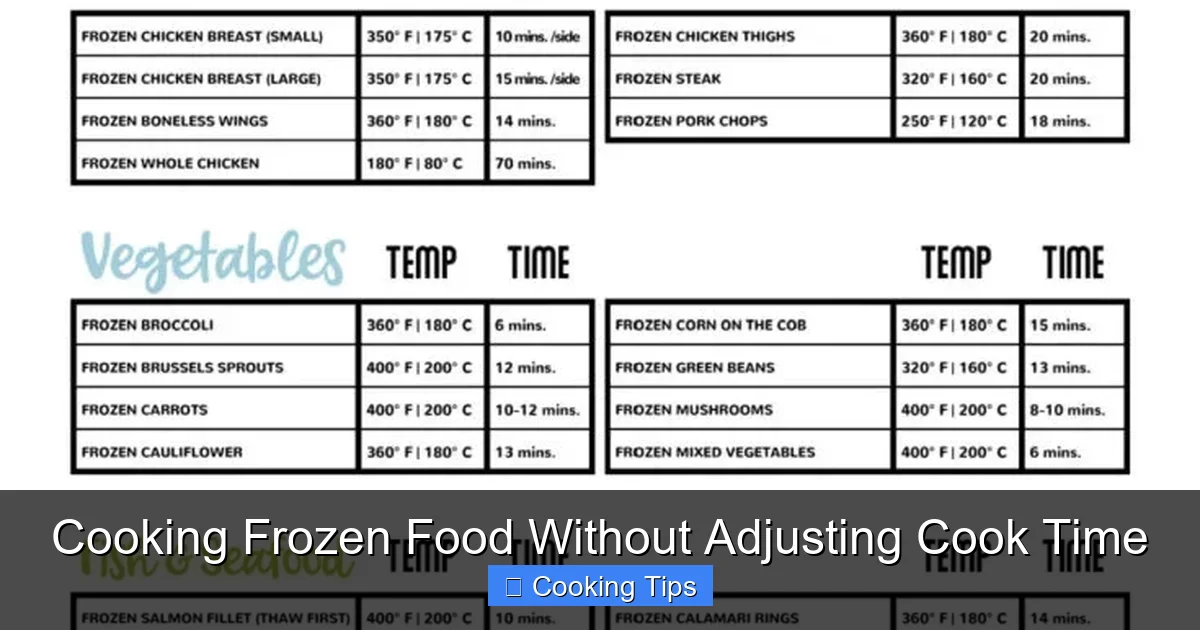
Unlock the secret to perfectly cooked frozen foods without altering cooking times! This guide reveals essential techniques for achieving delicious, evenly cooked meals every time. Learn how to prepare your frozen items and utilize your cooking equipment effectively for consistently great results, saving you time and frustration in the kitchen.
- Prepare Frozen Foods Properly: Understanding the initial state of your frozen food, like ice crystals and packaging, is crucial for successful cooking without time adjustments.
- Optimize Your Cooking Method: Different cooking methods (baking, frying, steaming) interact differently with frozen items, and choosing the right one is key to even cooking.
- Utilize Preheating Effectively: A properly preheated oven or pan creates the initial high heat needed to start cooking the exterior of frozen food immediately.
- Understand Heat Transfer: Knowing how heat moves through food helps in placing frozen items strategically for optimal cooking without extended times.
- Don’t Crowd the Pan/Oven: Adequate space ensures hot air or oil circulates, preventing steaming and promoting even browning and cooking.
- Consider Food Size and Thickness: While we won’t adjust time, understanding how larger or thicker frozen items will cook is important for managing expectations and potential slight variations.
Cooking Frozen Food Without Adjusting Cook Time
Welcome, home cooks of 2026! Are you tired of that nagging feeling when you pull frozen food from the freezer? You know, the one that says, “Should I add more time? Will it be cooked through? Will the outside burn?” Today, we’re here to banish that uncertainty. This guide is all about cooking frozen food *without* adjusting the cook time. Yes, you read that right! We’ll dive into the smart techniques that allow you to achieve perfectly cooked, delicious meals straight from the freezer, just as the package intended, or even better. Forget those guesswork minutes and focus on achieving consistent, fantastic results every single time.
We’ll cover everything from how to prepare your frozen items for the heat to how to leverage your cooking appliances for maximum efficiency. You’ll learn why certain steps are vital and how they contribute to the success of cooking frozen food without that dreaded time adjustment. Let’s get cooking!
Understanding the Frozen Food Advantage
Before we jump into techniques, let’s appreciate why cooking frozen food without adjusting time is not only possible but often desirable. Frozen food is designed to be cooked from its frozen state. The freezing process itself helps preserve quality and structure. When you thaw food, you often lose moisture, which can affect texture and even flavor. By cooking from frozen, you maintain that initial moisture, leading to potentially more tender and succulent results. The challenge, then, isn’t about extending time, but about facilitating efficient heat transfer from the moment it hits the heat.
Preparing Your Frozen Food for Success
The first crucial step in cooking frozen food without adjusting cook time is proper preparation. This isn’t about thawing; it’s about setting the stage for optimal cooking right from the freezer.
Removing Unnecessary Packaging
This might seem obvious, but always remove all plastic wrap, cardboard sleeves, and any other non-cookable packaging. These materials can hinder heat circulation and, more importantly, can melt, warp, or even catch fire, creating a safety hazard and ruining your food.
Visual guide about Cooking Frozen Food Without Adjusting Cook Time
Image source: thumbs.dreamstime.com
Visual guide about Cooking Frozen Food Without Adjusting Cook Time
Image source: thumbs.dreamstime.com
Breaking Apart Clumps
For items like frozen vegetables or berries sold in bags, gently break apart any large clumps. This ensures that individual pieces can be exposed to heat more evenly. A large frozen block will take longer to cook through than separated pieces, even if you don’t adjust the cook time. Think of it as giving each piece a fair chance at deliciousness.
Scraping Off Excess Ice Crystals
Sometimes, frozen foods can develop a thick layer of ice crystals. While not always detrimental, a significant amount of ice can release a lot of steam when it melts, which can lead to soggy results instead of a nice sear or crisp. A quick scrape with a knife or even a gentle rinse under cold water (and then patting very dry) can help manage this. This is especially helpful for items you want to be crispy, like fries or nuggets.
Optimizing Your Cooking Method
The method you choose to cook your frozen food significantly impacts how effectively it cooks without time adjustments. Some methods are inherently better suited for cooking frozen items from their solid state.
Baking and Roasting: The Power of Hot Air
Baking and roasting are excellent choices for many frozen foods like vegetables, pre-made meals, or breaded items. The key here is effective preheating. Ensure your oven is fully preheated to the temperature specified on the packaging. This blast of hot air immediately begins to cook the exterior of the frozen food, creating a crust or sear before the interior has a chance to overcook.
Visual guide about Cooking Frozen Food Without Adjusting Cook Time
Image source: i0.wp.com
Practical Tip: For frozen vegetables or fries, spreading them in a single layer on a baking sheet is crucial. This allows hot air to circulate around each piece, promoting even cooking and crispiness. Avoid overcrowding the pan; this leads to steaming rather than roasting, making your food soggy.
Frying: High Heat for Quick Results
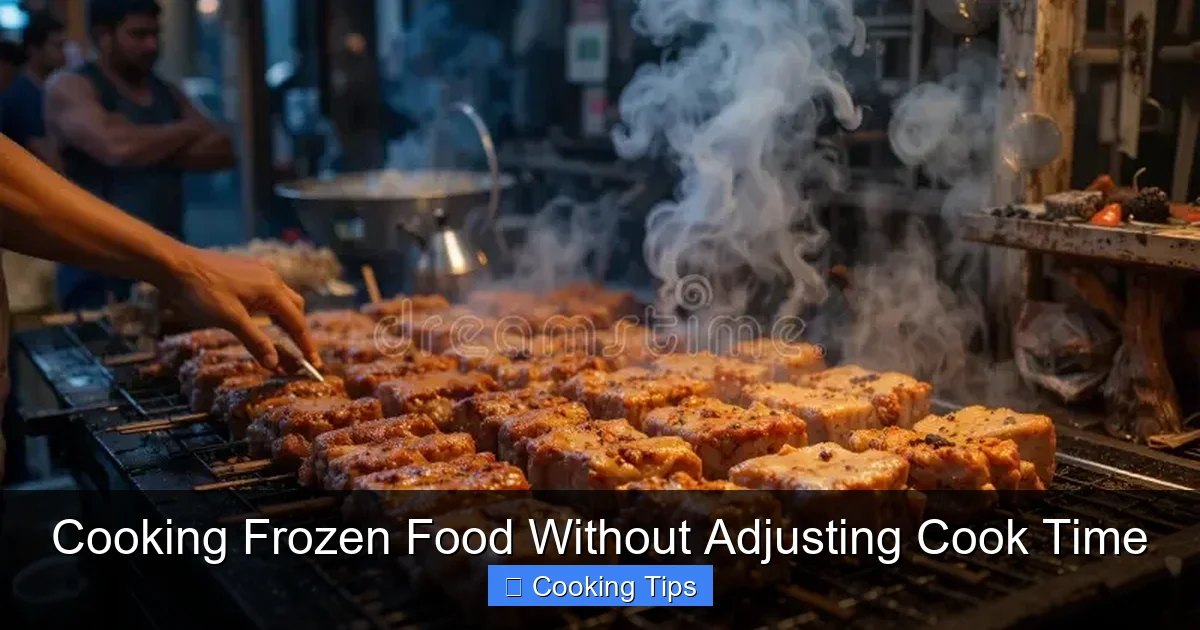
For items like frozen french fries, chicken nuggets, or fish fillets, frying (whether in a pan or an air fryer) can be very effective. Again, preheating your oil or air fryer is paramount. The high, direct heat of the oil or the rapidly circulating hot air in an air fryer quickly sears the outside of the frozen food, creating a delicious crispy coating while allowing the inside to cook through.
Important Note: When frying frozen foods, be mindful of moisture. If you’ve rinsed your frozen items, ensure they are thoroughly dried before they hit hot oil to prevent dangerous splattering.
Sautéing and Pan-Frying: Manageable Portions
For smaller frozen items like vegetables or shrimp, sautéing or pan-frying can work. The principle remains the same: hot pan, hot oil. Don’t overcrowd the pan. If you’re cooking a larger quantity, you may need to work in batches. However, for recipes designed for frozen ingredients, the cook time is usually calibrated for a single layer of food.
Steaming: Gentle and Even Cooking
Steaming is a fantastic method for frozen vegetables. The hot steam envelops the food, cooking it evenly and quickly without drying it out. Ensure your steamer basket is adequately sized and your water is at a rolling boil before adding the frozen vegetables. They typically cook very rapidly, often in just a few minutes.
Leveraging Your Cooking Equipment
Modern kitchen appliances in 2026 are designed with efficiency and precision in mind. Understanding how to use them correctly is your secret weapon.
The Oven: Your Reliable Workhorse
When the recipe says “bake at 375°F for 20 minutes,” it’s assuming the oven is already at 375°F. Don’t even think about putting your frozen food in until that temperature is stable. Use your oven’s indicator light or thermometer to confirm. For frozen items that need crisping, using the convection setting (if available) can often enhance browning and even cooking, though be aware that convection *can* sometimes cook slightly faster, so keep an eye on it, especially for the first time.
The Air Fryer: The New Standard for Crisp
Air fryers are revolutionary for cooking frozen foods. Their rapid air circulation system is perfect for crisping up fries, nuggets, wings, and more, often in less time than a conventional oven. Most air fryer recipes for frozen foods are designed for direct cooking without thawing. Again, don’t overcrowd the basket. Allow that hot air to do its magic.
The Stovetop: Controlled Heat
For pan-frying or sautéing, ensure your pan is adequately heated before adding your frozen food. A good rule of thumb is to test with a drop of water – it should sizzle and evaporate immediately. This ensures the pan is hot enough to start cooking the exterior of your frozen item without causing it to stick or steam.
Strategic Placement for Optimal Cooking
Where you place your food within the cooking appliance can make a difference, even when you’re not adjusting the cook time.
Oven Rack Placement
For most frozen items, the middle rack of your oven is ideal. This position generally receives the most even heat circulation. If a recipe calls for crisping, you might move it to a lower rack to be closer to the heating element, but this is usually specified. When cooking multiple items, ensure they aren’t touching and have ample space.
Air Fryer Basket Configuration
Similar to oven baking, ensuring food is in a single layer and not piled high is key in an air fryer basket. If your air fryer has multiple racks, use them, but avoid overlapping food. You might need to shake the basket halfway through cooking to redistribute the food for even browning.
Troubleshooting: When Things Don’t Go as Planned
Even with the best techniques, occasional issues can arise. Here are some common problems and how to address them without resorting to simply adding more time.
Problem: The outside is cooked, but the inside is still frozen.
Cause: This is usually due to insufficient heat penetration or overcrowding. If you didn’t preheat adequately, or if your food was piled too high, the center wouldn’t have time to cook.
Solution: While we’re aiming not to adjust time, if this happens, the best immediate fix is to cover the item loosely with foil to prevent further browning of the exterior, and then allow it to finish cooking. For future attempts, ensure thorough preheating and single-layer cooking. Consider cutting larger frozen items in half before cooking if they are particularly thick.
Problem: The food is soggy instead of crispy.
Cause: Too much moisture is the culprit. This can come from excess ice crystals, overcrowding (leading to steaming), or not drying food adequately after rinsing.
Solution: For future cooking, ensure you’ve scraped off excess ice. Don’t overcrowd your baking sheet or air fryer basket. If pan-frying, ensure the pan is hot enough to create a sizzle, not a steam. For breaded items, a second, shorter blast at a slightly higher temperature (after the main cook time) can sometimes help re-crisp, but use caution.
Problem: The food is unevenly cooked.
Cause: Inconsistent heat distribution or movement of food during cooking.
Solution: For baked goods, rotate the baking sheet halfway through. For air fryers, shake the basket. For pan-fried items, flip them more frequently. Ensuring your appliance is functioning correctly and that your food is spread evenly are preventative measures.
The Future of Frozen Food Cooking
As we look towards 2026 and beyond, kitchen technology continues to evolve. Smart ovens that precisely control temperature and humidity, and advanced air fryer models with multiple cooking zones, are becoming more common. These advancements further support the concept of cooking frozen food efficiently without endless time adjustments. The emphasis is on technology that facilitates, rather than compensates for, the initial state of the food.
Conclusion
Cooking frozen food without adjusting the cook time isn’t a magic trick; it’s a combination of understanding your ingredients, mastering your cooking methods, and utilizing your appliances smartly. By focusing on proper preparation, effective preheating, and ensuring adequate space for heat circulation, you can consistently achieve delicious, perfectly cooked meals straight from the freezer. Embrace these techniques, and say goodbye to cooking anxieties. Enjoy the convenience and quality that frozen foods offer, prepared to perfection, every time. Happy cooking!
