

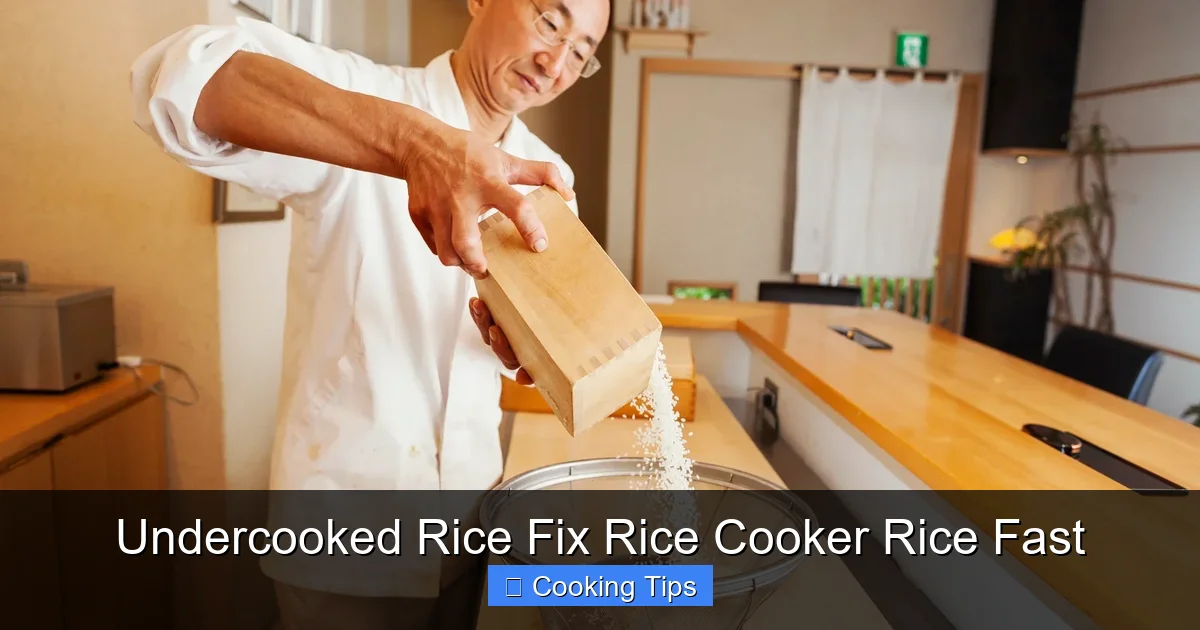
Discover how to rescue undercooked rice cooked in your rice cooker. This guide provides simple, effective methods to quickly get your grains from firm to fluffy. Learn how to add more water, steam it further, or even use a stovetop finish. With these tips, you’ll never have to throw away a batch of undercooked rice again!
# Undercooked Rice Fix Rice Cooker Rice Fast
It’s happened to the best of us. You’ve followed the instructions, your rice cooker is humming along, and you eagerly lift the lid, anticipating fluffy, perfectly cooked grains. But instead, you’re met with a disappointing sight: hard, chewy, and stubbornly undercooked rice. Don’t despair! This guide is here to rescue your meal. We’ll walk you through simple, effective methods to fix undercooked rice from your rice cooker, turning that culinary mishap into a success story. You’ll learn how to quickly salvage your rice without starting over, ensuring you always enjoy perfectly cooked grains.
## Why Does Rice Cooker Rice Become Undercooked?
Before we dive into the fixes, understanding why rice might turn out undercooked can help prevent future issues. Several factors can contribute to this common problem:
* Incorrect Water-to-Rice Ratio: This is the most frequent culprit. Too little water means the rice won’t absorb enough moisture to become tender.
* The Type of Rice: Different rice varieties (long-grain, short-grain, brown rice, basmati, jasmine) have varying water absorption rates and cooking times. Brown rice, for instance, requires more water and a longer cooking time than white rice.
* Rice Cooker Malfunction or Settings: Sometimes, the rice cooker itself might not be heating properly, or the chosen setting might not be ideal for the type of rice you’re using.
* Not Rinsing the Rice: While not always the direct cause of undercooking, not rinsing can leave excess starch, which can sometimes affect water absorption.
* Overcrowding the Rice Cooker: Stuffing too much rice into the cooker can lead to uneven cooking and insufficient moisture penetration.
Knowing these potential pitfalls will make your rice cooking journey smoother in the long run. But for now, let’s focus on fixing what’s in front of you.
## The Quickest Fixes for Undercooked Rice
When you discover your rice is undercooked, the first instinct might be to panic. However, most rice cooker models are quite forgiving, and there are several easy ways to rectify the situation. The best method often depends on how undercooked the rice is.
### Method 1: Add More Water and Re-Cook (The Go-To Solution)
This is your primary weapon against undercooked rice. It’s simple, effective, and works for most rice types.
#### Step 1: Assess the Undercooking
Gently stir the rice. How hard is it? Are the grains still very firm, or just slightly al dente? If the rice is completely dry and hard, you’ll need more water than if it’s just a little chewy.
#### Step 2: Add More Water
This is the crucial step. You don’t want to drown your rice. Start by adding a small amount of water.
* For slightly undercooked rice: Add about 1/4 cup of water for every 1 cup of uncooked rice.
* For significantly undercooked rice: Add about 1/2 cup of water for every 1 cup of uncooked rice.
Use warm or hot water if possible. This helps the rice cooker heat up faster and resume cooking more efficiently.
#### Step 3: Stir Gently
After adding water, gently stir the rice to distribute the new moisture evenly. Be careful not to mash the rice.
#### Step 4: Re-Cook
Close the lid of your rice cooker.
* If your rice cooker has a “Cook” or “White Rice” setting: Select it and let the cooker run its full cycle again.
* If your rice cooker only has a “Cook” and “Keep Warm” setting: You might need to run the “Cook” cycle. Some rice cookers will automatically switch to “Keep Warm” after the cook cycle is complete. You can also try simply letting it sit on the “Keep Warm” setting for 10-20 minutes after adding water, as the residual heat might be enough. However, a full cook cycle is usually more effective for truly undercooked rice.
#### Step 5: Let It Rest
Once the cooker finishes its cycle, resist the urge to open the lid immediately. Let the rice rest with the lid on for at least 10-15 minutes. This allows the steam to continue working, finishing the cooking process and ensuring the grains are tender and fluffy.
#### Step 6: Fluff and Serve
Open the lid, fluff the rice with a rice paddle or fork, and check for doneness. If it’s still not quite right, you can repeat the process with a little more water, but be cautious not to add too much, or you’ll end up with mushy rice.
### Method 2: Utilize the “Keep Warm” Setting (For Minor Undercooking)
If your rice is just slightly undercooked – meaning the grains are not rock-hard but have a noticeable chewiness – your rice cooker’s “Keep Warm” setting might be enough to finish the job.
#### Step 1: Add a Splash of Water
Add a tablespoon or two of water to the rice cooker, just enough to create a little steam.
#### Step 2: Close the Lid and Select “Keep Warm”
Close the rice cooker lid securely. If it’s not already on, switch it to the “Keep Warm” setting.
#### Step 3: Wait and Check
Let the rice sit on “Keep Warm” for at least 15-20 minutes. The residual heat and added moisture should help soften the rice. Check periodically.
This method is best for minor issues. If the rice is very hard, this might not provide enough heat or moisture to cook it through properly.
### Method 3: The Stovetop Rescue (When the Rice Cooker Fails)
Sometimes, despite our best efforts, the rice cooker might not be able to fully salvage severely undercooked rice. In such cases, a quick transfer to the stovetop can provide more precise control and a faster resolution.
#### Step 1: Transfer to a Stovetop Pot
Carefully scoop the undercooked rice and any remaining water from the rice cooker into a heavy-bottomed saucepan or pot.
#### Step 2: Add More Liquid
Add more water or broth to the pot. The amount depends on how much rice you have and how undercooked it is. A good starting point is about 1/4 cup of liquid for every 1-2 cups of rice.
#### Step 3: Bring to a Simmer
Place the pot on the stovetop over medium heat. Bring the liquid to a gentle simmer, stirring the rice to prevent sticking.
#### Step 4: Cover and Cook on Low
Once simmering, reduce the heat to low, cover the pot tightly with a lid, and let it cook.
* For white rice: Let it steam for about 10-15 minutes.
* For brown rice: You may need 20-25 minutes.
#### Step 5: Rest and Fluff
Remove the pot from the heat and let it stand, covered, for another 5-10 minutes. This allows the steam to finish cooking the rice. Then, fluff with a fork before serving.
This method is excellent because you can visually check the rice’s progress and adjust the heat or cooking time as needed.
## Troubleshooting: What If It’s Still Not Right?
Even with these fixes, sometimes rice can be stubborn. Here’s how to handle common issues:
* The rice is still too hard: If after adding water and re-cooking, the rice is still not tender, you can try adding a tablespoon of butter or oil and a tiny bit more water, then repeat the stovetop method. Fat can help conduct heat and soften grains.
* The rice is becoming mushy: This usually means you’ve added too much water in the fixing process. If it’s slightly mushy, spread it out on a baking sheet and let it air dry for a bit, or use it in dishes where texture is less critical, like fried rice or rice pudding.
* There’s a burnt smell/taste: If the rice stuck to the bottom of the cooker during the initial cook or the fixing process, it might have a burnt flavor. Try to carefully scrape off the cooked rice and discard the burnt bits. You can sometimes save the rest by gently fluffing it and letting it air out.
## Preventing Undercooked Rice in the Future
The best fix is, of course, to avoid the problem altogether. Here are some tips for perfect rice every time:
* Measure Accurately: Always use a measuring cup for both rice and water. The ratio is critical. For standard white rice, it’s often 1:1.5 or 1:2 (rice to water), but always check your rice package or rice cooker manual.
* Rinse Your Rice: Rinsing removes excess starch, which can prevent gummy rice and ensure better water absorption. Rinse until the water runs clear.
* Know Your Rice Type: Brown rice, wild rice, and parboiled rice require different amounts of water and cooking times than standard white rice. Always adjust accordingly.
* Don’t Overcrowd: Ensure you’re not filling the rice cooker beyond its recommended capacity.
* Check Your Rice Cooker: If you consistently have issues, your rice cooker might need maintenance or replacement. Ensure the inner pot is clean and the heating element is functioning correctly.
* Pre-Soak (Optional): For some types of rice, especially older rice or certain varieties, soaking them for 30 minutes before cooking can improve texture and reduce cooking time. Drain well before adding to the rice cooker.
## Conclusion
Discovering undercooked rice in your rice cooker can be a culinary setback, but it’s rarely a disaster. With a few simple techniques – adding a bit more water and re-cooking, using the “Keep Warm” function for minor issues, or employing a quick stovetop rescue – you can easily transform a disappointing meal into a delicious success. Remember to assess the situation, add liquid judiciously, and allow ample resting time. By mastering these fixes and implementing preventative measures, you’ll soon be enjoying perfectly cooked rice from your rice cooker every single time. Happy cooking!
Key Takeaways
- Don’t Panic: Undercooked rice in a rice cooker is a common issue and easily fixable.
- Add More Water: The most straightforward fix involves adding a small amount of water and restarting the cooking cycle.
- Utilize the “Keep Warm” Function: For minor undercooking, the ‘Keep Warm’ setting can sometimes finish the job with residual heat.
- Stovetop Finishing: If the rice cooker method fails, transferring to a stovetop pot offers more control and quicker results.
- Prevention is Key: Proper rinsing, accurate water-to-rice ratios, and using the right rice cooker settings prevent undercooking.
- Know Your Rice Cooker: Different models may have specific quirks that affect cooking times and results.
