

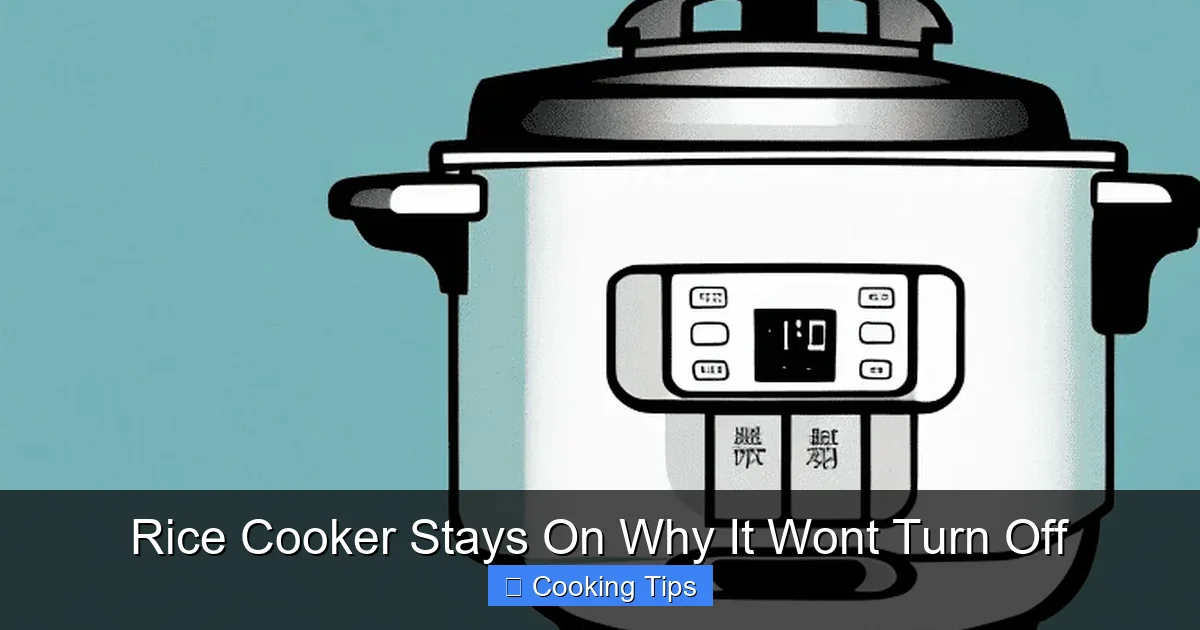
Discover why your rice cooker stays on even after the rice is done and how to fix it. This guide explains the common culprits, from faulty thermostats to stuck switches, and provides simple troubleshooting steps. Get your rice cooker back to its optimal performance with our expert advice and ensure perfectly cooked rice every time.
Rice Cooker Stays On: Why It Won’t Turn Off
You’ve done everything right: measured the rice, added the water, pressed the button, and waited patiently for that satisfying chime or click. But then, an unexpected sight greets you – your rice cooker hasn’t turned off. Instead, it’s still humming along, presumably cooking your rice into a starchy mush. This can be a frustrating and confusing situation, especially when you’re relying on your appliance to do its job efficiently. So, why does your rice cooker stay on even after the rice is done?
This comprehensive guide will delve into the common reasons why your rice cooker might not be shutting off as expected. We’ll explore the internal workings of these handy kitchen gadgets, identify potential issues, and provide you with practical steps to troubleshoot and resolve the problem. By the end of this guide, you’ll have a better understanding of your rice cooker’s behavior and how to get it back to its optimal performance, ensuring perfectly cooked rice every single time.
Key Takeaways
- Understanding the Thermostat: The primary reason a rice cooker stays on is often a malfunctioning thermostat, which is supposed to detect when the rice is cooked and switch the unit to “keep warm.”
- Sensors and Their Role: Rice cookers use sensors to monitor temperature and moisture levels. If these sensors are dirty or damaged, they can send incorrect signals, preventing the unit from turning off.
- The “Keep Warm” Function: Many rice cookers are designed to automatically switch to a “keep warm” mode, not fully shut off. It’s crucial to understand your specific model’s behavior.
- Mechanical Issues: Simple mechanical problems, like a sticky switch or a damaged power cord, can also prevent the rice cooker from shutting down as it should.
- Troubleshooting Steps: Basic troubleshooting involves cleaning sensors, checking the power cord, and inspecting the unit for obvious damage before considering professional repair or replacement.
- Safety First: Always unplug your rice cooker before attempting any cleaning or inspection to avoid electric shock.
Understanding How a Rice Cooker Works
Before we tackle the problem of a rice cooker that stays on, it’s helpful to understand the basic principles of how it operates. Most modern rice cookers, especially those with a single switch for cooking, rely on a simple yet ingenious mechanism: the thermostat.
The Role of the Thermostat
At its core, your rice cooker is a sophisticated heating device. When you press the “cook” button, electricity flows to the heating element at the base of the cooker. This element heats up the inner pot, which in turn heats the rice and water.
The magic happens thanks to a special type of thermostat, often a bimetallic strip or a magnetic switch. This device is calibrated to react to temperature. As the water inside the pot boils and turns to steam, the temperature of the pot itself stabilizes around the boiling point of water (approximately 100°C or 212°F).
When all the water has been absorbed by the rice or evaporated as steam, the temperature inside the pot begins to rise significantly above the boiling point. It’s this rapid increase in temperature that the thermostat detects. Once it reaches a pre-set threshold, the thermostat triggers a mechanism that switches the rice cooker from the “cook” mode to the “keep warm” mode. In many simpler models, this is the point where the power is cut to the main heating element, and a much lower-power heating element is activated to maintain a safe serving temperature.
The “Keep Warm” Function Explained
It’s important to note that not all rice cookers are designed to *completely* turn off after cooking. Many are programmed to automatically switch to a “keep warm” function. This is a desirable feature that allows you to cook rice ahead of time and have it ready to serve at a pleasant temperature for an extended period without it becoming cold or dry.
If your rice cooker is switching to “keep warm” and you were expecting it to shut down entirely, this is perfectly normal behavior for that particular model. However, if it remains on the “cook” setting, or if the “keep warm” function is malfunctioning and causing it to overheat or continue cooking aggressively, then you have a problem.
Common Reasons Your Rice Cooker Stays On
Now that we understand the basics, let’s explore the common reasons why your rice cooker might defy expectations and refuse to turn off.
1. Faulty Thermostat
The most frequent culprit behind a rice cooker that won’t turn off is a malfunctioning thermostat. As we discussed, the thermostat is the primary component responsible for detecting when the cooking cycle is complete.
Why Thermostats Fail
- Wear and Tear: Like any mechanical component, thermostats can wear out over time due to repeated heating and cooling cycles.
- Dirt and Residue: Small particles of rice or mineral deposits from water can accumulate on the thermostat’s sensor, interfering with its ability to accurately read the pot’s temperature.
- Damage: Physical damage to the thermostat, perhaps from dropping the appliance or improper cleaning, can also render it ineffective.
When the thermostat fails, it might not register the temperature rise that signifies the end of the cooking cycle. Consequently, it continues to send signals that the heating element should remain active, keeping the cooker on indefinitely.
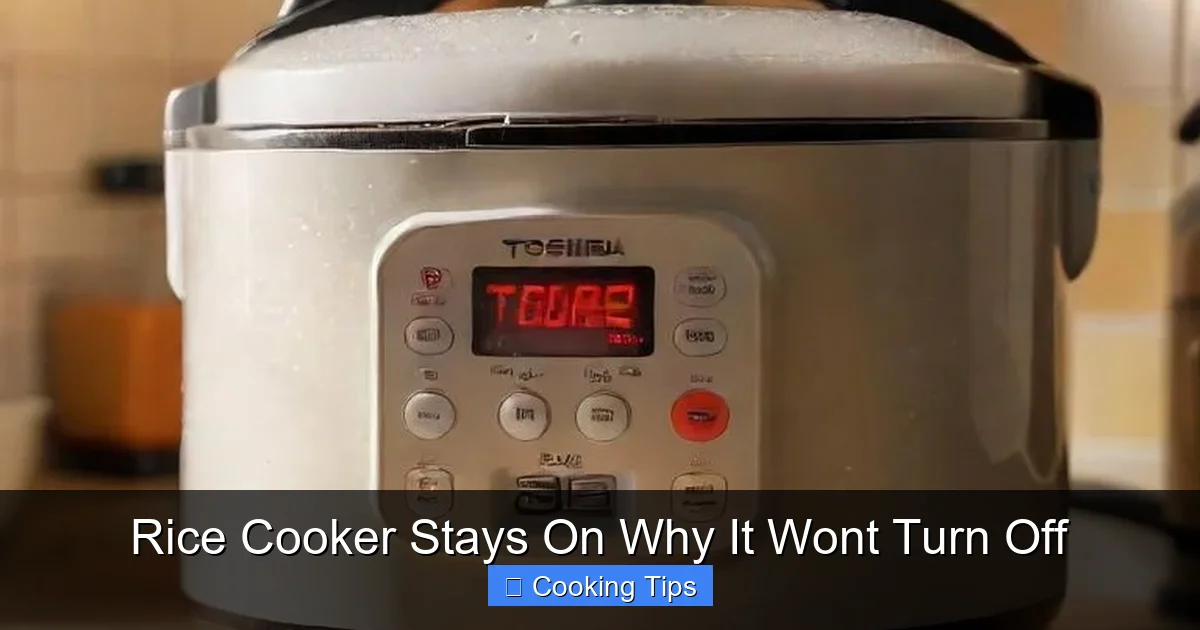
Visual guide about Rice Cooker Stays On Why It Wont Turn Off
Image source: childbrides.org
2. Dirty or Damaged Sensors
Beyond the primary thermostat, some more advanced rice cookers utilize additional sensors to monitor moisture levels and temperature more precisely. These sensors, often located at the base of the inner pot or within the lid, play a crucial role in the cooking process.
Impact of Sensor Issues
If these sensors become coated with starchy residue or other food particles, they can send false readings to the control circuitry. For instance, a sensor might incorrectly indicate that there’s still plenty of water, even if it has all been absorbed by the rice. This would prevent the cooker from switching to the “keep warm” mode or shutting off.
Similarly, if a sensor is physically damaged, it won’t be able to communicate its readings accurately, leading to similar malfunction.
3. Sticky Switches or Control Panel Issues
Sometimes, the problem isn’t with the temperature-sensing components but with the physical interface of the rice cooker.
Mechanical Snags
The “cook” button or switch on simpler rice cookers can become sticky. This can happen due to dried-on food particles or a worn-out spring mechanism. If the switch gets stuck in the “on” or “cook” position, it will prevent the unit from transitioning to “keep warm” or turning off, even if the thermostat has signaled completion.
More complex digital rice cookers have control panels with buttons or touch sensors. If these become dirty or if there’s an internal electronic fault, they might not register the commands to switch modes or shut down.
4. Issues with the “Keep Warm” Function
While it might seem counterintuitive, a problem with the “keep warm” function itself can sometimes manifest as the rice cooker staying on too aggressively.
Overheating in “Keep Warm” Mode
If the “keep warm” heating element is too powerful, or if its thermostat is also malfunctioning and stuck on high, it can continue to cook the rice, preventing the unit from truly resting. This can lead to burnt or overly dry rice, even though the cooker is technically “on.”
5. Damaged Power Cord or Internal Wiring
A less common but still possible reason for a rice cooker not turning off is an issue with its power supply components.
Electrical Hazards
A damaged power cord, with frayed wires or a loose connection, could potentially cause erratic behavior. Similarly, internal wiring faults within the rice cooker could lead to the heating element staying energized unexpectedly.
Safety Note: If you suspect a problem with the power cord or internal wiring, do not attempt to use the appliance. This is a serious safety hazard.
Troubleshooting Your Rice Cooker: Step-by-Step
If your rice cooker is staying on, don’t despair! Many of these issues can be resolved with some basic troubleshooting. Always remember to unplug the appliance before you begin any inspection or cleaning.
Step 1: Unplug and Let it Cool
The very first thing you should do is unplug your rice cooker from the power outlet. This is crucial for your safety. Then, allow the appliance to cool down completely. Trying to clean or inspect a hot rice cooker is dangerous.
Step 2: Clean the Inner Pot and Lid
Sometimes, the simplest solutions are the most effective. Thoroughly clean the inner pot and the lid of your rice cooker. Remove any leftover rice, water, or residue. Pay close attention to the area where the inner pot sits at the base of the cooker, as this is where some sensors are often located.
Visual guide about Rice Cooker Stays On Why It Wont Turn Off
Image source: cdn-0.truckomize.com
Step 3: Inspect and Clean the Sensors
Locate the sensors on your rice cooker. These are typically small metal discs or probes at the bottom of the outer casing where the inner pot rests. Carefully wipe them clean with a damp cloth. Ensure there’s no sticky residue or debris interfering with them. For digital models, check any sensors located inside the lid as well.
Step 4: Check the Switches and Buttons
If you have a model with a physical “cook” switch, gently press it a few times to ensure it’s not sticking. If it feels loose or jammed, try to dislodge any visible debris around it. For digital control panels, wipe the surface clean with a slightly damp cloth, avoiding excessive moisture.
Step 5: Examine the Power Cord
Inspect the power cord for any visible signs of damage, such as cuts, fraying, or exposed wires. If you find any damage, do not use the rice cooker and consider replacing it.
Step 6: Test the “Keep Warm” Function (If Applicable)
Once you’ve cleaned the unit, try running a simple test. Add a small amount of water (no rice) and turn it on to the “cook” setting. Observe if it switches to “keep warm” after the water boils and evaporates. If it stays on “cook” and continues to boil aggressively, the thermostat or main control board might be faulty.
Step 7: Consult Your User Manual
Your rice cooker’s user manual is a valuable resource. It often contains specific troubleshooting tips for your model. Check it for any advice related to the unit not shutting off or its “keep warm” function.
When to Consider Professional Repair or Replacement
If you’ve gone through the troubleshooting steps and your rice cooker still refuses to turn off correctly, it might be time to consider professional repair or, more likely, replacement.
Signs You Need a New Rice Cooker
- Persistent Malfunction: If the problem persists after thorough cleaning and inspection.
- Visible Damage: Any signs of damage to the casing, cord, or internal components.
- Electrical Smells or Sounds: If you notice burning smells or unusual buzzing sounds, turn off and unplug the unit immediately.
- Age of Appliance: Rice cookers, like most appliances, have a lifespan. If yours is very old, it might be more cost-effective to replace it.
- Safety Concerns: If you have any doubts about the safety of your rice cooker, it’s always best to err on the side of caution.
Repairing small appliances like rice cookers can sometimes be more expensive than purchasing a new one, especially if the issue is with the thermostat or control board. For many users, buying a new rice cooker is the most practical and safest solution.

Visual guide about Rice Cooker Stays On Why It Wont Turn Off
Image source: i.ytimg.com
Conclusion
A rice cooker that stays on can be a puzzling problem, but more often than not, it stems from a few common culprits: a faulty thermostat, dirty sensors, or sticky switches. By understanding how your rice cooker works and following the troubleshooting steps outlined in this guide, you can often resolve the issue yourself.
Remember to always prioritize safety by unplugging your appliance before cleaning or inspection. If the problem persists or if you have any safety concerns, it’s time to consider a replacement. With a little care and attention, you can ensure your rice cooker continues to be a reliable tool for perfectly cooked rice, meal after meal. Happy cooking!
