

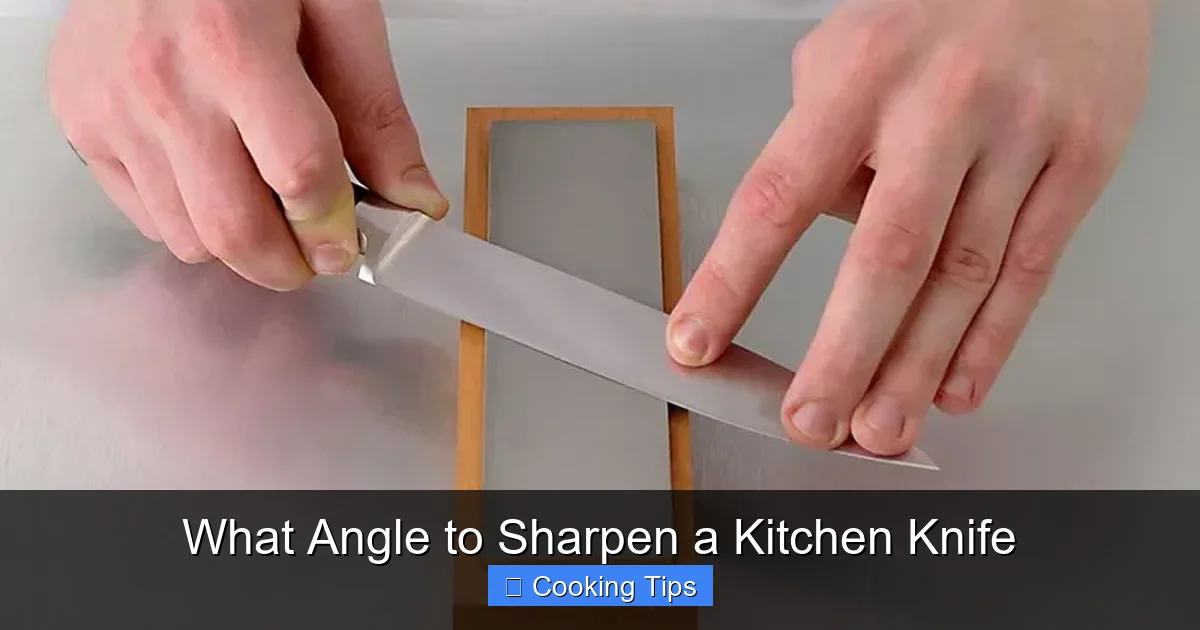
Choosing the right sharpening angle is crucial for a truly sharp kitchen knife. This comprehensive guide explains the optimal angles for different blade types, from delicate paring knives to robust chef’s knives. Mastering these angles will significantly improve your cutting performance and make cooking safer and more enjoyable. Learn to identify your knife’s needs and achieve professional-level sharpness at home.
So, you’ve got a kitchen knife that’s seen better days. Maybe it struggles to slice through a ripe tomato without squishing it, or perhaps it feels more like a butter knife than a precision cutting tool. The good news is, with a little knowledge and the right technique, you can bring that dull blade back to life! One of the most important factors in achieving that satisfyingly sharp edge is understanding the perfect angle to sharpen your kitchen knife.
In this guide, we’ll dive deep into the world of knife sharpening angles. We’ll break down why angles matter, explore the ideal angles for various types of kitchen knives, and give you practical, step-by-step advice to get your knives slicing like they’re brand new. By the end of this article, you’ll be well-equipped to choose and maintain the correct sharpening angle for every blade in your kitchen, making your culinary adventures safer and more enjoyable.
Key Takeaways
- Different Knives, Different Angles: The ideal sharpening angle isn’t one-size-fits-all. It depends on the knife’s intended use, steel type, and edge geometry.
- The Sweet Spot for Most Chef’s Knives: For general-purpose Western-style chef’s knives, a 15-20 degree angle per side is typically the sweet spot for a balance of sharpness and durability.
- Japanese Knives Require Finer Angles: Traditionally, Japanese knives are sharpened at steeper angles, often around 10-15 degrees per side, to achieve an incredibly keen edge suited for delicate tasks.
- Bread Knives and Serrated Edges: Serrated knives, like bread knives, don’t require traditional sharpening at a consistent angle; they need specialized tools and techniques to maintain their unique cutting edges.
- Durability vs. Sharpness: A steeper angle (higher degree) will be more durable but less sharp, while a shallower angle (lower degree) will be sharper but more prone to chipping or rolling.
- Consistency is Key: Regardless of the angle, maintaining a consistent angle throughout the sharpening process is paramount for an effective edge.
Why Does the Sharpening Angle Matter?
Think of your knife’s edge like a tiny, microscopic V-shape. When you sharpen a knife, you’re essentially reforming this V to be as acute as possible while still being strong enough to withstand cutting. The angle at which you create this V determines two critical things: how sharp the edge feels and how durable it is.
- Sharpness: A narrower angle (smaller degree) creates a finer, more acute edge. This finer edge can bite into food more easily, leading to cleaner cuts and a sensation of superior sharpness.
- Durability: A wider angle (larger degree) creates a more robust edge. This thicker edge is less likely to chip, roll, or get damaged during heavy-duty tasks like chopping through bones or tough vegetables.
The trick is to find the sweet spot for each knife. A knife meant for delicate filleting needs a different angle than a cleaver designed for heavy chopping. Using the wrong angle can lead to a knife that’s either too fragile and dulls quickly, or too blunt to perform its intended task effectively.
Understanding Knife Angles: Degrees Explained
When we talk about sharpening angles, we’re referring to the angle on *each side* of the blade. So, if a knife is sharpened at 20 degrees, it means there’s a 20-degree bevel on one side and a 20-degree bevel on the other, for a total inclusive angle of 40 degrees.
Western-Style vs. Japanese-Style Knives
This is where the main divergence in sharpening angles occurs.
Western-Style Knives
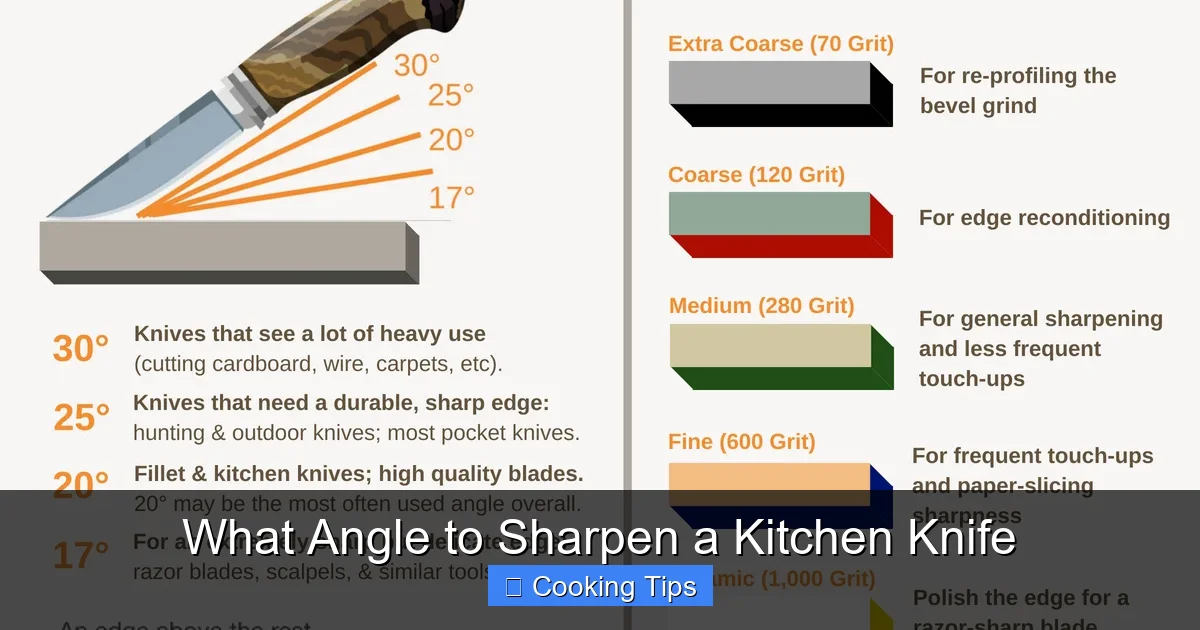
These are the workhorses of many kitchens. Think of your typical chef’s knife, santoku (though santokus can lean Japanese), utility knife, or paring knife. They are generally designed for versatility and durability. For most Western-style knives, a sharpening angle between 15 to 20 degrees per side is ideal. This range offers a good balance: sharp enough for most everyday tasks, yet robust enough to handle consistent use without frequent chipping.
Visual guide about What Angle to Sharpen a Kitchen Knife
Image source: i.redd.it
Why this range?
- 15 degrees: This angle will give you a noticeably sharper edge, excellent for slicing through softer ingredients like ripe tomatoes, fish, or delicate herbs. It requires a bit more care in use and maintenance to prevent damage.
- 20 degrees: This is often considered the standard for Western knives. It provides a good, sharp edge that is also quite durable. It’s a forgiving angle for general kitchen use, making it a great starting point if you’re unsure.
Japanese-Style Knives
Japanese knives are renowned for their incredible sharpness and precision. This is often achieved through a harder steel and a finer, more acute edge. Traditionally, Japanese knives are sharpened at much steeper angles, typically between 10 to 15 degrees per side.
Why this range?
- 10 degrees: This creates an incredibly keen edge, perfect for highly specialized tasks like sushi preparation, intricate vegetable carving, or slicing very delicate ingredients where the slightest resistance is undesirable. These knives require significant care and are not suited for heavy-duty chopping.
- 12-15 degrees: This is a common range for many Japanese gyutos (chef’s knives) and other all-purpose Japanese blades. It offers exceptional sharpness while still providing a reasonable level of durability for skilled users.
Important Note: While Japanese knives are traditionally sharpened at finer angles, many modern “Japanese-style” knives made with slightly softer steel might benefit from an angle closer to the higher end of the Japanese range (around 15 degrees) or even slightly wider if they are prone to chipping.
Finding the Right Angle for Your Specific Knife
So, how do you know what angle is right for *your* knife? Here’s a breakdown of common knife types and their recommended angles:
Chef’s Knives
As mentioned, chef’s knives are your primary workhorse.
- Western Chef’s Knives: Aim for 15-20 degrees per side. If you do a lot of chopping and dicing, leaning towards 20 degrees offers better durability. If you prioritize slicing precision, 15 degrees might be your preference, but be mindful of the edge.
- Japanese Gyuto (Chef’s Knife): These often come with a fine edge. Start with 10-15 degrees per side. If you find it chips easily, consider slightly increasing the angle over time.
Visual guide about What Angle to Sharpen a Kitchen Knife
Image source: i.ytimg.com
Paring Knives
These small knives are for detail work. They benefit from a sharp edge for precise cuts.
- All-Purpose Paring Knives: 15-20 degrees per side is usually sufficient. The smaller blade size means the edge isn’t subjected to as much stress as a chef’s knife, so a slightly finer angle can be maintained.
Utility Knives
Somewhere between a paring knife and a chef’s knife, utility knives are good for smaller, more precise tasks than a chef’s knife.
- General Utility Knives: 15-20 degrees per side is a safe bet.
Bread Knives and Serrated Knives
This is where traditional angle sharpening goes out the window. Serrated knives have a unique edge composed of small teeth.
- Sharpening Serrations: You don’t sharpen a serrated knife by running it over a flat stone at a consistent angle. Instead, you need to sharpen each “gullet” (the valley between teeth) and each “point” (the tooth itself). This is best done with a specialized ceramic rod or a fine-grit sharpening steel designed for serrations. The goal is to re-establish the point of each tooth. Many home cooks opt to send serrated knives to professional sharpeners or replace them when they become dull.
Boning Knives and Fillet Knives
These knives are designed for flexibility and precision when working with meat and fish.
- Boning/Fillet Knives: A finer angle, around 12-17 degrees per side, is often preferred. This allows for excellent control and a keen edge needed to separate meat from bone or skin.
Cleavers
Designed for heavy-duty chopping.
- Cleavers: These benefit from a more robust edge. Aim for 20-25 degrees per side. The thicker, wider blade can handle these steeper angles, providing durability for chopping through bone or dense vegetables.
How to Achieve and Maintain the Correct Angle
Once you know the ideal angle, the real challenge is maintaining it consistently during sharpening. This is where sharpening tools and techniques come into play.
Sharpening Methods and Angle Guides
- Sharpening Stones (Whetstones): This is the traditional and often most effective method for achieving a precise edge.
- Angle Guides: Many sharpening systems come with angle guides that clip onto the back of your knife. These help you maintain a consistent angle as you move the blade across the stone.
- Freehand Sharpening: This takes practice. You’ll need to develop a feel for the angle. A good starting point is to hold the knife so the spine is slightly higher than the edge. For a 15-degree angle, imagine holding the blade almost flat against the stone. For 20 degrees, lift the spine slightly more.
- Pull-Through Sharpeners: These are convenient but less precise. Many have fixed angles.
- V-Slot Sharpeners: These often have pre-set angles (e.g., 15 or 20 degrees). While easy to use, they can remove a lot of metal and might not be ideal for high-end knives or for achieving specific Japanese angles. Read the product specifications carefully to understand the angle it offers.
- Electric Sharpeners: Similar to pull-through sharpeners, these offer convenience but limited control over the exact angle. Some higher-end models may have adjustable slots.
- Honing Steels (Sharpening Steels): These are NOT for sharpening; they are for realigning the existing edge. They should be used at a similar angle to your knife’s sharpening angle (e.g., 15-20 degrees) to re-align the microscopic teeth of the edge.
Tips for Maintaining Consistency
- Start with a Marked Blade: You can use a marker to color the bevel of your knife. As you sharpen, you’ll see where the marker is removed. This helps you identify if you’re hitting the correct angle across the entire edge.
- Listen and Feel: Pay attention to the sound and feel of the blade against the stone. A consistent, smooth motion is key.
- Practice on Old Knives: Before tackling your prized chef’s knife, practice on an older, less expensive knife to build your confidence and muscle memory.
- Use the Right Grit: Start with a coarser grit stone to establish the edge, then move to finer grits to polish and refine it.
- Consider a Sharpening System: For beginners, a guided sharpening system or a good quality electric sharpener with clear angle settings can be a great investment to ensure accuracy.
Troubleshooting Common Sharpening Issues
Even with the best intentions, you might run into a few snags.
My knife still feels dull after sharpening.
This could be due to several reasons:
- Incorrect Angle: You might not have been consistent, or the angle was too steep for the level of sharpness desired.
- Insufficient Sharpening: You might not have removed enough metal to create a new, sharp edge.
- Burr Formation: A “burr” is a thin wire of metal that forms on the edge. If not properly removed, it can make the edge feel dull or roll over.
- The Knife is Too Far Gone: Some very old or damaged knives might require professional attention or may be beyond simple sharpening.
Visual guide about What Angle to Sharpen a Kitchen Knife
Image source: i.ytimg.com
The edge chipped or rolled after just a few uses.
This usually indicates the angle was too shallow for the type of steel or the way you use your knife. Try increasing the sharpening angle slightly on your next attempt to create a more robust edge.
I can’t get a consistent angle.
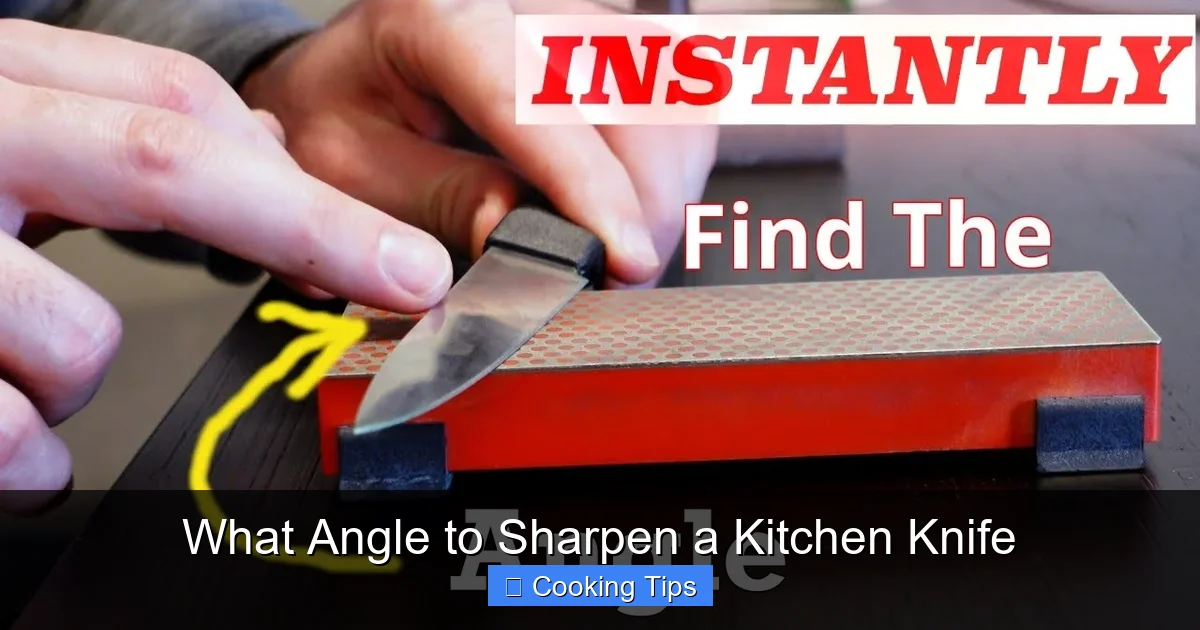
This is common with freehand sharpening. Invest in an angle guide, a guided sharpening system, or a quality pull-through sharpener with a known angle until you develop the necessary skill and feel.
Conclusion
Choosing the right sharpening angle for your kitchen knife is more art than exact science, but understanding the principles will dramatically improve your results. For most Western knives, the 15-20 degree range per side is your go-to. For those exquisite Japanese blades, lean towards 10-15 degrees per side. Remember, consistency in your angle is just as important as the angle itself.
By investing a little time in understanding your knives and practicing the art of sharpening, you’ll transform your kitchen experience. A sharp knife isn’t just about efficiency; it’s about safety. A sharp blade requires less force, reducing the risk of slips and accidental cuts. So, go forth, choose your angle wisely, and enjoy the satisfaction of a perfectly sharp kitchen knife!
