

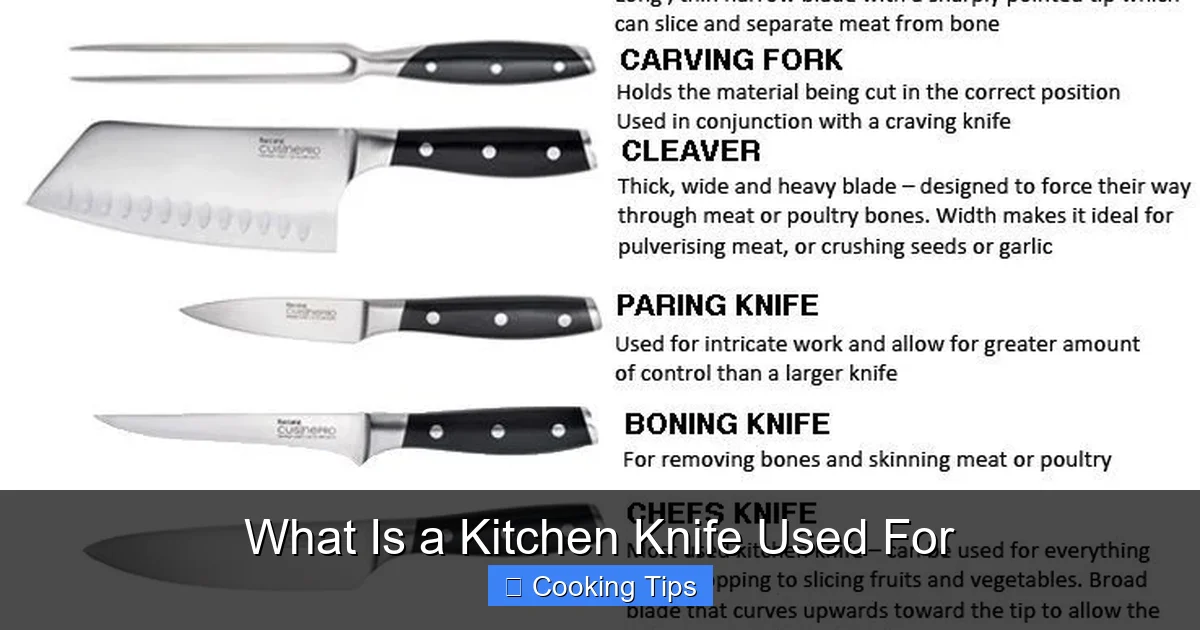
This guide delves into the fundamental uses of kitchen knives, explaining how different types excel at specific tasks. Learn to properly wield a chef’s knife for chopping, a paring knife for detail work, and more. Unlock your culinary potential by understanding your knife’s purpose, leading to safer and more efficient cooking in 2026.
What Is a Kitchen Knife Used For
Welcome to the heart of your kitchen – the humble, yet incredibly powerful, kitchen knife! In 2026, we’re all looking for ways to make our cooking more efficient, enjoyable, and ultimately, delicious. And at the core of successful meal preparation lies the proper understanding and use of kitchen knives. Whether you’re a seasoned home chef or just starting your culinary journey, this guide will illuminate the incredible versatility of these essential tools. You’ll learn what different kitchen knives are used for, how to wield them safely and effectively, and how to make them your most trusted culinary companions.
Let’s embark on this exploration and unlock the full potential of your kitchen knives!
Key Takeaways
- Mastering the Chef’s Knife: Understand its versatility for chopping, mincing, and slicing a wide range of ingredients.
- The Precision of Paring Knives: Discover their role in intricate tasks like peeling, coring, and detailed garnishes.
- Slicing with Serrations: Learn how serrated knives efficiently cut through bread, tomatoes, and other foods with tough exteriors and soft interiors.
- Beyond the Basics: Explore specialized knives like boning, filleting, and utility knives for specific culinary challenges.
- Safety First: Emphasize proper knife handling, cutting techniques, and storage to prevent accidents in the kitchen.
- Maintenance Matters: Understand the importance of sharpening and cleaning your kitchen knives to ensure optimal performance and longevity.
The Fundamental Purpose of a Kitchen Knife
At its most basic, a kitchen knife is a cutting tool designed for food preparation. But to categorize it as simply a “cutting tool” is like calling a symphony orchestra a “group of musicians.” It’s so much more! Kitchen knives are crafted with specific blade shapes, sizes, and materials to tackle the diverse textures and forms of ingredients. From the delicate dissection of a herb to the robust cleaving of a dense vegetable, each knife has a purpose. Understanding this purpose is the first step towards becoming a more confident and skilled cook.
The Workhorse: The Chef’s Knife
When people think of a kitchen knife, the chef’s knife is often what comes to mind. And for good reason! This is arguably the most versatile knife in your kitchen.
What is a Chef’s Knife Used For?
The chef’s knife is designed for a multitude of tasks. Its broad, tapered blade and sharp edge make it ideal for:
- Chopping: This is its bread and butter (pun intended!). Whether you’re dicing onions, mincing garlic, or roughly chopping herbs, the chef’s knife handles it with ease.
- Slicing: From slicing through a roast chicken to creating thin slices of bell peppers, its length and sharpness allow for smooth, controlled cuts.
- Mincing: The rocking motion often used with a chef’s knife is perfect for finely mincing ingredients like garlic, ginger, or shallots.
- Dicing: Creating uniform cubes of vegetables for stews, stir-fries, or salads is a breeze with a chef’s knife.
- Crushing: The flat side of the blade can be used to crush garlic cloves or spices.
How to Use a Chef’s Knife Effectively
Using a chef’s knife correctly involves a few key techniques:
The Pinch Grip
This is the most recommended grip for control and precision. Pinch the base of the blade (where it meets the handle) with your thumb and index finger, then wrap your remaining fingers around the handle. This provides excellent leverage.

Visual guide about What Is a Kitchen Knife Used For
Image source: i.ytimg.com
The Rocking Motion
For chopping and mincing, use a rocking motion. Keep the tip of the blade on the cutting board and lift the heel of the blade to cut through the ingredient. This creates a continuous, fluid cutting action.
Controlled Slicing
For slicing, use a smooth, drawing motion, pulling the knife towards you or pushing it away. Avoid sawing back and forth, which can tear ingredients.
The Detailer: The Paring Knife
For tasks that require a delicate touch and precision, the paring knife is your go-to.
What is a Paring Knife Used For?
Smaller than a chef’s knife, the paring knife is perfect for intricate work:
- Peeling: Removing the skin from fruits and vegetables like apples, potatoes, and carrots is made easy with the paring knife’s maneuverability.
- Trimming: Removing blemishes, eyes from potatoes, or the stem from strawberries are tasks it excels at.
- Deveining: For shrimp, the small, sharp tip is excellent for carefully removing the dark vein.
- Garnishing: Creating decorative garnishes like citrus twists or small vegetable shapes is where the paring knife shines.
- Small Slicing: For smaller fruits and vegetables, like cherry tomatoes or shallots, it can be used for precise slicing.
How to Use a Paring Knife for Precision
Working with a paring knife is all about control:
The Straight Grip
Hold the paring knife firmly by the handle. For peeling, you’ll often move the knife away from you, guiding it with your thumb on the back of the blade for stability.
Visual guide about What Is a Kitchen Knife Used For
Image source: i.pinimg.com
Controlled Twists and Turns
When creating garnishes, use the sharp tip to make precise cuts and twists. Practice makes perfect here!
The Serrated Specialist: The Bread Knife
If you’ve ever struggled to slice a crusty loaf of bread without squashing it, you’ve met the challenge that the bread knife solves.
What is a Bread Knife Used For?
The defining feature of a bread knife is its serrated edge, which acts like tiny saws. This makes it ideal for:
- Slicing Bread: The serrations grip the crust, allowing you to saw through it cleanly without crushing the soft interior.
- Slicing Tomatoes: Tomatoes, with their tough skins and juicy interiors, are also no match for a bread knife.
- Slicing Citrus: The serrations can help cut through the waxy rind of oranges and grapefruits.
- Cutting Cakes: For delicate cakes, the serrations can create clean slices without tearing.
Tips for Using a Bread Knife
The technique for using a bread knife is straightforward:
The Sawing Motion
Use a gentle back-and-forth sawing motion. Let the serrations do the work. Avoid pressing down too hard, as this can flatten the item you’re cutting.

Visual guide about What Is a Kitchen Knife Used For
Image source: i.pinimg.com
Beyond the Essentials: Other Important Kitchen Knives
While the chef’s knife, paring knife, and bread knife cover a lot of ground, a well-equipped kitchen in 2026 might also include these specialized tools:
The Utility Knife
Often seen as a smaller, more agile version of the chef’s knife, the utility knife is great for tasks that are too big for a paring knife but too small or intricate for a chef’s knife. Think slicing large fruits or vegetables, or cutting through smaller cuts of meat.
The Boning Knife
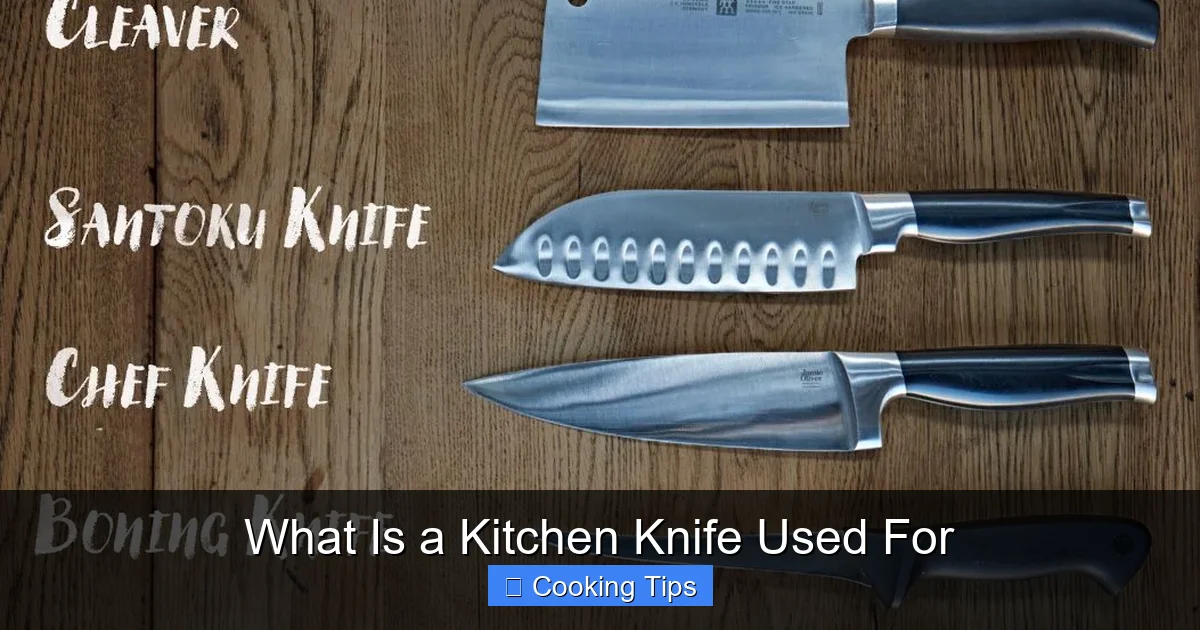
With its thin, flexible blade, the boning knife is designed to separate meat from bone. It’s perfect for trimming fat, deboning poultry, or filleting fish.
The Filleting Knife
Similar to a boning knife, a filleting knife is even more flexible and has a narrower blade. It’s specifically designed to remove skin and bones from fish, yielding perfect fillets.
The Santoku Knife
A popular Japanese-style knife, the Santoku is characterized by its straighter edge and Granton edge (dimples) which help prevent food from sticking. It’s excellent for chopping, slicing, and dicing.
The Cleaver
For heavy-duty tasks like chopping through bone or dense vegetables like squash, a cleaver is the tool for the job. It has a wide, heavy blade.
Safety First: Essential Knife Handling Practices
No matter which kitchen knife you’re using, safety is paramount. Accidents can happen, but following these guidelines will significantly reduce the risk:
Always Use a Stable Cutting Board
Ensure your cutting board is placed on a stable, non-slip surface. If it tends to slide, place a damp cloth or paper towel underneath it.
Keep Knives Sharp
This might sound counterintuitive, but dull knives are more dangerous than sharp ones. A dull knife requires more force to cut, increasing the chance of slipping. Regular sharpening is key.
Cut Away from Yourself
Whenever possible, direct the blade of the knife away from your body.
Keep Your Fingers Tucked
When holding ingredients to be cut, curl your fingertips under, creating a “claw” shape. This protects your fingertips from the blade.
Never Try to Catch a Falling Knife
It’s a natural instinct, but it’s dangerous. Step away and let it fall.
Store Knives Properly
Don’t leave knives lying around on the counter. Use a knife block, magnetic strip, or blade guards to protect the edges and prevent accidental cuts.
Clean Knives Immediately After Use
Don’t leave knives soaking in the sink, where they can be easily overlooked and cause injury. Wash them by hand with soap and water, and dry them thoroughly.
Maintenance: Keeping Your Knives in Top Condition
To ensure your kitchen knives perform at their best for years to come, proper maintenance is essential.
Sharpening Your Knives
As mentioned, sharp knives are crucial for safety and efficiency. You have several options for sharpening:
- Honing Steel: A honing steel doesn’t actually sharpen the knife; it realigns the microscopic teeth on the blade that get bent during use. Use it regularly (even before each use) to keep your knife performing well between sharpenings.
- Sharpening Stone (Whetstone): This is the traditional method for truly sharpening a knife, creating a new, sharp edge. It requires practice to get the angle right.
- Electric Knife Sharpener: These offer a convenient, albeit sometimes less precise, way to sharpen your knives.
- Professional Sharpening Services: If you’re not comfortable sharpening yourself, many services can professionally sharpen your knives.
Cleaning Your Knives
Always wash your knives by hand with warm, soapy water. Avoid putting them in the dishwasher, as the high heat and harsh detergents can damage the blade and the handle. Dry them immediately and thoroughly to prevent rust and corrosion, especially for carbon steel knives.
Conclusion
In 2026, mastering the use of your kitchen knives is an investment in your culinary journey. From the all-purpose chef’s knife that tackles your daily chopping needs, to the precise paring knife for delicate tasks, and the specialized tools that conquer specific challenges, each knife plays a vital role. By understanding their intended uses, practicing safe handling techniques, and committing to proper maintenance, you’ll not only elevate the quality of your cooking but also ensure a safer and more enjoyable experience in the kitchen. So, pick up your favorite knife, embrace its purpose, and get ready to create delicious meals with confidence!
