

Organizing your kitchen knife set is crucial for both safety and efficiency. This guide explores the best storage options, from countertop blocks to magnetic strips and in-drawer organizers, helping you find the ideal solution for your space and needs. We’ll cover factors like accessibility, blade protection, and kitchen aesthetics to ensure your knives are always ready and safely stored.
Welcome to your ultimate guide on where to put your knife set in the kitchen! In the bustling heart of your home, where culinary creativity unfolds, your knives are your most trusted companions. But where they reside matters – it impacts their sharpness, your safety, and the overall flow of your kitchen. In 2026, as kitchens become more personalized and efficient, understanding the best knife storage solutions is more important than ever. This guide will walk you through everything you need to know, from the most popular options to considerations you might not have thought of.
You’ll learn how to assess your kitchen space, weigh the pros and cons of different storage methods, and make an informed decision that keeps your knives sharp, your countertops clear, and your cooking experience smooth and safe. Let’s dive in and find the perfect home for your precious blades!
- Countertop knife blocks offer immediate accessibility and a classic kitchen look, but can take up valuable counter space and may not fit all knife styles.
- Magnetic knife strips are a space-saving and stylish option, allowing for easy visibility and access, but require secure mounting and can be a safety concern in homes with young children or pets.
- In-drawer knife organizers keep knives hidden and protected, freeing up counter space and maintaining a clean aesthetic, though they require dedicated drawer space and can be less convenient for frequent use.
- Knife rolls or blocks for cabinets are excellent for protecting knives during transport or for those who prefer a completely clutter-free countertop, but are less accessible for everyday cooking.
- Consider knife safety and accessibility based on your kitchen layout, cooking habits, and the presence of children or pets when choosing a storage solution.
- Blade protection is paramount; ensure your chosen method prevents nicks, dulling, and accidental cuts, extending the life of your knives.
- The aesthetic of your kitchen should also play a role; choose a storage solution that complements your décor and personal style.
Assessing Your Kitchen for Knife Storage
Before you even start looking at specific knife holders, it’s essential to understand your kitchen’s unique layout and your personal cooking habits. This initial assessment will be your compass in navigating the many storage options available.
Consider Your Countertop Space
How much free counter space do you actually have? Are your countertops often cluttered with appliances, or do you prefer a minimalist look? If counter space is a premium, options like magnetic strips or in-drawer organizers will be more appealing than a bulky countertop block. Measure your available space to ensure any chosen solution will fit comfortably without obstructing your work areas.
Evaluate Your Kitchen Workflow
Think about how you cook. Do you chop vegetables for every meal? Do you reach for your chef’s knife multiple times a day? If your knives are frequently used, you’ll want them to be easily accessible. This might lean towards a countertop block or a magnetic strip mounted conveniently near your primary prep zone. If you use your knives less often, or prefer a tidy appearance, an in-drawer solution might be perfectly fine.
Factor in Safety and Household Members
This is perhaps the most critical consideration. If you have young children or pets who might wander into the kitchen unsupervised, blade safety is paramount. Options that keep knives completely out of reach, such as secure in-drawer systems or high-mounted magnetic strips, become essential. Even for adults, clear visibility and safe removal from storage can prevent accidental cuts.
Think About Your Knife Set Type
Not all knife sets are created equal. Do you have a traditional wooden block that came with your knives? Are they all different sizes and shapes, making a universal block tricky? Understanding the number and types of knives you own will influence which storage solutions are most practical and effective for your specific set.
Popular Knife Set Storage Solutions: Pros and Cons
Now that you’ve assessed your kitchen, let’s explore the most common and effective ways to store your knife set. Each has its own set of advantages and disadvantages.
Visual guide about Where to Put Knife Set in Kitchen
Image source: m.media-amazon.com
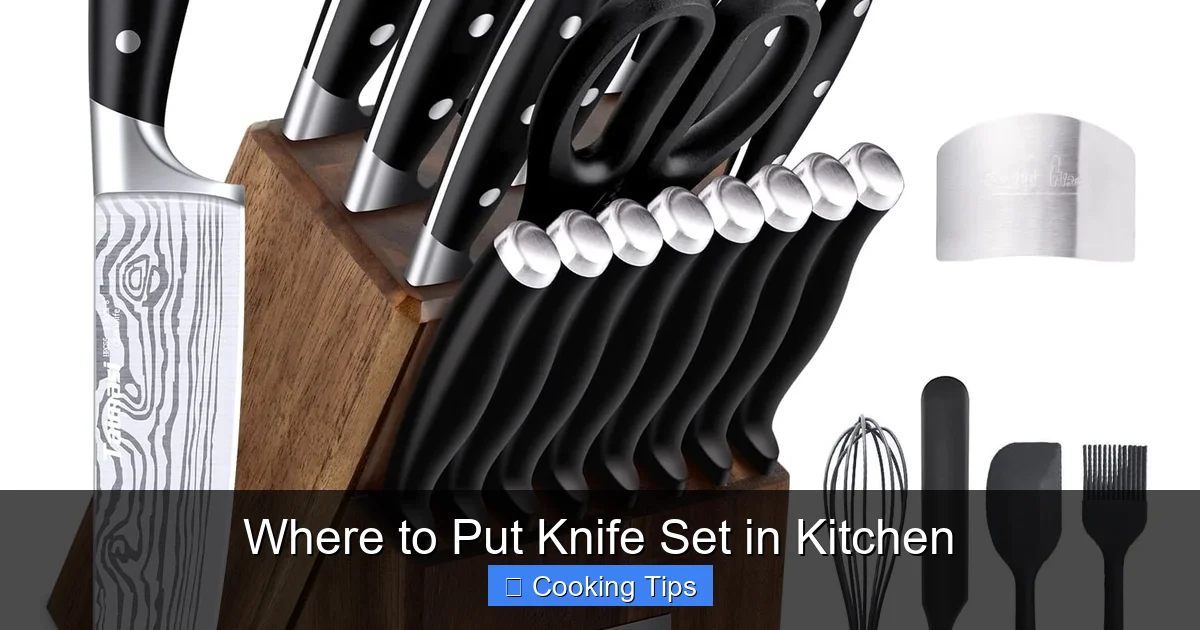
1. Countertop Knife Blocks
The classic choice, a countertop knife block, often comes with a knife set and provides a dedicated slot for each knife. They are readily available and instantly recognizable.
Pros:
- Accessibility: Knives are always within easy reach, making them ideal for frequent cooks.
- Protection: Slots generally protect the blades from damage and dulling when stored properly.
- Familiarity: They are a traditional and widely accepted storage method.
- Aesthetics: Many blocks are designed to be attractive additions to kitchen décor.
Cons:
- Counter Space: They occupy valuable real estate on your countertops.
- Slot Limitations: Some blocks have fixed slots that might not fit all knife sizes or brands.
- Cleaning: Slots can accumulate crumbs and dust, requiring periodic cleaning.
- Hygiene: If knives aren’t completely dry when put away, moisture can get trapped, leading to potential rust or mold.
Practical Tip: When cleaning your knife block, use a pipe cleaner or a straw to reach into the slots. Ensure knives are bone dry before reinserting them.
2. Magnetic Knife Strips
These sleek and modern strips mount directly to your wall, using strong magnets to hold knives securely. They are a popular choice for saving counter space and showcasing knife collections.
Pros:
- Space Saving: Frees up valuable counter and drawer space.
- Visibility: Knives are on display, making it easy to see and select the right one.
- Versatility: Can accommodate knives of various sizes and shapes, as well as other metal kitchen utensils.
- Easy Cleaning: The strip itself is easy to wipe down, and knives are readily accessible for cleaning.
Cons:
- Safety Hazard: Can be a risk in homes with young children or pets if mounted at their level.
- Mounting: Requires secure installation into wall studs or appropriate anchors for safety.
- Blade Contact: If not placed carefully, the blade’s edge can come into contact with the strip, potentially causing minor damage over time.
- Aesthetics: Some may find exposed knives less visually appealing than hidden storage.
Installation Tip: Mount the magnetic strip at least 5 feet (1.5 meters) off the floor, or in a location inaccessible to children. Ensure it’s mounted on a solid surface, ideally studs, for maximum security.
3. In-Drawer Knife Organizers
For those who love a minimalist look, in-drawer organizers keep your knives safely tucked away and protected. These can range from simple wooden inserts to elaborate multi-tiered systems.
Pros:
- Clutter-Free: Keeps countertops completely clear, offering a clean and tidy appearance.
- Blade Protection: Safely cradles each blade, preventing dulling and damage.
- Safety: Knives are completely hidden, reducing accidental cuts, especially important in homes with children.
- Space Efficiency: Utilizes often-underused drawer space.
Cons:
- Accessibility: Requires opening a drawer, which can be less convenient for very frequent use.
- Drawer Space: Takes up a dedicated drawer, which might be at a premium in smaller kitchens.
- Fit: You need to ensure the organizer fits your drawer dimensions and your specific knives.
- Potential for Movement: Some less secure organizers might shift when the drawer is opened or closed.
Size Matters: Before buying, measure the height, width, and depth of your chosen drawer. Also, measure your longest and widest knives to ensure a good fit.
4. In-Cabinet Knife Blocks or Holders
Similar to countertop blocks, these are designed to fit inside your cabinets. They offer a hidden storage solution that still provides easy access when the cabinet door is open.
Pros:
- Hidden Storage: Keeps knives out of sight but still accessible.
- Countertop Space Saved: Similar to in-drawer solutions, this frees up counters.
- Protection: Offers good blade protection when designed well.
- Safety: Safer than countertop options in homes with very active children.
Cons:
- Cabinet Space: Occupies cabinet space, which might be needed for other kitchen items.
- Accessibility: Requires opening a cabinet door, which can be slightly less convenient than a countertop block.
- Installation: Some may require minor installation or fitting within the cabinet.
- Size Constraints: Like countertop blocks, they may have limitations on knife size.
Cabinet Measurement: Ensure the cabinet height, width, and depth can accommodate the in-cabinet block, and that there’s enough clearance to open the door fully.
5. Knife Rolls and Cases
Traditionally used by chefs for transport, knife rolls and cases are also a viable storage option for home kitchens, especially for those with large collections or who travel with their knives.
Pros:
- Ultimate Protection: Each knife is individually secured, offering excellent protection from damage and dulling.
- Portability: Ideal for culinary students, caterers, or anyone who moves their knives.
- Space Saving: Can be stored in a drawer or cupboard when not in use.
- Organization: Keeps a large collection neatly organized.
Cons:
- Least Accessible: Not practical for everyday, quick access to a single knife.
- Takes Time to Pack/Unpack: Unrolling and re-rolling can be time-consuming.
- Bulk: Can be bulky to store when not in use.
- Cost: High-quality knife rolls can be an additional expense.
Consider a Display Stand: If you have a beautiful knife roll, you might consider displaying it as a conversation piece when not in use, rather than hiding it away.
Making the Final Decision: Key Factors to Reiterate
Choosing the “best” place for your knife set isn’t a one-size-fits-all answer. It’s about finding the optimal solution for *your* kitchen and *your* lifestyle. Let’s quickly recap the most important factors:
Visual guide about Where to Put Knife Set in Kitchen
Image source: iororwxhiqijjo5q.ldycdn.com
- Safety First: Always prioritize the safety of household members, especially children and pets. If safety is a concern, opt for solutions that keep blades out of sight and reach.
- Accessibility is Key: How often do you use your knives? If they are daily tools, convenience is paramount.
- Protect Your Investment: Good storage extends the life of your knives by preventing damage to the blades.
- Kitchen Aesthetics: Your kitchen is your sanctuary. Choose a storage solution that complements your décor and makes you happy.
- Space Optimization: Work with your kitchen’s layout, not against it. Make the most of the space you have.
Troubleshooting Common Knife Storage Issues
Even with the best intentions, you might encounter some challenges. Here are a few common ones and how to solve them:
Visual guide about Where to Put Knife Set in Kitchen
Image source: m.media-amazon.com
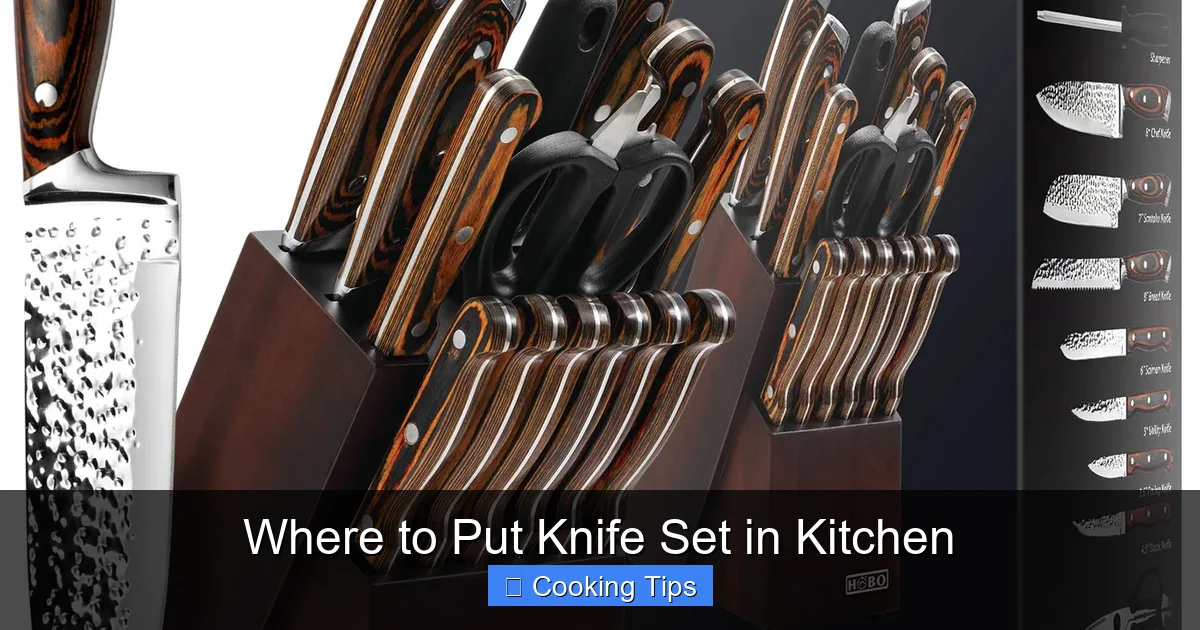
Issue: My countertop block is too small for some of my knives.
Solution: Consider a magnetic strip for oddly shaped knives, or invest in an in-drawer organizer that can accommodate various sizes. You might also need to accept that a single block may not fit every knife you own.
Issue: I worry about my knives dulling on a magnetic strip.
Solution: Ensure you place your knives gently on the strip, edge-first, and remove them carefully without dragging. Using a wooden or bamboo magnetic strip can also be gentler on blades than metal ones.
Issue: My in-drawer organizer slides around.
Solution: You can secure it with a bit of non-slip drawer liner underneath. Some organizers also come with adhesive strips for mounting to the drawer bottom.
Issue: My knife block feels unsanitary.
Solution: Regularly clean the slots with a brush or compressed air. Ensure knives are completely dry before storing to prevent moisture buildup.
Conclusion: Your Knives Deserve a Happy Home
Finding the perfect place for your knife set is more than just tidiness; it’s about safety, knife longevity, and the joy of a well-organized kitchen. Whether you choose the classic countertop block, the space-saving magnetic strip, the discreet in-drawer organizer, or another innovative solution, the goal is the same: to keep your sharpest tools safe, accessible, and in pristine condition. By carefully considering your kitchen’s layout, your cooking habits, and the safety of your household, you can transform how you interact with your knives. So, take a moment, assess your space, and give your knife set the deserving home it needs to continue being your culinary partner for years to come.
