

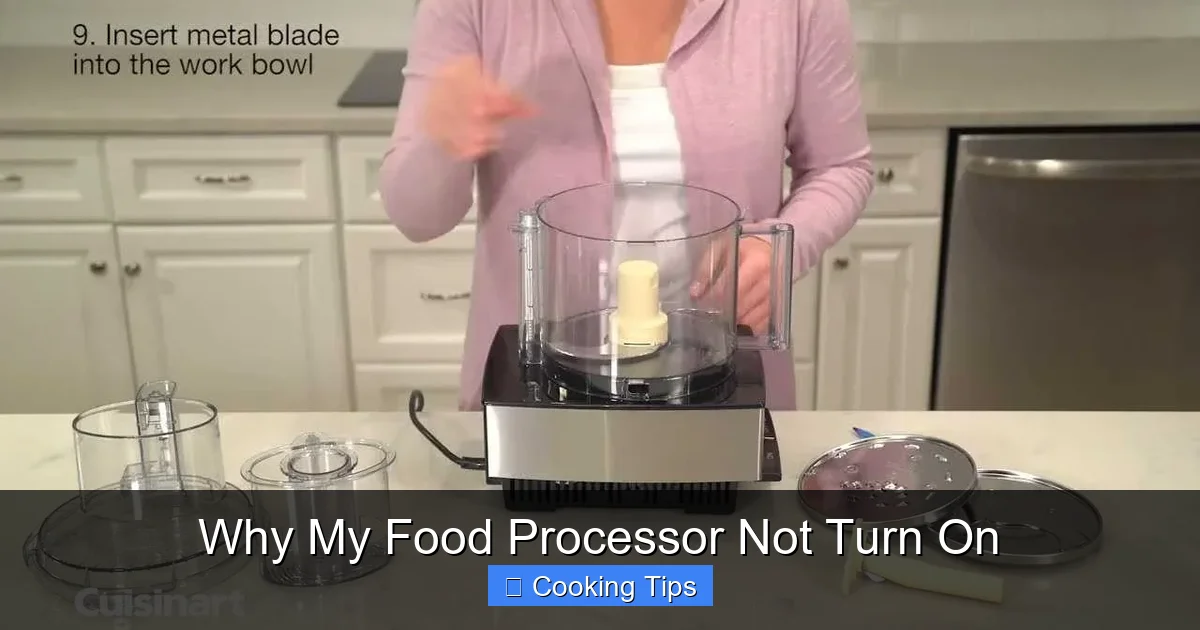
Is your food processor refusing to start? Don’t worry! This guide provides a step-by-step troubleshooting process to help you diagnose and fix common issues. We’ll cover everything from power supply problems to safety lock mechanisms and motor issues. Get your food processor back in action for all your culinary needs with these easy-to-follow tips.
Key Takeaways
- Power Supply Check: The most common reason a food processor won’t turn on is a simple power issue, so always start by checking the outlet and cord.
- Safety Lock Assembly: Ensure all parts of the food processor are correctly assembled and locked into place, as most units have safety interlocks that prevent operation when not secured.
- Overload Protection: Many food processors have a built-in mechanism to prevent motor damage from overheating or overworking; allow it to cool down if it has recently stopped unexpectedly.
- Motor and Internal Issues: If basic checks don’t resolve the problem, there might be an internal electrical fault or a problem with the motor itself, which may require professional repair or replacement.
- Regular Maintenance: Proper cleaning and maintenance can prevent many issues, ensuring your food processor runs smoothly for years to come.
- Consult the Manual: Always refer to your specific food processor’s user manual for model-specific troubleshooting and safety instructions.
Why My Food Processor Not Turn On
So, you’re ready to whip up a batch of pesto, chop some vegetables for a stir-fry, or maybe even make some homemade hummus. You reach for your trusty food processor, plug it in, press the power button, and… nothing. Silence. Your kitchen companion has decided to take an unscheduled break. It can be incredibly frustrating when your food processor doesn’t turn on, especially when you’re in the middle of a recipe. But before you declare it officially dead and start browsing for a new one, let’s explore why your food processor might be refusing to start and how you can likely get it back up and running.
In this comprehensive guide, we’ll walk you through a series of troubleshooting steps. We’ll start with the most common and simplest issues, gradually moving towards more complex possibilities. By the end of this guide, you’ll have a much better understanding of why your food processor is acting up and what you can do about it. We’ll aim to resolve most common problems right at home, saving you time and money.
1. The Power Supply Predicament
This might sound obvious, but it’s the most frequent culprit. A food processor, like any electrical appliance, needs a reliable source of power to operate. If it’s not turning on, the first place to look is the power source itself.
Check the Outlet
Is the outlet you’re using working? You can test this by plugging in another small appliance, like a lamp or a phone charger. If that appliance also doesn’t work, the issue is likely with the outlet itself, not your food processor.
What to do:
- Try a different electrical outlet in your kitchen.
- If you suspect a tripped circuit breaker or a blown fuse, check your home’s electrical panel and reset the breaker or replace the fuse. For safety, if you’re not comfortable doing this, call a qualified electrician.
Inspect the Power Cord
The power cord can become damaged over time. Look for any visible signs of wear, such as cuts, nicks, or exposed wires. A damaged cord can prevent power from reaching the appliance.
What to do:
- Gently wiggle the cord where it enters the appliance and at the plug. If you notice any intermittent power issues when you do this, the cord might be faulty.
- Never use a food processor with a damaged power cord. This is a serious safety hazard. If the cord is damaged, it typically needs to be replaced by a qualified technician or the appliance may need to be replaced.
Ensure the Plug is Fully Inserted
Sometimes, the plug might just not be pushed in all the way into the outlet. It sounds simple, but it happens!
What to do:
- Firmly push the power plug into the outlet, ensuring it’s seated securely.
2. The Safety Lock System: Your Kitchen Guardian
Modern food processors are designed with safety features to prevent them from operating when parts aren’t correctly assembled. These safety interlocks are crucial, but they can also be the reason your appliance won’t power on if they aren’t engaged properly.
Bowl and Lid Assembly
Most food processors have a locking mechanism that connects the bowl and lid to the base. This mechanism often includes a switch or a tab that must be depressed for the motor to engage. If the bowl or lid isn’t secured correctly, this switch won’t activate, and the unit won’t turn on.
What to do:
- Remove and reassemble: Take the bowl and lid off the base. Then, carefully reattach them, ensuring they click or lock firmly into place. Pay close attention to any specific alignment guides or notches.
- Check for obstructions: Make sure there are no food particles, dried-on residue, or debris that might be preventing the bowl or lid from seating properly. Clean the contact points if necessary.
- Test the locking mechanism: Some food processors have a visible lever or tab that needs to be engaged. Ensure this is fully in the “locked” position. You might hear a click when it’s secure.
Handle Alignment
The handle on the bowl, or a specific part of the lid, often aligns with a corresponding component on the base to engage the safety switch. If this handle is out of place, it won’t trigger the safety mechanism.
What to do:
- Rotate the bowl or lid slightly to ensure the handle is perfectly aligned with its designated spot on the base. Sometimes, a small adjustment is all it takes.
3. Overload Protection: A Lifesaver for Your Motor
Your food processor’s motor is powerful, but like any motor, it can overheat if it’s overworked or if it encounters too much resistance. To prevent damage, many models have an overload protection feature. This feature will automatically shut off the appliance if it senses it’s working too hard or has become too hot.
Motor Overheating
If you were processing a particularly dense or large quantity of food, or if the motor has been running for an extended period, it might have simply overheated. The overload protector has done its job by shutting it down.
What to do:
- Unplug the appliance: For safety, always unplug the food processor before letting it cool down.
- Let it rest: Allow the food processor to sit unplugged for at least 15-30 minutes, or even longer if it was very hot. This gives the motor and its internal components time to cool down to a safe operating temperature.
- Reduce the load: When you try it again, process smaller batches of food or cut tougher ingredients into smaller pieces. Avoid forcing the motor.
Obstructions in the Blades or Motor
Sometimes, an obstruction can cause the motor to work harder than usual, triggering the overload protection. This could be a piece of food wedged in the blade assembly or something caught in the motor shaft.
What to do:
- Unplug the appliance.
- Disassemble carefully: Remove the bowl, lid, and blade assembly. Inspect the blade for any stuck food.
- Check the motor shaft: Look at the center of the base where the bowl sits. There’s a spindle or shaft. Ensure nothing is lodged around or on it.
- Clean thoroughly: Make sure all parts are clean and free of any food debris.
4. The On/Off Switch and Control Panel
The physical switch or the electronic control panel you use to turn the appliance on can also be the source of the problem.
Stuck or Faulty Switch
On older or simpler models, a mechanical on/off switch can become stuck or simply fail. On electronic control panels, the buttons might not be registering a press.
What to do:
- For mechanical switches: Gently try to wiggle the switch. If it feels loose or jammed, it might be the issue.
- For electronic panels: Ensure you are pressing the buttons firmly and directly. Sometimes, residue can get under the buttons.
- Clean the control panel: If there’s visible grime on the control panel, unplug the unit and carefully clean it with a damp cloth. Ensure no liquid seeps into the electronics.
5. Internal Electrical Issues
If you’ve gone through all the external checks and your food processor still won’t turn on, it’s possible there’s an internal electrical fault. This is where things get a bit more serious, and often require professional help.
Faulty Motor Capacitor
The motor capacitor is a component that helps start the motor. If it fails, the motor may hum but not spin, or it might not do anything at all.
Wiring Problems
Internal wiring connections can become loose or corroded over time, especially in an appliance that experiences vibration and moisture. This can interrupt the flow of electricity.
Motor Failure
The motor itself could have failed. This is less common but certainly a possibility, especially with older or heavily used units.
What to do if you suspect internal issues:
- Consult your manual: Your user manual may have specific troubleshooting tips for electrical problems or direct you on how to contact customer support.
- Contact the Manufacturer: If your food processor is still under warranty, contact the manufacturer for repair or replacement options.
- Professional Repair: For out-of-warranty appliances, you can look for a local appliance repair shop. However, the cost of repair for small appliances can sometimes be close to the cost of a new one.
- Consider Replacement: If the food processor is old, heavily used, or the repair cost is high, it might be more economical to invest in a new food processor. Newer models often have improved features and energy efficiency.
6. Battery Issues (for Cordless Models)
While less common, some newer food processors are cordless. If yours is cordless and won’t turn on, the problem might be related to the battery.
Low Battery Charge
The most obvious reason for a cordless appliance not working is a depleted battery.
What to do:
- Ensure the appliance is properly connected to its charger.
- Allow it to charge for the manufacturer-recommended time. Check the charging indicator light to confirm it’s receiving power.
Battery Health or Connection
The battery itself might be faulty, or its connection within the appliance might be loose.
What to do:
- Refer to your manual for instructions on how to check or replace the battery. Some batteries are user-replaceable, while others require professional service.
- If the battery is removable, ensure it’s seated correctly.
Preventative Maintenance for Longevity
To avoid the frustration of a non-functioning food processor in the future, regular maintenance is key.
Clean After Every Use
Food residue can harden and interfere with mechanisms. Always clean the bowl, lid, and blade assembly thoroughly after each use. Some parts are dishwasher safe, but check your manual.
Dry Thoroughly
Ensure all parts are completely dry before reassembling or storing. Moisture can lead to corrosion and electrical issues.
Store Properly
Keep your food processor in a clean, dry place. Avoid storing it where it might be subjected to extreme temperatures or humidity.
Inspect Regularly
Periodically check the power cord and all attachment points for any signs of wear or damage.
Conclusion
It’s a bummer when your food processor decides to go on strike, but most of the time, the issue is a simple one that you can fix yourself. By systematically working through these troubleshooting steps, starting with the power supply and safety interlocks, you’ll likely identify the problem. Remember to always prioritize safety by unplugging the appliance before performing any checks or cleaning. If you’ve exhausted all the basic troubleshooting and your food processor still refuses to power on, it might be time to consult the manufacturer or consider professional repair. But more often than not, a little patience and a systematic approach will have your food processor humming along and ready to assist you in the kitchen once again, making your meal prep a breeze for years to come in 2026 and beyond!
