

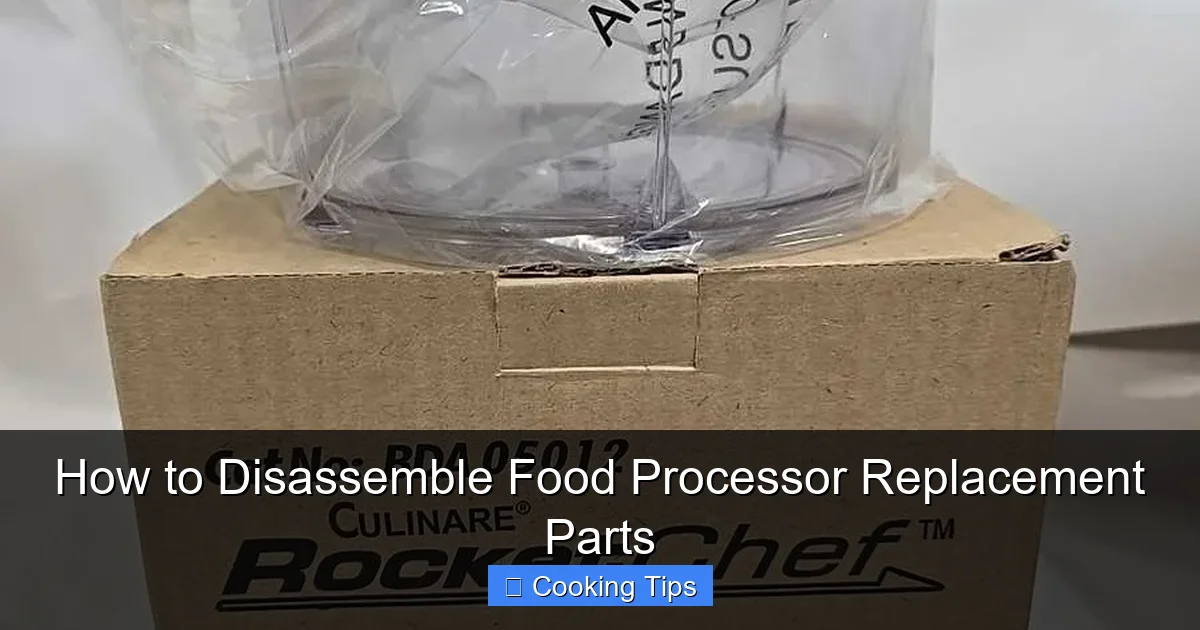
This guide provides a detailed walkthrough on how to safely disassemble food processor replacement parts for cleaning, troubleshooting, or repair. By following these simple steps, you can extend the life of your appliance and ensure optimal performance. Understand the basics, gather your tools, and proceed with care to successfully take apart and reassemble your food processor parts.
Key Takeaways
- Understand Your Model: Always consult your food processor’s manual for specific disassembly instructions relevant to your model, as designs can vary significantly.
- Safety First: Ensure the food processor is unplugged and all blades are removed before attempting any disassembly to prevent injury.
- Gather Essential Tools: Have a clean workspace and a few basic tools like screwdrivers (Phillips and flathead), pliers, and a soft cloth readily available.
- Gentle Approach: Most food processor parts are designed for easy removal. Avoid forcing components; look for release tabs, twist-locks, or simple pull-off mechanisms.
- Organize Parts: Keep disassembled parts organized, perhaps in labeled containers or on a clean towel, to simplify reassembly.
- Clean as You Go: This is an excellent opportunity to thoroughly clean all parts before reassembling them.
- Reassembly is Key: Follow the disassembly steps in reverse, ensuring all parts click securely into place for proper functioning.
How to Disassemble Food Processor Replacement Parts
Welcome to our comprehensive guide on disassembling your food processor’s replacement parts! In today’s fast-paced kitchens, a reliable food processor is a culinary workhorse. But like any appliance, parts can wear out, break, or simply need a good deep clean. Knowing how to safely and effectively take apart your food processor replacement parts is a valuable skill. It can help you troubleshoot issues, perform minor repairs, or ensure your accessories are sparkling clean.
This guide, tailored for 2026, will walk you through the entire process. We’ll cover everything from preparing your workspace to safely removing and reassembling components. Whether you’re dealing with a jammed lid, a dull blade, or just want to give your processor a thorough spa treatment, you’ve come to the right place. Let’s get started!
Step 1: Preparation is Crucial
Before you dive into taking things apart, a little preparation goes a long way. This ensures safety and makes the entire process much smoother.
Unplug the Appliance
This is the absolute most important step. Always, without exception, make sure your food processor is unplugged from the electrical outlet. Never attempt to disassemble any part of a plugged-in appliance. This prevents accidental startups and severe injury.
Clear Your Workspace
Find a clean, well-lit, and stable surface to work on. A kitchen counter or a sturdy table is ideal. You’ll want enough space to lay out the parts as you remove them. Consider laying down a clean towel or a mat to protect your countertop and prevent smaller parts from rolling away.
Gather Your Tools
Most food processor disassembly requires very few tools. Typically, you’ll need:
- Screwdrivers: A small Phillips head and a flathead screwdriver are usually sufficient. Some models might use Torx screws, but this is less common for user-accessible parts.
- Pliers: Needle-nose pliers can be helpful for grasping small parts or gently prying.
- A Soft Cloth: For cleaning parts as you go.
- Optional: A Small Container or Tray: To keep screws and small pieces organized if you’re disassembling more than just the basic blade.
Consult Your Manual
While this guide offers general advice, every food processor model is slightly different. If you still have your appliance’s user manual, it’s an excellent resource. Look for sections on cleaning, maintenance, or troubleshooting. It will often have diagrams or specific instructions for your particular model.
Step 2: Disassembling the Bowl and Lid Assembly
The bowl and lid are the most frequently used and cleaned parts of a food processor. They are also the most common areas where replacement parts might be needed.
Removing the Bowl
Most food processor bowls are designed to simply twist and lift off the motor base. Look for arrows or markings indicating the direction to twist. Typically, you’ll twist the bowl counter-clockwise and then lift it straight up. Some models might have a locking mechanism that needs to be disengaged first.
Detaching the Lid
The lid usually sits on top of the bowl and may have a locking or sealing mechanism.
- Twist-Lock Lids: Similar to the bowl, many lids twist to lock into place. Find the release point or twist counter-clockwise until it unlocks, then lift it off.
- Latch Lids: Some lids have simple latches that you need to press or flip to release.
- Feed Tube Lids: If your lid has a removable feed tube, it usually slides or twists out of its designated opening.
Tip: If the lid seems stuck, check for any remaining food particles or debris that might be preventing it from releasing smoothly. A gentle wiggle might help.
Step 3: Removing the Blade Assembly
The blade assembly is the heart of the food processor. It’s crucial to handle this part with extreme care, as the blades are very sharp.
Understanding Blade Mounting
Blade assemblies are usually mounted on a central shaft that protrudes from the bottom of the bowl or is integrated with the lid. The method of removal depends on the design.
For Blades That Sit Inside the Bowl
If your blades sit loosely inside the bowl, you simply need to carefully lift them out.
- Grip by the Hub: Always hold the blade assembly by the central hub, which is typically made of plastic. Avoid touching the sharp metal edges at all costs.
- Lift Straight Up: Gently lift the entire blade assembly straight up and out of the bowl.
For Blades Attached to a Shaft or Lid
Some food processors have blades that are permanently attached to a spindle that goes into the motor base or a part of the lid. In these cases, the entire unit is removed.
- Twist and Lift: Often, the entire blade assembly will twist off the central post within the bowl. Turn it counter-clockwise and lift.
- Handle with Extreme Caution: If the blades are exposed, even when detached, treat them with the utmost care. Consider wearing protective gloves if you have them.
Important Note: Never try to force the blade assembly. If it feels stuck, re-examine the bowl and lid for any locking tabs or mechanisms you might have missed.
Step 4: Disassembling Other Replacement Parts
Depending on your food processor model and what needs replacing, you might encounter other parts.
The Pusher and Feed Tube
The food pusher usually slides into the feed tube. To remove it, simply slide it out. The feed tube itself is often integrated into the lid and may not be removable as a separate part unless it’s broken. If it is a separate piece, it might twist or snap into place.
The S-Blade Hub (if separate)
Some older or specialized food processors might have an S-blade that detaches from its central hub. If this is the case, look for small clips or a screw mechanism holding the blades to the hub. This is less common in modern designs.
Disc Attachments (Slicing/Shredding Discs)
These are typically straightforward. They are usually placed on top of the blade assembly or directly onto the motor shaft. You can usually just lift them straight off. Ensure they are dry and clean to prevent rust or damage.
Motor Base Components (Advanced)
Disassembling the motor base itself is generally not recommended for the average user and can void your warranty. This is usually reserved for professional repair services. However, if you’re trying to clean around the base or access a specific user-serviceable part (like a control panel that has come loose), you might encounter screws on the underside of the unit.
- Identify Screws: Look for any visible screws, often recessed.
- Use Appropriate Screwdriver: Select the correct screwdriver to avoid stripping the screw heads.
- Keep Track of Screws: If you remove screws, place them in your labeled container. Some screws might be different lengths.
- Gently Pry: The housing might be held together with clips as well as screws. Use a plastic pry tool or a flathead screwdriver very gently to release these clips. Work your way around the seam.
Caution: Be extremely careful not to damage any internal wiring or components. If you are unsure, stop and seek professional advice.
Step 5: Cleaning While Disassembled
This is the perfect opportunity to give your food processor parts a thorough cleaning.
Wash Removable Parts
Most bowls, lids, pushers, and blade assemblies (if made of stainless steel and plastic) can be washed in warm, soapy water. Some are also top-rack dishwasher safe, but always check your manual to be sure. Harsh dishwasher detergents can dull blades over time.
Deep Clean Blades
For blades, use a soft brush or sponge to clean around the sharp edges. Be very careful not to cut yourself. Rinse thoroughly and dry completely to prevent rust.
Wipe Down the Motor Base
Use a damp cloth to wipe down the exterior of the motor base. Never immerse the motor base in water or put it in the dishwasher. Pay attention to any nooks and crannies where food might have accumulated.
Step 6: Reassembly
Reassembly is simply the reverse of disassembly. Take your time and ensure everything is correctly aligned and secured.
Bowl and Lid Reattachment
Place the bowl back onto the motor base, aligning any markers or tabs. Twist it clockwise until it locks securely into place. Then, reattach the lid, ensuring it also locks or latches properly. You should hear or feel a click when it’s secure.
Blade Assembly Reinsertion
Carefully place the blade assembly back into the bowl, ensuring it sits correctly on its post or shaft. If it twists on, twist it clockwise until it’s snug. For loose blades, simply ensure they are seated properly.
Reinstall Other Parts
Slide the pusher back into the feed tube. Reattach any disc attachments or other components in the order they were removed.
Test for Functionality
Once everything is reassembled, plug the food processor back into the outlet. Test it briefly by turning it on without any food inside to ensure all parts are working correctly and that there are no unusual noises or vibrations.
Troubleshooting Common Issues During Disassembly/Reassembly
Sometimes, things don’t go as smoothly as planned. Here are a few common issues and how to address them:
Part Won’t Come Off
Problem: A lid or bowl is stuck and won’t twist or release.
Solution: Double-check for any hidden release tabs or latches. Ensure there are no food particles wedged in the seams. Sometimes, a gentle, even pressure in the intended direction of removal can help. Avoid using excessive force, which can break plastic parts.
Screws Won’t Go Back In
Problem: Screws don’t seem to catch or thread properly during reassembly.
Solution: Ensure you are using the correct screw for the correct hole; lengths and thread types can vary. Also, make sure the parts you are screwing together are perfectly aligned. Do not overtighten screws, as this can strip the threads.
Unusual Noises After Reassembly
Problem: The food processor makes strange grinding or rattling noises when turned on.
Solution: This usually indicates that a part is not correctly seated or secured. The blade assembly is the most common culprit. Unplug the unit, and re-check that the blade is properly aligned and locked in place. Ensure the bowl and lid are also fully secured.
Conclusion
Disassembling your food processor replacement parts might seem daunting at first, but with this step-by-step guide, it’s a manageable task. By prioritizing safety, preparing your workspace, and proceeding with a methodical approach, you can confidently tackle the disassembly and reassembly of your food processor components. This skill not only helps in maintaining your appliance but also empowers you to perform simple repairs and thorough cleaning, ensuring your food processor continues to be a reliable kitchen companion for years to come. Happy processing!
