

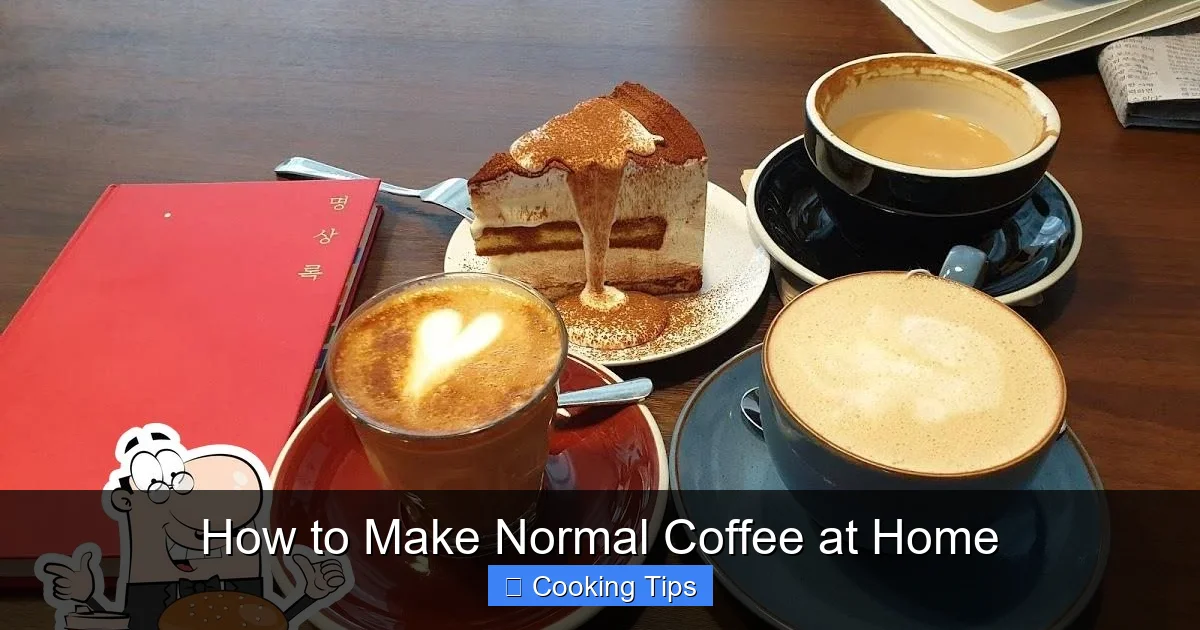
Discover how to make a satisfying cup of normal coffee right in your kitchen. This guide breaks down the process, from choosing the best beans to the simple steps for brewing a perfect cup. You’ll learn about different brewing methods and get practical tips to elevate your daily coffee ritual, ensuring you can enjoy consistently delicious coffee at home.
Making a delicious cup of normal coffee at home might seem simple, but there’s a wonderful world of flavor to unlock with a few key techniques. Forget those instant packets or complicated barista machines for now. This guide is all about mastering the art of making that perfect, everyday cup of coffee that’s satisfying and comforting, without any fuss. We’ll walk you through everything you need to know, from selecting the right coffee beans to the actual brewing process. By the end of this, you’ll be well on your way to enjoying café-quality coffee in your own kitchen.
Think of your morning coffee as a ritual, a moment of calm before the day begins. With a little knowledge and practice, you can elevate this daily habit into something truly special. We’re going to cover the essential components of a great cup of coffee: the beans, the grind, the water, and the brewing method. Each plays a vital role in the final taste.
## Understanding the Basics of Good Coffee
Before we dive into the step-by-step process, let’s touch on what makes a coffee taste good. It’s a combination of freshness, proper extraction, and balance.
* Freshness: Coffee beans are at their best shortly after roasting. As time passes, they lose their aromatic compounds and flavor.
* Grind: The size of your coffee grounds affects how quickly water extracts flavor. Too fine, and it can over-extract and become bitter. Too coarse, and it can under-extract and taste weak.
* Water Temperature: The ideal temperature for brewing coffee is between 195°F and 205°F (90°C to 96°C). Water that’s too cool won’t extract enough flavor, while water that’s too hot can scorch the grounds and make the coffee taste bitter.
* Coffee-to-Water Ratio: This is crucial for achieving the right strength and flavor balance.
## Step 1: Choosing Your Coffee Beans
This is where the magic begins! The quality of your coffee beans is the single most important factor in the final taste of your brew.
### Selecting Whole Beans vs. Pre-Ground Coffee
Ideally, you’ll want to buy **whole coffee beans**. Why? Because coffee starts to lose its flavor and aroma very quickly once it’s ground. Grinding beans right before you brew preserves those precious volatile compounds.
Pre-ground coffee is convenient, but it’s often stale by the time you get it. If you absolutely must use pre-ground coffee, try to buy it in smaller bags and use it up quickly.
### Types of Coffee Beans
* Arabica: This is the most popular type of coffee bean, making up about 60% of the world’s coffee production. Arabica beans are known for their smooth, aromatic, and complex flavors. They often have notes of fruit, flowers, and caramel.
* Robusta: Robusta beans are known for their stronger, bolder, and more bitter flavor, often described as rubbery or chocolatey. They also contain more caffeine than Arabica beans. Robusta is often used in espresso blends to create a richer crema and a stronger kick.
### Roasting Levels
Coffee beans are roasted to different levels, which greatly impacts their flavor:
* Light Roast: These beans are roasted for a shorter time and at a lower temperature. They retain more of their original flavor characteristics, with bright acidity and fruity or floral notes. They typically have a higher caffeine content.
* Medium Roast: These beans have a balanced flavor, aroma, and acidity. They are roasted longer than light roasts, resulting in a smoother, richer taste, often with notes of caramel, nuts, and chocolate. This is a popular choice for many.
* Dark Roast: These beans are roasted for the longest time and at the highest temperatures. They develop a bold, smoky, and sometimes bittersweet flavor. The origin flavors of the bean are often masked by the roasting process. They have less caffeine than light roasts because caffeine is reduced by heat.
**Tip:** If you’re unsure where to start, a medium roast Arabica bean is a safe and delicious bet for most “normal” coffee drinkers.
### Where to Buy Coffee Beans
* Local Roasters: Supporting local businesses is great, and they often have the freshest beans and can offer expert advice.
* Specialty Coffee Shops: Many coffee shops sell their beans, and their staff can guide you.
* Online Retailers: There are many reputable online stores specializing in high-quality coffee beans. Look for options that specify the roast date.
## Step 2: Grinding Your Coffee Beans
As mentioned, grinding your beans just before brewing is key to maximum flavor. The type of grinder you use and the grind size are critical.
### Types of Coffee Grinders
* Blade Grinder: These are the most common and affordable type. They work like a blender, with spinning blades that chop the beans. However, they produce an inconsistent grind size, with some particles being too fine and others too coarse, which can lead to uneven extraction.
* Burr Grinder: These grinders use two abrasive surfaces (burrs) that crush the beans into consistent-sized particles. There are two main types:
* Conical Burr Grinders: These have a cone-shaped inner burr and a ring-shaped outer burr. They are generally quieter and produce less heat, which is better for preserving flavor.
* Flat Burr Grinders: These have two flat, parallel burrs. They can be faster but might produce more heat.
Burr grinders are an investment, but the difference in coffee quality is noticeable. If you’re serious about making good coffee at home, consider a burr grinder.
If you’re wondering if you can use your kitchen appliances for more than just their intended purpose, you might be curious: Can You Use a Food Processor to Grind Coffee Beans?
### Determining the Right Grind Size
The ideal grind size depends on your brewing method:
* Extra Coarse: Like peppercorns. Used for cold brew.
* Coarse: Like sea salt. Ideal for French presses and percolators.
* Medium-Coarse: Like rough sand. Good for Chemex and some drip coffee makers.
* Medium: Like regular sand. Suitable for most automatic drip coffee makers and cone pour-overs.
* Medium-Fine: Slightly smoother than sand. For cone pour-overs and Aeropress (with shorter brew times).
* Fine: Like table salt. For espresso machines and Moka pots.
* Extra Fine: Like powdered sugar. For Turkish coffee.
For “normal” coffee brewed in a standard drip machine, a **medium grind** is usually the best starting point.
**Grinding Tip:** If you’re using a blade grinder, pulse it in short bursts and shake the grinder in between to help achieve a more uniform grind.
## Step 3: Water Quality and Temperature
You might be surprised how much your water affects your coffee. Coffee is over 98% water, so good water equals good coffee.
### Water Quality
* Use Filtered Water: Tap water often contains minerals and chlorine that can negatively impact the taste of your coffee. Using filtered water (like from a Brita pitcher or a tap filter) will result in a cleaner, purer flavor.
* Avoid Distilled Water: Distilled or purified water lacks the minerals that are essential for extracting flavor.
### Water Temperature
The ideal brewing temperature is between **195°F and 205°F (90°C to 96°C)**.
* Boiling Water is Too Hot: Water that is at a full boil (212°F or 100°C) is too hot and can scald the coffee grounds, leading to a bitter taste.
* How to Achieve the Right Temperature:
* Electric Kettle with Temperature Control: This is the easiest way. Set it to your desired temperature.
* Standard Kettle: Bring water to a boil, then let it sit for about 30-60 seconds off the heat before pouring. This usually brings it down to the optimal range.
* Thermometer: Use a kitchen thermometer to check the temperature if you’re unsure.
Understanding how to control heat is essential in cooking and brewing. For more on this, you might find our articles on How To Cook At Right Temperature and How To Control Heat While Cooking helpful.
## Step 4: Brewing Your Coffee
Now for the fun part! There are many ways to brew coffee, but we’ll focus on some of the most common and accessible methods for “normal” home coffee.
### Method 1: Automatic Drip Coffee Maker
This is the go-to for many households due to its simplicity and convenience.
#### What You’ll Need:
* Automatic drip coffee maker
* Coffee filter (paper or reusable)
* Freshly ground coffee (medium grind)
* Filtered water
#### Instructions:
1. Prepare the Coffee Maker: Make sure your coffee maker is clean. If using a paper filter, place it in the brew basket. Some people like to rinse paper filters with hot water before adding coffee to remove any papery taste and preheat the basket.
2. Add Coffee Grounds: Measure your coffee grounds. A good starting point is a **1:15 to 1:18 ratio** of coffee to water. For example, for 10 cups of water (about 50 oz or 1500 ml), you might use around 80-90 grams of coffee (about 8-10 tablespoons). Adjust this to your personal preference. If you’re using tablespoons, aim for 1-2 tablespoons of coffee per 6 ounces of water.
3. Add Water: Pour the correct amount of fresh, filtered water into the reservoir. Use the markings on your coffee maker or a measuring jug.
4. Start Brewing: Turn on your coffee maker and let it do its thing!
5. Serve: Once brewing is complete, give the coffee a gentle stir in the carafe to ensure even flavor distribution. Pour and enjoy immediately. Don’t let it sit on the warming plate for too long, as this can make the coffee taste burnt or stale.
### Method 2: French Press
The French press offers a richer, more full-bodied cup of coffee because the metal filter allows more of the coffee’s natural oils to pass through.
#### What You’ll Need:
* French press brewer
* Freshly ground coffee (coarse grind)
* Filtered water (heated to 195-205°F)
#### Instructions:
1. Preheat the French Press: Pour some hot water into the French press, swirl it around, and then discard it. This helps maintain the brewing temperature.
2. Add Coffee Grounds: Add your coarse-ground coffee to the bottom of the French press. Use the same ratio as above (1:15 to 1:18 is a good starting point).
3. Add Water: Pour about half of your hot water over the grounds, ensuring they are all saturated. Let it bloom for 30 seconds. This allows gases to escape, which can improve flavor.
4. Add Remaining Water: Pour the rest of the hot water into the press.
5. Steep: Place the lid on top, but don’t press the plunger down yet. Let the coffee steep for about 4 minutes.
6. Plunge: Slowly and steadily press the plunger all the way down.
7. Serve: Pour the coffee into your mug immediately to prevent over-extraction, which can happen if the coffee remains in contact with the grounds.
### Method 3: Pour-Over
Pour-over methods, like a Hario V60 or Kalita Wave, offer more control over the brewing process and can produce a very clean, nuanced cup.
#### What You’ll Need:
* Pour-over dripper (e.g., V60, Kalita)
* Paper filter (specific to your dripper)
* Kettle (gooseneck kettle is ideal for control)
* Freshly ground coffee (medium-fine to medium grind)
* Filtered water (heated to 195-205°F)
#### Instructions:
1. Prepare the Dripper: Place the paper filter in the dripper. Rinse the filter with hot water to remove any papery taste and to preheat the dripper and your mug or carafe. Discard the rinse water.
2. Add Coffee Grounds: Add your ground coffee to the filter. Gently shake to level the bed of grounds.
3. Bloom: Pour just enough hot water over the grounds to saturate them evenly, starting from the center and spiraling outwards. Wait about 30 seconds for the coffee to “bloom.” You’ll see it expand and bubble.
4. Continue Pouring: Slowly and steadily pour the remaining water in controlled, circular motions. Try to avoid pouring directly down the sides of the filter. Aim to complete your pour within 2.5 to 3.5 minutes, depending on the amount of coffee.
5. Let it Drip: Allow all the water to drip through the grounds.
6. Serve: Remove the dripper and serve your fresh pour-over coffee.
## Step 5: Customizing Your Coffee
Once you have your perfect brew, you can customize it to your liking.
### Additions:
* Milk/Creamer: Whole milk, half-and-half, heavy cream, or plant-based alternatives (oat milk, almond milk, soy milk) are common.
* Sweeteners: Sugar, honey, maple syrup, or artificial sweeteners.
* Spices: A pinch of cinnamon, nutmeg, or cardamom can add a lovely warmth.
**Tip:** If you’re adding milk and sugar, it’s often best to add them after the coffee has brewed. This allows you to taste the coffee’s natural flavor first and adjust accordingly.
## Troubleshooting Common Coffee Problems
Even with the best intentions, you might encounter a less-than-perfect cup. Here are a few common issues and how to fix them:
### Coffee Tastes Bitter
* Cause: Over-extraction, water too hot, grind too fine, or dirty equipment.
* Solution:
* Use a coarser grind.
* Ensure your water isn’t boiling hot. Let it cool slightly.
* Reduce brewing time.
* Clean your coffee maker thoroughly. Make sure there are no old coffee grounds or residue. If you have a coffee maker that’s not turning on, check out this guide on How To Fix A Coffee Maker That Will Not Turn On.
### Coffee Tastes Weak or Sour
* Cause: Under-extraction, water too cool, grind too coarse, or not enough coffee grounds.
* Solution:
* Use a finer grind.
* Ensure your water is at the correct temperature (195-205°F).
* Use more coffee grounds. Experiment with your coffee-to-water ratio.
* For drip machines, make sure you’re using the correct filter type and it’s not clogging.
### Coffee Tastes Stale or Burnt
* Cause: Coffee beans are old, or coffee has been sitting on a hot plate for too long.
* Solution:
* Buy fresh beans and grind them just before brewing.
* If using a drip coffee maker, drink the coffee immediately after brewing or transfer it to a thermal carafe. Avoid the warming plate if possible.
## Conclusion
Making normal coffee at home is a rewarding experience that doesn’t require complex equipment or specialized skills. By focusing on fresh, quality beans, the right grind, proper water temperature, and a brewing method you enjoy, you can consistently brew a delicious cup. Don’t be afraid to experiment with different beans, roasts, and ratios to find what you love best. Enjoy your daily ritual, and savor the simple pleasure of a perfectly brewed cup of coffee, made by you!
Key Takeaways
- Start with Quality Beans: The foundation of great coffee is fresh, high-quality beans. Opt for whole beans and grind them just before brewing for the best flavor.
- Master Your Grind Size: The fineness of your coffee grounds significantly impacts extraction. Coarser grinds are for French presses, while finer grinds suit espresso machines.
- Water Matters: Use fresh, filtered water heated to the optimal temperature (195-205°F or 90-96°C) for proper coffee extraction.
- Choose Your Brew Method: Simple methods like drip coffee makers, French presses, and pour-overs are accessible for home brewing and yield delicious results.
- Proper Ratios are Key: A good starting point for the coffee-to-water ratio is 1:15 to 1:18 (e.g., 1 gram of coffee to 15-18 grams of water).
- Clean Your Equipment: Regular cleaning of your coffee maker and accessories is crucial to prevent bitter tastes and ensure optimal performance.
