

Unlock the secret to consistently perfect rice with this comprehensive guide! Learn the ideal rice-to-water ratios, proper rinsing techniques, and the importance of resting. From fluffy white rice to perfectly cooked brown rice, you’ll gain the confidence to achieve delicious results every single time.
# How Do You Cook Perfect Rice Everytime
Rice is a staple food for billions worldwide, a versatile and comforting base for countless dishes. Yet, achieving that perfect, fluffy texture can sometimes feel like a culinary mystery. Are you tired of encountering sticky clumps, burnt bottoms, or mushy grains? Worry no more! This comprehensive guide will demystify the process of cooking perfect rice every time. We’ll walk you through the essential steps, from selecting the right type of rice to the final resting period, ensuring your rice is always light, fluffy, and delicious.
Whether you’re a beginner in the kitchen or a seasoned cook looking to refine your technique, understanding the fundamentals of rice cooking is invaluable. This guide will equip you with the knowledge to conquer any rice dish, making meal preparation a breeze. Get ready to transform your rice from a potential pitfall into a culinary triumph!
## Understanding Your Rice
Before we dive into the cooking process, it’s important to understand that not all rice is created equal. Different types of rice require slightly different approaches.
### Common Rice Varieties and Their Characteristics
* **Long-grain rice (e.g., Basmati, Jasmine):** These varieties have a higher amylose content, meaning the grains tend to stay separate and fluffy after cooking. They are ideal for pilafs, stir-fries, and as a side dish.
* **Medium-grain rice (e.g., Arborio, Calrose):** With a lower amylose content, medium-grain rice releases more starch, making it slightly stickier. It’s perfect for risottos, paella, and sushi.
* **Short-grain rice (e.g., Sushi rice, Glutinous rice):** These grains are starchy and sticky when cooked, ideal for sushi, rice puddings, and other dishes where clumpiness is desired.
* **Brown rice:** This is whole-grain rice, meaning it retains its bran and germ. It’s more nutritious but takes longer to cook and requires more water than white rice. Its texture is chewier and nuttier.
* **Wild rice:** Technically a grass seed, wild rice has a distinct chewy texture and nutty flavor. It often requires a longer cooking time and a higher water ratio.
For this guide, we’ll focus primarily on white long-grain rice, as it’s the most common and a great starting point. However, the principles can be adapted for other varieties.
## The Essential Ingredients and Tools
You don’t need much to cook perfect rice, but having the right tools can make a significant difference.
### What You’ll Need
* **Rice:** Your chosen variety.
* **Water or Broth:** Water is standard, but broth can add extra flavor.
* **Salt (optional):** Enhances the flavor of the rice.
* **A Pot with a Tight-Fitting Lid:** A heavy-bottomed saucepan is ideal for even heat distribution. A dedicated rice cooker is also a fantastic option.
* **A Measuring Cup:** For precise rice and water measurements.
* **A Fine-Mesh Sieve or Colander:** For rinsing the rice.
* **A Fork or Rice Paddle:** For fluffing.
## Step-by-Step Guide to Cooking Perfect Rice
Follow these steps diligently, and you’ll be well on your way to rice perfection.
### Step 1: Measure Your Rice Accurately
Precision is key here. Use a standard measuring cup for the most accurate results. The amount of rice you cook will depend on how many people you’re serving. A general guideline is about 1/4 cup of uncooked rice per person.
### Step 2: Rinse Your Rice Thoroughly
This is arguably the most critical step for fluffy rice. Rinsing removes excess surface starch, which is responsible for the gummy, clumpy texture many people struggle with.
#### How to Rinse Rice:
1. **Place rice in a fine-mesh sieve or a bowl.**
2. **Run cold water over the rice** in the sieve.
3. **Swish the rice around** with your fingers.
4. **Continue rinsing and swishing** until the water runs mostly clear. This might take several rinses, especially for white rice. For brown rice, the water might not get completely clear, which is fine.
5. **Drain the rice well.**
This process is similar to how you might prepare ingredients for other dishes, ensuring a clean start.
### Step 3: Determine the Correct Rice-to-Water Ratio
This is where many recipes falter. The perfect ratio depends on the type of rice and your cooking method. Always check the package instructions first, as they are usually tailored to that specific rice.
#### General Ratios:
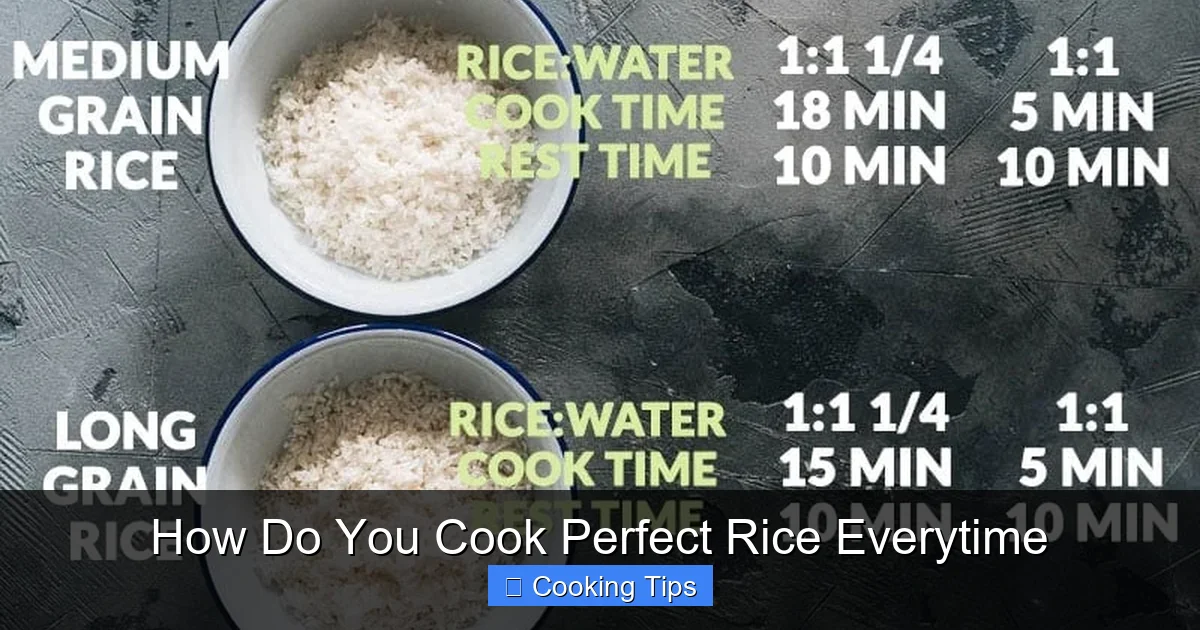
* **White Rice (long, medium, short grain):** Typically 1 cup rice to 1.5 cups water.
* **Brown Rice:** Typically 1 cup rice to 2 cups water.
* **Basmati/Jasmine Rice:** Often 1 cup rice to 1.25 – 1.5 cups water.
**Pro Tip:** If you’re using broth instead of water, you might want to reduce the added salt, as broth already contains salt.
### Step 4: Combine Rice, Liquid, and Salt in the Pot
* **Add the rinsed and drained rice to your saucepan.**
* **Pour in the measured water or broth.**
* **Add a pinch of salt** if desired. Stir gently to combine.
### Step 5: Bring to a Boil, Then Reduce Heat
* **Place the saucepan over medium-high heat.**
* **Bring the water to a rolling boil**, uncovered.
* **Once boiling, immediately reduce the heat to the lowest possible setting.** This is crucial. You want a very gentle simmer, just a few tiny bubbles breaking the surface occasionally. If your stove’s lowest setting is still too high, you might need to use a heat diffuser. Learning how to adjust heat while cooking rice is a valuable skill.
### Step 6: Cover and Simmer
* **Once the heat is reduced, immediately cover the pot tightly with a lid.** This traps the steam, which is essential for cooking the rice evenly.
* **Do NOT lift the lid** during the cooking process. Resist the urge! Lifting the lid releases precious steam and can disrupt the cooking cycle, leading to unevenly cooked rice.
#### Cooking Times:
* **White Rice:** Typically 15-20 minutes.
* **Brown Rice:** Typically 40-50 minutes.
**Important Note:** These are approximate times. The goal is for the liquid to be absorbed, not for the rice to be cooked by a timer.
### Step 7: Rest the Rice
This is another step often skipped, but it makes a world of difference. Once the cooking time is up and you suspect the liquid has been absorbed (you can gently lift a corner of the lid very briefly to check if there’s still visible water, but it’s best to trust the time initially), remove the pot from the heat.
* **Leave the lid on the pot.**
* **Let the rice rest for at least 5-10 minutes.**
This resting period allows the steam to redistribute evenly throughout the rice, finishing the cooking process and creating that perfect, fluffy texture. It’s like letting a steak rest after grilling.
### Step 8: Fluff the Rice
After resting, remove the lid. The rice should look fluffy and the grains should be distinct.
* **Use a fork or a rice paddle to gently fluff the rice.**
* **Start from the bottom and gently lift and separate the grains.** Avoid stirring vigorously, which can break the grains.
Your perfect rice is now ready to be served!
## Using a Rice Cooker
Rice cookers are designed specifically for this task and take much of the guesswork out of cooking rice. While models vary, the general process is similar:
1. **Measure and Rinse:** Measure your rice and rinse it thoroughly as described above.
2. **Add to Cooker:** Place the rinsed rice and the appropriate amount of water (or broth) into the rice cooker pot. Most rice cookers have water level lines specific to the amount of rice you’re cooking.
3. **Select Setting:** Close the lid and select the appropriate setting (e.g., “White Rice,” “Brown Rice”).
4. **Cook:** Turn on the cooker. It will automatically switch to “Keep Warm” when the rice is done.
5. **Rest (Optional but Recommended):** Even with a rice cooker, letting the rice rest for 5-10 minutes after it switches to “Keep Warm” can improve texture.
6. **Fluff:** Fluff with a fork or paddle before serving.
If you have a specific model, check out guides on how to use a Black and Decker rice cooker or similar appliances. For specific types, like how to make sticky rice in a rice cooker, the principles remain, but the water ratio might differ.
## Troubleshooting Common Rice Problems
Even with the best intentions, sometimes things don’t go perfectly. Here’s how to fix common rice woes:
### My Rice is Mushy or Gummy
* **Cause:** Too much water, not enough rinsing, or lifting the lid too often.
* **Fix:** If it’s slightly mushy, spread it on a baking sheet and let it air dry for a bit, or gently reheat it in a dry pan over low heat to evaporate excess moisture. For severely mushy rice, it’s best to repurpose it into something like rice pudding or congee.
### My Rice is Undercooked and Hard
* **Cause:** Not enough water, cooking time too short, or lid not sealed properly.
* **Fix:** Add a tablespoon or two of hot water to the pot, cover tightly, and simmer on very low heat for another 5-10 minutes. You may need to adjust heat settings if your stove has trouble maintaining very low temperatures, as discussed in how to control heat while cooking.
### My Rice is Burnt on the Bottom
* **Cause:** Heat is too high, or the pot doesn’t have good heat distribution.
* **Fix:** Carefully scrape off the good rice from the top, leaving the burnt portion. You can try to salvage it by adding a bit of fresh water to the burnt bottom and scraping gently while simmering on very low heat, but the burnt flavor might persist. Using a heavy-bottomed pot or a heat diffuser can prevent this. Learning how to cook without burning food is a general skill that applies here.
### My Rice is Dry and Sticking Together (but not mushy)
* **Cause:** Not enough water or not enough resting time.
* **Fix:** Similar to undercooked rice, add a tablespoon of hot water, cover, and let it steam for a few more minutes. Ensure you’re also following the resting period.
## Tips for Extra Flavor
While plain rice is a blank canvas, you can easily enhance its flavor:
* **Cook in Broth:** Replace water with chicken, vegetable, or beef broth.
* **Add Aromatics:** Add a bay leaf, a crushed garlic clove, or a few peppercorns to the water before cooking. Remove them before serving.
* **Toast the Rice:** Briefly sauté the rinsed and dried rice in a little oil or butter over medium heat until fragrant before adding liquid. This gives it a slightly nutty flavor.
* **Add Spices:** Consider adding turmeric for color, cumin for warmth, or saffron for a luxurious touch.
* **Finish with Butter or Oil:** A small knob of butter or a drizzle of olive oil stirred in after fluffing adds richness.
## Conclusion
Cooking perfect rice every time is an achievable goal. By understanding the importance of rinsing, using the correct rice-to-water ratio, mastering gentle simmering, and allowing for a crucial resting period, you can consistently produce fluffy, delicious rice. Whether you prefer the simplicity of a rice cooker or the hands-on approach with a saucepan, these techniques will serve you well. Don’t be discouraged by past failures; with practice and these tips, you’ll be making perfect rice a staple in your culinary repertoire. Enjoy your perfectly cooked grains!
Key Takeaways
- Master the Rice-to-Water Ratio: The exact ratio is crucial for the desired texture; typically 1:1.5 for white rice and 1:2 for brown rice, but always check package directions.
- Rinsing is Key: Rinsing rice removes excess starch, preventing a gummy texture and ensuring fluffy, separated grains.
- Proper Cooking Technique: Bring to a boil, then reduce to a gentle simmer, cover tightly, and avoid lifting the lid during cooking.
- The Power of Resting: Letting the rice rest off the heat after cooking allows steam to redistribute, finishing the cooking process for optimal texture.
- Choose the Right Pot: A heavy-bottomed pot or a dedicated rice cooker provides even heat distribution, preventing scorching and promoting consistent cooking.
- Troubleshooting Common Issues: Learn how to fix undercooked, overcooked, or mushy rice with simple adjustments.
