

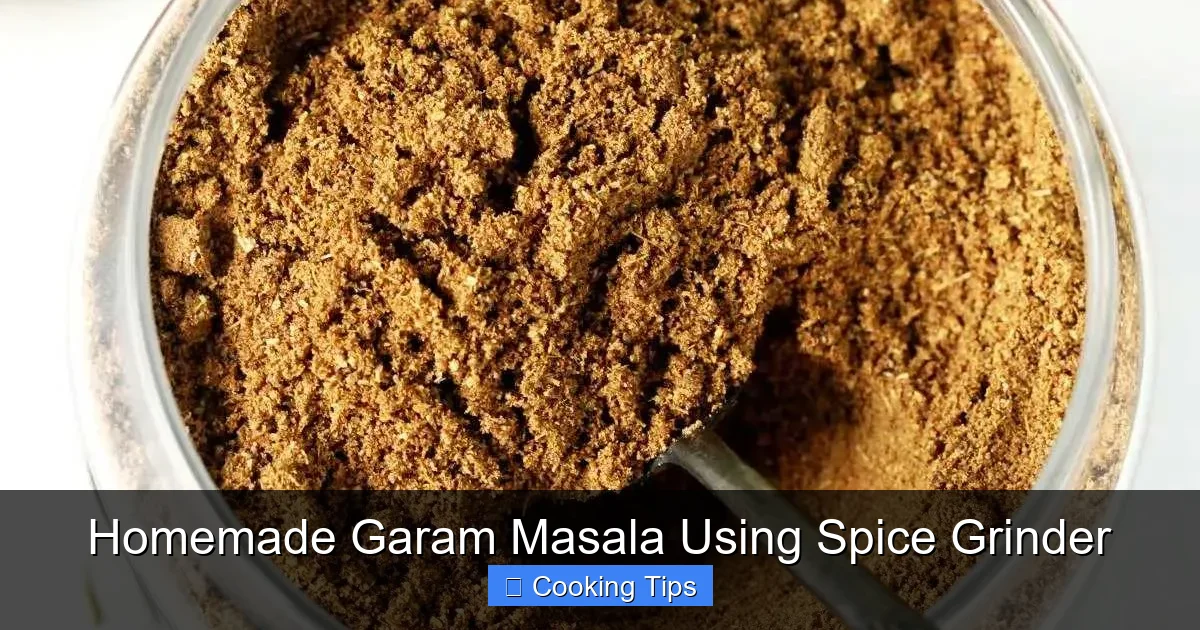
Transform your cooking with homemade garam masala, a staple in many cuisines. This guide provides a simple, step-by-step method for creating a fresh, aromatic blend using your spice grinder. You’ll learn the best spices to use and how to achieve the perfect consistency for maximum flavor and aroma.
# Homemade Garam Masala Using Spice Grinder
Are you ready to elevate your cooking to a whole new level? Tired of store-bought spice blends that lack that authentic punch? Then this guide is for you! We’re going to dive into the wonderful world of homemade garam masala, a quintessential spice blend used across India and beyond. Making your own garam masala is surprisingly simple, especially when you have a spice grinder. You’ll discover how to select the best spices, unlock their full flavor potential through toasting, and grind them to perfection for an aromatic masterpiece. Get ready to impress yourself and your loved ones with the vibrant taste of your very own homemade garam masala!
## What is Garam Masala?
Before we start grinding, let’s understand what garam masala is. The name itself translates from Hindi to “hot spice.” However, “hot” here refers to the warming quality of the spices, not necessarily their spiciness. Garam masala is typically a blend of ground spices used to add warmth, depth, and aroma to dishes. It’s not usually added during the initial cooking stages but rather towards the end of the cooking process or as a finishing spice to preserve its delicate flavors and aromas.
Different regions and families have their own unique garam masala recipes. Some are mild and aromatic, while others pack a bit more heat. This flexibility is one of the beautiful aspects of making it yourself. You can tailor it to your liking!
## Why Make Your Own Garam Masala?
You might be wondering, why go through the trouble when you can easily buy garam masala at the store? The answer is simple: **freshness and flavor**.
* **Superior Aroma:** Whole spices, when freshly ground, release an incredible aroma that simply cannot be matched by pre-ground spices. The essential oils that give spices their flavor and scent start to dissipate once they are ground.
* **Customization:** You control the ingredients and their proportions. Want more cardamom? Less clove? You can create a blend that perfectly suits your palate and your cooking style.
* **Cost-Effective:** Buying whole spices and grinding them yourself can often be more economical in the long run, especially if you use a lot of garam masala.
* **No Fillers or Additives:** You know exactly what’s going into your blend – pure, unadulterated spices.
## Essential Spices for Your Garam Masala
The beauty of garam masala lies in its customizable nature. However, most traditional blends share a core set of aromatic spices. Here are the most common ones, along with their roles:
* **Coriander Seeds:** This is often the base of the blend, providing a citrusy, slightly sweet, and earthy flavor. It also helps to mellow out the stronger spices.
* **Cumin Seeds:** Adds a warm, earthy, and slightly pungent flavor. It’s another foundational spice in many blends.
* **Green Cardamom Pods:** Offers a sweet, floral, and slightly menthol-like aroma. The pods contain tiny black seeds that are intensely flavored.
* **Black Peppercorns:** Provides a pungent heat and a touch of spice that balances the sweetness of other ingredients.
* **Cloves:** Very potent with a sweet, pungent, and slightly bitter flavor. Use them sparingly as they can easily overpower other spices.
* **Cinnamon Sticks:** Adds warmth, sweetness, and a woody aroma. You can use cassia cinnamon, which is more common and less expensive, or Ceylon cinnamon for a more delicate flavor.
* **Bay Leaves:** Contributes a subtle herbal and slightly bitter note that adds complexity.
* **Nutmeg:** A warm, sweet, and slightly nutty spice. A little goes a long way.
* **Mace:** The outer covering of the nutmeg seed, it has a similar but more delicate and peppery flavor.
* **Star Anise:** Adds a distinct licorice-like flavor and aroma.
**Optional additions** for a more complex blend include:
* **Fennel Seeds:** For a mild anise flavor and sweetness.
* **Mustard Seeds:** For a pungent kick.
* **Dried Ginger:** For warmth and a slightly spicy bite.
* **Chili Peppers (dried):** For added heat.
## Equipment You’ll Need
You don’t need much to get started, but a few key items will make the process smooth and efficient.
* **Spice Grinder:** This is your most important tool. A dedicated coffee grinder that you use only for spices is ideal. Alternatively, a small food processor or a mortar and pestle can work, though a grinder will give you the finest, most consistent powder. If your grinder isn’t working, don’t worry, there are simple ways to address it. Check out how to fix a kitchen grinder that is not turning on.
* **Non-stick Skillet or Baking Sheet:** For toasting the whole spices.
* **Airtight Container:** For storing your finished garam masala. Glass jars are excellent.
* **Measuring Spoons/Cups:** For accurate measurements of your spices.
* **Spatula or Spoon:** For stirring the spices during toasting.
## Step-by-Step Guide to Homemade Garam Masala
Let’s get started on creating your own fragrant garam masala! This recipe uses a balanced ratio of common spices, but remember, you can always adjust it.
### Step 1: Select and Measure Your Whole Spices
This is where the magic begins. Using whole spices is crucial for the best flavor. Pre-ground spices have already lost much of their aromatic oils.
**Basic Garam Masala Blend Ratio (adjust to your preference):**
* 2 tablespoons Coriander Seeds
* 1 tablespoon Cumin Seeds
* 1 teaspoon Green Cardamom Pods (about 8-10 pods)
* 1 teaspoon Black Peppercorns
* ½ teaspoon Cloves
* 1 (2-inch) Cinnamon Stick, broken into pieces
* 1 Bay Leaf, torn into smaller pieces
* A small pinch of whole Nutmeg (about ¼ teaspoon when grated) or Mace
**Why these quantities?** Coriander and cumin form the base. Cardamom, cloves, and cinnamon provide the signature warmth and aroma. Black pepper adds a gentle heat. Nutmeg and bay leaf add subtle complexity.
**Tip:** If you’re new to making garam masala, start with this basic recipe. As you become more comfortable, you can experiment with adding other spices like fennel, star anise, or dried ginger.
### Step 2: Toast the Whole Spices
Toasting whole spices is a critical step that unlocks their essential oils, intensifying their flavor and aroma. This process makes your garam masala significantly more potent and delicious.
#### Preheating the Pan
* Place a dry, non-stick skillet over medium-low heat. You want a gentle heat. Too high and you’ll burn the spices, turning them bitter.
#### Toasting Process
* Add the measured whole spices to the dry, preheated skillet.
* **Stir continuously.** This is very important to ensure even toasting and prevent burning. Use a wooden spoon or spatula.
* You’ll start to notice the spices becoming fragrant. They may pop slightly. This usually takes about 3-5 minutes. Be attentive; you don’t want to overdo it.
* **Listen and Smell:** The aroma will become noticeably stronger and more complex. The spices might also deepen slightly in color.
* **For the Bay Leaf and Cinnamon:** These tend to take a little longer to toast. Add them a minute or two after the smaller seeds and peppercorns, or break them into smaller pieces for more even toasting.
#### Cooling the Spices
* Once toasted and fragrant, immediately remove the spices from the skillet and spread them out on a plate or a clean baking sheet.
* Let them cool completely. This is essential before grinding. Grinding warm spices can lead to a paste-like consistency and can also damage your spice grinder.
### Step 3: Grind the Spices
Now for the main event – turning those fragrant, toasted spices into a fine powder.
#### Prepare Your Spice Grinder
* Ensure your spice grinder is clean and completely dry. Any moisture can cause the ground spices to clump. If you’re concerned about residual flavors from coffee or other items, this is where a dedicated spice grinder shines. If you’re using a general-purpose grinder, ensure it’s thoroughly cleaned as per its instructions. If you’ve recently used your grinder for something else, remember not to avoid using the blender with wet hands to prevent shock, as this is a key safety tip.
#### Grinding in Batches
* **Do not overload your grinder.** Overcrowding will lead to uneven grinding and can strain the motor. Work in small batches.
* Add a portion of the cooled, toasted spices to the grinder.
* Secure the lid tightly.
* Pulse the grinder in short bursts, shaking the grinder gently between pulses if needed.
* Grind until you achieve a fine, uniform powder. The consistency is up to you, but for garam masala, a fine powder is generally preferred for easy incorporation into dishes.
* Carefully tap the grinder to dislodge any clinging powder.
#### Combining and Re-Grinding (Optional)
* Empty the ground spices into a clean bowl.
* Repeat the grinding process with the remaining spices.
* Once all spices are ground, you can combine them in the grinder for a final quick pulse to ensure everything is thoroughly mixed. This also helps to break down any slightly larger particles.
**Tip:** If you’re using a mortar and pestle, this will take significantly more time and effort but can yield a wonderfully rustic garam masala. Grind in stages, starting with larger pieces and moving to smaller ones.
### Step 4: Store Your Homemade Garam Masala
Proper storage is crucial for maintaining the freshness and potency of your homemade garam masala.
* **Cool Completely:** Make sure the ground spices are completely cool before storing.
* **Airtight Container:** Transfer your garam masala to a clean, dry, and airtight container. Glass jars with tight-fitting lids are ideal as they don’t absorb odors and are easy to clean. Small mason jars or repurposed spice jars work well.
* **Cool, Dark Place:** Store the container in a cool, dark place, away from direct sunlight and heat sources like your stove. A pantry or a cabinet is perfect. Avoid storing it right above the stove, especially if you have a gas stove, as the heat and steam can degrade the spices. Familiarize yourself with mistakes using gas stove for cooking to better understand environmental factors affecting food storage.
* **Label and Date:** It’s a good practice to label your container with the name “Garam Masala” and the date you made it.
**How long does it last?** Homemade garam masala is best used within 6 months to a year for optimal flavor. After that, its potency will gradually diminish. If you notice a significant drop in aroma, it’s time to make a fresh batch.
## Tips for Success and Customization
* **Quality is Key:** Start with good quality whole spices. If your spices are old and have lost their aroma, your garam masala won’t be as vibrant.
* **Adjust the Heat:** If you prefer a spicier garam masala, increase the amount of black peppercorns or add a small dried chili pepper during the toasting and grinding process.
* **Experiment with Aromatics:** Don’t be afraid to add a few star anise pods, some fennel seeds, or even a touch of dried ginger for unique flavor profiles.
* **Grind Only What You Need:** If you don’t use a lot of garam masala, consider making smaller batches more frequently to ensure peak freshness.
* **The Power of Ratios:** While this recipe provides a good starting point, the true art of garam masala is in the ratios. Explore different Indian cuisines and notice how their garam masala blends might differ. For instance, some may use more cardamom for a sweeter, more floral note, while others might use more cumin for a deeper, earthier taste. Understanding spice layering tips can also help you appreciate how different spices interact.
* **Don’t Fear Imperfection:** Your first batch might not be absolutely perfect, but it will still be delicious. The more you make it, the better you’ll get at understanding your preferences and the nuances of the spices. This is a skill, much like knowing common spice errors to avoid.
## Troubleshooting
* **My Garam Masala is Bitter:** This usually happens if the spices were toasted for too long or at too high a heat, causing them to burn. Next time, use lower heat and toast for a shorter duration. Cloves can also be bitter if used in excess, so be mindful of their potency.
* **My Garam Masala is Not Aromatic Enough:** This could be due to old, stale whole spices, or insufficient toasting. Ensure your spices are fresh and toast them until they are noticeably fragrant.
* **My Garam Masala is Gritty:** If you didn’t grind the spices finely enough, or if your grinder isn’t powerful enough, you might end up with a coarser texture. Grind in smaller batches for longer, or consider a more powerful grinder if this is a recurring issue.
* **My Spice Grinder Smells Like Coffee:** This is why a dedicated spice grinder is recommended! If you can’t avoid this, try grinding a small amount of plain rice or a slice of stale bread in the grinder to absorb some of the residual odor before grinding your spices.
## Using Your Homemade Garam Masala
The possibilities are endless! Add it towards the end of cooking to dishes like:
* Curries (vegetable, chicken, lamb)
* Lentil dishes (dal)
* Rice dishes (biryani, pulao)
* Soups and stews
* Marinades for meats and vegetables
* As a finishing sprinkle on dishes before serving for an extra burst of aroma.
Think of it as a finishing touch that brings all the flavors of your dish together. It complements a wide range of spices and ingredients, making it incredibly versatile. For some inspiration, explore tips related to curry spice tips.
## Conclusion
Making homemade garam masala with a spice grinder is a rewarding experience that will profoundly impact your cooking. The aroma and flavor you achieve will far surpass anything you can buy off the shelf. It’s a simple process that empowers you to create a unique, personal touch in your dishes. So, gather your spices, fire up your grinder, and embark on this aromatic adventure. Your kitchen, and your taste buds, will thank you!
Key Takeaways
- Gather Fresh, High-Quality Spices: The foundation of great garam masala is using whole, fresh spices. This ensures the most vibrant flavor and aroma.
- Understand Spice Ratios: While flexible, there are common ratios for core spices like coriander and cumin, which form the base of most blends.
- Toast Spices for Deeper Flavor: Lightly toasting whole spices before grinding unlocks their essential oils, leading to a more complex and intense garam masala.
- Use a Dedicated Spice Grinder: A spice grinder is essential for achieving a fine, consistent powder, crucial for even flavor distribution in your dishes.
- Grind in Batches: Avoid overcrowding the grinder to ensure efficient and even grinding. This prevents overheating and uneven particle size.
- Proper Storage is Key: Store your homemade garam masala in an airtight container away from light and heat to maintain its freshness and potency.
- Experiment and Customize: Don’t be afraid to adjust the spice blend to your personal taste or the specific dish you’re preparing.
