

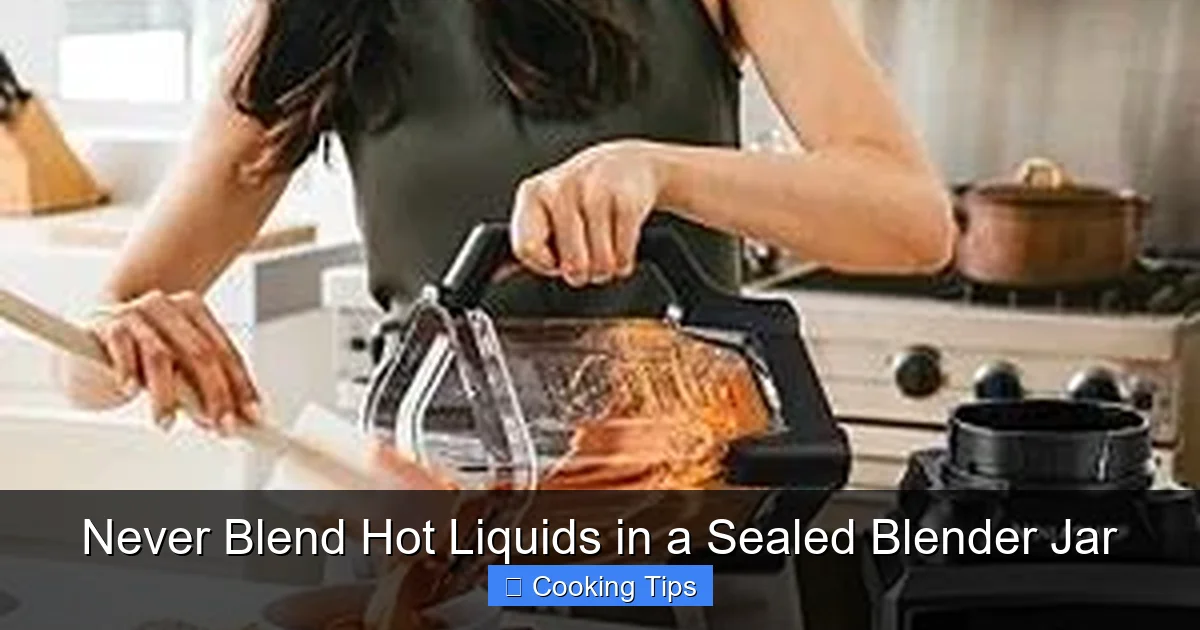
Never blend hot liquids in a sealed blender jar. This guide explains the dangerous pressure buildup that can occur and the severe risks involved, including explosions and burns. We provide step-by-step safe blending techniques to ensure you can process hot ingredients without injury. Learn how to properly vent your blender and avoid this common kitchen hazard.
# Never Blend Hot Liquids in a Sealed Blender Jar
The kitchen is a place for culinary creativity and delicious discoveries. But sometimes, even the simplest kitchen tools can pose unexpected dangers if used incorrectly. One such common, yet often overlooked, danger is blending hot liquids in a sealed blender jar. You might be tempted to quickly puree a hot soup or sauce, but doing so can lead to a violent and hazardous explosion. This guide will explain exactly why blending hot liquids in a sealed blender is so dangerous and, more importantly, how you can safely blend hot ingredients without putting yourself or your kitchen at risk. We’ll cover the science behind the danger, provide clear, step-by-step instructions for safe blending, and offer practical tips to ensure your cooking adventures are always safe and enjoyable.
## Understanding the Danger: Why Hot Liquids and Sealed Blenders Don’t Mix
The fundamental reason you should never blend hot liquids in a sealed blender jar boils down to one word: pressure. When you heat a liquid, especially to its boiling point or near it, it releases a significant amount of steam. In a typical kitchen blender, the jar is designed to be sealed tightly by its lid. If you attempt to blend hot liquid with the lid completely secured, that steam has no escape route.
### The Science of Steam and Pressure
Imagine a small, enclosed space like your blender jar filled with hot liquid. As the blades spin and agitate the liquid, more heat is generated, causing even more steam to form. This steam is essentially superheated water vapor. In a confined space, this steam rapidly expands. Think of it like a pressure cooker. As the steam builds up, the pressure inside the blender jar increases exponentially.
### The Consequence: Violent Ejection or Explosion
This immense pressure has to go somewhere. Unfortunately, in a blender, the weakest point is often the lid seal. The force of the expanding steam can overcome the seal, causing the lid to be violently ejected from the jar. This isn’t just a little puff of steam; it’s an explosive event. The lid can fly off at high speed, sending scalding hot liquid and potentially shattered pieces of the blender jar in all directions. In more severe cases, the pressure can even cause the glass or plastic blender jar itself to crack or shatter under the strain.
### The Risks to You and Your Kitchen
The aftermath of a blender explosion involving hot liquids can be devastating.
*
Severe Burns: The primary risk is severe burns from the eruption of boiling or near-boiling liquid. These burns can cover large areas of skin and lead to permanent scarring. They can affect your face, hands, arms, and any other body parts that are in the direct path of the explosion.
*
Eye Injuries: Hot liquid can splash into the eyes, causing serious damage and potentially leading to vision loss.
*
Cuts and Lacerations: If the blender jar shatters, you can suffer cuts and lacerations from the broken glass or plastic.
*
Property Damage: The explosion can cover your kitchen walls, ceiling, and appliances with hot, sticky liquid, making for a difficult and messy cleanup.
## Safe Blending Techniques for Hot Liquids
While the risks are significant, it doesn’t mean you can never blend hot liquids. It simply means you need to employ specific safety precautions. The key is to manage the steam and pressure buildup.
### Step 1: Cool Down the Liquid (The Safest Approach)
The absolute safest way to blend hot liquids is to let them cool down considerably before you even put them in the blender.
*
Allow to Rest: After cooking your soup, sauce, or other hot mixture, let it sit for 10-15 minutes off the heat. This allows some of the initial intense heat to dissipate.
*
Check Temperature: If you’re unsure, use a food thermometer to check the temperature. Ideally, you want the liquid to be warm, not scalding hot. Aim for a temperature below 160°F (71°C).
*
Batch Blending: If you have a large quantity, blend it in smaller batches rather than trying to do it all at once. Smaller amounts of hot liquid will cool down faster and generate less steam.
### Step 2: Never Seal the Lid Completely
If you must blend a hot liquid that hasn’t cooled down completely, the most critical step is to manage the steam release.
*
Remove the Center Cap: Your blender lid likely has a removable center cap or plug. This is your escape route for steam.
*
Cover with a Towel: Once the center cap is removed, cover the opening with a folded kitchen towel. Use a thick, absorbent towel that you don’t mind getting a little messy. This towel will act as a barrier to prevent splashing but will allow steam to escape.
*
Hold the Towel Firmly: As the blender runs, you’ll need to hold the towel down firmly with one hand, pressing it against the lid. This is crucial to prevent the towel from being blown off by the escaping steam and to contain any minor splatters.
### Step 3: Blend in Short Pulses
Avoid running your blender continuously for extended periods when blending hot liquids.
*
Start with Low Speed: Begin blending on the lowest speed setting of your blender.
*
Use Pulse Function: Utilize the pulse function. This means running the blender in short bursts (e.g., 5-10 seconds) followed by a pause. This allows the steam to escape and the pressure to equalize between pulses.
*
Observe and Listen: Pay close attention to the sounds your blender is making. If you hear a lot of straining or rapid pressure buildup, stop immediately.
### Step 4: Don’t Overfill the Jar
Overfilling the blender jar exacerbates the pressure problem.
*
Respect the Max Fill Line: Never fill the blender jar beyond the maximum fill line indicated on the side. This is especially important when dealing with liquids that expand when heated.
*
Leave Headspace: For hot liquids, it’s even advisable to fill the jar to less than the maximum line to provide extra room for steam to develop without immediately reaching critical pressure.
### Step 5: Know Your Blender’s Limitations
Not all blenders are created equal. Some are designed with more robust features and safety mechanisms than others.
*
Read Your Manual: Always consult your blender’s owner’s manual. It will often contain specific warnings and instructions regarding the blending of hot liquids.
*
High-Powered Blenders: While high-powered blenders are fantastic for creating smooth purees, their sheer power can also generate more heat and pressure more quickly. Exercise extreme caution with these machines when blending hot ingredients.
*
Vented Lids: Some more advanced blenders come with lids that have built-in vents or steam release mechanisms. Familiarize yourself with how these work and use them as intended.
## Practical Tips and Examples
Let’s put these safety principles into practice with some common kitchen scenarios.
### Blending Hot Soups
Making a creamy tomato soup or a silky butternut squash soup? These are classic candidates for blending.
*
Before Blending: Ladle the hot soup into the blender jar, filling it no more than halfway. Remove the center lid cap and cover the opening with a folded kitchen towel, holding it down firmly.
*
Blending: Start on low speed or use the pulse function. Blend for short intervals, allowing steam to escape. You might need to do this in several batches to achieve the desired smoothness.
*
Alternative: Immersion Blender: For soups and sauces, an immersion blender (also known as a stick blender) is often a much safer and more convenient tool for hot liquids. You blend directly in the pot, and there’s no sealed container, so pressure is not an issue.
### Pureeing Hot Sauces
Creating a vibrant pesto or a spicy chili sauce often involves blending warm ingredients.
*
Cooling is Key: Allow the sauce to cool for at least 10-15 minutes after cooking. If the recipe calls for hot peppers or other ingredients that need to be blended while warm, be extra cautious.
*
Vent and Towel Method: Use the same method as with soups: remove the center cap, cover with a towel, and blend in short pulses.
*
Consider Blending in Stages: If your sauce is very hot, try blending a small portion first until it’s mostly smooth, then add more hot liquid to it and blend again. This allows you to manage the heat and pressure more effectively.
### Blending Cooked Vegetables for Smoothies
Sometimes, recipes call for blending cooked vegetables into smoothies.
*
Ensure Cooked Vegetables are Warm, Not Hot: If you’re adding cooked sweet potato or pumpkin to a smoothie, make sure it’s cooled down from cooking to at least lukewarm. Scalding hot cooked vegetables are still a hazard.
*
Standard Blender Use: Once cooled, these can usually be blended with other cold ingredients using your standard blender practices, though it’s always wise to remove the center cap and cover with a towel for good measure, especially if other hot ingredients are added.
## Troubleshooting Common Issues
Even with the best intentions, you might encounter a few minor hiccups.
### My Blender is Splattering Through the Towel
*
Cause: The towel might be too thin, or you’re not holding it down firmly enough. The speed might also be too high.
*
Solution: Use a thicker, more absorbent towel and apply firm pressure. Slow down the blender speed or use shorter pulses. If splattering continues, stop the blender and let the contents cool down further.
### The Blender Lid Feels Like It’s Going to Pop Off
*
Cause: Significant pressure is building up inside the jar. This is a warning sign.
*
Solution: STOP THE BLENDER IMMEDIATELY. Do not try to force it. Remove the blender from the base. Carefully remove the towel and let the liquid cool down considerably. This is a clear indication that the liquid is too hot for immediate blending, even with venting.
### My Blended Mixture Isn’t Smooth Enough
*
Cause: You might be blending in too small of batches, not allowing enough blending time, or the liquid might be too cool (though this is less of a problem for smoothness and more for safety).
*
Solution: Ensure you are allowing sufficient blending time within the safe, pulsed intervals. If the liquid is safely warm (not hot), you can increase the blending duration slightly, always paying attention to pressure. Consider blending in slightly larger batches if your previous batches were very small, but always respecting the halfway mark for hot liquids.
## Conclusion: Safety First in the Kitchen
Blending hot liquids in a sealed blender jar is a recipe for disaster. The rapid buildup of steam pressure can lead to explosions, causing severe burns, injuries, and property damage. However, by understanding the risks and implementing simple, yet crucial, safety measures, you can safely enjoy the benefits of blending hot ingredients. Always prioritize cooling your liquids, never seal the lid completely, use a towel for venting, and blend in short pulses. By following these guidelines, you can transform your kitchen into a safe haven for culinary exploration, ensuring that every dish you create is as safe as it is delicious. Remember, a few extra minutes of cooling or careful venting is a small price to pay for your safety and peace of mind.
Key Takeaways
- Extreme Pressure Buildup: Hot liquids release steam when heated, and in a sealed blender jar, this steam has nowhere to escape, creating immense pressure.
- Risk of Explosion: The uncontrolled pressure can cause the blender lid to forcefully eject, or even shatter the jar, leading to a dangerous explosion.
- Severe Burn Hazard: The ejected hot liquid and broken blender parts can cause serious burns, permanent scarring, and eye injuries.
- Always Vent Your Blender: The most crucial safety step is to never seal the lid completely. Always remove the center cap and cover with a folded towel.
- Cool Down First: For optimal safety, allow hot liquids to cool significantly before blending.
- Don’t Overfill: Avoid filling the blender jar beyond the recommended maximum line, especially with hot liquids, to prevent overflow and reduce pressure.
- Know Your Blender: Familiarize yourself with your blender’s specific safety features and instructions.
