

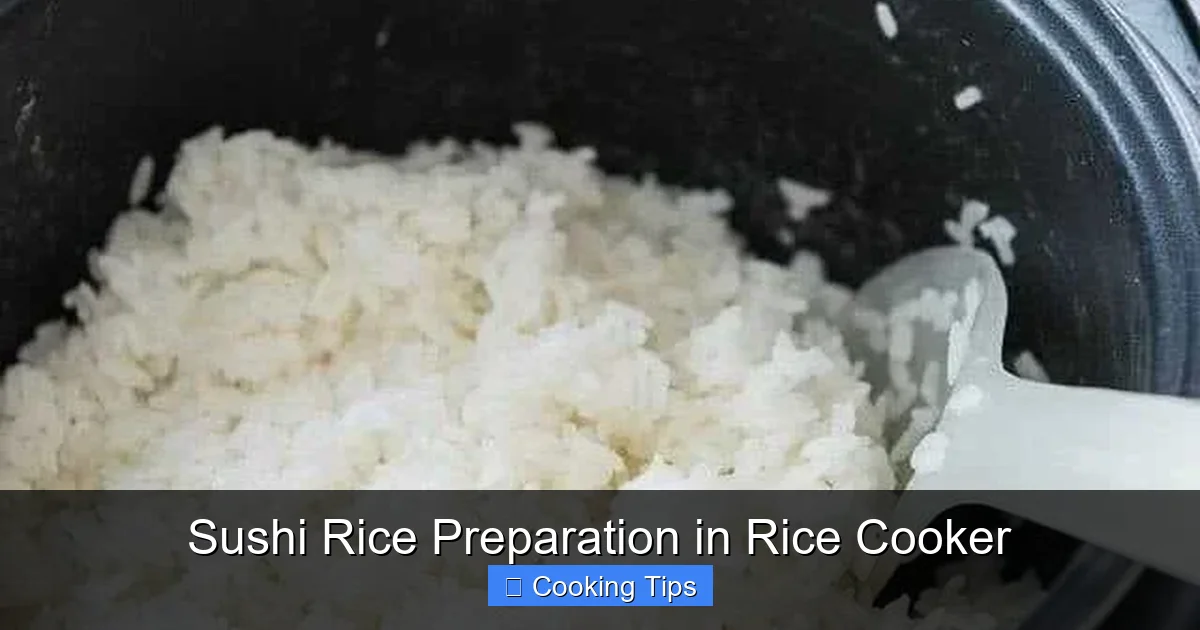
Learn how to make perfect sushi rice effortlessly using your rice cooker. This guide covers everything from selecting the right rice to the final seasoning. Get restaurant-quality sushi rice in your own kitchen with these simple, step-by-step instructions and helpful tips.
Making sushi at home is a rewarding culinary adventure. One of the most important components of delicious sushi is perfectly prepared sushi rice. While it might seem daunting, using a rice cooker can simplify the process significantly. This guide will walk you through each step of preparing sushi rice in your rice cooker, ensuring a fantastic result every time. You’ll learn what ingredients you need, how to prepare the rice, cook it perfectly, and season it to perfection.
### Understanding Sushi Rice
Sushi rice, also known as *sumeshi* or *shari*, is not just plain steamed rice. It’s short-grain Japanese rice seasoned with a mixture of rice vinegar, sugar, and salt. This seasoning gives sushi rice its characteristic slightly sweet, tangy, and savory flavor, and also helps it achieve the perfect sticky texture needed to hold sushi together. The grains should be distinct yet cling together, not mushy or dry.
### Ingredients You’ll Need
To make delicious sushi rice, you’ll need a few key items:
* **Short-grain Japanese rice:** This is non-negotiable for authentic sushi rice. Look for labels like “sushi rice” or “japonica rice.” Common varieties include Koshihikari, Calrose, or Akitakomachi.
* **Water:** For cooking the rice. The amount will depend on the type of rice and your rice cooker.
* **Rice vinegar:** This is the base for your sushi seasoning.
* **Granulated sugar:** To balance the acidity of the vinegar.
* **Salt:** To enhance the flavors.
* **A wooden or plastic bowl (hangiri or donburi):** For seasoning and cooling the rice. Metal bowls can react with the vinegar.
* **A rice paddle (shamoji) or a flat wooden spoon:** For mixing.
* **A fan (uchiwa) or a piece of cardboard:** To cool the rice quickly.
### Step-by-Step Sushi Rice Preparation in a Rice Cooker
Follow these steps carefully for perfect sushi rice:
#### Step 1: Measure and Rinse the Rice
This is a critical first step. The quality of your sushi rice starts with how you handle the raw grains.
##### Measuring the Rice
* Use a standard measuring cup. For most rice cookers, you’ll use the cup that came with it, which is often slightly smaller than a US standard cup. Always refer to your rice cooker’s manual.
* Measure out the desired amount of sushi rice. A good starting point is 2 cups of uncooked rice, which yields about 6 cups of cooked rice. This is enough for a few sushi rolls or a decent amount of nigiri.
##### Rinsing the Rice
* Place the measured rice in a large bowl.
* Add cold water to the bowl and swirl the rice gently with your hand. You’ll notice the water immediately turns milky white. This is the excess starch.
* Drain the milky water carefully.
* Repeat this rinsing process at least 5-7 times, or until the water runs almost clear. Don’t be too rough; you don’t want to break the rice grains.
* Once rinsed, drain the rice very well. You can let it sit in a fine-mesh sieve for about 10-15 minutes to ensure excess water drains off. This helps prevent the rice from becoming too watery when cooked.
#### Step 2: Cook the Rice in Your Rice Cooker
Now it’s time to let your rice cooker do the heavy lifting.
##### Adding Water
* Transfer the rinsed and drained rice to the inner pot of your rice cooker.
* Add the appropriate amount of cold water. The general rule of thumb for sushi rice is a 1:1 ratio of rice to water, or slightly more water, like 1:1.1, to ensure it’s tender enough. For example, if you used 2 cups of rice, you would add 2 cups of water. If you find your rice is consistently too firm, try adding a little more water.
* It’s important to use the correct water ratio. For more detailed information on water-to-rice ratios, you can refer to our guide on what is the ratio of water to rice in a rice cooker.
* Let the rice soak in the water for about 30 minutes before cooking. This allows the grains to absorb moisture evenly, leading to a better texture. This step is often skipped but highly recommended for optimal results.
##### Cooking
* Close the lid of your rice cooker securely.
* Select the standard white rice setting. Most modern rice cookers will automatically detect the cooking time and temperature.
* Allow the rice cooker to complete its cycle. Do not open the lid during the cooking process, as this can disrupt the steam and affect the cooking. This is one of the common rice cooker mistakes to avoid.
* Once the cooking cycle is finished, let the rice rest inside the rice cooker with the lid closed for another 10-15 minutes. This allows the steam to redistribute evenly, ensuring each grain is cooked through and fluffy.
#### Step 3: Prepare the Sushi Vinegar Seasoning
While the rice is resting, prepare the seasoning. This mixture is what transforms plain rice into sushi rice.
##### Making the Mixture
* In a small saucepan, combine:
* 1/4 cup rice vinegar
* 2 tablespoons granulated sugar
* 1 teaspoon salt
* Gently heat the mixture over low heat, stirring constantly, until the sugar and salt are completely dissolved. Do not boil the mixture.
* Once dissolved, remove from heat and let it cool slightly. You want it warm, not hot.
#### Step 4: Season and Cool the Rice
This is where you give your rice its signature flavor and texture.
##### Transferring the Rice
* Open the rice cooker and gently fluff the cooked rice with your rice paddle or a fork. Be careful not to mash the grains.
* Transfer the hot rice to a large, shallow, non-metallic bowl. A traditional wooden *hangiri* is ideal, but a wide glass or plastic bowl will work.
##### Seasoning the Rice
* Gradually pour the prepared sushi vinegar mixture over the hot rice.
* Use your rice paddle to gently “cut” and fold the vinegar into the rice. Imagine you are slicing through the rice and then folding it over itself. The goal is to distribute the seasoning evenly without breaking the rice grains.
* Avoid stirring or mashing the rice. This is a common mistake that leads to mushy rice, which is something you want to avoid.
##### Cooling and Fanning
* As you fold, fan the rice vigorously with an *uchiwa* (Japanese fan) or a piece of cardboard. This helps to cool the rice quickly and evaporate some of the excess moisture, giving it a glossy sheen and the right texture.
* Continue fanning and folding until the rice is no longer steaming and has reached room temperature or is slightly warm. This process should take about 10-15 minutes. The rice should be sticky enough to hold together but still have distinct, separate grains.
#### Step 5: Using Your Sushi Rice
Once the sushi rice is seasoned and cooled, it’s ready to be used for your sushi creations.
* Cover the seasoned rice with a damp, clean kitchen towel or plastic wrap to prevent it from drying out while you prepare your other sushi ingredients.
* Use the rice promptly. Sushi rice is best used within a few hours of preparation. Refrigerating sushi rice can make it hard and dry.
### Practical Tips for Perfect Sushi Rice
* **Room temperature ingredients:** Ensure your rice vinegar, sugar, and salt are at room temperature before making the seasoning.
* **Taste and adjust:** The seasoning can be adjusted to your preference. If you like it tangier, add a little more vinegar. If you prefer it sweeter, add more sugar. Always dissolve and heat gently first.
* **Don’t overcook or undercook:** Pay attention to your rice cooker’s settings and the resting time. Both overcooking and undercooking can lead to undesirable textures. If your rice is consistently mushy, you might be using too much water, or not draining it enough initially. This relates to the common why rice becomes mushy issue.
* **Clean paddle and bowl:** Ensure your paddle and bowl are clean and free of any grease or oil. This is important for the rice’s texture and flavor.
* **For a more authentic flavor:** Some chefs add a small piece of kombu (dried kelp) to the rice cooker while cooking. Remove it before seasoning.
* **For sticky rice:** If you are specifically aiming for a very sticky rice for things like *onigiri* (rice balls), you might want to explore our guide on how to make sticky rice in a rice cooker, as the preparation methods can overlap.
### Troubleshooting Common Sushi Rice Problems
Even with the best intentions, you might encounter a few issues. Here’s how to address them:
* **Mushy Rice:**
* **Cause:** Too much water, not enough rinsing, over-mixing, or improper cooling.
* **Solution:** Ensure you’re using the correct water-to-rice ratio. Rinse thoroughly. When seasoning, fold gently. Fan vigorously during cooling. If it’s already mushy, it’s hard to fix completely, but you can try to spread it out thinly on a baking sheet and fan it to dry slightly.
* **Dry or Hard Rice:**
* **Cause:** Too little water, over-rinsing, not enough resting time, or cooling too quickly without covering.
* **Solution:** Adjust your water ratio next time. Ensure adequate resting time in the cooker. Cover the rice properly after seasoning and cooling to retain moisture.
* **Uneven Seasoning:**
* **Cause:** Not distributing the vinegar evenly during the folding process.
* **Solution:** Focus on cutting and folding the rice to ensure the seasoning reaches all the grains.
* **Rice Sticking to the Paddle:**
* **Cause:** The rice is too sticky, or the paddle is dry.
* **Solution:** Lightly wet your rice paddle with water or sushi vinegar.
### Conclusion
Preparing sushi rice in a rice cooker is a straightforward process that yields delicious and authentic results. By focusing on the quality of the rice, thorough rinsing, precise water measurements, and a gentle seasoning and cooling technique, you can consistently make perfect sushi rice for all your favorite Japanese dishes. With a little practice, you’ll be rolling sushi like a pro in no time. Enjoy the process, and more importantly, enjoy the delicious sushi you create!
Key Takeaways
- Choose the right rice: Always use short-grain Japanese sushi rice for its ideal texture and stickiness.
- Rinsing is crucial: Thoroughly rinse the rice until the water runs clear to remove excess starch.
- Precise water ratio: Use the correct water-to-rice ratio, typically 1:1 or 1:1.1, depending on the rice.
- Seasoning is key: Create a balanced sushi vinegar mixture to flavor the cooked rice.
- Gentle mixing: Carefully fold the vinegar into the hot rice to avoid mushing it.
- Cooling process: Allow the rice to cool properly, fanning it to achieve the right consistency.
