

Discover the versatility of personal blenders for crafting delicious single-serve recipes. This guide will walk you through selecting the perfect blender, mastering its use for everything from smoothies to sauces, and keeping it sparkling clean. Unlock quick, healthy, and personalized meals and drinks with this essential kitchen tool.
Personal Blenders for Single Serve Recipes
Welcome to the world of effortless single-serve culinary creations! If you’re looking to whip up quick, healthy, and perfectly portioned meals and drinks without the hassle of a large appliance, a personal blender is your new best friend. These compact powerhouses are designed for speed, convenience, and individual servings, making them ideal for busy lifestyles, small kitchens, or anyone who appreciates simplicity.
This comprehensive guide will equip you with everything you need to know to get the most out of your personal blender. We’ll start by helping you choose the right one, then dive into mastering its use with a variety of recipes. You’ll also learn essential cleaning and maintenance tips, and we’ll even tackle common troubleshooting issues. Get ready to unlock a whole new level of kitchen creativity and efficiency!
Key Takeaways
- Choosing the Right Personal Blender: Understand the key features to look for, like motor power, jar size, blade material, and ease of cleaning, to find the best fit for your needs.
- Mastering Basic Blending Techniques: Learn the optimal way to load ingredients, blend for the right duration, and achieve your desired consistency for various recipes.
- Versatile Single-Serve Recipe Ideas: Explore a wide range of applications beyond smoothies, including dips, sauces, baby food, and even small-batch dressings.
- Effective Cleaning and Maintenance: Discover simple, quick methods to keep your personal blender in top condition, ensuring longevity and optimal performance.
- Troubleshooting Common Blender Issues: Find solutions for common problems like under-blending, over-blending, or leakage to ensure a smooth blending experience every time.
- Maximizing Your Blender’s Potential: Learn tips and tricks to elevate your single-serve creations and make the most of your compact kitchen appliance.
Choosing Your Perfect Personal Blender
Not all personal blenders are created equal. Understanding the key features will help you select the one that best suits your needs and budget.
Motor Power: The Heart of Your Blender
The motor is what drives the blades. For personal blenders, you’ll typically see a range from 200 to 1000 watts (W).
- Below 300W: Good for softer ingredients like yogurt, protein powder, and leafy greens. Might struggle with frozen fruits or ice.
- 300W – 600W: A solid all-around choice for most everyday tasks, including smoothies with frozen fruit and crushing ice.
- Above 600W: These are more powerful and can handle tougher ingredients like nuts, seeds, and larger chunks of frozen produce with ease.
Consider what you’ll be blending most often. If it’s just simple protein shakes, a lower wattage might suffice. For more complex creations, invest in a bit more power.
Jar Size and Material
Personal blenders usually come with one or two blending cups, typically ranging from 10 to 32 ounces.
- Size: Choose a size that accommodates your typical single serving. Some blenders come with multiple cups of different sizes, offering flexibility.
- Material: Most cups are made from BPA-free plastic. Some models offer glass cups, which are more durable and don’t scratch as easily, but can be heavier and breakable.
Look for cups with measurement markings, as this makes recipe preparation easier. Also, check if the cups come with travel lids, which is a huge convenience for on-the-go drinks.
Blade Assembly
The blades are crucial for breaking down ingredients. Most personal blenders have stainless steel blades.
- Number of Blades: More blades generally mean more efficient blending, but design also plays a role.
- Removable vs. Attached: Some blades detach from the cup for easier cleaning, while others are integrated into the lid. Integrated blades can be simpler to use but might be harder to clean thoroughly.
Ensure the blades look robust and are made of good quality stainless steel.
Ease of Use and Cleaning
This is where personal blenders truly shine.
- One-Touch Operation: Many models feature simple push-down or twist-and-lock operation.
- Dishwasher-Safe Parts: This is a major convenience. Check if the cups, lids, and blade assembly are dishwasher safe.
- Simple Assembly: The fewer parts to fiddle with, the better.
Read reviews to gauge how easy a particular model is to assemble, use, and clean in practice.
Brand Reputation and Reviews
Do your research! Look for well-known brands with good customer service and positive reviews. Pay attention to reviews that discuss durability, blending performance, and any potential issues.
Mastering Your Personal Blender: Step-by-Step
Once you have your personal blender, it’s time to put it to work! Here’s how to get the best results.
Step 1: Gather and Prepare Your Ingredients
This is crucial for smooth blending.
Loading Order Matters
For optimal blending and to protect your motor, follow this general order:
- Liquids First: Add your liquid base (water, milk, juice, yogurt) to the cup. This helps the blades move freely and prevents ingredients from getting stuck.
- Soft Ingredients Next: Add items like spinach, protein powder, chia seeds, or sweeteners.
- Harder Ingredients: This is where you add fruits and vegetables, whether fresh or frozen. Cut larger items into smaller, manageable pieces (about 1-2 inches).
- Ice Last (if using): If you’re adding ice, put it in last.
Avoid overfilling the cup. Most personal blenders have a “max fill” line.
Step 2: Secure the Blade Assembly
This is a critical safety step.
Make sure the blade assembly is screwed tightly onto the blending cup. If it’s not sealed properly, you risk leaks during blending. Some blenders have a safety lock mechanism that prevents operation if the cup or blade assembly isn’t correctly attached.
Step 3: Blend to Perfection
The blending process itself is simple, but duration is key.
Blending Techniques
- Pulse for Control: If your blender has a pulse function, use it for tough ingredients or to break down larger chunks before continuous blending.
- Short Bursts: For most smoothies, start by blending in short bursts (5-10 seconds), shaking the cup gently between bursts if needed. This helps ensure all ingredients are incorporated.
- Continuous Blending: Once ingredients are mostly broken down, you can blend continuously until your desired consistency is reached. This typically takes 30-60 seconds.
- Listen to Your Blender: If the motor sounds strained, stop blending and check the contents. You may need to add more liquid or break down ingredients further.
Don’t over-blend, as this can warm up your ingredients and affect the texture, especially for smoothies.
Step 4: Enjoy Your Creation
This is the best part!
Once blended, carefully unscrew the blade assembly. You can either drink directly from the blending cup (if it has a travel lid) or pour your creation into another glass or container.
Creative Single-Serve Recipes Beyond Smoothies
While personal blenders are synonymous with smoothies, their versatility extends far beyond. Here are some ideas to inspire you:
1. Creamy Hummus (Single Serving)
Blend chickpeas, a spoonful of tahini, lemon juice, garlic, and a pinch of salt. Add a little water to reach your desired consistency. Perfect for a quick snack!
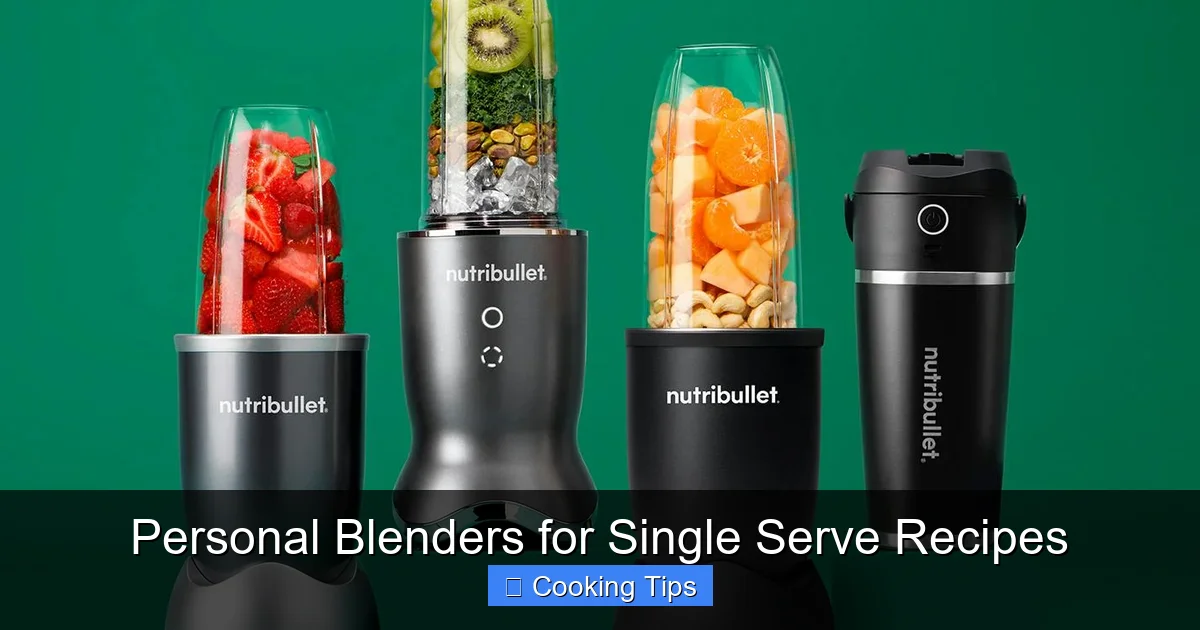
Visual guide about Personal Blenders for Single Serve Recipes
Image source: nbmedia.imgix.net
2. Baby Food Purees
Steam vegetables like carrots, peas, or sweet potatoes until tender. Blend them with a little breast milk, formula, or water until smooth. Ensure no large chunks remain.
3. Salad Dressings
Whip up a small batch of your favorite vinaigrette or creamy dressing. Blend olive oil, vinegar, Dijon mustard, herbs, and a pinch of salt and pepper.
4. Nut Butters
Roast nuts like almonds or peanuts until fragrant. Let them cool slightly, then blend in your personal blender until they transform into a creamy butter. This may take several minutes and require scraping down the sides.
5. Pestos and Sauces
Create a quick pesto by blending basil, garlic, pine nuts, Parmesan cheese, and olive oil. Or, blend ripe tomatoes with garlic and herbs for a simple pasta sauce base.
6. Protein Pancake Batter
Combine oats, egg, milk (or water), protein powder, and a leavening agent like baking powder. Blend until smooth for a quick batter.
7. Small-Batch Guacamole
Mash avocado with lime juice, salt, and finely chopped onion and cilantro. For a super smooth guac, a quick blend is great!
Cleaning and Maintenance: Keeping Your Blender Pristine
Proper cleaning ensures your personal blender stays hygienic and performs optimally for years to come.
Immediate Rinse: The Best First Step
As soon as you’re finished using your blender, rinse the cup, lid, and blade assembly under warm running water. This prevents ingredients from drying and sticking, making a deeper clean much easier.
Quick Clean Method
Fill the blending cup about halfway with warm water. Add a drop of dish soap. Screw the blade assembly back on and blend for about 30 seconds. Rinse thoroughly with clean water.
Dishwasher Use
If your blender’s parts are dishwasher safe (check your manual!), this is an easy option. Place cups and lids on the top rack. Be cautious with the blade assembly; while often dishwasher safe, handwashing can prolong its sharpness and prevent damage.
Deep Cleaning the Blades
For stubborn residue, you might need to handwash the blade assembly. Use a brush (like a bottle brush) to gently clean around the blades. Always be careful when handling sharp blades!
Drying and Storage
Allow all parts to air dry completely before reassembling or storing. Store the assembled blender or its parts in a dry place. Ensure the blade assembly is dry to prevent rust or mold.
When to Replace Blades
Over time, blades can become dull. If you notice your blender struggling to break down ingredients it used to handle with ease, it might be time to consider replacing the blade assembly.
Troubleshooting Common Personal Blender Issues
Even the best gadgets can sometimes act up. Here are solutions to common problems.
Problem: Leaking
Cause: The blade assembly isn’t screwed on tightly, or the seal is damaged.
Solution: Ensure the blade assembly is securely tightened onto the cup. Check the gasket (rubber seal) on the blade assembly for any damage or debris. If damaged, you may need a replacement part.
Problem: Under-blending or Chunky Results
Cause: Too many ingredients, not enough liquid, or ingredients cut too large.
Solution: Reduce the amount of ingredients, add more liquid, or cut larger ingredients into smaller pieces. Try pulsing more frequently to break down ingredients before continuous blending.
Problem: Over-blending and Warm Ingredients
Cause: Blending for too long.
Solution: Shorten your blending time. For frozen ingredients, blend in shorter bursts and shake the cup between bursts. Aim for the desired consistency without overdoing it.
Problem: Motor Overheating or Smelling Burnt
Cause: Motor is overworked due to tough ingredients or prolonged blending.
Solution: Stop blending immediately. Let the motor cool down completely (at least 10-15 minutes). Ensure you’re not overloading the blender, and that your ingredients are appropriately sized. If the problem persists, the motor might be faulty.
Problem: Difficulty Removing the Cup from the Base
Cause: Usually due to slight jamming or the cup being stuck.
Solution: Try gently twisting the cup in the opposite direction. Ensure there’s no excess liquid or food residue around the base that’s causing it to stick. Never force it; this could damage the blender.
Maximizing Your Personal Blender’s Potential
Beyond basic use, here are some tips to make your personal blender work even harder for you:
- Invest in Extra Cups: If you’re a frequent smoothie drinker, having a few extra cups means you can prepare multiple drinks in advance or make different types of recipes without constant washing.
- Experiment with Ice: Crushed ice blends more easily than large cubes. Some blenders come with special ice-crushing blades. If yours doesn’t, pulse carefully.
- Use Frozen Veggies: Freezing fruits and vegetables like spinach, berries, or bananas adds thickness and chill to your smoothies without diluting the flavor with ice.
- Don’t Forget Flavor Boosters: Add spices like cinnamon, nutmeg, or ginger, or extracts like vanilla or almond, to elevate your creations.
- Meal Prep Components: Pre-portion smoothie packs into freezer bags with fruits, vegetables, and add-ins. Just grab a bag, add liquid to your blender cup, and blend.
Conclusion
Your personal blender is more than just a smoothie maker; it’s a gateway to quick, healthy, and personalized culinary experiences. By understanding how to choose the right model, master its operation, explore diverse recipes, and maintain it properly, you’ll find yourself reaching for this compact appliance time and time again. Embrace the simplicity and power of single-serve blending, and enjoy the delicious results it brings to your daily routine!
