

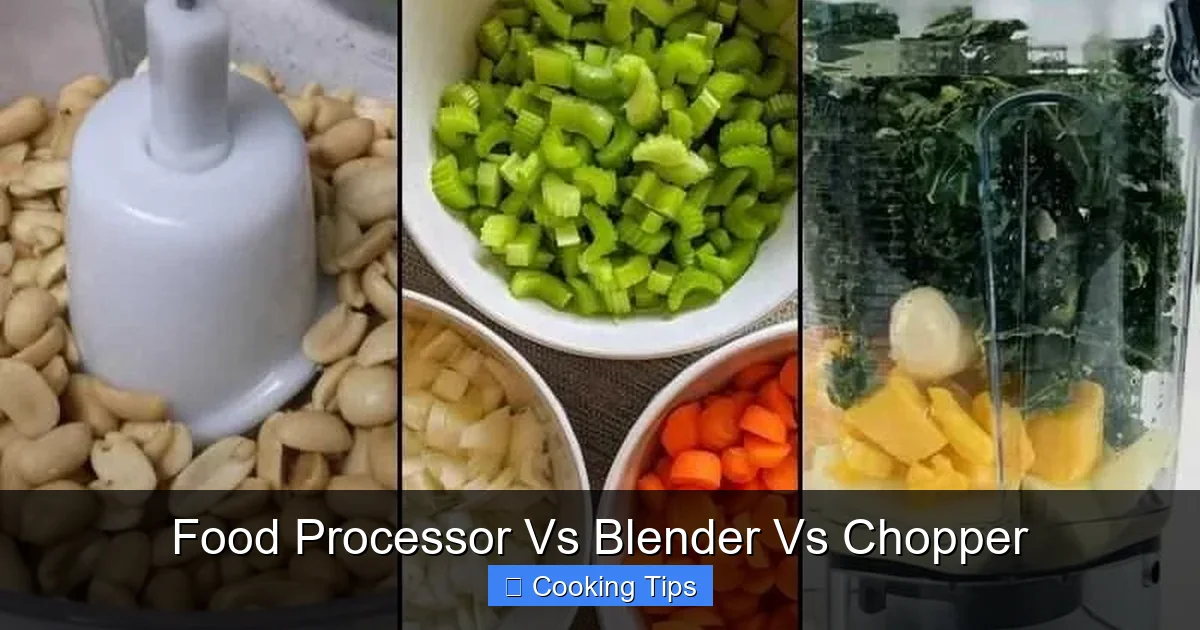
Confused about food processors, blenders, and choppers? This comprehensive guide breaks down the differences, helping you understand their unique strengths and ideal uses. Learn which appliance is best suited for your kitchen tasks, from pureeing soups to chopping nuts. Make informed purchasing decisions and maximize your culinary efficiency by choosing the right tool for the job.
Welcome to your ultimate guide to navigating the often-confusing world of kitchen appliances! If you’ve ever stood in the appliance aisle, scratching your head between a food processor, a blender, and a chopper, you’re not alone. These kitchen workhorses, while all capable of breaking down food, have distinct personalities and excel at different tasks. Understanding their differences will not only help you make the right purchasing decision but also unlock a new level of efficiency and creativity in your kitchen.
In this guide, we’ll delve deep into the heart of what makes each of these appliances tick. We’ll explore their design, their ideal uses, the types of food they handle best, and even touch on some common pitfalls to avoid. By the end of this journey, you’ll be a pro at identifying which appliance is your culinary superhero for any given task. Get ready to say goodbye to manual chopping and hello to effortless meal preparation!
Key Takeaways
- Understand Core Functions: Blenders excel at liquids and smooth textures, food processors handle a wider range of tasks from dough to chopping, and choppers are best for small, quick dicing jobs.
- Blade Design Matters: The shape and placement of blades significantly impact an appliance’s effectiveness. Blenders have tall blades for vortex action, food processors have wider, flatter blades for slicing and shredding, and choppers have small, fast-rotating blades.
- Capacity and Size: Consider the volume of food you typically prepare. Blenders and food processors come in various sizes, while choppers are generally compact.
- Ease of Cleaning: All three appliances require cleaning. Look for models with dishwasher-safe parts for convenience.
- Motor Power and Durability: Higher wattage generally means more power and better performance, especially for tougher tasks.
- Versatility is Key: If you need an appliance for multiple tasks, a food processor is often the most versatile choice. For primarily liquid-based creations, a blender is ideal.
The Blender: Your Go-To for Smoothness
When you think of smooth, creamy, and liquefied, think blender. These appliances are designed with a tall, narrow jar and a set of sharp blades at the bottom. This specific design creates a vortex effect as the motor whirs, pulling ingredients down towards the blades and then pushing them back up. This continuous motion is what achieves those ultra-smooth results.
What Blenders Do Best
* **Smoothies and Shakes:** This is the classic, undisputed territory of the blender. From fruity delights to protein-packed shakes, a blender can transform your ingredients into a perfectly drinkable consistency.
* **Soups and Sauces:** Hot or cold, blenders are fantastic for pureeing cooked vegetables into silky soups or creating smooth, velvety sauces and dips like hollandaise or pesto.
* **Purees:** Baby food, fruit purees for desserts, or even vegetable purees for baby-led weaning are no match for a blender’s power.
* **Crushing Ice:** Many powerful blenders can handle crushing ice for cocktails or frozen treats, though it’s always best to check your model’s specifications.
* **Grinding:** Some blenders can also grind smaller quantities of dry ingredients like nuts or coffee beans, though a dedicated grinder or a food processor might be more efficient for larger batches.
Blender Anatomy and How it Works
The core components of a blender are the motor base, the jar (or pitcher), and the blade assembly. The motor base houses the powerful engine that spins the blades at high speeds. The jar is where your ingredients are placed, and its shape is crucial for the vortex action. The blade assembly, typically made of stainless steel, is where the magic happens. The speed and power of the motor determine how effectively and quickly the blender can break down ingredients.
Choosing the Right Blender
* **Motor Power (Wattage):** For smoothies with frozen fruits and ice, aim for a blender with at least 600 watts. Higher wattage blenders will also offer smoother results and handle tougher ingredients more easily.
* **Jar Material:** Glass jars are heavier and can scratch, while plastic jars are lighter but can sometimes retain odors or stains. Tritan plastic is a durable, BPA-free option.
* **Blade Design:** Look for sharp, sturdy blades. Some blenders have multiple blade angles for better pulverization.
* **Presets and Settings:** Features like smoothie settings, ice crush, or pulse can enhance convenience.
Practical Tips for Blender Use
* **Liquid First:** Always add your liquid ingredients (water, milk, juice) to the blender jar first. This helps the blades catch and liquefy the other ingredients more effectively.
* **Don’t Overfill:** Stick to the maximum fill line on your blender jar to prevent leaks and ensure proper blending.
* **Secure the Lid:** Always ensure the lid is firmly in place before turning on the blender to avoid messy accidents.
* **Pulse Power:** Use the pulse function for short bursts to control the texture, especially when you don’t want a completely smooth result or are dealing with chunkier ingredients.
The Food Processor: The Versatile Workhorse
Visual guide about Food Processor Vs Blender Vs Chopper
Image source: foodprocessr.com
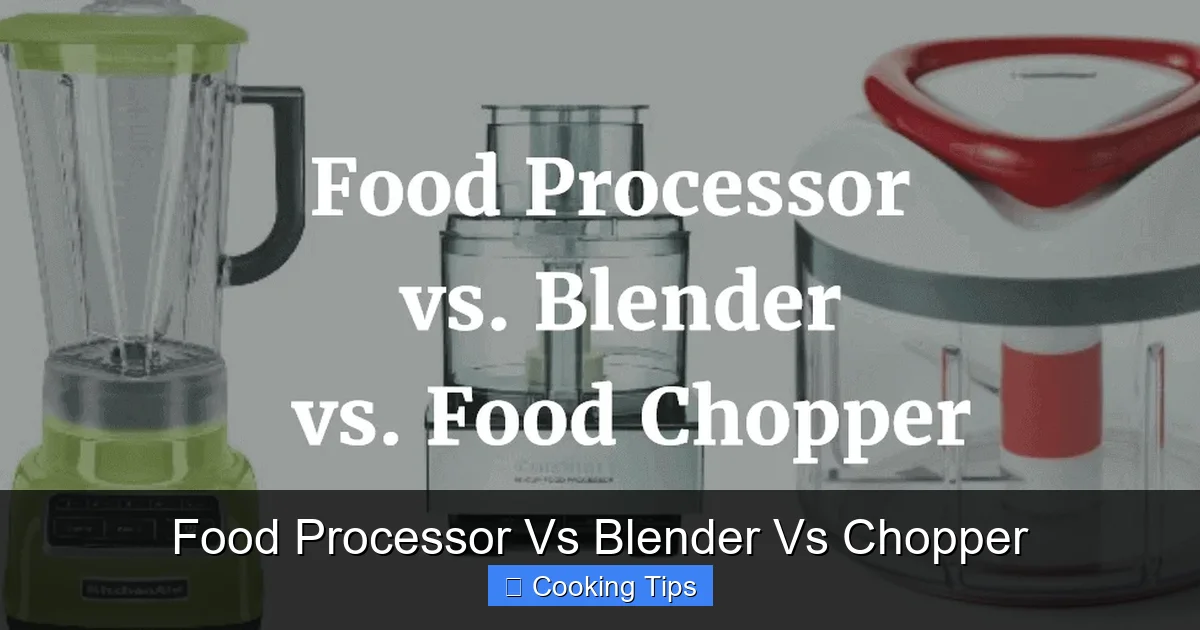
If the blender is a specialist, the food processor is the all-around MVP. This appliance is designed with a wider bowl and a variety of interchangeable blades and discs, making it incredibly versatile. Its primary function is to chop, slice, shred, mix, knead, and puree. A food processor’s blades are typically flatter and wider than a blender’s, designed to work the ingredients against the sides of the bowl.
What Food Processors Do Best
* **Chopping and Dicing:** From onions and garlic to herbs and nuts, a food processor can achieve a uniform chop much faster than doing it by hand.
* **Slicing and Shredding:** With the right disc attachment, a food processor can effortlessly slice vegetables for salads or shred cheese for pizza.
* **Dough Kneading:** Many food processors come with a dough blade, capable of kneading bread dough and pizza dough, saving your arms a lot of work.
* **Making Sauces and Dips:** While a blender can make smooth sauces, a food processor is excellent for chunkier pestos, hummus, or salsa where you want a bit more texture.
* **Pureeing:** Similar to a blender, a food processor can puree ingredients, especially for thicker mixtures like nut butters or baby food.
* **Grinding:** It’s effective for grinding larger quantities of nuts or seeds.
* **Emulsifying:** Making mayonnaise or other emulsions is a breeze with the controlled speed of a food processor.
Food Processor Anatomy and How it Works
The food processor has a motor base, a work bowl with a lid, and various attachments. The work bowl is typically wider and shorter than a blender jar, allowing ingredients to be processed across a larger surface area. The lid usually has a feed tube, which is essential for adding ingredients while the machine is running, particularly for slicing and shredding. The interchangeable blades and discs are the key to its versatility.
Choosing the Right Food Processor
* **Bowl Size:** Food processors range from mini-choppers (around 3-4 cups) to large family-sized models (10-14 cups or more). Consider how many people you cook for and the types of recipes you make.
* **Motor Power:** Higher wattage (700 watts and up) is better for tougher tasks like kneading dough or grinding hard ingredients.
* **Attachments:** Look for essential attachments like a chopping blade, slicing disc, and shredding disc. Additional attachments for making french fries or extra fine grating can be a bonus.
* **Feed Tube Size:** A wide feed tube is useful for processing whole vegetables like carrots or zucchini without pre-cutting.
* **Ease of Assembly and Cleaning:** Some models are more intuitive to assemble, and dishwasher-safe parts significantly simplify cleanup.
Practical Tips for Food Processor Use
* **Don’t Over-Process:** Especially when chopping vegetables, process in short bursts and check the consistency frequently to avoid turning your ingredients into mush.
* **Secure the Lid:** Just like a blender, ensure the lid is properly locked before operating.
* **Use the Feed Tube:** For slicing and shredding, use the feed tube to guide ingredients evenly against the discs.
* **Scrape Down the Sides:** Occasionally, you might need to stop the processor and scrape down the sides of the bowl to ensure all ingredients are incorporated evenly.
* **Batch Processing:** For larger quantities, process ingredients in batches to avoid overwhelming the motor and ensure consistent results.
The Chopper: The Speedy Dicer
Visual guide about Food Processor Vs Blender Vs Chopper
Image source: publish.purewow.net
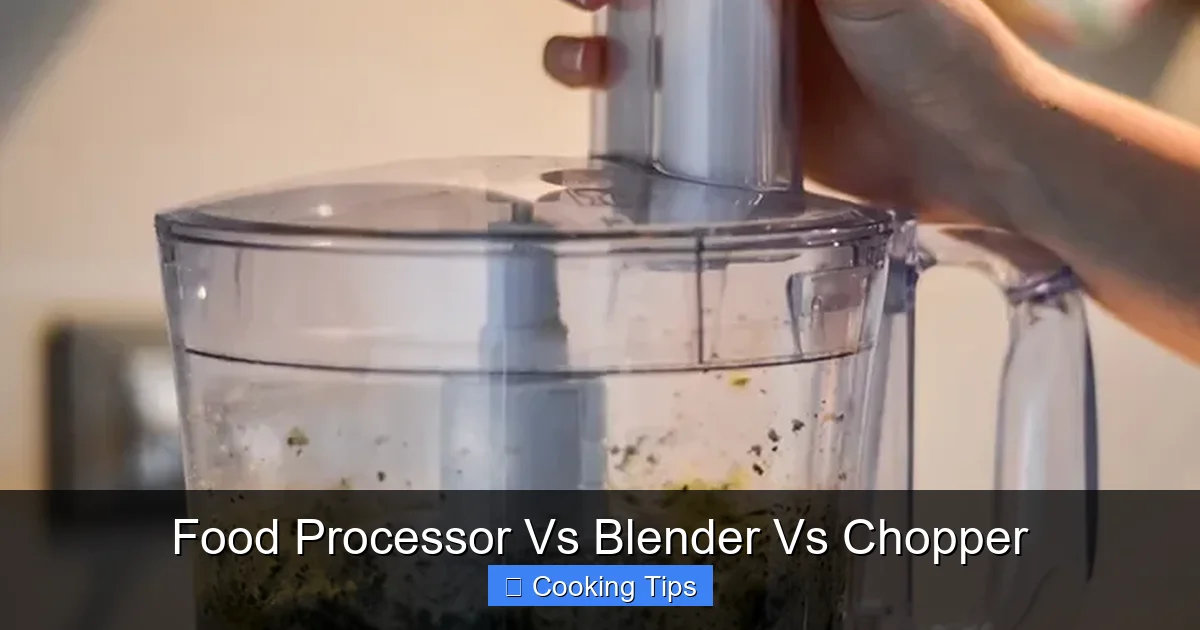
The chopper, often called a mini-chopper or food chopper, is the smallest and simplest of the three. It’s designed for quick, small-scale chopping tasks. Typically, it has a small bowl and a compact, fast-rotating blade. Its primary advantage is its speed and simplicity for processing small amounts of ingredients.
What Choppers Do Best
* **Chopping Herbs:** Finely dicing fresh herbs like parsley, cilantro, or basil is a breeze.
* **Mincing Garlic and Shallots:** Quickly mince garlic cloves or shallots for flavor bases in recipes.
* **Chopping Nuts and Seeds:** Perfect for small portions of nuts or seeds needed for toppings or baking.
* **Making Baby Food (Small Portions):** If you’re only making a small amount of baby food at a time, a chopper can be convenient.
* **Crushing Spices:** For whole spices like peppercorns or cumin seeds, a chopper can grind them into a coarse powder.
Chopper Anatomy and How it Works
A chopper usually consists of a small plastic or glass bowl, a lid with a blade assembly, and a motor base. The blades are often a simple, sharp set designed for quick dicing. Many electric choppers are operated by pressing down on a button or a lid, activating the motor for short bursts. There are also manual choppers that use a pull-cord mechanism.
Choosing the Right Chopper
* **Bowl Capacity:** These are typically small, ranging from 1 to 4 cups. Choose based on the typical quantity of ingredients you’ll be processing.
* **Blade Sharpness and Material:** Sharp, durable stainless steel blades are essential for effective chopping.
* **Ease of Use:** For electric models, a simple push-button operation is ideal. For manual ones, a smooth pull-cord is key.
* **Dishwasher-Safe Parts:** Like its larger counterparts, look for parts that can go in the dishwasher for easy cleanup.
Practical Tips for Chopper Use
* **Small Batches Only:** Do not overstuff the chopper. Process ingredients in small amounts for best results.
* **Pulse, Pulse, Pulse:** Use the pulse function very sparingly. It’s easy to go from perfectly chopped to mush in seconds.
* **Even Size Pieces:** Try to cut your ingredients into relatively uniform pieces before adding them to the chopper. This helps them process more evenly.
* **Clean Immediately:** Food residue can get stuck in the blades. Rinsing or cleaning soon after use makes it much easier.
Food Processor Vs. Blender Vs. Chopper: The Showdown
Visual guide about Food Processor Vs Blender Vs Chopper
Image source: twosleevers.com
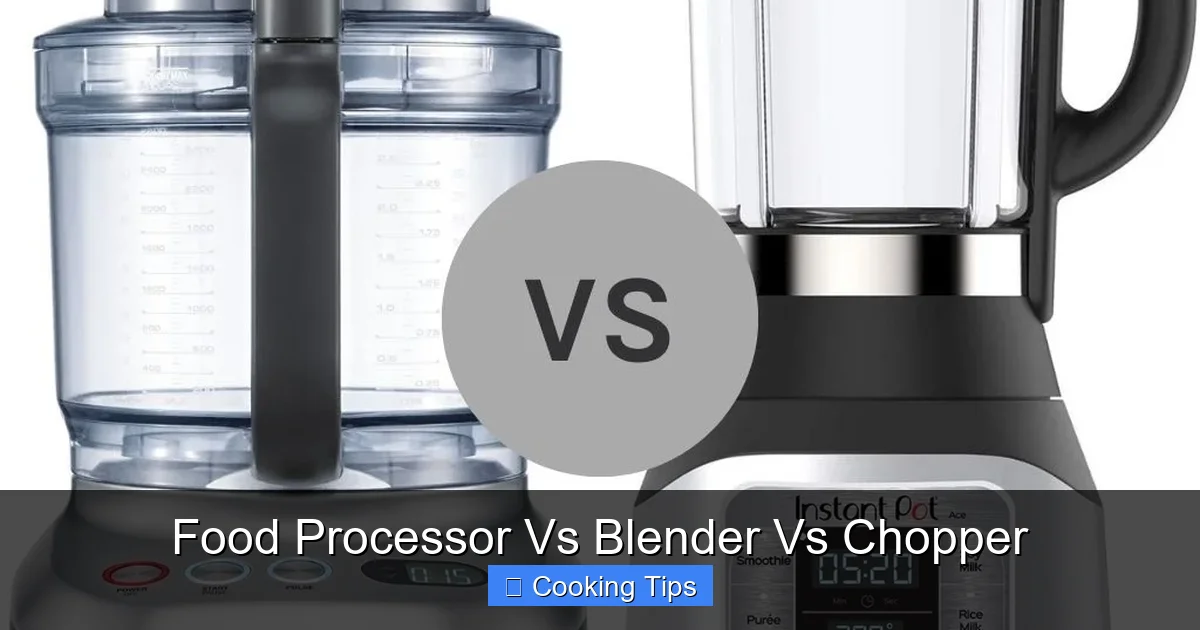
Let’s break down how these three appliances stack up against each other for specific tasks:
| Task | Blender | Food Processor | Chopper |
| :———————- | :————————————– | :————————————– | :———————————— |
| **Smoothies/Liquids** | **Excellent** | Good (can be chunky if not pureed) | Poor (too small, not designed for this) |
| **Soups/Sauces (Smooth)** | **Excellent** | Good (can achieve smooth, but takes longer) | Poor |
| **Dicing/Chopping** | Poor (often results in mush) | **Excellent** | **Excellent (for small quantities)** |
| **Slicing/Shredding** | Not possible | **Excellent (with discs)** | Not possible |
| **Kneading Dough** | Not possible | **Excellent (with dough blade)** | Not possible |
| **Making Pesto/Hummus** | Good (can be very smooth) | **Excellent (for texture control)** | Poor (too small) |
| **Grinding Nuts/Seeds** | Good (for small amounts) | **Excellent** | Good (for small amounts) |
| **Baby Food (Puree)** | **Excellent** | Good | Good (for small portions) |
| **Quick Onion Chop** | Poor | **Excellent** | **Excellent (for small onion)** |
### When to Choose Which
* **Choose a Blender if:** Your primary goal is to make smoothies, milkshakes, creamy soups, purees, or frozen drinks. You want smooth, liquefied results.
* **Choose a Food Processor if:** You need an all-around appliance for chopping, slicing, shredding, kneading dough, making dips, or processing larger batches. It’s the most versatile option for general food preparation.
* **Choose a Chopper if:** You frequently prepare small amounts of ingredients like herbs, garlic, nuts, or shallots and want a quick, convenient solution for these specific tasks. It’s your shortcut for small-scale dicing.
## Troubleshooting Common Issues
* **Appliance Not Turning On:**
* Ensure it’s plugged in securely.
* Check if the lid or bowl is properly locked into place (many have safety interlocks).
* For some models, there might be a reset button on the motor base.
* **Uneven Chopping/Processing:**
* Ensure you haven’t overloaded the bowl or jar.
* Cut ingredients into similar-sized pieces.
* For food processors and blenders, stop and scrape down the sides of the bowl/jar.
* Process in pulses and check consistency regularly.
* **Leaking:**
* Make sure the lid is securely fastened and the seal is intact.
* Don’t overfill the appliance beyond the maximum fill line.
* Check that the blade assembly is properly seated in the bowl/jar.
* **Motor Overheating:**
* You might be processing for too long or trying to handle ingredients that are too tough for the motor’s power.
* Allow the appliance to cool down before using it again.
* Process in shorter bursts.
## Conclusion
Deciding between a food processor, blender, and chopper ultimately comes down to your cooking habits and the types of meals you prepare most often. If you’re a smoothie enthusiast or love velvety soups, a powerful blender is your champion. For the home cook who tackles a variety of tasks from slicing veggies to kneading dough, a food processor is an indispensable tool. And for those quick, small-batch dicing jobs, a handy chopper can save you precious minutes.
Investing in the right appliance means less time spent on tedious prep work and more time enjoying delicious, homemade creations. Many kitchens benefit from having at least two of these appliances, often a blender and a food processor, to cover all bases. Consider your counter space, budget, and most importantly, your culinary aspirations, and you’ll find the perfect kitchen companion to elevate your cooking experience. Happy cooking!
