

This guide demystifies the basic coffee process, taking you on a journey from the coffee cherry to your morning cup. We’ll explore the essential steps: harvesting, processing, roasting, and grinding. Understanding these stages is key to appreciating the subtle differences in flavor and aroma, allowing you to brew a truly exceptional coffee.
What Is The Basic Coffee Process
Are you curious about what happens to those little green beans before they become the rich, aromatic beverage you enjoy every morning? The journey of coffee is fascinating, a meticulous process that involves cultivation, careful harvesting, transformative processing, skillful roasting, precise grinding, and finally, the art of brewing. Understanding the basic coffee process can elevate your appreciation for your daily cup and empower you to make better coffee at home.
In this comprehensive guide, we’ll walk you through each crucial stage. You’ll learn about where coffee comes from, how the bean is extracted from its fruit, the magic that heat performs on these beans, and how the size of your coffee grounds can dramatically change your brew. By the end of this article, you’ll have a solid grasp of the basic coffee process, from the coffee cherry on the bush to the steaming cup in your hands.
Key Takeaways
- From Cherry to Bean: Coffee begins as a fruit (cherry) on a bush, and the precious bean is actually the seed inside.
- Processing Methods Matter: How the cherry is removed from the bean (washed, natural, honey) significantly impacts the final flavor profile.
- The Magic of Roasting: Roasting transforms green coffee beans through heat, developing their characteristic aromas and flavors.
- Grind Size is Crucial: The size of your coffee grounds directly affects how quickly water extracts flavor, influencing the taste of your brew.
- Brewing Extracts Flavor: Brewing is the final step where hot water dissolves soluble compounds from the grounds to create your delicious coffee beverage.
- Freshness is Key: Freshly roasted and freshly ground coffee beans offer the best flavor and aroma for your cup.
1. Harvesting the Coffee Cherries
Everything begins on a coffee plant. Coffee beans, as we know them, are actually the seeds found inside the fruit of the coffee plant, which resembles a cherry. These coffee cherries grow on trees and shrubs, primarily in a region known as the “Bean Belt,” which circles the Earth near the equator. The two most common species are Arabica and Robusta, each with distinct characteristics and growing requirements.
Cultivation and Ripening
Coffee plants require very specific conditions to thrive: a consistent temperature, ample rainfall, and nutrient-rich soil. The flowers of the coffee plant, which are often white and fragrant, bloom after the rainy season. These flowers then give way to green cherries. Over several months, these cherries mature, gradually turning from green to yellow, then orange, and finally, a vibrant red or deep purple when they are perfectly ripe. This ripening process is crucial for developing the sugars and acids that contribute to the bean’s flavor.
Picking the Cherries
Harvesting coffee is a labor-intensive process, and how it’s done has a significant impact on the quality of the final coffee. There are two primary methods:
- Strip Picking: In this method, all the cherries on a branch are stripped off at once, either by hand or by machine. This method is faster and less expensive, but it often means that unripe, overripe, and ripe cherries are all harvested together. This can lead to inconsistencies in flavor.
- Selective Picking: This method involves picking only the ripe cherries by hand. While much more labor-intensive and costly, it ensures that only the best cherries are chosen, leading to a higher quality and more flavorful coffee. This is the preferred method for specialty coffee producers.
The timing of the harvest is also critical. Picking cherries at their peak ripeness ensures the best possible flavor development within the bean.
2. Processing the Coffee Cherries

Visual guide about What Is the Basic Coffee Process
Image source: cafecampesino.com
Once the coffee cherries are harvested, the next step is to remove the bean from the fruit. This process is called “processing,” and it’s one of the most critical stages that influences the coffee’s final taste. There are several methods, each imparting unique characteristics to the bean. The goal is to dry the bean to a specific moisture content (around 10-12%) so it can be stored and transported without spoiling.
The Washed (or Wet) Process
This is a very common method, especially for Arabica coffees grown in regions with ample water. It involves removing the outer layers of the cherry before the bean is dried.
- Pulping: After harvesting, the cherries are sent to a pulper. This machine removes the skin and most of the pulp from the coffee bean.
- Fermentation: The beans, still covered in a sticky layer called mucilage, are then placed in fermentation tanks, often filled with water. Here, natural enzymes and bacteria break down the mucilage over 12-48 hours. This fermentation process is carefully monitored to prevent over-fermentation, which can introduce undesirable flavors.
- Washing: After fermentation, the beans are thoroughly washed with clean water to remove any remaining mucilage.
- Drying: The now-clean beans are spread out on large patios or raised beds to dry in the sun. They are raked regularly to ensure even drying and prevent mold. Alternatively, mechanical dryers can be used.
Flavor Profile: Washed coffees tend to have a cleaner, brighter, and more acidic taste. The flavors are often more nuanced and delicate, allowing the inherent characteristics of the bean to shine through.
The Natural (or Dry) Process
This is the oldest processing method and is often used in regions where water is scarce. In this method, the entire coffee cherry is dried.
- Drying: Freshly harvested cherries are spread out in a single layer on large patios or raised beds.
- Turning: The cherries are constantly turned and raked to ensure even drying and prevent them from fermenting or molding. This process can take several weeks, depending on the climate. As the cherries dry, they shrink and turn a deep reddish-brown or even black.
- Hulling: Once the cherries are fully dried, the dried husk and parchment layer are removed using hulling machines.
Flavor Profile: Natural processed coffees are known for their intense, fruity, and often wine-like flavors, with lower acidity and a heavier body. The sugars from the drying fruit can impart sweetness and complex fruity notes.
The Honey Process
This method is a hybrid of the washed and natural processes, aiming to combine the best of both. It involves removing the skin but leaving some or all of the mucilage on the bean during drying.
- Pulping: The skin of the coffee cherry is removed, but the sticky mucilage remains.
- Drying: The beans, coated in mucilage, are then dried on patios or raised beds. The amount of mucilage left on the bean can vary, leading to different “colors” of honey processing (e.g., yellow, red, black honey), each indicating a different level of mucilage and drying time.
Flavor Profile: Honey processed coffees often offer a balance between the clean acidity of washed coffees and the fruity sweetness of natural coffees. They typically have a sweeter profile with a pleasant body and moderate acidity.
3. Roasting the Green Coffee Beans

Visual guide about What Is the Basic Coffee Process
Image source: thumbs.dreamstime.com
Green coffee beans, as they are called before roasting, have very little aroma and flavor. Roasting is the transformative process that unlocks the potential of these beans, developing hundreds of aromatic compounds and bringing out their unique flavors. This is where the magic truly happens.
The Roasting Process
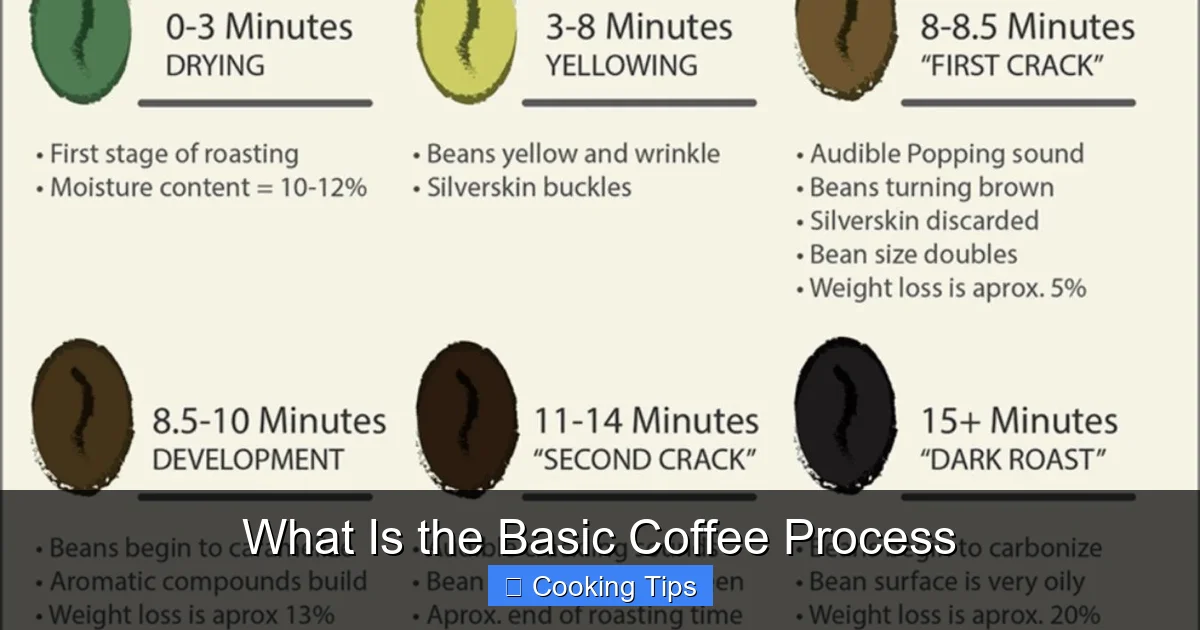
Roasting involves heating green coffee beans to high temperatures (typically between 370°F and 450°F or 188°C and 232°C) for a specific duration. During roasting, several critical changes occur:
- Color Change: The beans start as green and gradually turn yellow, then light brown, and finally a dark brown, depending on the roast level.
- Cracking: The beans expand and release moisture. You’ll often hear two “cracks.” The first crack, occurring around 370-400°F (188-204°C), signifies the beginning of caramelization and flavor development. The second crack, happening at higher temperatures, indicates a darker roast and the development of more oils on the surface.
- Aroma Development: Sugars caramelize, and chemical reactions (like the Maillard reaction) create the complex aromas we associate with coffee.
Roast Levels
The duration and temperature of the roast determine the final roast level, which significantly impacts the coffee’s flavor.
- Light Roasts: Roasted to a lighter brown color, these beans have a higher acidity and retain more of their original origin characteristics, often with floral or fruity notes. They typically haven’t reached the second crack.
- Medium Roasts: A balanced roast, medium brown in color, offering a good compromise between origin characteristics and roast-developed flavors. They often have notes of caramel, chocolate, or nuts.
- Dark Roasts: Roasted to a dark brown color, often with a glossy sheen due to released oils. These coffees have lower acidity and a bolder, often smoky or chocolatey flavor. The origin characteristics are largely masked by the roast profile.
Practical Tip: For most home brewing, medium roasts are a great starting point as they balance origin flavors with roast complexity. Experimenting with different roast levels is key to finding your preference.
4. Grinding the Coffee Beans

Visual guide about What Is the Basic Coffee Process
Image source: cdn.mycreativeshop.com
Grinding is the process of breaking down roasted coffee beans into smaller particles. The size of these grounds is absolutely crucial because it affects the surface area of the coffee, which in turn determines how quickly water can extract flavor.
Grind Size and Extraction
Think of it like this: the finer the grind, the more surface area exposed to water, leading to faster extraction. Conversely, a coarser grind means less surface area, and extraction happens more slowly.
- Extraction is Key: Too fast an extraction (e.g., too coarse a grind for the brewing method) results in under-extracted coffee, which tastes sour and weak. Too slow an extraction (e.g., too fine a grind) results in over-extracted coffee, which tastes bitter and astringent. The goal is a balanced extraction, yielding a flavorful and enjoyable cup.
Types of Grinders
There are two main types of coffee grinders:
- Blade Grinders: These work like a blender, chopping the beans into irregular pieces. This results in an inconsistent grind size, making even extraction difficult.
- Burr Grinders: These use two revolving abrasive surfaces (burrs) to grind the beans to a uniform size. Burr grinders offer much more control over the grind size and produce a more consistent result, which is essential for good coffee.
Practical Tip: Invest in a quality burr grinder. It’s one of the most impactful upgrades you can make to your home coffee setup.
Grind Size for Different Brewing Methods
The ideal grind size depends entirely on your brewing method:
- Extra Coarse: (Like sea salt) – Cold brew
- Coarse: (Like kosher salt) – French Press
- Medium-Coarse: (Like rough sand) – Chemex, Drip Coffee Makers (depending on filter)
- Medium: (Like sand) – Drip Coffee Makers, Siphon Brewers
- Medium-Fine: (Slightly smoother than sand) – Pour-over (like V60), Aeropress (for shorter brews)
- Fine: (Like table salt) – Espresso, Moka Pot
- Extra Fine: (Like powdered sugar) – Turkish Coffee
Freshness Matters: It’s best to grind your coffee beans just before brewing. Pre-ground coffee loses its aroma and flavor much more quickly than whole beans.
5. Brewing the Coffee
The final step in the basic coffee process is brewing, where hot water is used to extract the soluble flavors from the ground coffee. This is where all the prior steps culminate in the cup you drink.
The Brewing Principles
Regardless of the brewing method, the fundamental principles are the same:
- Water Temperature: The ideal water temperature for brewing coffee is typically between 195°F and 205°F (90°C and 96°C). Water that is too cool will lead to under-extraction, while water that is too hot can scorch the grounds and lead to bitter flavors.
- Coffee-to-Water Ratio: A common starting point is a ratio of 1:15 to 1:18 (e.g., 1 gram of coffee to 15-18 grams of water). Adjusting this ratio can change the strength and flavor of your coffee.
- Brew Time: This is the amount of time the water is in contact with the coffee grounds. It’s closely linked to grind size. A longer brew time generally requires a coarser grind, and a shorter brew time requires a finer grind.
- Agitation: Stirring or swirling the coffee grounds can help ensure even saturation and extraction.
Popular Brewing Methods
While the details vary, the goal is always the same: to extract the delicious compounds from the coffee.
- Drip Coffee Makers: Automatic machines that heat water and drip it over grounds in a filter basket.
- Pour-Over (e.g., V60, Chemex): Manual brewing where you slowly pour hot water over grounds in a filter cone, offering a lot of control.
- French Press: Coffee grounds steep in hot water for several minutes before a plunger separates the grounds from the liquid.
- Espresso: Hot, pressurized water is forced through finely ground coffee, producing a concentrated shot.
- Aeropress: A versatile brewer that uses air pressure to force water through grounds, offering flexibility in brew time and grind size.
Practical Tip: Weigh your coffee beans and water using a kitchen scale for consistent results. It’s more accurate than using scoops.
Conclusion
The basic coffee process is a remarkable journey of transformation, from a humble seed inside a fruit to a complex and beloved beverage. Each step – from the careful harvesting and diverse processing methods that shape its inherent flavors, to the art of roasting that unlocks its aromas, the precision of grinding that controls extraction, and finally, the act of brewing that brings it all together – plays a vital role in the final cup. By understanding these fundamental stages, you can gain a deeper appreciation for the craft involved and make more informed choices about the coffee you enjoy. So, the next time you savor your morning brew, take a moment to appreciate the incredible journey that little bean has taken to reach your cup.
