


Choosing between a Keurig coffee maker and a French press can dramatically impact your daily coffee experience. This guide dives deep into the comparison, exploring flavor profiles, ease of use, environmental impact, and cost-effectiveness. Whether you prioritize speed and convenience or a richer, more hands-on brewing process, we’ll help you make the perfect choice for your coffee ritual.
Are you staring at your coffee counter, wondering which brewing method will truly elevate your morning cup? The world of coffee offers a delightful array of choices, and two popular contenders often stand out: the Keurig coffee maker and the French press. Both promise delicious coffee, but they do so in remarkably different ways. Understanding these differences is key to unlocking your perfect coffee experience.
This comprehensive guide is designed to demystify the Keurig vs. French press debate. We’ll explore what each brewing method brings to the table, from the nuanced flavors and aromas to the practicalities of daily use. By the end, you’ll have a clear picture of which machine or tool best fits your lifestyle, taste preferences, and even your budget. Let’s dive in and discover your ideal coffee companion!
Key Takeaways
- Taste Profile: Keurig offers consistent, often lighter-bodied coffee, while French press delivers a bolder, richer cup with more oils.
- Convenience & Speed: Keurigs excel in rapid brewing with minimal effort, ideal for busy mornings.
- Control & Customization: French presses offer complete control over brewing variables for a personalized cup.
- Cost of Ownership: While Keurigs have a higher upfront cost, K-cups can add up; French presses are inexpensive upfront but require good quality beans.
- Environmental Impact: K-cups generate significant plastic waste, whereas French presses are reusable and eco-friendly.
- Maintenance: Keurigs require descaling, while French presses need simple handwashing.
Keurig Coffee Maker: The Convenience King
The Keurig coffee maker has revolutionized home brewing for many. Its primary appeal lies in its unparalleled simplicity and speed. With a Keurig, a single cup of coffee is just moments away.
How a Keurig Works
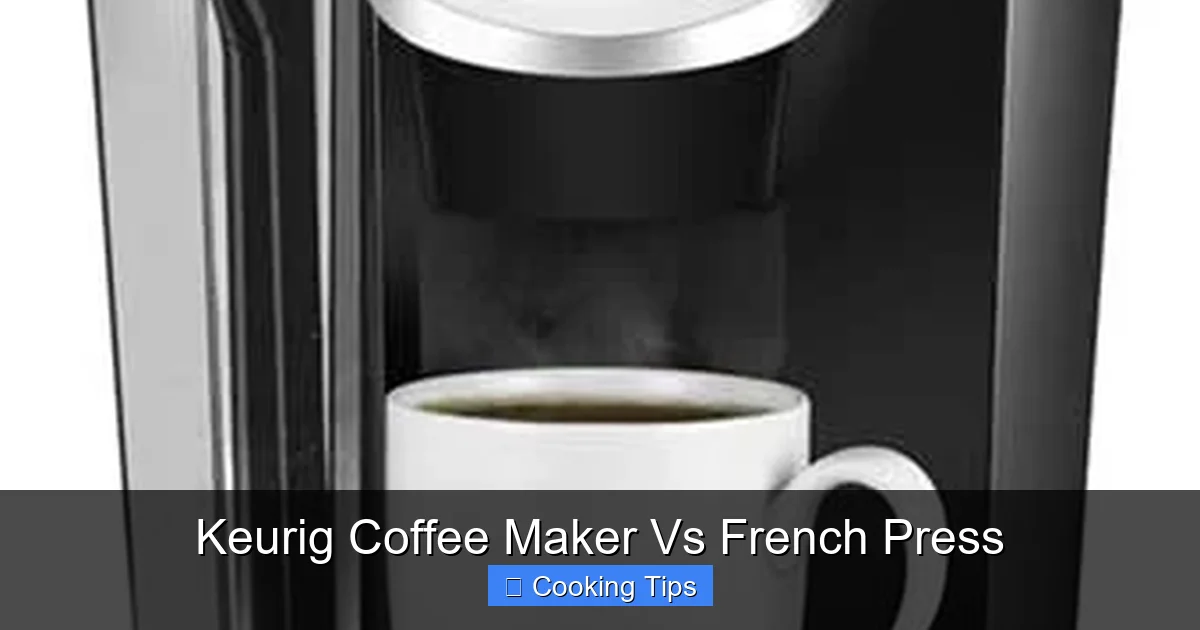
At its core, a Keurig is a single-serve coffee brewer. It uses pre-portioned coffee pods, known as K-Cups, filled with ground coffee.
Here’s a breakdown of the brewing process:
Step 1: Add Water
You’ll start by filling the water reservoir. The size of the reservoir varies by model, but most can hold enough water for several cups, reducing the need for constant refills.
Step 2: Insert K-Cup
Next, you select your desired K-Cup. Lift the handle, place the K-Cup in the designated holder, and close the handle firmly. The machine pierces the top and bottom of the K-Cup.
Step 3: Select Cup Size and Brew
Choose the size of your coffee cup (e.g., 6 oz, 8 oz, 10 oz) and press the brew button. Hot water is then forced through the K-Cup at high pressure, extracting the coffee.
The Keurig Coffee Experience: Taste and Texture
The taste of Keurig coffee is often described as clean and consistent. Because the coffee grounds are sealed within the K-Cup and the brewing process is automated, the results are generally predictable.
However, this consistency can sometimes come at the cost of complexity.
- Body: Keurig coffee tends to have a lighter body. The paper filter within many K-Cups can strip away some of the coffee’s natural oils, which contribute to a fuller mouthfeel.
- Flavor Nuances: While you can find a vast array of K-Cup flavors, the finer notes of the coffee beans might be less pronounced compared to other brewing methods. The high-pressure, rapid brew can sometimes lead to over-extraction of certain compounds, resulting in a slightly bitter or less nuanced taste.
- Consistency: This is a major win for Keurig. If you love your coffee tasting the same every single day, a Keurig delivers.
Pros of a Keurig Coffee Maker
* Incredible Convenience: Brew a single cup in under a minute. Perfect for busy mornings or when you only need one cup.
* Variety: K-Cups come in countless brands, roasts, and flavors, including tea and hot chocolate.
* Ease of Use: Minimal learning curve. Anyone can operate a Keurig.
* Cleanliness: No messy coffee grounds to deal with. Simply discard the used K-Cup.
* Customization (to an extent): Most models allow you to select brew strength and cup size.
Cons of a Keurig Coffee Maker
* Environmental Impact: K-Cups are a significant source of plastic waste, though some recyclable options are emerging.
* Cost of K-Cups: While the machine itself might seem affordable, the ongoing cost of K-Cups can be substantial.
* Taste Limitations: For coffee aficionados seeking the absolute best flavor and control, Keurig can be a compromise.
* Maintenance: Keurigs require regular descaling to maintain optimal performance and taste.
The French Press: The Artisan’s Choice
The French press, also known as a press pot or plunger pot, is a timeless brewing method that appeals to those who appreciate a hands-on approach and a robust cup of coffee. It’s a method favored by many who seek a rich, full-bodied brew.
How a French Press Works
A French press operates on a simple yet effective principle: immersion brewing. Coffee grounds are steeped in hot water, and then a mesh filter is used to separate the grounds from the brewed coffee.
Here’s the step-by-step process:
Visual guide about Keurig Coffee Maker Vs French Press
Image source: consumerfiles.com
Step 1: Grind Your Coffee Beans
This is a crucial first step. For a French press, you need a coarse grind. A fine grind will pass through the mesh filter, resulting in a muddy cup. Grind your beans right before brewing for maximum freshness.
Step 2: Heat Water
Heat fresh, filtered water to just off the boil, ideally between 195°F and 205°F (90°C – 96°C). Boiling water can scorch the coffee grounds, leading to bitterness.
Step 3: Add Coffee and Water
Place your coarsely ground coffee into the bottom of the French press. A common ratio is 1:15 – for example, 2 tablespoons of coffee for every 6 ounces of water. Add a small amount of hot water to “bloom” the coffee (let it sit for 30 seconds). Then, add the rest of the hot water.
Step 4: Steep
Place the lid on the French press without pressing the plunger down. Let the coffee steep for about 4 minutes. This immersion time allows for full extraction of flavors and oils.
Step 5: Plunge and Serve
Gently and slowly press the plunger all the way down. This separates the coffee grounds from the liquid. Pour the coffee immediately to prevent over-extraction and bitterness.
The French Press Coffee Experience: Taste and Texture
The French press is celebrated for producing a cup with exceptional depth and character.
Here’s what you can expect:
- Body: The metal mesh filter allows more of the coffee’s natural oils and micro-grounds to pass into the cup. This results in a significantly fuller, richer, and more viscous mouthfeel.
- Flavor Complexity: Because the coffee steeps directly in the water, it extracts a wider range of flavor compounds. You’ll often taste more of the coffee’s origin characteristics, sweetness, and subtle notes.
- Boldness: French press coffee is typically bolder and more intense than drip coffee or Keurig coffee.
- Control: You have complete control over grind size, water temperature, and steeping time, allowing for endless customization.
Pros of a French Press
* Exceptional Flavor: Delivers a rich, full-bodied, and complex cup of coffee.
* Control Over Brewing: Allows for precise adjustments to taste.
* Cost-Effective: The initial investment is very low, and there are no ongoing pod costs.
* Environmentally Friendly: No disposable pods or filters required.
* Simple to Use (once you get the hang of it): The process is straightforward.
* Durable: Most French presses are made of glass or stainless steel and can last for years.
Cons of a French Press
* Requires More Effort: It’s a manual process that takes a few minutes.
* Potential for Sediment: If the grind is too fine or the plunge is too aggressive, you might get some coffee sediment in your cup.
* Cleaning: While not difficult, it requires more steps than simply discarding a K-Cup. You need to scoop out the grounds and wash the press.
* Taste Variability: Results can vary more depending on grind, temperature, and time.
Keurig vs. French Press: A Direct Comparison
Visual guide about Keurig Coffee Maker Vs French Press
Image source: luckybelly.com
Now that we’ve explored each method individually, let’s put them head-to-head on key factors:
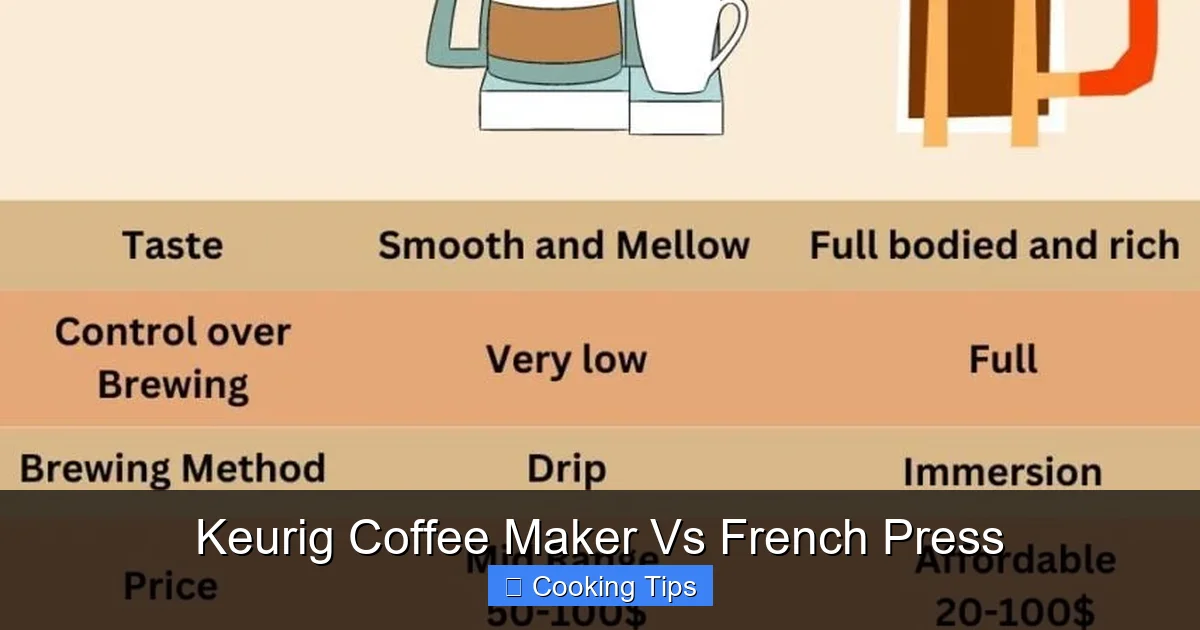
Taste and Flavor Profile
* Keurig: Lighter body, consistent, sometimes perceived as less complex.
* French Press: Richer body, bolder flavor, more oils, greater nuance.
Convenience and Speed
* Keurig: Unmatched speed and ease of use. Brew in under a minute.
* French Press: Requires a few minutes for grinding, heating, steeping, and plunging.
Cost
* Keurig: Higher upfront cost for the machine, but significant ongoing costs for K-Cups.
* French Press: Very low upfront cost. The only ongoing cost is good quality coffee beans.
Environmental Impact
* Keurig: Significant plastic waste from K-Cups.
* French Press: Minimal waste, reusable.
Maintenance and Cleaning
* Keurig: Requires occasional descaling. Daily cleaning involves rinsing the drip tray and K-Cup holder.
* French Press: Requires daily disassembling and washing of the carafe and plunger.
Control and Customization
* Keurig: Limited control over brew strength and cup size.
* French Press: Full control over grind, water temp, and steep time for a highly personalized cup.
Who is Each Brewer For?
Visual guide about Keurig Coffee Maker Vs French Press
Image source: coffeeabout.com
Understanding these differences helps us determine who each brewer is best suited for.
The Keurig is ideal for:
* **Busy individuals and families:** When every second counts in the morning.
* **Those who value simplicity:** If you want great coffee with zero fuss.
* **Households with diverse tastes:** When one person wants regular coffee, another tea, and someone else hot chocolate.
* **Office environments:** Where speed and individual servings are paramount.
The French Press is ideal for:
* **Coffee enthusiasts:** Those who appreciate nuanced flavors and enjoy the craft of brewing.
* **Budget-conscious individuals:** If you prefer investing in quality beans over disposable pods.
* **Environmentally conscious consumers:** Who want to minimize their waste.
* **People who enjoy a more relaxed morning ritual:** When you have a few extra minutes to savor the process.
Troubleshooting Common Issues
Even with these popular brewers, you might encounter a few hiccups.
Keurig Troubleshooting
* Weak Coffee:
* Ensure you are using the correct pod and that it’s seated properly.
* Your K-Cup might be old or defective.
* Clean the brew head; sometimes coffee grounds can clog it.
* Consider using a stronger brew setting if your machine has one.
* Machine Not Brewing:
* Check if the water reservoir is filled and properly seated.
* Ensure the K-Cup holder is closed completely.
* The machine may need descaling. Follow the manufacturer’s instructions.
* Leaking Water:
* Check that the water reservoir is not cracked and is seated correctly.
* Ensure the drip tray is not overflowing.
French Press Troubleshooting
* Muddy Coffee (Sediment):
* Use a coarser grind for your coffee beans.
* Ensure your plunger mesh is clean and undamaged.
* Plunge gently and slowly.
* Avoid pouring the very last bit of coffee from the press, as this is where most sediment settles.
* Bitter Coffee:
* Water might be too hot; let it cool slightly after boiling.
* Coffee may have steeped for too long. Reduce steeping time.
* Grind might be too fine, causing over-extraction.
* Weak Coffee:
* Increase the amount of coffee grounds.
* Steep for a longer duration.
* Ensure your grind is coarse but not so coarse that it doesn’t extract well.
Conclusion: Making Your Choice
The “better” coffee maker between a Keurig and a French press isn’t about which one is objectively superior, but rather which one aligns best with your personal coffee journey.
If your priority is **speed, convenience, and variety** with minimal effort, a Keurig coffee maker is likely your champion. It’s a workhorse for those who need a caffeine fix fast and appreciate the simplicity of pressing a button.
However, if you are a **connoisseur of taste, appreciate the art of brewing, and desire a rich, full-bodied cup** that reflects the true character of coffee beans, the French press is an unparalleled choice. It offers a rewarding experience for those willing to invest a few extra minutes and enjoy the tactile process of making coffee.
Consider your daily routine, your taste buds, your budget, and your commitment to environmental impact. By weighing these factors, you can confidently choose the brewing method that will bring you the most satisfaction, cup after delicious cup. Happy brewing!
