

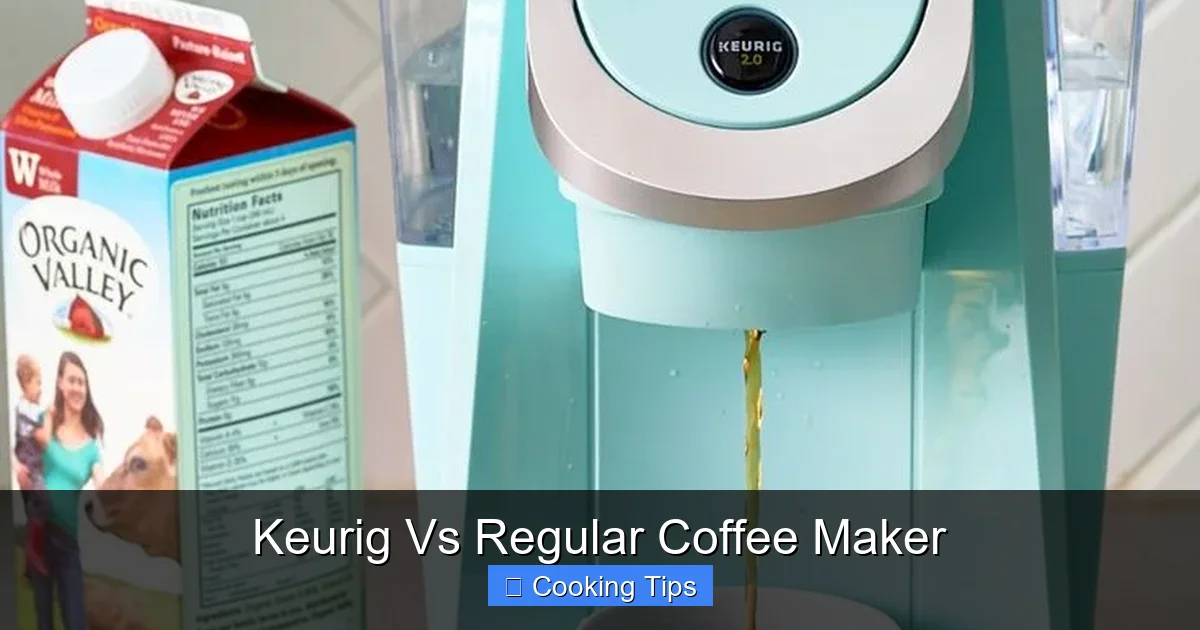
Choosing between a Keurig and a regular coffee maker depends on your priorities. Keurigs offer speed and convenience with single-serve options, perfect for busy mornings. Regular drip coffee makers excel in cost-effectiveness and customization, ideal for brewing larger batches and experimenting with grounds. This guide breaks down the differences to help you make the best choice for your kitchen.
Are you staring at your kitchen counter, wondering which coffee maker will best suit your morning ritual? The battle between the modern convenience of a Keurig and the traditional charm of a regular coffee maker is a common dilemma for coffee lovers. Both have their loyal fans, and for good reason. This guide is designed to help you navigate the nuances of each system, so you can make an informed decision that will bring you delicious coffee for years to come.
We’ll dive deep into what makes each type of coffee maker tick. You’ll learn about the pros and cons, how they brew, what they cost, and even their impact on the environment. By the end of this guide, you’ll have a clear picture of which coffee maker – the speedy Keurig or the versatile regular coffee maker – is the perfect fit for your lifestyle and your taste buds.
Key Takeaways
- Speed and Convenience: Keurigs are significantly faster, brewing a single cup in under a minute, making them ideal for individuals or busy households.
- Variety and Customization: Keurig machines offer a wide array of K-Cup flavors, while regular coffee makers allow for complete control over bean type, grind size, and brewing strength.
- Cost Considerations: While the initial cost of a Keurig can be higher, the long-term cost of K-Cups can outweigh that of ground coffee from a regular maker.
- Environmental Impact: Single-use K-Cups generate more waste than reusable filters used in drip coffee makers, though reusable K-Cup options exist.
- Batch Brewing vs. Single Serve: Regular coffee makers are designed for brewing multiple cups at once, whereas Keurigs are primarily for individual servings.
- Ease of Use and Cleaning: Both have their advantages. Keurigs are generally simple to operate and clean, while drip coffee makers might require more regular descaling and filter replacement.
- Coffee Quality Perception: While both can produce good coffee, experienced coffee enthusiasts often prefer the nuanced flavors achievable with a regular drip maker due to greater control.
Understanding the Basics: Keurig vs. Regular Coffee Maker
At their core, both Keurig and regular coffee makers aim to do the same thing: brew a satisfying cup of coffee. However, their approaches are vastly different, leading to distinct user experiences and outcomes.
The Keurig Experience: Speed and Single-Serve Simplicity
Keurig machines revolutionized the home coffee market with their introduction of the K-Cup pod system. The main selling point of a Keurig is its unparalleled speed and simplicity for brewing a single cup of coffee.
* How it Works: You insert a pre-packaged K-Cup pod, fill the water reservoir, select your cup size, and press a button. Hot water is forced through the pod, extracting the coffee, and delivering a fresh cup in under a minute.
* Key Features: Single-serve brewing, a vast selection of K-Cup flavors (coffee, tea, hot chocolate), programmable brew strength and temperature on some models, and generally compact designs.
* Ideal For: Busy individuals, small households where only one person drinks coffee, those who enjoy variety without commitment to a whole pot, or offices.
The Regular Coffee Maker Experience: Batch Brewing and Control
The “regular” coffee maker, most commonly referring to the drip coffee maker, has been a kitchen staple for decades. It’s known for its ability to brew multiple cups and for offering more control over the brewing process.
* How it Works: You place a coffee filter (paper or reusable) into a basket, add your desired amount of ground coffee, fill the water reservoir, and turn it on. Water is heated and then drips through the grounds into a carafe below.
* Key Features: Batch brewing capabilities (typically 4-12 cups), ability to use any ground coffee, adjustable brew strength via coffee-to-water ratio, and often a “keep warm” function.
* Ideal For: Families, households with multiple coffee drinkers, budget-conscious individuals who buy ground coffee in bulk, and coffee aficionados who enjoy experimenting with beans and grinds.
The Pros and Cons: A Detailed Comparison
Visual guide about Keurig Vs Regular Coffee Maker
Image source: nationalcoffeeblog.org
Now, let’s break down the advantages and disadvantages of each system to help you weigh your options.
Keurig: The Convenience Champion
Pros:
- Speed: Brews a cup in less than a minute. This is a huge advantage when you’re rushing out the door or need a quick pick-me-up.
- Convenience: No measuring coffee grounds or dealing with messy filters for single cups. Just pop in a pod and go.
- Variety: Thousands of K-Cup options are available, from different roasts and brands of coffee to teas and hot cocoa. You can easily switch flavors for each cup.
- Ease of Use: Extremely simple to operate, even for those who aren’t tech-savvy.
- Less Waste (Potentially): No leftover coffee in a carafe to go stale.
Cons:
- Cost per Cup: K-Cups are significantly more expensive per serving than brewing with ground coffee.
- Environmental Impact: Traditional K-Cups are single-use plastic and create a lot of waste, though reusable K-Cup filters are an option.
- Limited Customization: While some models offer brew strength, you have less control over the final taste compared to a drip maker.
- Coffee Quality Perception: Some argue that the quality of coffee from a K-Cup doesn’t match that of freshly ground beans brewed in a drip maker, due to pre-ground coffee and pod limitations.
- Water Reservoir Size: Many Keurigs have smaller water reservoirs, requiring frequent refilling if you make multiple cups.
Regular Coffee Maker: The Traditional Workhorse
Pros:
- Cost-Effectiveness: Buying ground coffee or beans in bulk is much cheaper than K-Cups. The long-term savings are substantial.
- Customization: You have complete control over the coffee bean, grind size, and the ratio of coffee to water, allowing for a personalized brew.
- Batch Brewing: Perfect for making coffee for multiple people or for enjoying throughout the morning.
- Environmental Friendliness: Using a reusable filter or even compostable paper filters is more eco-friendly than single-use K-Cups.
- Consistent Quality: With good beans and the right grind, you can achieve excellent, nuanced coffee flavors.
Cons:
- Time: Brewing a full pot takes longer, typically 5-10 minutes.
- Waste: If you don’t drink the whole pot, leftover coffee can go stale and be wasted.
- Mess: Measuring grounds and cleaning the filter basket can be a bit messier than using a K-Cup.
- Less Variety (Per Brewing Session): If you’re brewing a pot, everyone drinking it has to agree on the type of coffee.
- Maintenance: Requires regular cleaning and descaling to prevent mineral buildup and ensure optimal performance.
Brewing Methods: How They Work in Detail
Visual guide about Keurig Vs Regular Coffee Maker
Image source: nationalcoffeeblog.org
Understanding the brewing mechanics can help you appreciate the differences in taste and efficiency.
Keurig: Pressure and Extraction
Keurig machines utilize a form of pressure brewing, similar in principle to an espresso machine but much gentler.
1. **Piercing the Pod:** When you insert a K-Cup and start brewing, a needle punctures the top and bottom of the pod.
2. **Heating the Water:** The machine heats water from its reservoir to a precise temperature.
3. **Forcing Water Through:** Hot water is then pumped at pressure through the coffee grounds inside the pod. This process forces the brewed coffee out through the bottom needle and into your mug.
4. **Single-Serve Extraction:** This method is optimized for a quick, single-serving extraction, designed to deliver a consistent flavor profile from each pod.
Regular Coffee Maker: Gravity and Steeping
Drip coffee makers rely on gravity and a steeping process.
1. **Heating the Water:** Water in the reservoir is heated to near boiling point.
2. **Rising and Dripping:** The hot water travels up a tube and is dispersed over the coffee grounds in the filter basket.
3. **Extraction:** As the hot water saturates the grounds, it extracts the coffee solubles.
4. **Gravity Feed:** Gravity then pulls the brewed coffee down through the filter and into the carafe.
5. **Continuous Extraction:** This process continues until all the water has passed through the grounds.
Cost Analysis: Initial Investment vs. Long-Term Savings
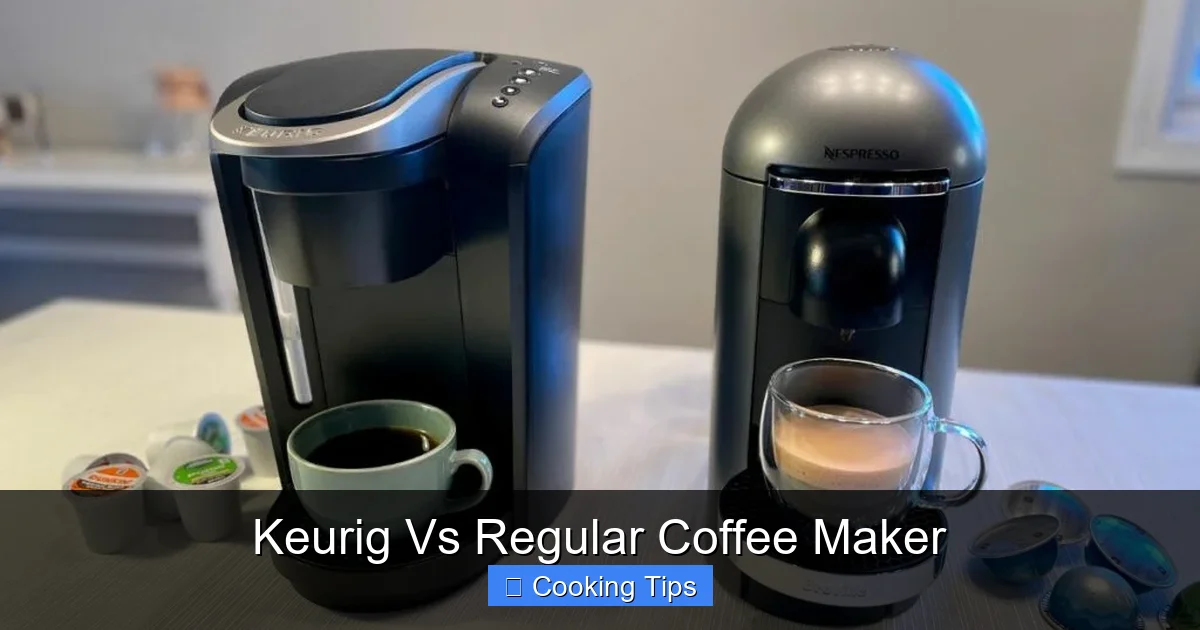
Visual guide about Keurig Vs Regular Coffee Maker
Image source: craftcoffeespot.com
The financial aspect is often a deciding factor for many consumers.
Keurig: The Pod Problem
* Initial Cost: Keurig machines range from around $70 for basic models to $200+ for advanced ones with more features.
* Ongoing Cost: K-Cups typically cost between $0.50 and $1.00 per pod. If you drink two cups a day, that’s $365 to $730 per year just for coffee! This can add up very quickly.
* Consideration: Reusable K-Cup filters can significantly reduce the per-cup cost, allowing you to use your own ground coffee. These filters typically cost around $10-$15 and can pay for themselves within a few months.
Regular Coffee Maker: The Ground Game
* Initial Cost: Basic drip coffee makers can be found for as little as $20-$30, with mid-range and high-end models costing $50-$150.
* Ongoing Cost: A pound of quality ground coffee typically costs $8-$15. Depending on your brewing strength, this can yield 30-40 cups of coffee. This makes the per-cup cost anywhere from $0.20 to $0.40.
* Consideration: The cost of filters (if not using a permanent one) is a minor additional expense.
Environmental Impact: Waste and Sustainability
For the eco-conscious consumer, this is a crucial consideration.
Keurig: The Plastic Predicament
* The Issue: The primary environmental concern with Keurigs is the vast number of single-use plastic K-Cups that end up in landfills. While some K-Cups are now recyclable, the process can be complex, and not all municipalities accept them.
* Mitigation: Using reusable K-Cup filters is the most effective way to reduce waste. You can also look for K-Cups made from more sustainable materials or companies that offer K-Cup recycling programs.
Regular Coffee Maker: Greener Choices
* The Advantage: Drip coffee makers generally have a lower environmental footprint.
* Options:
* Reusable Filters: Made from mesh or metal, these eliminate paper waste entirely.
* Compostable Paper Filters: A good option if you prefer paper filters, as they break down more easily.
* Bulk Buying: Purchasing coffee in bulk reduces packaging waste.
Maintenance and Cleaning: Keeping Your Brewer in Top Shape
Both machines require some upkeep to ensure they continue to make delicious coffee.
Keurig: Simple but Regular
* Daily: Emptying the K-Cup, wiping down the exterior, and ensuring the drip tray is clean.
* Weekly: Running a cleaning cycle with a descaling solution or vinegar and water to remove mineral buildup. Cleaning the needle assembly to prevent clogs.
* Occasional: Descaling the water reservoir and running multiple rinse cycles.
Regular Coffee Maker: Deeper Cleaning
* Daily: Discarding the used grounds and filter, rinsing the filter basket and carafe.
* Weekly: Washing the carafe and filter basket with soap and water. Wiping down the exterior.
* Monthly (or as needed): Descaling the machine by running a cycle with a vinegar and water solution or a commercial descaling product to remove mineral deposits. This is crucial for maintaining brewing temperature and flavor.
Troubleshooting Common Issues
Even the best coffee makers can develop quirks. Here are a few common problems and how to solve them.
Keurig Troubleshooting
* Coffee is too weak: Ensure you’re using the correct brew size for the pod, and that the K-Cup is properly seated. Try a different K-Cup brand or a stronger brew setting if available.
* Machine won’t brew: Check that the water reservoir is full and properly seated. Ensure the K-Cup is inserted correctly and the lid is fully closed. If it’s an error message, consult your manual.
* Coffee tastes burnt or bitter: This can be a sign of mineral buildup. Descale the machine thoroughly. Also, try a different K-Cup brand, as some blends can be naturally more bitter.
Regular Coffee Maker Troubleshooting
* Coffee tastes weak or watery: You may need to use more coffee grounds, or ensure your grind is not too coarse. Check that the water is reaching the optimal brewing temperature (usually around 195-205°F).
* Coffee maker is slow or not brewing: This often indicates mineral buildup. Descale the machine. Ensure the filter basket isn’t clogged.
* Coffee tastes stale or burnt: Make sure you’re using fresh coffee grounds and that the machine is clean. Old coffee oils can impart a burnt flavor.
Making Your Decision: Which is Right for You?
The choice between a Keurig and a regular coffee maker ultimately comes down to your personal preferences and daily habits.
Ask Yourself These Questions:
* **How many people drink coffee in your household?** If it’s just one or two, and you often have different preferences, a Keurig might be more practical. For a family of coffee drinkers, a drip maker is more economical.
* **How much time do you have in the morning?** If speed is paramount, the Keurig wins.
* **What is your budget?** Consider both the initial purchase price and the ongoing cost of K-Cups versus ground coffee.
* **How important is variety to you?** If you love trying new flavors daily, Keurig’s vast K-Cup selection is appealing. If you prefer to stick to your favorite beans but want control over the brew, a drip maker is better.
* **Are you concerned about environmental impact?** If so, a regular coffee maker with reusable filters offers a greener solution.
Conclusion
Both the Keurig and the regular coffee maker have their strengths, and neither is definitively “better” than the other. The Keurig offers unmatched speed and convenience for single servings, making it a fantastic choice for busy individuals and small households who value variety and ease of use. On the other hand, the traditional drip coffee maker excels in cost-effectiveness, batch brewing, and the ability to finely tune your coffee’s flavor profile, making it a beloved choice for families, budget-conscious consumers, and coffee enthusiasts alike.
By understanding the unique brewing methods, cost implications, environmental considerations, and maintenance requirements of each, you can confidently choose the coffee maker that will best enhance your daily caffeine ritual. Whichever you choose, the joy of a freshly brewed cup of coffee is sure to start your day off right. Happy brewing!
